An Image of America

A woman perched atop a ladder is attaching a plastic bat onto the roof of a porch. Across the street from her, just in front of a park, a man in a wheelchair is rolling over to a haggard lady, who is doubled-over at the entrance to a tiny tent. I watch them speaking. He rolls his eyes, shakes his head slowly and says “Man, he’s worse than Bush. I’m sorry he ever got my vote”. He turns his head to a squirrel at his feet: “I’m sorry I’ve no nuts for you, buddy”.

The lady has been holding a vigil against America’s nuclear policy for over twenty years. She lost her husband two years ago. He spent twenty-seven years in the same tent. Today her home-made signs promoting peace are sopping wet and the squirrels sheltering inside her tent keep her company.

The woman descends the ladder. A plastic bat flaps its wings in the breeze: black against the gleaming White House.

#Occupydamestreet exposes what’s good about Ireland

I admire the Occupy Dame Street protesters. On a night like this, as the wind pounds on my window panes and the rain pours down, I imagine them huddled together discussing the agenda for the day ahead. They are a peaceful bunch, who have spent their days postering trees with quotes from Fight Club rather than hurling abuse at the workers whose premises they occupy.

In spite of my self-confessed lack of understanding of the economy, I don’t share their belief that bankers represent the evil 1% of the population and that 99% (the “rest of us”) are their unequivocal victims. It can’t be as simple as that. I’m also not sure whether the protest has any concrete aim but it is certainly drawing attention to the displeasure of many as a result of the actions of few.

What really interests me about this protest is how it exposes the Good in our society.

Here are a group of people occupying a central location and plastering around it slogans determined to undermine the country’s main financial institution.

And yet, it’s peaceful. No aggressive guard has entered the scene, and yelled “Hey, you angry hippy, move it or I’ll shoot”. No protester has screamed abuse at the passing bankers to which they attribute a decline in society’s moral code.

Instead, the public casts a glance, takes a look around, enjoys a talk with a protester about the meaning of life and ambles on, equipped to make its own mind up.

The Occupydamestreet movement tells me a lot about what’s right with this country; the assurances that we take for granted are those for which so many of the Arab Spring protesters have died for.

So inspired have I been by #occupydamestreet that I’m off to #occupywallstreet in the morning. I’m visiting my sister in Philadelphia. She emigrated there two years ago, but not before hosting an “emigrate-like-its-a-recession-party”. When I ask her about her job she tells me that she analyses butt samples but I have a funny feeling there might be a little more to the job of geneticist than that. I’m gutted to be missing the election. If there’s anybody apathetic enough to vote for my first choice I’d be most obliged. Mail me privately for my politics.

I intend to update you on my travels in the Free World but should that not be possible, I will record my thoughts in my little blue copy book and transcribe them at a later date. See you on the other side of the Atlantic!

Wesley Women Celebrate 100 years

I spent the period between 2000 and 2006 in secondary school at Wesley College, Dublin. Wesley is a Methodist school, which takes its name from John Wesley who – as we were taught in our first year – at the age of five survived a fire in a rectory and henceforth considered himself to be “a brand plucked from the burning” and therefore destined to serve God.

Wesley was founded on the first of October 1845 on St Stephen’s Green and on that morning “At 9 o’clock the whole company sat down to breakfast joined by three boarders and nine day pupils. The Revd. Robert Masaroon presided.” In the years since, the annual Founders’s Day Service has commerated this day and the story of the college’s inception is recounted to students gathered together in “Assembly”.

An enormous landmark in the college’s history came in 1911 when the decision was made to admit girls. The significance of the move can be understood when compared to some facts relating to the period: Cambridge University didn’t award full degrees to women until 1947 and women in Ireland weren’t allowed to vote until 1922.

This year, a group of dedciated students under the guardianship of their English teacher, set about to collect the memories and stories of the girls who had passed through Wesley’s doors since 1911. They sent letters and e-mails to all corners of the world and made inquiries online and over the phone.

One such e-mail arrived in my inbox around Christmas time last year. It asked me whether I would contribute to a special book to celebrate 100 years of co-education at the school. Of course I was delighted to do so. My only problem was that when faced with the task of recounting my schooldays I didn’t know where to start and I didn’t know where to end. I managed to string a few thoughts together however and sent them back to the editorial team.

Last week, I attended the book launch. It was held in the National Gallery and was a momentous occasion. I couldn’t believe how many people had come. The expansive entrance hall of the Gallery was packed to the brim and as I looked around I saw many, many faces I did not recognise, but dotted between them, the unchanged appearance of my old teachers, whose mannerisms and expressions have remained constant since my departure.

The book, “Wesley Women” is a remarkable achievement. In all, 87 past pupils contributed. It’s full of amusing stories like girls ‘sealing’ holes in their tights with nail polish and filling balloons with hot water in order to survive the cold boarding house dorms. The earliest contributor left Wesley in 1912 and and there are several contributions from the 1920s and 1930s too. These stories are particualrly valuable as documentation of social and cultural history: Wesley did not live isolated from the world wars, the advent of rock and roll and of course the fight for women’s rights.

I’ll post my contribution later but must add that many of my memories are of people with whom many of you won’t be familiar. Still, I’d love to know, if you had to summarise your school days in 500 words, what would you mention and why?

KateKatharina’s Online Arabic Tutorial

I wish I could lie to you but I can’t. The Arabic alphabet has 28 letters, a large proportion of which change shape according to their position in the word. A select few are awkward and refuse to join with letters to their left. Many have the same shape when in the beginning or middle of a word but have a different number of dots above or below them. There’s a special symbol to let you know the absence of a vowel sound. In case you were, you know, in doubt.

I’m just back from my second class and am rather disappointed that there has been no opportunity to practise speaking, given that learning the alphabet seems to take an eternity. For this reason, I’m going to teach what I’ve learnt in the way I would have liked to learn it. I’m really not one to say a bad word about teachers (believe me, I’ve a vested interest) but as one of my classmates mumbled after class “she’s awful serious.. she’d want to ligthen up” and of the homework “It’d put you to sleep alright”.

To get us started, watch this. I dare you not to feel a smile creeping uponon your lips.

The only two things you need to remember from this video:
1.That little boy’s adorable voice (Bieber who?)
2.that Arabic has three vowels, which correspond loosely to ‘A’. ‘E’ and ‘U’. They’re a bit like fadas in Irish. For ‘A’ you put a dash above the letter; for ‘E’ below and for ‘U’ its a little sign that looks like a number 9 above the letter. That’s why in the song they sing ‘A, U, E, Be Bu Beey’ etc.

Okay, enough about the alphabet. (For my sake, not yours).

For those of you who don’t know me (I’m looking at the seven people who googled “smail” and were referred to my blog today. Though on second thought, perhaps it was was just one massively enthsiastic malacologist.)

“ismee Kate Katharina”

Say it.

Go on.

Now tell me who you are.

ismee= I

Your name=Your name

Easy Peasy Lemon Squeezy.

Now, Kayf- haluk? How’s life?

I’d hate to pre-empt you but are you feeling fine, thank God? And are you male? Then say this:

Tayeb al-hamdu lelah

Are you feeling fine thank God but worried, because you are female? Then say this:

Tayeba al-hamdu lelah.

Same? Nope. All adjectives (as here ‘fine’) have genders. How do we make an adjective feminine?

Add A.

Hmmm. There’s a problem, isn’t there?

Some of you are not fine. Some of you are tired. Fine. It’s a late blog post. You have an excuse.

Say this if you’re a man:
Ta-ban, which the stress on the ‘ban’.

If you’re female, say….???

Come on, you know this one.

Yes, you got it Ta-ban-a.

I (ismee) really am Ta-ban-na now..

So I guess I should take my leave from you and say

Mass-salama.

Go on, reply to me. It’d be rude not to.

*********************************************************************

PS- Remember ‘share the luv’ on bebo? Well my lovely blogger friend Clariice over at Reise meines Lebens has shared the luv by nominating me for a Liebster blogging award.
I’m not sure if this is an actual award or simply a way to get bloggers to share each other’s work but I’m going to take the opportunity to link you to some blogs that I really enjoy.

1. Comeheretome: UCD history students writing interesting short pieces about cultutal landmarks. They often include scans of really interesting historical documents they have access to. Warning: also write about football.
2. Inside the brain: Love this blog. Irish neuroscientist summarises latest research in his fields in layman’s terms
3.Broadside New York-based writer and author of Malled: my unintentional career in retail writes short, poignant pieces in beautifully crafted prose
4. Kat Richter: Serial-dater from Philadelphia. What more can I say? Addictive and witty.
5. Last but definitely not least: Clariice herself. She writes wonderful poetry in language that I love. It’s totally unique in that it’s sparse but also satisfyingly clunky. Her words are real, soulful and off-beat.

“Hay” there: Arabic shit and how to put your foot in it

He sighs wistfully. “Ah my dear teacher, you need practise long time!” It’s Tuesday morning, the day after my first Arabic class and I’ve just greeted my student with “kayf halaka” (كيف حالك) or “howeyeah”. It’s not that he doesn’t appreciate my effort, but apparently, my ‘ks’ are too harsh and like most people, I can’t master the breathy ‘H’, which is unique to Arabic. They say it sounds like you’re breathing onto a pair of glasses as if to clean them, but given that I’m blessed with 20:20 vision and that my windows are filthy, it’s something that’s going to take time.

Another girl looks surprised and then disgusted when I say “tibn” (تبن) to her. “Teacher, that not good word”, she says.
“What, why?!” I ask.

I’m a little indignant. After all, it’s in Chapter 1 of Mastering Arabic and it means “hay”. Not the most essential word for a slick city dweller like myself, but on the other hand, it uses the three letters introduced on page 2.

“It not good in Arabic”, she repeats patiently.
A more outspoken classmate chimes in:
“Teacher, it mean shit”.

Oh. So on top of having to read backwards, learn a 28 letter alphabet whose letters change form depending on their position in the word, and bizarre sounds only the visually impaired can achieve, I also have to bear in mind that my precious beginner’s textbook isn’t forthcoming in differentiating between horsefood and horseshit. I love a good challenge I do.

Anyway, some time ago I asked you all to make suggestions for what you’d like to see in my Arabic posts. One loyal and lovely reader suggested more about culture and language, less about politics. I breathed (not the ‘soft, on glasses kind) a sigh of relief. I had appealed in that post for suggestions on a postcard, but stipulated that should I not be considered worthy of a stamp, I would also accept suggestions submitted electronically.

Well, guess what happened. Last Sunday evening, I came home to find a postcard through my door from a magical friend, who happens to have just forsaken me for life in London. She had been clearing out her room and found a postcard from San Francisco which she’d never sent. On her very last afternoon here, she wrote an adorable piece of prose, included a suggestion for my Arabic series, stuck a 55 cent stamp on the postcard, and hand-delivered it. I’ve attached it with a wooden peg to my “poetree”, a cluster of branches which I keep in a pot on my mantlepiece and which I decorate with meaningful paraphenalia.

My Poetree


In honour of the two loyal readers, who together made the response to my request “overwhelming”, I will post a summation of what I have learnt to date after my second Arabic class tomorrow. If you’re really stuck until then, just remember to keep your glasses clean, and to learn how to pronounce “shit” before you put your foot in it.

Page One – Inside the New York Times: The Future of Print Journalism

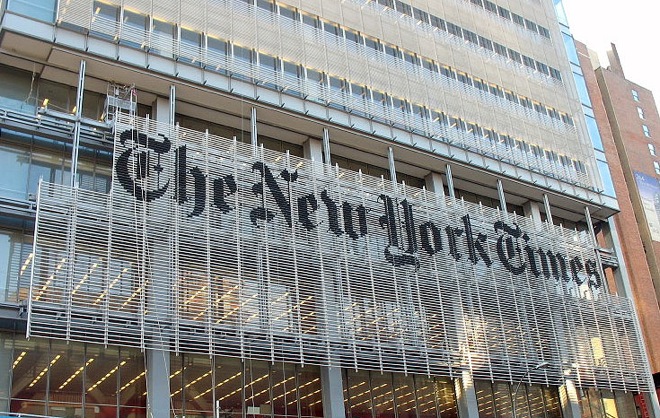
Nobody – not even the New York Times is safe from the digital revolution. That’s the message of Page One: Inside the New York Times , a docu-film -showing at the IFI this week, which follows editors and writers at the publication as they respond to falling revenue, new media outlets and the speed of social networking. Most of the scenes come from inside the NYT Headquarters and feature an array of high-strung, high-functioning individuals in front of multiple computer screens, yelling down the phone, exchanging smart comments and looking like they’re about to boil over as individually they compete for space in the publication and collectively fight for their survival.

Footage is taken from between 2008 and 2010 and while there’s no obvious narrative structure, we’re gradually introduced to key figures, like David Carr, staff writer, former crack addict and in-house character. We get a glimpse of the dilemma facing the publication as wikileaks arrives onto the scene and bewilders the world by posting videos of disturbing war scenes on youtube. We get the first reactions (what’s wikileaks?) to the final question over whether collaborating with the Guardian and Der Spiegel to release wikileaks’ wires renders Assange a source or an associate.


Comparisons are made between The Watergate scandal, which broke over the course of a year and a half’s reporting – primarily by Bob Woodward and Carl Bernstein of The Washington Post- and Assagne’s overnight release of a vast quantity of sensitive material for pubic perusal. We get the sense that the source of power is changing: where Woodward and Bernstein relied on the Washington Post to distribute their findings, now The New York Times depends in part on Assange’s willingness to use it as his outlet.

Page One documents the complexity of the relationship between The New York Times and Assange. Granted it’s symbiotic but in comparison to the media landscape of the 1970s a disproportionate amount of power lies with the source. Assagne benefits from the relationship because his material becomes associated with a credible source but The New York Times faces the uneasy task of ‘keeping up’ with a story that’s developing faster than it can be be digested.

Furthermore, we can see how The New York Times is taking a risk with Assange: how can they substantiate a source that describes himself as espousing the “values of activism” over those associated with journalism. What does that even mean?

Page One asks the questions it cannot answer. How can print media sustain itself? How is the role of journalists changing?

Newspapers didn’t predict that advertising revenue would disappear with the rise of the internet. They weren’t ready for the arrival of websites that featured classifieds and for the advent of faster, flashier, funkier outlets like gawker.com.

Things changed fundamentally in about 18 months, an insider tells the camera.

In the course of filming, 100 odd people are let go. The deputy obit editor has been there for over 20 years and takes voluntary leave. The Books and Arts editor seems on the way out too. We watch a teary few words from somebody leaving. Gathered about her are her colleagues applauding numbly. We get a shot of the enormous multi-storeyed newsroom and the tiny cluster of people gathered about the retiring journalist. It’s an image of resilience but the journalists appear tiny amongst their overwhelming surroundings.

The newsroom atmosphere has always been one of high-tension but in Page One we really get a sense of individuals constantly on the verge of boiling over. They’re always nibbling, always minimising windows on their computer screens while firing questions down the phone and gesturing to their colleagues to get things done. Where they excel though is in their attention to getting it right: there’s constant debate over what should go in and at two daily meetings, editors must justify their content. They’re still all about reporting from the ground, and there’s a sober clip of a goodbye party for a young correspondent being sent to Iraq. As the credits roll we find out that he has become chief Bagdhad correspondent.

Page One does a good job of documenting the uncertainty that surrounds The New York Times, along with all other print media. Unconsciously it documents what might be its saving grace – attention to detail, passion, unbrdidled dedication to getting it right and the conviction that a journalist’s place is first on the ground, and then on twitter.

Page One – Inside the New York Times is showing twice daily in the IFI until Friday 29 September.
The NYT HQ: image source: http://www.editorsweblog.org/web_20/2011/07/new_york_timess_second-quarter_results_s.php

What are the atrocities of our time?

Every period of history spits out its horror stories in retrospect: the murder of six million Jews, the abuse of children at the hands of priests and the institutionalisation of political dissenters. We’ve got used to documentaries exposing the trauma of war, neglect and corruption. We expect them like we do the next episode of a soap. It’s a sign of progress of course – though it makes me think about the abuses of today that will make it into the documentaries of tomorrow.

Today it was revealed that a criminal gang in Bedfordshire has been operating a twenty-four men slave work camp at a caravan park. According to British media reports, victims were lured from soup kitchens, benefit offices and hostels. Nine of them (presumably those of slightly higher standing or those suffering from Stockholm Syndrome) have refused to co-operate with police investigations. According to the Guardian, one traveller said that “Plenty of men who were here wanted to be here and they were getting paid”. As if the volition of plenty justified the slavery of a single other.

Last week the abuses of Iraqi prisoners by British army officials was relived in grotesque detail with the publication of the full report.

Tonight the second part of the RTE investigation into the practices going on behind closed doors in state mental institutions was broadcast.

I work in a not-very-nice area of town. Sometimes I see the faces of future documentaries gazing blankly past me, as they cower terrified at the knees of abusive parents, or bend their weary, wizened faces over pint glasses at 8 am, when the early license pubs are ready for their next order.

Last week I watched two families staggering about on the luas platform. Dirty beer cans in hand, the parents drunk and drugged, yelled at each other as they stumbled against empty buggies from which their toddlers wandered aimlessly away. One little boy with huge brown eyes looked at me and I stared back at him, knowing my inevitable complicity was failing him.

The luas doors opened and his parents endeavoured, with clumsy futility to secrete their multiple beer cans at the bottom of their buggy. The injustice of bad parenting – and the audacity to pass judgement on the nuclear family unit – this I believe is the stuff of next generation’s documentaries.

What else, from where you’re standing?

My scrapes with the violin and the crushes that never go away

When I was young, I learnt to play the violin at the College of Music in Chatham Row, just around the corner from Stephen’s Green. In my later years, it was renamed “The Conservatory” but the Fergusons – staunch Conservatives – continue to refer to it simply as “the College”.

My teacher, a middle-aged eastern European was quirky and sober in equal measure. He was so confident of his methods that he invited parents in to observe his lessons.

Most declined politely: but my mama certainly didn’t. So great was her love for me that every Thursday afternoon for years she endured the hostile scratching of my bow as it glided gracelessly across the four strings to produce sounds that can only be imagined -and excused- when I explain the meaing of: intonation exercises.

Unfortunately the noble purpose of intonation exercises is disguised by their horrendous sound. You see, the thing is: to play violin, you need a pretty good ear. It’s not like piano, where you just bang on a given key to produce a sound. With violin – as with all stringed instruments – you have to find the sound. And in order to do this, you need to be familiar to the very last quarter tone, of the location of each sound on the finger board.

Intonation exercises consist of playing two given notes at once and then slowly, repeadly changing the position of one of your fingers by roughly half a tone up and down to produce a clash which resonates and aims to cement in memory the correct position of your hand. To really make them useful, you have to repeat them over and over and over again….

This level of endurance represents just one of the ways in which my mama is a hero. I could write a pamphlet on her other feats. She deserves at least a series of blogs in her honour.

The best part of Thursdays was right after the violin lesson ended. Mum and I would hurry out into the wind and rain and make ourselves to the newsagent on Camden Street where we treated ourselves to a packet of Sour Cream Hunky Dorey’s each. We kept them in our coat pockets so that we could have a look around the various charity clothes shops on the way home. Sometimes, when mum was looking at blouses in Age Action, I would sneak a crisp or two from her coat pocket, just to be devious.

When we got home, we would have dinner and then get ready for Kommissar Rex. If you know me, you know all about Kommissar Rex. If you don’t you should get informed. Kommissar Rex is a TV series about a detective and his police dog “Rex”, who sleuth around Vienna solving crimes in scenic locations. I’m an enormous fan and the actor that played the detective in my day remains my only celebrity crush. LSB doesn’t like the twinkle that appears in my eye when I talk about Gedeon Burkhard, or indeed the way, when I spotted him playing a minor role in Inglorious Basterds, I nigh jumped from my seat with excitement.

Kommissar Rex is moderately scary and featured a rather disturbing scene of a man trapped in an over-heated sauna which I have never forgotten. When LSB and I were in Vienna, I finally bought the series on dvd. One night, having stocked up on Croatian beer and strawberry cake, we knocked on some Kommissar. I was right back home again, curled up beside my mama, reaping the reward of intonation exercises.

Watching Kommissar in a hostel in Zagreb

Confessions of a teacher: Part 4 An Arab Gulf

In the course of my short teaching career, I have already learnt that you can make them do anything and that there’s nothing worse than a runny nose. My fourth confession is marginally more profound: you learn more than you teach.

Since I started working last February, it’s been the Arab students who have most fascinated and inspired me and of course it is they who have cemented my desire to learn Arabic and to visit the middle east.

Among Saudi and Omani students I have met with the most genuinely gallant and warm-hearted of gentlemen. “Teacher, let me carry your bags” “Teacher, I will help you clean board”, “Teacher, in Saudi Arabia; BIG respect for teacher”, “After you, teacher”.

Among Saudi women, I have noticed more than anything the expressiveness of their eyes. In many cases, along with the feet and hands, the eyes have been the only feature visible to me. They are often heavily made up. Their nails too are carefully painted and manicured. It’s surprising how little one needs to be identified: the shape of your eyes and the size of your head; the colour and pattern of a headscarf.

. Some months ago in class, I posed an open question: “Do you like Dublin?”

Generally, a mixed response: Ridiculous weather. Friendly people. Bad food. Not enough to do. Two Saudi women shook their heads. “Not good city” said the first. “Oh”, I said, interested. “Why not?” “Not big enough” the other answered: “No shops..”
“No SHOPS?!”, I asked incredulously. “But We’re right in the city!”.
“Not many shops”, they repeated.
“What about Dundrum?” I insisted. “That’s one of the biggest shopping centres in Europe”.
“Yeah; Europe“, they muttered and rolled their eyes.

And then there’s the unparalleled adulation for King Abdullah. Some time ago a student asked me what I thought of the uprisings in the middle east. I was uncomfortable in my answer and skirted about the subject by stressing the general importance of putting an end to corrupt regimes, but that I knew too little about the region. I did ask however whether King Abdullah was popular. “Oh yes”, he replied, his lips curling into a smile and his eyes wistful “I love him like my father”.

King Abdullah

And they really do. He is constantly nominated for the “greatest person in the world” contest, which I occasionally moderate for the purposes of fluency development. They tell me that he introduced a social welfare system a few months ago as part of his great reforms, which some say were a way of saying thanks for the no-show of protests following some facebook stirrings urging people to go to the streets.

Money has none of the moral associations that I am used to. One day I am practising opposite adjectives with an elementary class. The opposite of rich?” I prompt. They all know this one.
“In Saudi Arabia, no poor people”, a girl tells me.
“NONE?” I repeat
I put in on the board. “Poor people=0%??????”
“Yes!” another chips in. “Saudi Arabia lots of Oil”.
“I know”, I say “but I’m sure there are one or two poor people…”
Another time, we are practising modal verbs of obligation to respond to the problem pages of a magazine. A girl called Jenny is an unemployed shopaholic. Her habit is sustained by a foolish and ubergenerous grandmother, who keeps sending her money. “She should get a job” a French student says. “Yeah, and her grandmother should stop to give her money”, a Brazilian adds. “No problem in Saudi Arabia”, the girl from Riyhad chips in. “Family send money every day. No problem”.

Most of all, they enjoy shocking me with descriptions of the terrible consequences of committing minor offences in their country. “First time drunk on street” one tells me “name in book; second time, lashings” (he mimes a violent whipping action in case I have misunderstood) “Third time life prison”.

There is a sudden outburst of laughter from the whole class because they have  noticed the horrified expression I have been wearing unaware. He grins, adding in a conciliatory tone “Alcohol, in secret, no problem”, as if that had been my biggest concern.

LSB never fails to make an appearance either. One day, I got chatting to a class about my leprechaun-kraut heritage. The Saudi ladies seemed disproportionately impressed by my having a German mother, which makes a nice change from the inane references to Fascism to which I am accustomed.
“Boyfriend Irish or German?” they ask.
“Irish” I say.
“WHY Irish?” they gasp
“What do you mean?”, I enquire.
“Why you choose Irish man, not German. Germany better”.
I pause. “Because… because I like him”, I almost whine.
“Yes, I like LSB. And LSB is Irish.”
They shake their heads and raise their eyes.

A few days later LSB makes a re-appearance.
“Teacher how long you know boyfriend””
I sigh “Oh about 5 years” I answer.
“When you marry, teacher?”

It’s my turn to shock. “Oh I don’t know” I say with a sigh of casual self-indulgence.
“Maybe never”.

Katekatharina and LSB: No plans to marry soon
The Real Body Politic

24 August 2011-08-24

While rebels shoot victory bullets at artwork in Gadafffi’s compound, an exhausted doctor in Libya’s state hospital stitches a man’s head back together.

In America, Dominique Strauss Kahn’s lawyer reminds the world that the distinction between “inappropriate behaviour” and “crime” lies in the employment of physical force.

In London and its environs, the post-riot cleanup continues.

For all the pen-pushing, market speculating, fashion-conscious, nasal-gazing tendencies of modern politics, the source of power lies – and always has – in physical force. From the uprisings in the middle-east and the rioting in London, we recognise the cycle of destruction and re-construction that seems to be the driving force behind progress and reform.

In a civilised society, it’s easy to underestimate the extent to which stability relies on a combination of physical restraint and the threat of physical force. When things are running smoothly, the majority isn’t motivated to engage in violence, and those that are must consider that the authorities outnumber them in physical strength. The thief who underwent a citizen’s arrest in Grafton Street last Friday, had weighed up the options, and decided he would try to outrun his enemies. When they caught up with him, and employed considerable force to pin him down, he remembered that respect for physical boundaries is enshrined in our society’s moral make-up. With this in mind, he took his chances and yelled “ASSAULT, ASSAULT, ASSAULT”.

Some time ago I was researching phobias online. I stumbled across a forum of people who shared a fear of being physically attacked. Most of the advice pooled on the forum was rational but unhelpful: the chances of being the victim of an assault are slimmer than you imagine, always carry your keys in your hand and pretend to be on your mobile phone when walking home late etc One piece of advice struck a chord though. It said that no matter how terrifying your ordeal and no matter how bad the prospect of physical pain and psychological scarring, the chances are that you will survive it and the mere knowledge that you will prevail will alleviate the fear.

In Libya, with tanks and shells pelting through the streets, the prospects of survival are not so great. The wounded rebels, with blood streaming down their faces believe so much in a society ultimately governed by physical restraint and the threat of force that they are willing to sacrifice their own body for its cause.