A Hangover, a Prayer and a Pond

I was slumped on a bench in Vienna Stadtpark a couple of days ago, hungover, watching ducks in a pond. A black coot swam over to a drake and unprovoked, nipped it in the buttocks. The drake spun around to face his aggressor, then thought the better of it and glided away.

On the bench to my left, a girl was sitting alone, smiling to herself. She was waif-like and innocent-looking with long brown hair and large eyes. She seemed unusually still.

Suddenly, as if out of nowhere, two girls clutching tiny pads of paper approached her. They began very quietly, to question her. All the time the girl murmured her answers, she kept the little otherworldly smile on her lips. The others were noting down her answers and nodding sympathetically; their faces full of vivid reassurance. I couldn’t make out a word of what they were saying.

The air was cooler than it had been the last few days.

Suddenly a gust of wind snatched some sheets of paper from the girls’ grip. They flew up into the air and landed in the pond. The girls gasped, turned, stretched out their arms, laughed, then gave up and pointed helplessly at the white specks as they dispersed across the water.

I forgot about them for a while because I was distracted by a lady on the other side of me playing with her grandson. He was bouncing on her knee and laughing. I caught the lady’s eye and smiled. She had auburn hair and an elegant face. After a little while, her daughter came back. “Look,” she’s back, the older lady told the baby, turning him so that he faced his mother. He beamed and she sat down beside him and rubbed his nose.

I looked back at the three girls beside me. They had closed their eyes and were speaking to God. All I could hear was the address “Herr.” Soon it was over, and the two girls disappeared. The original one remained on the bench, sitting bolt upright, her expression and posture unchanged. Though it was pasted to her face, her smile had an ephemeral quality. She had been touched.

The grandmother and her daughter laid the baby between them and together changed his nappy. They couldn’t have looked any happier. The pleasure they took from the task was nourishing.

As I was leaving the park, I passed a man wearing a red plastic nose, a pair of plastic glasses and a floppy hat. He was dipping a folded piece of rope into a bucket of soapy water and blowing giant bubbles. A little girl was clapping her hands and chasing them before they disappeared into the gravel on the ground.

I wandered home and some of the guilty hollowness left by the hangover was gone.

“Disc”overing Ourselves

LSB and I are bookish types. We met in a library, not on a sports field. While he gallops through the classics, I canter along beside him, skimming paragraphs to keep up. Altogether we’re contented.

But ever since our arrival in Vienna, we’ve been committed to a course of self-improvement. When we’re not saving ladybirds or relaxing in the museum quarter, we’re exchanging skills. I’m teaching him German (his progress is remarkable) and he’s introducing me to chess. I now know my rook from my knight and he can distinguish between the genitive and the accusative case.

LSB in a coffee shop off Mariahilfestrasse, where he began teaching me chess

It’s all well and good to study a new language and familiarise yourself with chess; for bookish types like us, both activities qualify as recreational. To really test our commitment to self-improvement, we need to tread outside our comfort zone.

Conversation turned to that very theme last week, while we were walking down Mariahilfestrasse.

“Let’s buy a frisbee,” said LSB.

How could I resist?

We went into a sports shop. I saw some kids trying out the treadmills so I did the same. A shop assistant came over to reprimand the children, accusing them of breaking the machines. Then she came to me wearing a large smile and asked if she could be of help. I said I was just “looking” and ran away as fast as I could.

Eventually we found the section we were looking for. In between snorkels and body boards, we found some large plastic discs.

“There we are,” I said. “How much is that?”

LSB picked it up and gasped.

“20 euro! Forget about it.”

“Sure we could use a paper plate for free!”

We continued down Mariahilfestrasse.

We passed a stamp shop, a furniture store and a hat shop.

Finally we found a toy store.

We found some frisbees inside a basket of Barbie beach balls.

LSB pulled some out.

“Grey or green?”

“What a toughie! Go grey.”

He did. We bounced to the till and paid €2.49.

Since then, LSB and I have discovered talents we never knew we had.

We may have started out unable to toss the bloody disc in any direction at all, and we have certainly hit a good number of beautiful Viennese park-dwellers, who thought they were out for a relaxing afternoon in the park, but you should see the beautiful arcs in the air that we can now achieve.

While I’m content to continue shooting long backhands, which I have mastered, LSB is keen to make swift improvements. In recent days, he has become intent on mastering the forehand. Unfortunately up to now, all attempts in that direction have landed far off target. I swear he’s doing it to make me run.

A few minutes ago, I looked up at LSB, who is sitting at the window with his laptop, looking over the Danube. A strange sound was coming from his computer. It sounded like a chorus of sea gulls.

“What are you doing?” I asked LSB, who is supposed to be preparing for his future life in Edinburgh.

“Just watching an Ultimate Frisbee Game,” he said.

The sun is beginning to set, casting a beautiful orange glow over the water. There’s just enough light left for a quick game.

Update: We played frisbee in the dark outside the national library.

Also, as regular readers may have noticed, I have a new picture as my header. If you become a fan of Katekatharina on Facebook, you can see the complete album of the photo shoot, which I’ll be posting tonight.

The Ladybird

I once started crying in a falafel joint  in Philadelphia because I saw a father upbraid his son for not doing well at school.  He spat when he spoke, his wife pursed her lips and his sister said “I’d help you if I were in big kid school.” It was too much for me to watch. A couple of tears landed in my hummus.

And on Tuesday night, just outside the opera house in Vienna, I gave money to a woman on a crutch who told me she had lost her wallet, had already reported it to the police and just needed a fare to get the train home. I suspended disbelief.

If that wasn’t enough, when I went to see the King’s Speech with LSB, I was in such a state afterwards that I refused to leave the cinema in case I met somebody I knew.

You see, I have a delicate sensibility.

I also like ladybirds, a lot.

So you can imagine my reaction when one landed on my toe last Sunday afternoon. I was sitting on a  bench in a beautiful Viennese park. The sun was scalding me, my eyes were closed and I felt something brush against my toe.  I was preparing to flick the offending creature away when LSB said “Look, Katzi!”

The ladybird that landed on my foot

I looked down and squealed with delight. There it was – a beautiful, well-rounded specimen with chunky spots and a confident crawl. I watched it and asked LSB to take a picture to preserve for posterity.

After some time, it ambled away contentedly to a stretch of pathway. I watched it go a little sadly. Then all of a sudden a wave of people passed by directly in front of me, completely obscuring my view of the ladybird.

“Oh no, no, no, no!” I cried.

LSB winced. “Don’t look, Katzi.”

I had to.

It had been trodden on but it was still alive, flailing.

I rushed to it. Some of its legs were crushed. I tried to encourage it onto a newspaper in my hand. It would not move.

I stayed there a while. I felt I was being watched but I didn’t feel like looking up.

Then a woman’s voice said to me, “The newspaper won’t work. Try your finger!”

I looked up to find a middle-aged lady with brown curls and a loose blouse peering down at me.

I took her advice but it didn’t work. I told her that the ladybird had been stepped on.

“Oh well that’s the end of him then,” she said, smiling apologetically before walking away.

I returned to the bench and watched the bug. It had stopped moving.

“I don’t think there’s anything we can do, Katzi,” said LSB sadly. “But it wasn’t your fault.”

I got down on my knees and looked at it again carefully.

The lady came back. She licked her finger, scooped the ladybird up and plopped it in my hand.

“That’s how you do it,” she said.

I was startled but grateful. LSB laughed a little.

The ladybird moved.

“It’s alive!” I cried.

It began to push forward with its two undamaged legs.

I set it down on a leaf at the edge of a lawn. It moved forward a little and then toppled over onto its back. I turned it back over.

This happened a few times. Then LSB said, “Katzi, this time let it try on its own.”

That was wisdom and my first insight into my shortcomings as a future parent.

It managed to turn itself over. There was no guarantee that it would master the concrete ledge onto the lawn. But it was time to go.

“It wasn’t your fault,” said LSB again.

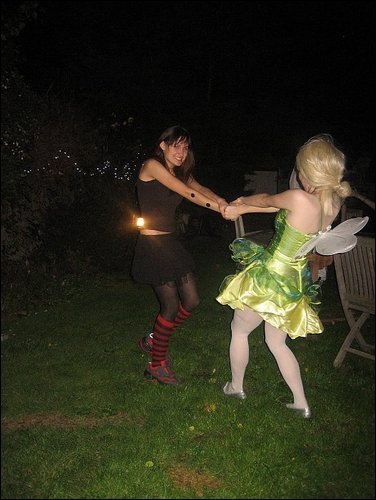
Spinning in my ladybird costume, Halloween 2008 with a charming Tinkerbell

Since then I have seen several crushed ladybirds on the pavement.

But yesterday, while I was swimming in the Danube, I spotted a ladybird in the water.

Without thinking, I scooped it up into both my hands and brought it to safety.

Even more impressively, today I ate a falafel sandwich and nothing about it or my surroundings offended my sensibilities.

Vienna: “Clocking” In

It’s 8 am and the Danube is the colour my father’s Wellington boots used to be. I’m sitting by the window in my pyjamas while LSB sleeps curled to the side with his mouth slightly open. By the riverside, joggers in white hot-pants are battling the heat. Every so often a crow takes flight and I watch its shadow glide effortlessly over the water. A white cruise ship had just gone by. In the distance is a gigantic Ferris wheel.

View from where I’m writing

LSB and I arrived in Vienna on Saturday evening, worse for wear. We had spent the previous night in a cocktail bar in Kreuzberg and arrived home at 5 am to finish off the packing, only to rise again at 7, to make our way to the train station.

Four months of my life amounted to two suitcases and five bags. I had winter coats, summer dresses, an obscene amount of books and sentimental rubbish I cannot throw away. LSB was heroic in lugging so much of my existence on his shoulders.

We sat in a stuffy train compartment with a German couple and their teenage son. I held a poorly-packed plastic bag on my lap and fell asleep, uncomfortably, with my head resting on a damp towel at the top of the bag. I jolted awake suddenly, with the terrifying sense that everybody’s attention was directed upon me.

I became aware of a continuous beeping sound, the kind associated with either a bomb or a digital timepiece. “It’s coming from around here,” said the woman, body-searching her teenage son but with her eyes still on me. I maintained a rightful expression of innocent curiosity. I peeked into my bags and shook my head quizically, keen to share in the bewilderment but even keener to return my head to my damp and malodorous pillow. I was positive I hadn’t packed a bomb.

The beeping continued and so did the search. The woman put her ear under my seat and said, “There! It’s coming from that bag.”

With the last strength my feeble arms could muster, I swept the offending carrier onto my lap. The beeping became louder. LSB, who at the time had been in the corridor by the window admiring some charming north German village or other, peered into the compartment at the commotion. He looked bemused.

I rummaged awkwardly through loose batteries, postcards, underwear and socks. When I saw LSB, I motioned for him to come over. I dumped the bag on him, he left the compartment, I slid the door closed.

Silence.

The German couple looked at me kindly and tried to mask their triumph.

A little while later, LSB returned, clutching a black alarm clock which I could have sworn I had never encountered before.

The couple laughed, their son smirked and I protested feebly, “I’ve never seen it before!”

On mature reflection, I realised it was the alarm clock my mother had packed for me before I left but which I hadn’t used since my very first night in Berlin, when I decided it was defective.

In four months, the alarm clock had failed to announce its continued existence. Evidently, I had stuffed it in the corner of a bag and forgotten about it, relying instead on the unhygienic house cat to wake me up. I can only assume that it had been stewing, furious at my neglect for the past four months, and had plotted the whole thing.

While I have been writing this, LSB has woken up and fallen back asleep. Every so often, he scratches the back of his leg with his other foot. Now on the river bank, two dogs on the same lead have been let loose by their owner. They are playing together and getting themselves in a tangle. And a lady in blue pants is jogging by.

Inclined to Recline in Vienna

LSB’s feet

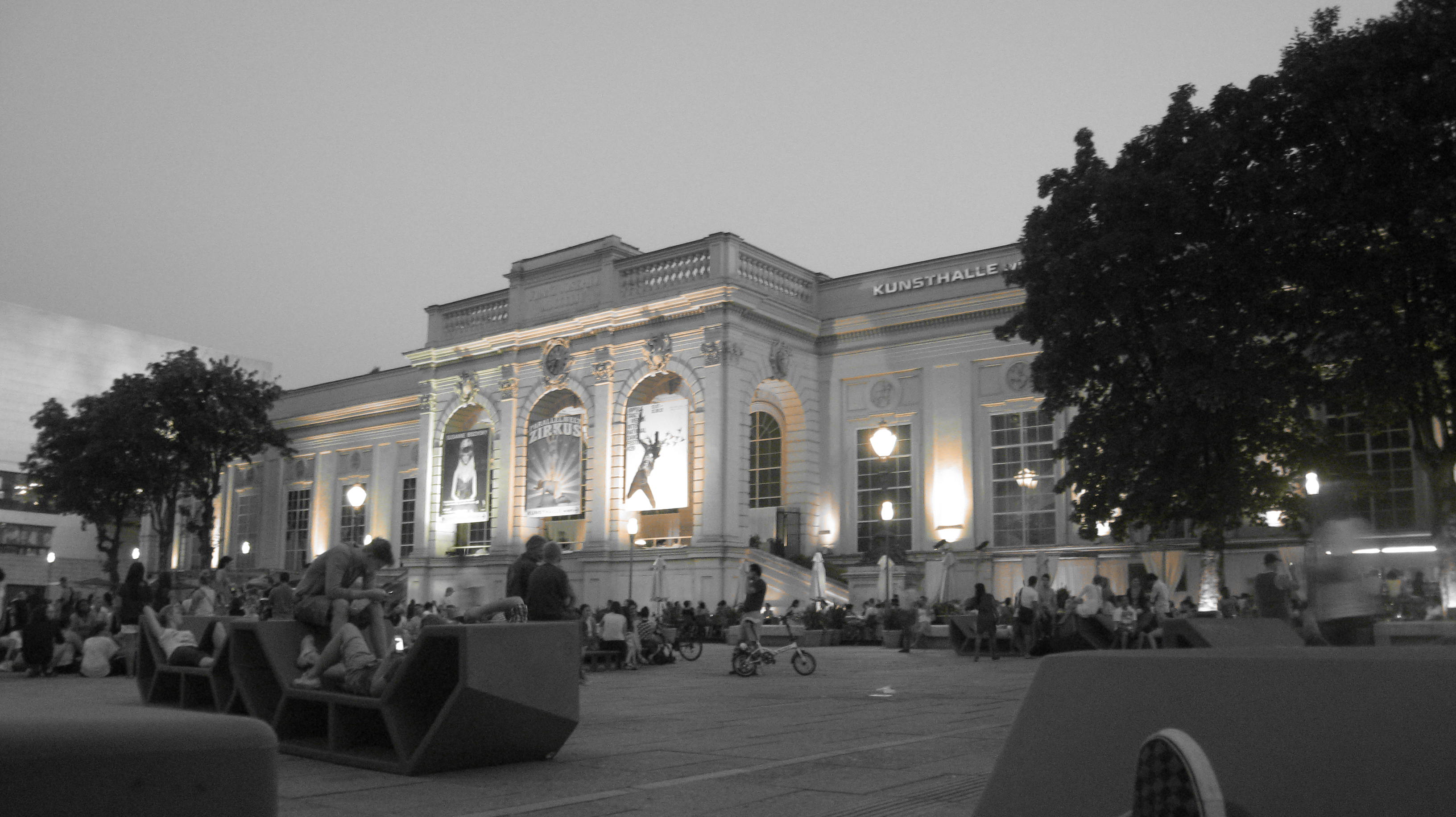
On Friday, LSB and I packed my life into seven bags and fell onto a train. After a grubby, sweaty and exhausting journey, we arrived in Vienna. The last time we were here was in the summer of 2009 when we fell in love with the city’s implausible majesty. The highlight of the trip then, and now are the “etsies” in the museum quarter. “Etsies” are bright-coloured spongy loungers in various shapes which have been a feature of the city since 2002. They change colour from year to year. You can sit, lie, climb or sleep on them. LSB and I curled up on one tonight, holding hands and reading our books. We must have looked insufferable. After a little while, my bum began to hurt and we went home.

Football in Berlin: Flat Out Support

Berliners tell me that the 2006 World Cup was the first time since the war that Germans dared wave the national flag. Now you can see them dotted on balconies, slung out of shop windows and on the tops of cars.

Alone in Berlin: Part Two

In late February Berlin was brown and the air was cool. I saw a Chinese man standing by the bin at the entrance to my underground station every morning. He had a blank face and kept a neat shoulder bag slung over his body. At first, I wondered who he was waiting for. Then I learnt that he sold cigarettes, which he kept in tight plastic packaging in the bottom of his bag.

He never moved, but some days when he was feeling bold, he would line up three or four packets of Marlboro on the edge of the bin to eliminate any doubt about why he was there.

His brazen passivity intrigued me. I developed the involuntary habit of staring him right in the eye as I turned to go down the steps to the platform.

I sat in a corner on the eighth floor of a silent office. It was a five-minute walk from the Brandenburg Gate. When it became warmer, I would sit by the Spree at lunchtime and watch the tourist boats go by. Sometimes I would read or listen to music, but mostly I just sat.

One night my flatmate came home and said “We’re going out.” It was shortly before midnight. He took me to a rundown sports hall. Inside it was dark. Illuminated figures were racing across a badminton field, firing glow-in-the-dark shuttlecocks at each other. It smelt of sweat and alcohol. Even the nets glowed. Afterwards, a girl offered me a sip of bubble tea. It tasted like lentils and bath salts. Now I’m on the mailing list for “Spedminton,” a sport you play in the dark, while drunk.

Another time, I went to the punk bar down the road. Men and women in their forties, wearing leather jackets and vacant expressions, sat in clouds of smoke. They drank beer and had conversations about life and sometimes death. In the corner of the bar, completely out-of-place, was a foozeball table. My flatmate directed me towards it. I played so badly that his friend told me I must be tired. I thought I was at the top of my game.

At the weekends I went walking in the city. I watched teenagers nodding their heads to beat boxes, homeless men reaching into bins and Roma girls with clipboards approaching tourists, always with the same high-pitched greeting, “Speak English?”

My flatmate asked me to wipe the tiles dry after I showered. He had a special scraper for it. I would stand there, naked and dripping, pretending I was a window cleaner. A few weeks later, in a moment of rebellion, I simply stopped.

Overnight, I became a journalist. I made phone calls to surly trade unionists, government representatives and natural history museums, from a little sound-proof glass box, where my colleagues couldn’t hear me.

Once I met a man who thought I was more important than I was. He invited me to his office, which overlooked the Brandenburg Gate and he said, “So are you going to become a TV presenter?” I looked at him incredulously. And he said “You have the personality for it. You’re charming.” I told him that I was shy and didn’t want to be famous.

The dizzy feeling of accomplishment I got from publication made me afraid. I learnt that I am equally scared of success as I am of failure. Sometimes to atone, I would buy a newspaper from the crippled homeless man on Friedrichstrasse. I made a point of reading it on the way home, in case the emptiness of achieving my dream overcame me.

When Dublin Meets Berlin

There was a delay on one of the underground lines in Berlin a few weeks ago because a homeless man had fallen asleep on the tracks. Security personnel rushed to the scene and the man was woken up. Bewildered, he growled at the passengers staring at him. He was escorted off the platform but it all took time. There was a short delay before service resumed.

Meanwhile, a public announcement had urged passengers to take alternative routes. I got on another train which would take me close to where I needed to go. Sitting opposite me were two little girls, aged about nine and eleven, who had also been waiting for the first train. We’d barely been on the second for five minutes when it was announced that “Service has now resumed on the U8.”

The smaller of the girls pursed her lips and shook her head, disgusted. “What an absolute joke,” she said. “Why didn’t they announce that it would only take five minutes to clear the line?” The other rolled her eyes and sighed. “This kind of thing is always occurring. It’s a farce.”

My jaw dropped. I couldn’t believe what I was hearing. First of all, the transport system in Berlin is the single best I have ever encountered. And second, here were two tiny German girls complaining about bad service in language so adult and earnest that it was comical.

This, I thought is the difference between the Germans and the Irish.

I imagined a similar situation in Ireland, where a conversation might have gone like this: “Jaysus, the poor fella. Did you get a look at him? Lucky somebody saw him and he wasn’t driven over … Jaysus! Sure we’ll be fashionably late. It’ll be grand sure. We’ve a story to tell.”

As our economy wilts and theirs prospers, it’s worth examining what makes the Germans German and the Irish Irish. I’m in a rather convenient position to do so, being half of each.

People here tell me that when I begin to complain habitually about everything, I can be called a “Berliner.”

Complaining in Germany, as in Ireland is a national hobby. The difference here is that complaints are taken seriously.

The reason that complaints are taken seriously is that responsibility is too. When you go to a ticket vendor or to buy a hot dog, you’re served with the same level of attention as you are in a bank or a lawyer’s office.

Some time ago, I was working on a story about low wage workers and got talking to a middle-aged woman selling hot dogs on the street. “I take my job seriously,” she told me, after she spoke perfect English while serving some American tourists. “I want people to enjoy their food.” She was earning about six euro an hour and was finding it hard to make ends meet.

Sincerity too is an integral part of the German mindset. If you say “We must meet up for a coffee. I’ll give you a call in the next couple of days,” it means that you will certainly arrange a date within three working days.

Shortly after I moved into my apartment, I made my flatmate dinner. It was vegetarian Shephard’s Pie and I was worried that it hadn’t turned out well. As we sat down to eat it, he took a few mouthfuls and said nothing. I was nervous. Perhaps it wasn’t to his taste. I waited for a while and then tentatively asked whether the food was alright.

“It’s delicious,” he said.
“Then why didn’t you say anything?” I cried.
“Well I had to wait to taste it properly,” he said. “It would have been insincere to say it was nice straightaway.”

I thought about that for a long time.

While the Germans are responsible, reliable and sincere, the Irish are compassionate, humorous and wily.

When my parents visited me recently, they were a little slow in buying their train ticket at the machine. A woman in her twenties standing behind cursed at them and shoved them out of the way. I would like to think that in Ireland, she would have given them a hand. For all its Celtic Tiger madness, Ireland has remained a place, where, as my mother so nicely puts it, “eejits and eccentrics are well tolerated.”

Before I moved to Berlin, my boyfriend made me a mix tape which included two anthems to remind me of home. One of them is the speech Enda Kenny made to welcome Barack Obama to the country and the other is the lament, with mandolin accompaniment, performed by Joe Duffy following Thiery Henri’s handball in 2009, which crushed Ireland’s dream of qualifying for the World Cup.

The latter is ridiculous and hilarious and features lines such as “Will You be Out of Favour To Sell Gillette Razors?” and “It’s a pity for the South African nation without us at their world celebration.” Enda’s speech on the other hand, is so full of passion and pride that it’s hard not to feel a pang of affection for the little nation, which despite falling to pieces, has still managed to maintain a healthy dose of national pride.

While the Irish might champion mediocrity, they do it with charm. Ireland is like the child in the psychological experiment that gobbled up the single marshmallow, despite knowing that if it had waited, it would have received two. Germany is the child that waits for the second marshmallow but wonders whether, by the same principle, it would make more sense to continue to wait rather than to enjoy the two already gained.

The Irish are wily and endearingly naive. We wouldn’t quite call ourselves dishonest but we’d settle on being creative with the truth: the stuff of brown envelopes, dodgy property deals, shifty politicians and the Catholic Church. On the other hand, it’s also the kind of opportunistic cleverness that bagged Enda a meeting with the Chinese Vice President last February, made Jedward into national icons and allows some to hold fast to the belief that we really, really, really can win the Euros.

If we could learn accountability and responsibility from the Germans and teach them to kick back and remember that everything – probably will be grand in the end – we’d both be better off. Instead, they’ll be bailing us out for decades and we’ll be telling jokes to numb the pain.

Alone in Berlin: Part 1

At first it was exhilarating.

I wanted the hostel, where I stayed the first few nights, to be my home forever. I loved the anonymity of the place – the backpackers waiting for a leftover packet of pasta to boil, the discarded tea bags, the little laminated signs asking travellers to consider the environment before throwing away their rubbish.

There were two Asian-looking girls in the kitchen one evening. One had an American accent, the other was British. They had met at the hostel and now they were friends. The American wanted to go to “school” in Europe. The other nodded and made dinner.

Alone in Berlin, reading Alone in Berlin

In the evenings I bought a falafel sandwich or a slice of pizza on the main street which was soon to become my neighbourhood.

One morning — my first in Berlin, I took a bus tour of the city. On the top deck, a round lady with red-painted lips and peroxide hair gripped a microphone and gave a commentary of the city in English that was so broken that a tourist behind me muttered that he had more chance of understanding German. Her smile was fixed to her face like a stubborn mole, her face was wrinkled. If she had had no folds on her face, she would have looked like a doll. I knew she had grown up in east Germany. She learnt Russian at school. No west German tour guide would speak so little English.

I scribbled down the names of places that looked interesting from the bus. I saw pink water pipes all over the city, the president’s house, the parks, and a beautiful square.

I found my workplace and my heart jumped when I saw that it was five minutes away from the Brandenburg Gate. I found a little photo booth and got a picture taken for my student travel card. I followed the instructions for getting a passport photograph taken. “Don’t smile” said the machine. “You must not tilt your head, or obscure your face with your hair.”

I look so stony in the picture that weeks later, when the secretary at Spiegel looked at the card she said “but you are so cross!”

After I checked into my hostel on that first night, I went out to try to find the apartment I would be moving in to.
It wasn’t far from the hostel. It was late February and it was dark. I approached the flat from a direction I never walk now. I found the shoe shop and the children’s book store that Google Maps had promised me. The street was quiet and I was alone.

Obeying The Machine

I found the number and glanced up at the building. It was too dark to see anything.

I walked past a church, back to the main street. Next to my hostel was a photocopying shop and a video store. All rentals one euro. There was a large adult movie section on display in the window.

The day before I moved into my new flat, I met a book vendor outside Humboldt University. He had wild white hair and a black hat. He said: “You don’t think I have mornings when I wake up and say ‘Fuck this shit. I don’t want to stand at this fucking table selling books all day? And then you know what? I see children laughing and playing and nothing matters any more.”

I nodded at him, I think I smiled. I thought we were the only two people in the city. The sky turned midnight blue and the TV tower was lit up in the distance. I bought a book called “Der Steppenwolf”. The cover is blue and there are bits of paper still stuffed inside a page in the middle of the book, where I stopped reading it.

As the lights came on and I got into a grubby underground train, something danced in my brain. Now I realise it was the taste of freedom.

Bag Yourself A Sister Like Mine

“What does this mean?” I said, thrusting an official letter from the Federal German Post Office at my flatmate.
His eyes darted from left to right.
“You have to go to customs to collect a parcel,” he replied.
“Yes, but why?”
“I don’t know.”

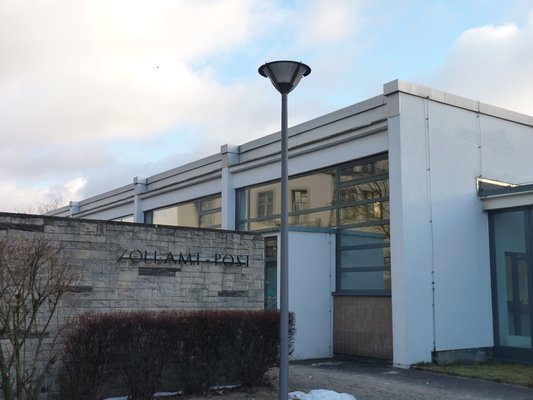
The customs office was far, far away. When I got off the train I saw a motorway, some industrial buildings and a pair of old ladies smoking. It was cold and damp.

As I approached the dreary concrete customs office and a wind began to blow, I began to feel more and more like I was at home. I joined the queue. Two men were working behind the desk. Another fifty or so people were sitting with little tickets, waiting for their number to be called. A waft of inefficiency filled the air.

image source: http://www.yelp.de

It came to my turn. I handed the officer my documents. He had a crinkled orange face and a snide mouth. “Do you know the sender?” he asked.
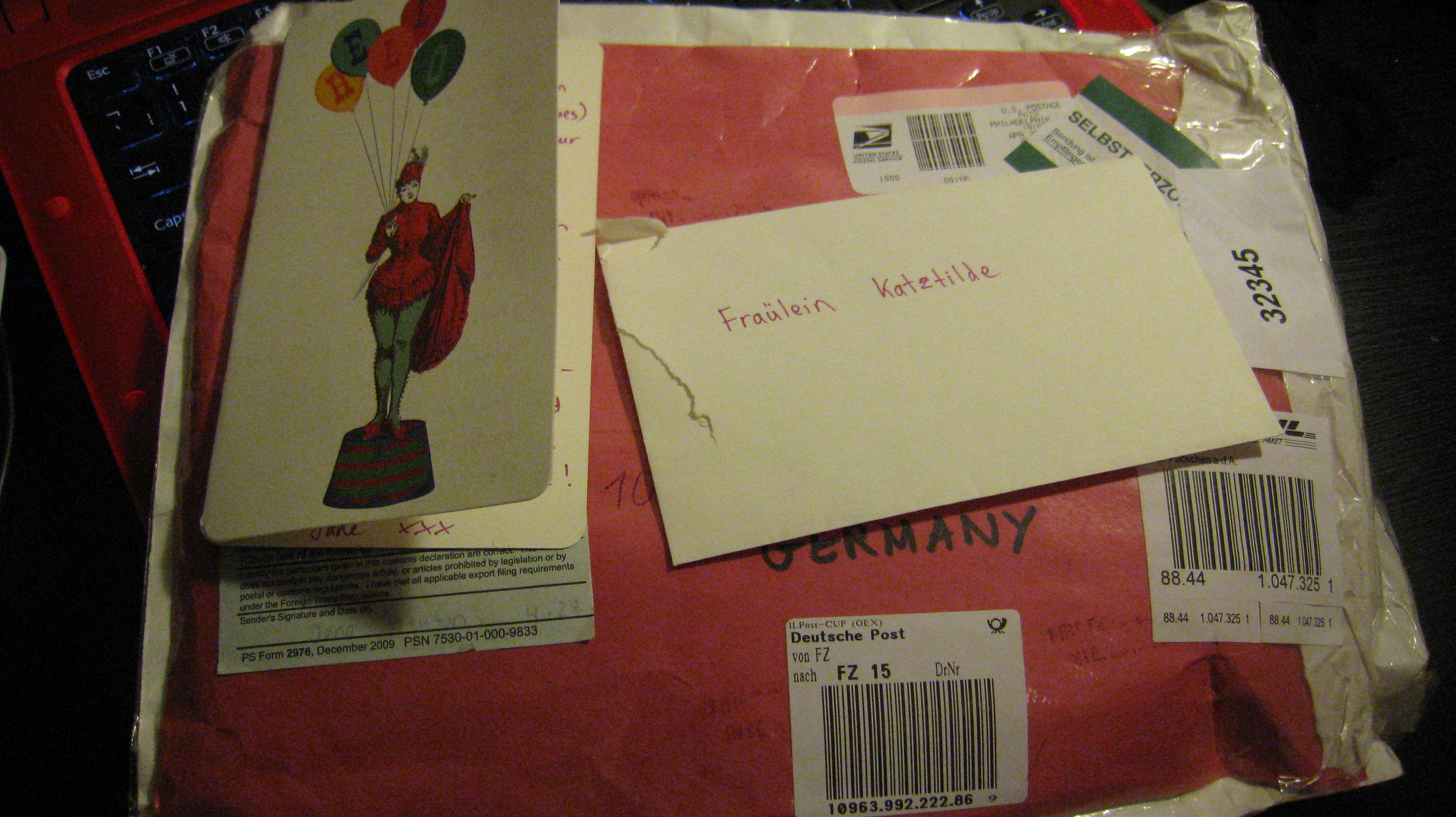
I did. My lovely sister, who is a geneticist in Philadelphia and says she analyses butt samples for a living, had sent me a parcel back in April and was dismayed that it had not arrived yet.

“What’s in the parcel?” said the man gruffly.
…..
“I don’t know,” I replied. “It’s a gift.”
“Well I don’t know isn’t going to get you very far, is it?” he said.
“I’m sorry,” I said “but how am I to know what is inside the parcel?”

He narrowed his eyes. “We need to know what’s in the parcel.”
“Okay,” I said with false breeziness. “I’m sorry, but I’m not from Germany and I’m not familiar with this system. How does it work?”

His lips flickered with hatred.
“Do you think you’re the only one who needs to be served today? Look behind you. Look at the queue.”
He sighed and rolled his eyes.
“Okay,” I said. “I’m sorry, I just don’t know what’s in the parcel.”
“What could it be then?” he said with dull resignation.

I paused. He fumed.

“I’m sorry I don’t know. Maybe it’s a piece of clothing, or some chocolate. I really don’t know.”

He scribbled something down and issued me with a ticket. On it was printed the number 240.
“It’s a minimum two hour wait. Do you want to accept the parcel?”
“Of course!”
“Well sit down then.”

I took a seat beside a black man, who was swinging his legs with boredom.

I looked at the clock. It was twenty to four. “I’ll chance it,” I thought to myself.

I got out my phone and dialled my sister’s number.

“Hello?”

“Nothing has happened. There is no emergency. I’m sorry for calling so early.”

“Okay?”

My sister, who was settling into a day’s work in her laboratory listened patiently as I told her that I was in the middle of nowhere and that officials were demanding to know what was inside her parcel.

“It’s a handmade bag,” she said.

“Aw!” I said. “That’s so sweet! Thank you so much.”

“Way to ruin a surprise!”

“I know!”

I rejoined the queue.

This time I got the other official.

“Hello,” I said. “I was talking to your colleague earlier.” (The latter snorted over, “It’s true.”) “I have just called my sister in America. And I can reveal that there is a handmade bag in the package.”

He looked at me. Silently.

“Does this help you?”

“It is too late,”he said. “You have been issued with a number already. You must wait your turn. When your number is called, you will open the parcel with a knife in the presence of an official.”

I returned to my seat. Thankfully I had Greg Baxter’s book “The Apartment” with me.

Every thirty seconds my reading was interrupted by a ping announcing a number.

After some time, I became puzzled. The numbers were not being called in chronological order.

I glanced at the noticeboard directly in front of me. Pinned to it was a sign which said “Customers should note that due to our organisational system, numbers may not be called in chronological order.”

Pot luck, then.

One of the girls in the queue was being told that she had to pay €75 tax on clothing from America which she had bought online. She was confused and dismayed.
“That’s the rules,” said the official.

Suddenly there was a ping and the number “240” flashed on the display board. I jumped. Only one rather than two hours had elapsed since my confinement.

I rushed through a little white door and found myself in a large space full of long tables. I made my way to station number 5. The official with whom I had spoken to second was standing behind the table.

The table was the kind that you sit on with one or two others when you are in secondary school. On it was nothing but a tiny package with my sister’s characteristic handwriting on the front.
I let out a little squeal of excitement.

The official handed me a knife.

“Open it.”

I put the knife down and tore it upon with my bare hands.

An envelope and a little package covered in bubble wrap slid out.

I unwrapped the bubble wrap carefully.

My heart skipped. In my hands was the most adorable and charming of cloth bags. It had a brown strap and buckle and the pattern was Berlin-themed. There were little green signs with the names of the city’s famous stations and scattered between them, were little pictures of umbrellas, clocks, suitcases and trains.

The official’s face changed.

He smiled. “That’s lovely.”

“My sister made it,” I said, still gasping.

Then he looked at the envelope. My sister had written “Fraulein Katztilde” on it in purple pen.
Urban U-Bahn Chic

“That’s sweet,” he said.

“I know!”

“No tax payable. Have a nice weekend.”

Chocolate Fesch

“Really!”

I didn’t wait for an answer and dashed outside clutching my precious bag.

I opened the envelope on the train. Apart from all the other lovely things she had written, my sister also finally provided unequivocal proof of her genius.

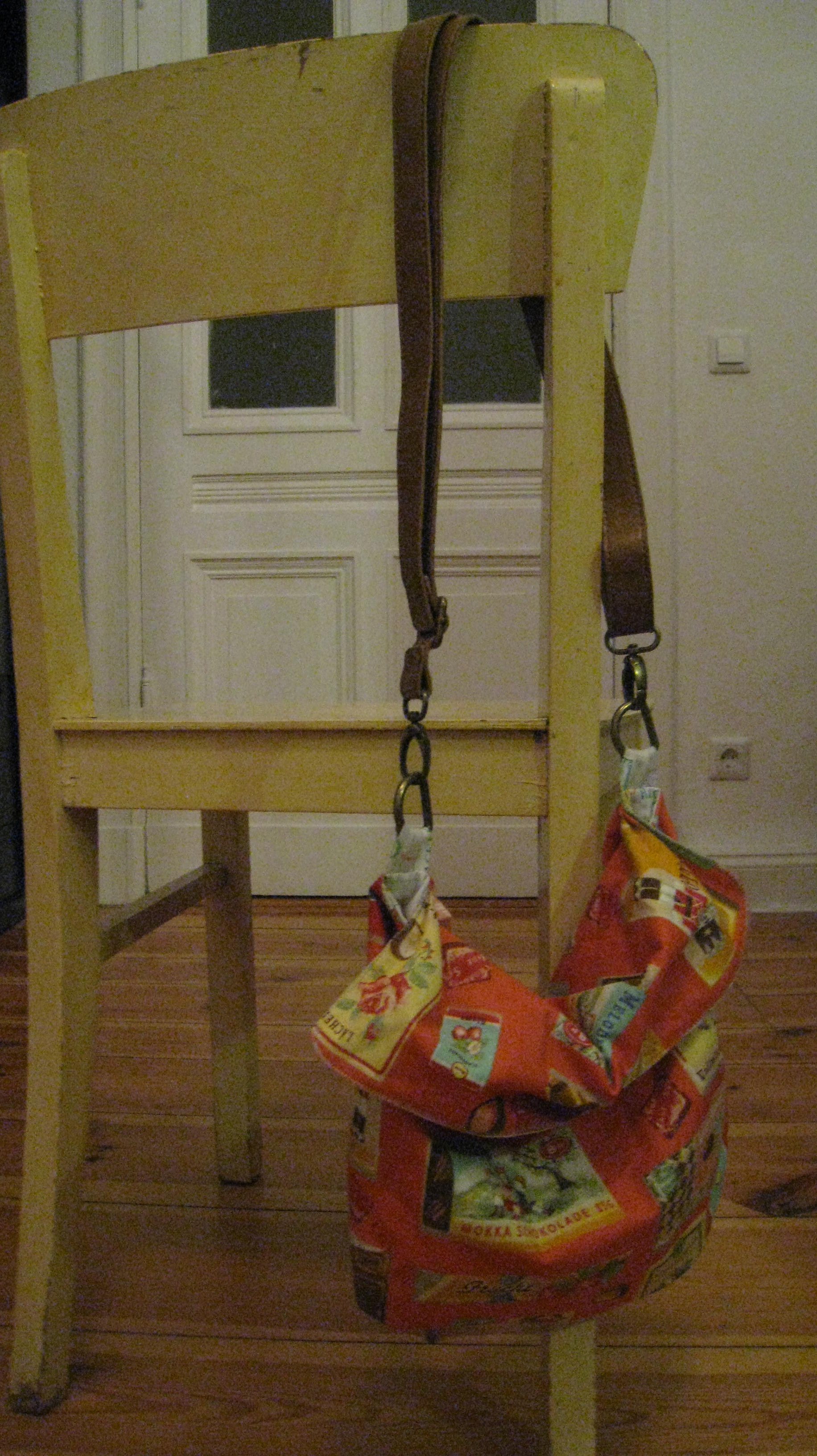
“I couldn’t decide which fabric was better so I made the bag reversible – just turn it inside out to go from urban U Bahn chic to traditional chocolate Fesch.”*

I looked at the red fabric on the inside of the bag, which featured lots of pictures of traditional German chocolate from times past.

Somehow, my sister, had created a two-sided magnet-drawn fastener which would allow me to sport two super-cool German-themed bags in a city known for both its trendiness and efficiency.

So, not only is she a talented analyser of butt samples, terribly witty, exceptionally attractive, kind, sweet and thoughtful, my sister is also a queen of crafts.

So, if you are reading, Jane Franziska, thank you so much. I absolutely love it. You’re a complete ledgeBAG.

*Fesch is a German word meaning something like “trendy,” which the Ferguson family finds amusing.