Do you mean what you say?

Remember Senator John McCain? He- that -promoted -Sarah Palin -to -Vice- Presidential- candidate? And daughter Bristol to equivalent reality TV stardom?
Well, I’m happy to say that this month marks the two- year anniversary of his inclusion in my Undergraduate essay of the title The Field of Pragmatics is concerned with how people manage to mean more than their words seem to say. Discuss how they do this, with reference to Grice’s maxims.
It was a dull essay, believe me, but Senator JMC managed to spice things up about 1500 words in.
You see, one day in 2008, when JMC was on his campaign trail, an elderly lady supporter petitioned him for a quick word about his no-hoper opponent, Barack Obama. She told JMC proudly that she had “read about him”. JMC nodded in sympathy. By God, hadn’t he had to do his own reading up on that guy. It was the lady’s next utterance that scored the inclusion in my essay. She asked simply; “he’s an Arab?”, to which McCain- swiftly removing the microphone from under her- replied “no, he’s a decent family man … and citizen”.
The whole interchange was a delight to me. It justified the discipline of pragmatics as the study of meaning beyond words and made clear to me that language is as much about what’s not said as what is. Of course, the obvious implication in this interchange is that being an Arab and a decent family man are mutually exclusive. Were this to have been made explicit however, JMC would have been immediately asked to answer to accusations of racism. As his response was veiled in an (arguably irrelevant) compliment to Obama’s family values and citizenship (oh, the irony!) however, he faced no such charges.

Paul Grice was a linguist with a mission. He wanted to create a taxonomy of the unspoken rules that govern the kind of communication that generates meaning beyond words. You can read all about his maxims here but in short, he believed that successful communication relies on adherence to a few basic rules: tell me what’s true, tell me what’s relevant, don’t flood me with information, be polite. So, when I ask you whether you like my new haircut and you tell me that you think long hair really suited me, I can assume, based on the maxims of relevance and clarity, that you are politely answering “no”.

Saying what you mean is so rare that shows like Curb Your Enthusiasm exploit it as a particular kind of comedic art. Sugar-coating our utterances and beating about the bush are so ingrained in our psyche that they have come to represent what we consider civil society to entail. An insidious underbelly is revealed however when we consider the larger-scale effects of such rigid use of linguistic decoration. As recently as last week, the White House claimed that Bin Laden was killed “after a fire-fight”. What emerged later however, was that he couldn’t in fact have had any part in the fire-fight, since he wasn’t armed. When we hear the term “firefight” it’s fair to assume that both parties (now there’s an incongruous word) exchange fire, isn’t it?

Things don’t seem to go so well for those who do say what they mean though. Poor Old Gordon Brown had a terrible time during his campaign trail last year when he called a lady a “bigoted woman”. Even though she was.

At the end of King Lear, Edgar reminds us to “speak what we feel, not what we ought to say”. Respect to Mr Brown for favouring William Shakespeare over Alistair Campbell.

My Juvenilia and The Opening Line That Wasn’t

I was 16 and practically the same but for a hideous mane of long, straggly brown hair with orange highlights. I had just finished struggling through The Satanic Verses. I’d taken it to Germany where I spent many a journey on slow trains, puff-puff-puffing their way through the Bavarian countryside, with the battered book on my knee, trying to make sense of it all. Bizarrely-named angels, and evil and the Muslims didn’t like it: it went something like that. Still though, I used torn up bits of receipts from purchases of Puffreiss Schokolade in Müller to mark interesting passages, which I later transcribed into a notebook, in case I ever decided to emulate Rushdie’s descriptive style, which I must have assumed would be a piece of cake.

My literary aspirations began early in life; in fact they were very much present before I could read and write. At the age of three, I was inspired by numerous attempted break-ins to our home to compose my first work of non-fiction, which I titled “The Book of Burglars”. It was a no-nonsense guide to local criminals, which I penned with help from the local Gardaí, who had shown me an enormous, hard-bound book with an austere brown cover full of photographs of known criminals in the Rathmines area. I illustrated the book interpretively and filled its pages with line after line of elaborate pencil swirls, which I supposed represented the words I was imagining writing. In hindsight, it was rather a reasonable conclusion to draw, given that I had witnessed countless adults sign their name with a scribble that bore no resemblance to the letters of the alphabet of which I had by then become cognisant.

When I subsequently added literacy to my repertoire, I concentrated my efforts on the story of Spook, a castle-dwelling ghost-child, who gets separated from his parents only to be re-united with them at a banquet, where he enjoys (what in my 6-year-old eyes was) the ultimate consolation prize after an agonising ordeal: a drink of 7Up.

As I turned nine and became politically aware, (where such consciousness has since departed is anybody’s guess) my literary efforts were directed to a novella on the subject of the war in Kosovo. Alina’s Story told the tale of a girl and her family struggling to come to terms with the effects of ethnic cleansing in her village. It was written as part of a class project and my older sister of 13 kindly agreed to be my editor. Her decisions and re-writings may have been difficult to reconcile with my original vision, but I was convinced of her sagacity and the finished work is testament to her editorial skill.

Alina's Story, First Edition

When I turned 16, my hairstyle and literary interests took a new direction. I became immersed in the realm of the hypothetical and was in no small part inspired by Rushdie to create an unintelligible literary landscape of my own. It was my solipsistic phase, you see. I considered the predominant preoccupations of my life: self-loathing and the feeling of inadequacy and decided, delightedly that I would transmute these singular insights into a mytho-historical landscape. I imagined a people and land far away from mine and outside of the inconvenience of an established historical timeframe. These people lived in a country that looked precisely how I had pictured Rushdie’s India to be. They had inherited self-loathing, which was rooted somewhere in a bitter historical event (possibly a world war) which had generated, across generations, a learned guilt. I wrote 26 words of that epic work. I have lost the original to a large mainframe Pakard Bell computer but I had enough foresight to commit the 26-word opening line to memory. Here I admit it, for the first time to public view. It went like this:

The self-hatred of the Rahadan race was not ancient, but had existed long enough for the Purkhan family of four generations not to know anything else.

That line concluded my Juvenilia. Little did I know then to what my literary aspirations would amount: a paltry offering of my miscellaneous adventures to the blogosphere. Should have stayed in the genre of mythic-realism. Glad the orange highlights grew out though.

A Royal Flush

I imagine that just about now, a rogue-ish Prince Harry is pulling back his hand-carved mahogany chair, after a few too many gulps of Montrachet 1978, to deliver his Best Man’s speech. I can almost hear the tap-tap-tap of his silver spoon on the rim of his wine glass and oh, despite the royal fuss of it all, what I’d do to be a fly on the crystal chandelier; or indeed one of the couple’s three HUNDRED “close” (but probably only facebook) friends.. There’s nothing for it but to deflect my curioisity by pondering the following five nuptial nuggets:

1.Kiss me, Kate?
When William and Kate kissed for the second time during the balcony scene, one of the BBC royal correspondents commented that “She was game, he less so”. Having watched this scene repeatedly and considered the comment, I am convinced of its inaccuracy . As delightful as Kate’s putative enterprise is- when watched carefully- it is clearly William who initiates Peck Two, unless I am missing some subtle display of microexpressions?

2. Wed-lock?
It’s well known that changes in temperature cause the limbs to expand and retract and it’s only natural that beneath her poise and exquisite cherry-lipped smile, the Princess was experiencing immense physiological imbalance. It was an agonizing few seconds, but William did finally succeed in encircling Kate’s blood-starved ring finger with a golden hoop- but what if he hadn’t managed? Could he have asked little bro for a hand?

3. How many times had they practised their vows?
They fail – they endearingly fail – to keep straight faces as they repeat before the eyes of God what they have been stumbling over ad nauseum for weeks.

4. Is William’s receding hairline indicitative of his humility?
It certainly is. As Prince, he could have opted for all sorts of cover-up treatments, and the fact is, he didn’t.

5. Does Princess Catherine’s academic future lie in the history of meterology?
Unlike most disciplines, meterology shows a distinct bias for future events over retrospective analysis. It was widely reported that Kate’s first official statement was that she was “glad the weather held up”. I believe this sagacious remark to be representative of an impressive and rapid immersion into the royal fixation with the past. At the same time, it adds a little authority and glamour to the utterance: “Lovely weather we’ve been having!”

And now to return to Harry’s speech, which he should be wrapping up about now: God save them all.

The Wild West or just a quiet town?

A boy of 15 is standing still; thigh-deep in muggy river water. His pomona green Wellington boots are just visible beneath the surface. It’s about six in the evening. He is alone, and the town about him sleeps. He is fishing.

“That’s a lonely image”, I say as we watch him from a distance.

We are leaning against a stony wall by the riverbank. I am unzipping my camera case gingerly because I want to remember the stillness and his solitude when a blonde-haired man of about thirty staggers, stony-eyed towards us.

“Don’t you dare take my picture”, he yells. “You’ve no right, you sons of bitches. You’ve no fucking right at all”.

Startled, I glide the camera down and wait for him to pass. He is still ranting as he shuffles away. He is alone and mad maybe, if mad is a thing.

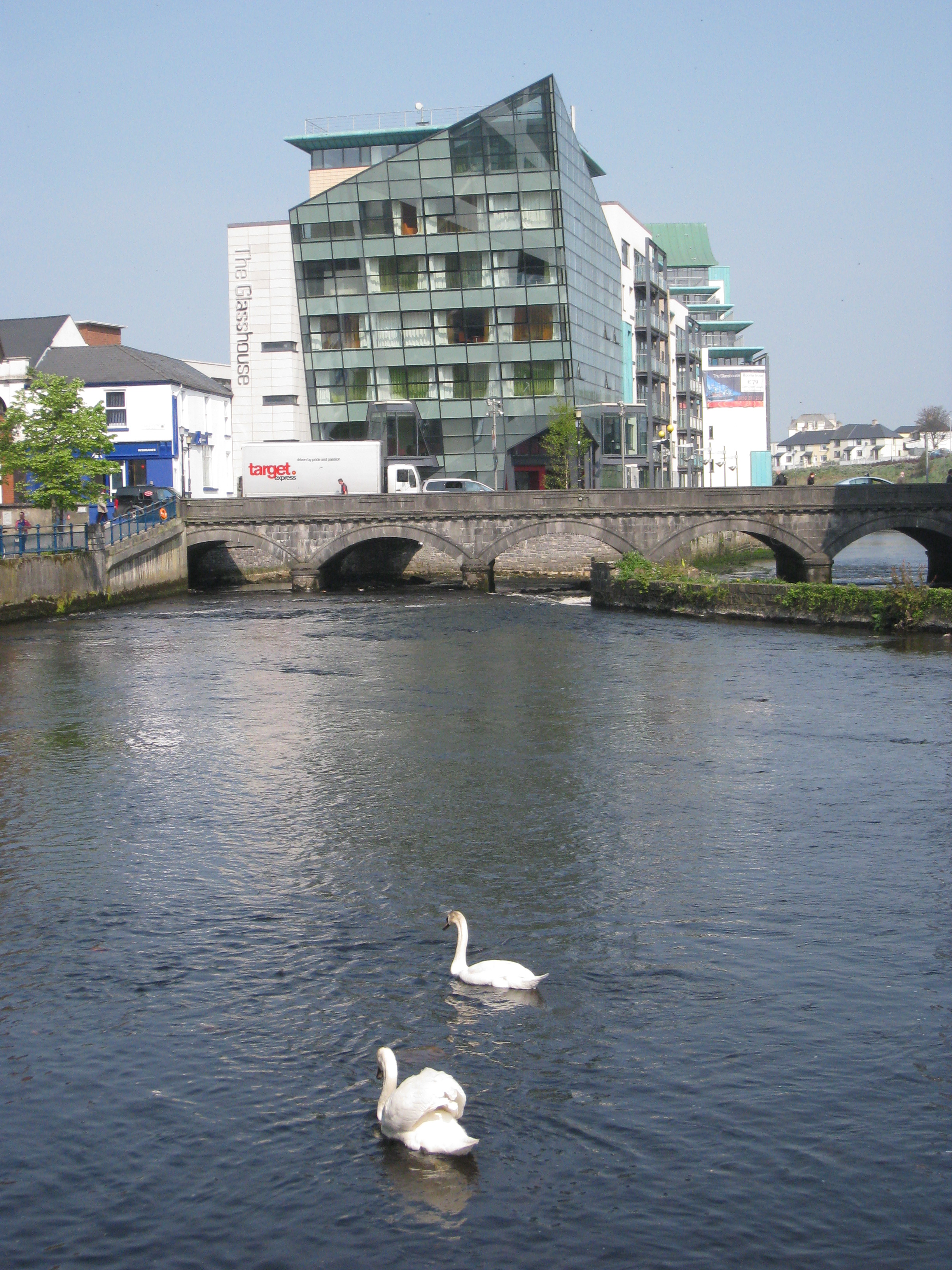
This was our first of impression of Sligo and the scene I have just described took place just metres away from the impressive glass structure of our hotel, which is shaped like an enormous boat, and obscures the little twist of the river as it stretches itself into an estuary.

The Glass hotel, Sligo

Later that night, after a walk through the town, Andrew asked, “so what do you think of it?” I paused, because this was our special break away and you’re not really supposed to acknowledge that it’s not perfect until months later, when you joke about it and realise that the other thought it was a bit shit too.

“It’s a bit dead”, I said. That was indisputable. As dusk settled, the town was lifeless but for a line of three drunken old men, smoking outside their local.

You’d have to move, if you were our age, we agreed, unless you were a farmer or wanted to work in a tattoo parlour, of which there were a disproportionate amount in the town.

We spent only three days in Sligo but it was long enough to perceive how fuzzy a boundary divides what is still and unspoilt from what has been forgotten.

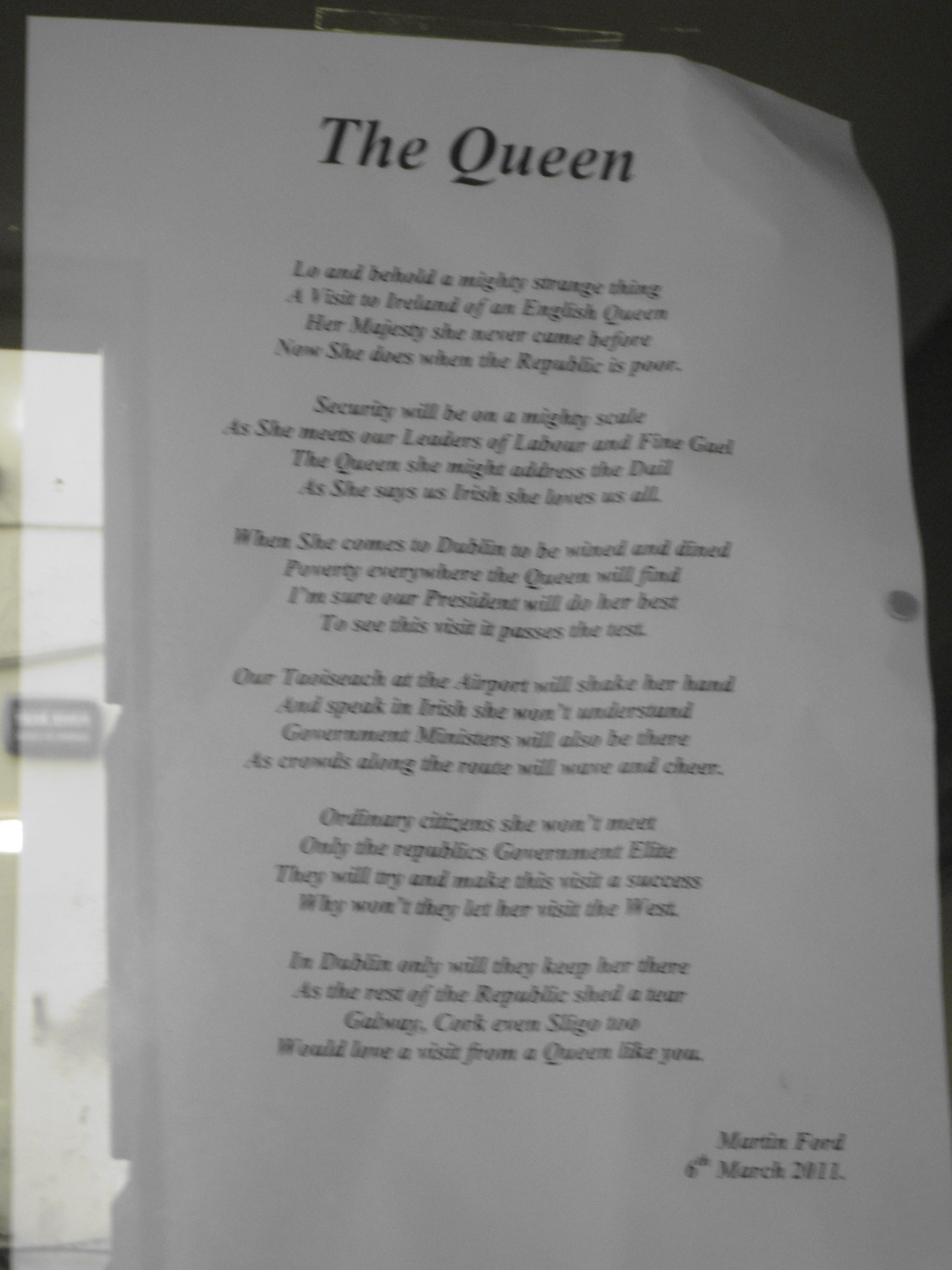
One of the first things we noticed in Sligo town, was a page stuck with blu-tac to the door of a bank (of all places!). It was a reminder of what’s been forgotten. A man, a poet, had penned some verses, on the subject of the queen’s visit. In the penultimate verse, he asked simply “Why won’t they let her visit the west?” And indeed the following day, as we climbed Knocknaree and observed the beautiful, rocky wilderness that surrounded us, it was hard to believe that this wild, unspoilt landscape wouldn’t be to Her Majesty’s taste. And yet, the way I had described Sligo town the night before as “dead”, was as if stillness were a sin.

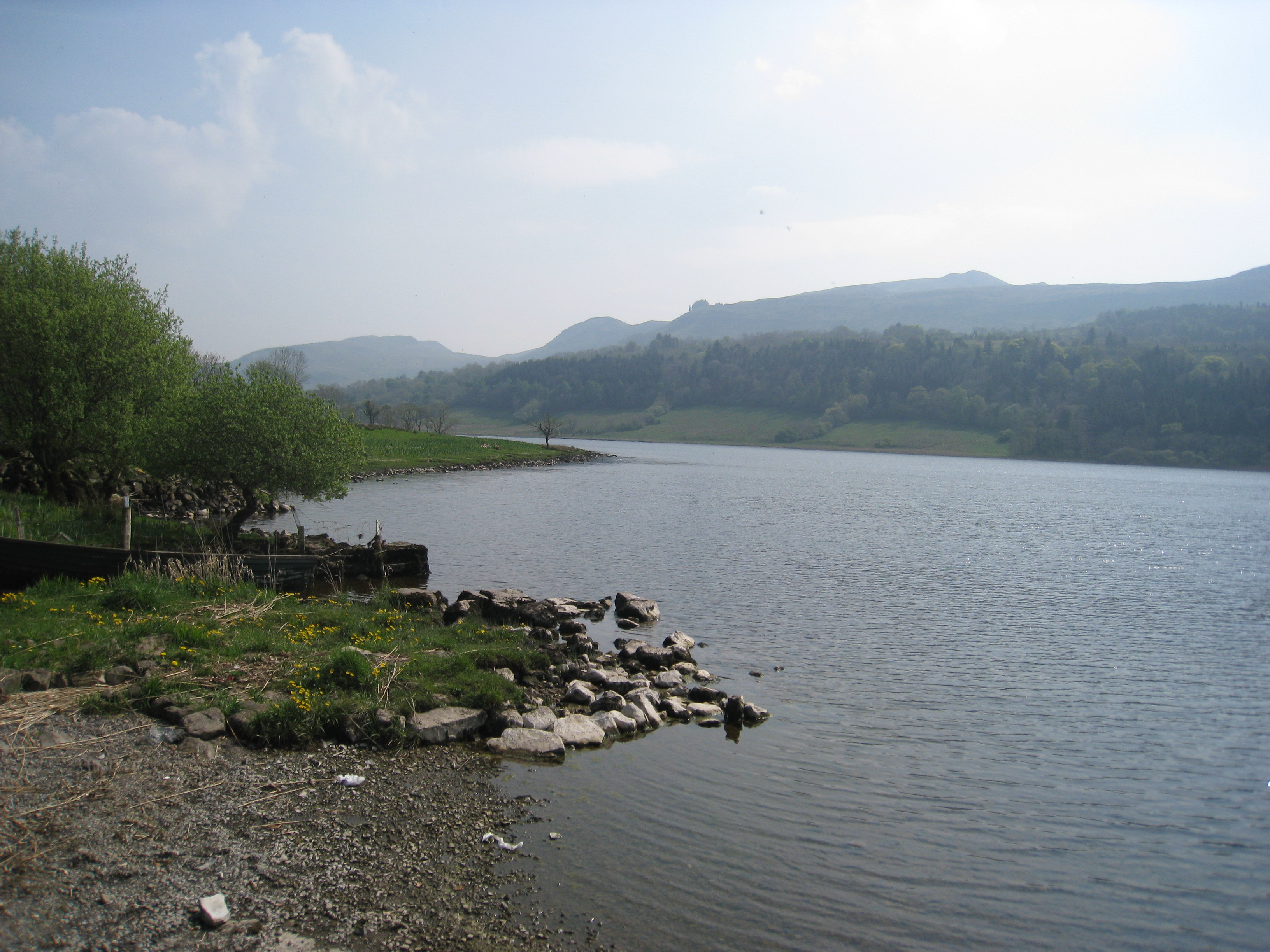
And when on our last day we visited the majestic lake at Glencare (strictly in Leitrim, but whatever) and the waterfall that inspired Yeats in his poetry we were cast under a spell. Beneath gleaming sunshine, the lake water lapped with low sounds by the shore and there was not a soul to be seen. It was beauty unbridled. It didn’t need the Queen’s visit to make it so. It was too beautiful for words or tourist brochures.
And looking back, I am glad that I never did take the fisher boy’s picture. Without that angry, lonely interruption to the peace, his stillness wouldn’t have resonated into prose.

The lake at Glencare

Plans for my retirement

Rupert - Image courtesy of prospect.rsc.org

For some time now I have been contemplating retirement with singular focus. My requirements are modest but particular. For one, I intend to continue living in the cosy, two-storey red-brick, rat-and-mouse-proof house by the canal which I acquired for next to nothing in my mid-to-late twenties during an immoderate slump in the property market. In spite of the life of reluctant employment I have led, I will not be lured by idleness. I will occupy myself with both a vegetable patch and herb garden and feed the fruits of my daily weeding to my guinea pig, Rupert and his rabbit friend, Baltishar, who will munch dandelion leaves in amicable silence while gazing at me adoringly.

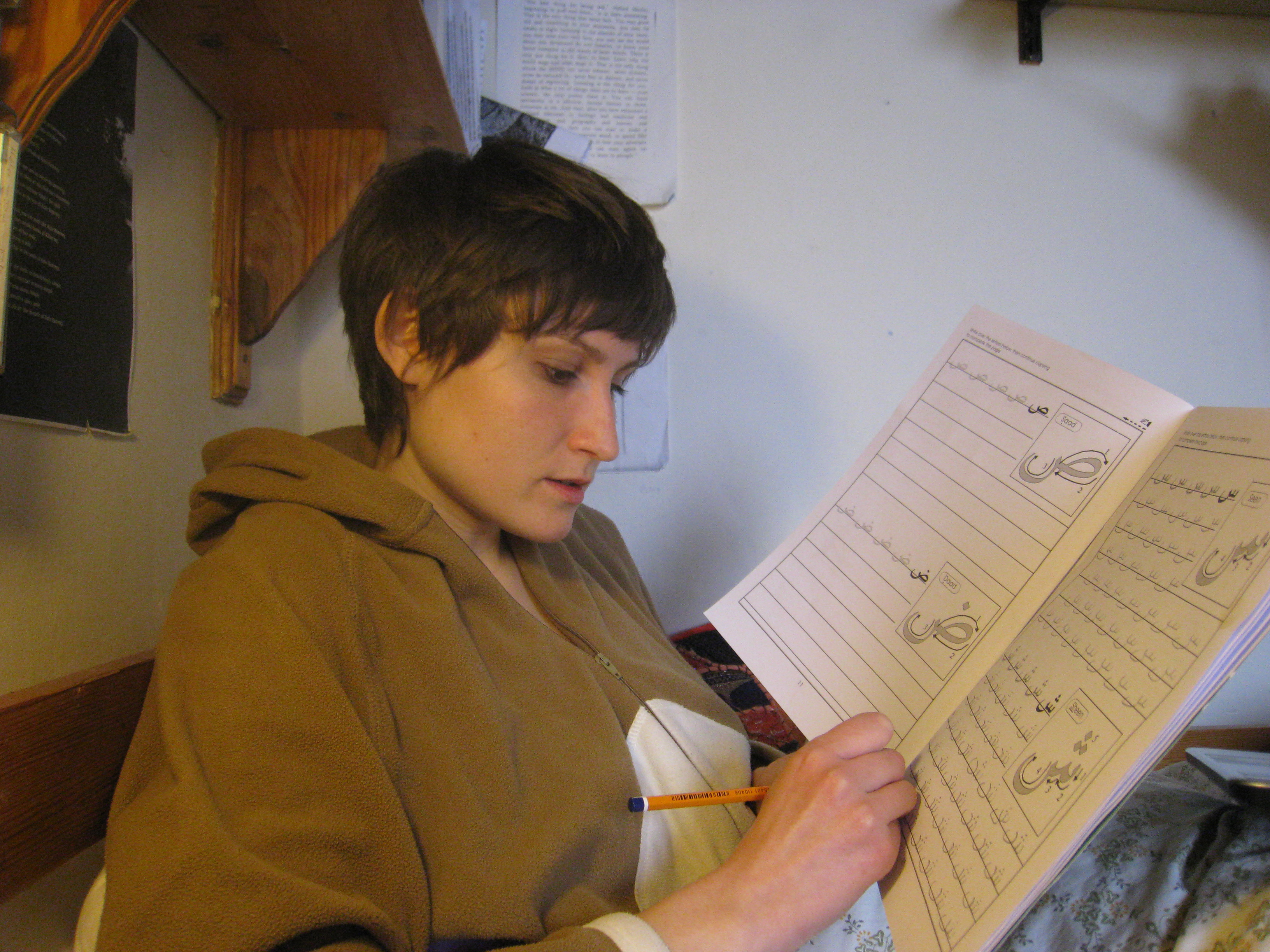
I will cultivate my faculties by daily mastery of the ancient Arabic scripts, having established firm mastery of the basics in quarter life. In the attic will be housed a superior telescope where I will while away long nights in contemplating the stars.

I willl engage in late rebellion by smoking hash for the first time, and by taking part in an extreme sport. Though it may seem uber-efficient- given my care-free lifestyle- I might take hallucinogens on the occasion of my first parachute jump. I will enjoy in equal measure my subscription to New Scientist and to Rolling Stone. I will engage in risk-taking behaviour on account of having achieved longevity, which fear of failing at, had held me back before. (Details of my quarter-life crisis can be found here). If LSB has had enough of me, I will become promiscuous.

Speaking of LSB, we are taking the train to Sligo in the morning for a jaunt in the northwest and for some time to ourselves, for the first time in aaaages. I hope that the mytho-poetic landscape there will inspire me to finalise plans for my retirement.

O’Connell Street: Was it for this?

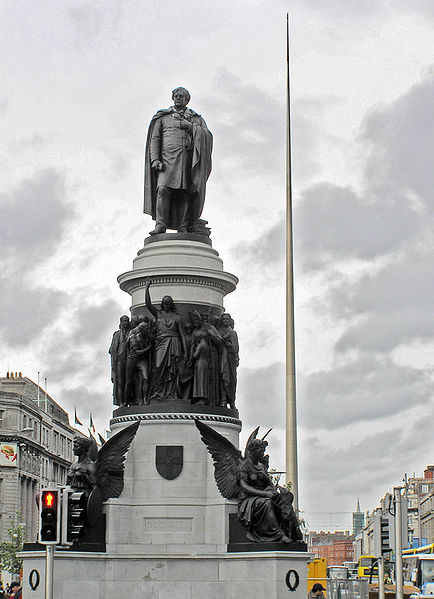
On cold, wet days I really feel for them; O’Connell, Larkin and the other lads, condemned – on account of their noble achievements- to a life of stony immobility rooted to the grey, chewing gum-smeared concrete of our main thoroughfare. I scurry by them in the mornings and wonder whether the tick-tock of Clery’s clock imposes order to their lives and whether they ever sigh to themselves “I’d fecking kill for a drink in The Grand Central” or “I’d risk my bronze plating for a win at the slot machine in Dr Quirkeys”.

The tiny Mary Mediatrix shop, which blasts out religious tunes from a battered speaker and which claimed on hand-made posters in advance of the general election that “a vote for the Labour party is a vote for abortion” is an historical artefact made charming by the implausibility of its continued existence. The Spire too – the triumphant baby claw that remains of the Celtic Tiger – speaks of time passed.

Image courtesy of Flickr

The news stands selling the Herald, as well as some specialist magazine titles survive against the odds to compete with the similarly-priced and far more extensive range in Eason’s. Those that man them are industrious and tough and their presence often masks the groups of three or four addicts slumped against the walls outside of shops with cans of Dutch gold at their feet and expressions that flicker from vacant to murderous.

The beggars too are early risers. I admire their flowing gypsy skirts and the sleepy faces of the babies they cradle in their free arm. I watch in the afternoon as tipsy old men respond to flirtations, addressed to them in wide-eyed, broken English. There is always a moment when the few coins that these men have paid for their flattery are rejected for being too paltry and it is at that moment that the expressions of the men change for it is then they know that they have been had and that the price of their time was an extra portion of curry chips at Londis.

The top of O’Connell Street is a blend of Belvedere boys and foreign children in wine-coloured pinafores making their way to school. There is a grotesque butcher’s shop on Parnell Street just at the junction with North Great George’s Street. All sorts of fleshy entrails dot the grubby countertops and I see a pair of Chinese hands skilfully tidy them into rows and columns.

Families in tracksuits queue for social welfare in a little newsagent which doubles up as a post office. Once I saw a father assault his three-year-old son on Marlborough Street. The most brutal and disgusting face I have ever seen; there is a sharp knot of disgust in my stomach as I type and the memory floods back. I didn’t intervene and it fills me with some shame. What would have been the point though? I had seen the violent force the man was capable of and the little boy’s mother was with him, watching it all with the ennui of perpetual deprivation.

There are moments of relief though. Daffodil Day coloured the street golden and pinned to bopping buttonholes an image of energy and hope and growth. The man who hops about on O’Connell Bridge each morning, wearing a gigantic grin on his face as he hands out a complimentary copy of MetroHerald to groggy commuters on their way to work makes me smile every day. And in spite of the indignity of public urination, unsolicited mounting and discarded beer cans, perhaps Larkin, O’Connell and the lads do stand proud as they watch over the city and the people they helped to forge. After all, it is their city, as it is mine and for every loss at Dr Quirkey’s there is the possibility of redemption across the road at Mary Mediatrix.

1001 Arabic Nights

Oh – wistful sigh – the stories I could tell you about the sex, drug and electro-music – obssessed Italian teenagers. For sure the tale of Akram’s business card, which I employ now as a bookmark could also have been enshrined into a blog post. The sad truth is that I have been too busy to continue my confessions and that my daily routine of walking for two-and-a-half hours and teaching for eight is taking its toll in physical and mental fatigue.
Constant contact with foreigners nevertheless continues to please. I am dealing very well with the unceasing extroversion required of my profession and I am convinced that my love of improvisation is at the root of it. I have grown passionately fond of Akram and his friends and have forgiven but not forgotten his trangression. I have heard King Abdullah of Saudi Arabia described as “vedy beautiful person” and have been suitably bemused at his feature in Akram’s “Greatest Person in the World” project presentation. In short, I have been freshly motivated in my desire to learn Arabic, first announced back when I was marvelling at brain plasticity.

I just love how everything in the language is stylishly incomprehensible and back-to-front. I have self-diagnosed dyspraxia (the most severe kind) and if there is a ‘wrong’ way to do something simple, I have found it. For example, one summer while eating dinner high up in the Swiss Alps, an American across from me regarded the manner in which I was holding my fork and asked me whether this peculiar grip was “Irish tradition”. I told her it was but have had a silent complex ever since. Perhaps for this reason, the idea of reading unintelligble symbols backwards has long held an intuitive appeal.

So I have bought myself a backwards Arabic workbook so that I can learn the alphabet. It’s mega-cool. It only cost me €5.65 in Hodges Figgis and it requires of me to trace letters repeatedly just like I did in those special copybooks when I was four. Last night, while babysitting in a quiet house with nothing but the heavy breath of a sleeping labrador beside me, I began to form the letters: Alif, Baa, Taa, Thaa …

It’s sure to be a journey of 1001 Arabic nights and more, but it’s only one item on my ever-growing mental to-do-list, which includes – if only putatively – emigration and re-sewing the golden buttons onto my coat from AWear. More of both in the future, but meanwhile, why not follow me on my journey and learn some Arabic with me along the way? السلام

Confessions of a Teacher: Part 2

I have already documented in gross detail the plight of the teacher suffering from the common cold. In my continuing confessions, I turn to another phenomenon recently realised: You can make them do anything!
It’s remarkable. Last week I was highlighting to a class of elementary students the difference between the sound of ‘th’ as in ‘that’ and ‘th’ as in ‘think’. I proceeded to write many words connected to the theme on the board. I then led a group chorus of these words, which I conducted whimsically by gliding the tip of my whiteboard marker in foul swoops across the board, alighting dramatically on my word of choice. There was something so ridiculous about the whole endevour and my temptation to make them utter whole sentences that I lol-ed facing the board and behind their chants.

Another time, I was saying adieu to my class of French engineers. I had decided that their last class would be ‘fun’ so I had bought a box of delightful Irish truffles in that insufferably successful tourist shop O’Carrolls. Throughout my three week stint with the French engineers, I had been encouraging them to contribute to my home-made “Vocabulary Box”. I had made same on the advice of a highly-experienced teacher. I had “adapted my material” and “connected with the student body” by pasting a large picture of Brian O’Driscoll on the cover of the box.

Culturally relevant vocabulary box

This was to act as a gentle reminder to Céderic, Frederic, Laurent and Stéphane (not their real names), that though France may have beaten Ireland at the rugby the previous weekend, the vocabulary box was a zone not to be conquered by Les Blues.

They had accepted this with the bemused equanimity to which I had become pleasantly accustomed. However, as the time came for me to wrap up my classes, I realised that the vocabulary cards resident inside the box had not come to any kind of finalé. Therefore, I packed in my bag a three-cd set of Irish music and announced that we were having a vocabulary quiz with on-the-spot prizes. I explained that I would pick at random a word from the vocabulary box, which they would then – working in teams of three- have to put into as many sentences as possible. The time limit would be set by the pumping beat of Lord of The Dance, which would stop suddenly in the manner of Musical Chairs. As I watched them scribbling frantically sentences containing the word ‘shamrock’ over a mix of Irish melodies, I had to once again turn away to hide my mirth. The first spot prize – a lolipop with a picture of a shamrock on it – was flung to Bernard, for his sentence “The shamrock bring me good chance”. A chancer I certainly am.

Prize lolipop

Confessions of a Teacher: Part 1

As a teacher, there is no opportune time to blow your nose. I know this because I thought I had cracked it last Friday. My middle-aged French engineers were engaged: the weekly test, you see. You could have heard a pin drop so a sniffle was out of the question. Nothing but the soft scratch of their pencils: a concerto with passages of relative conviction and uncertainty. The tickle of moisture that was descending my nasal passages caused me to twitch. With reverence for the exam conditions in place, I fumbled gingerly in my bag for a tempo tissue. I dabbed gently.

Somewhere dancing in the air about me, I sensed the chemical energy of eyes boring into me from the side. I was caught. Francois, first finished and ready to doodle flashed me a sympathetic grin. Or at least, that’s what I thought it was at the time. With the benefit of mature reflection, I realise he was bemused. He had been watching my entire escapade and he had thwarted the very possibility of success by mere observation. I would have been furious had he not been my second favourite student. I was now in the precarious position of having to dispose of my snotty tissue in a classroom without a paper basket and in the knowledge that Francois was enjoying full comprehension of the wordless language of awkward etiquette. Up my sleeve? Total no-goer. Too risky. Could fall out at any time; particularly when writing on the board. Nothing for it, but to drop it back in the bag, slowly does it, just stretching my left arm, downward. Drop. Done. Gone. Can’t help myself. Take a quick look over at Francois who averts his gaze, quickly. Test over, little bit of bustle as scripts are handed up and responses compared. I sniff long and hard into the background murmurs and exhale, deeply. Bliss.