From Tolstoy to Twitter

Edinburgh is just the place for thrifty, book-loving odd-balls.

Many areas, like Bruntsfield, Marchmont and Waverly sound like settings that Jane Austen has fabricated.

There is even a Bingham Park and, while I’ve yet to come across a Darcy Drive or a Wickham Way, it’s only a matter of time before mindful town planners restore the literary balance.

I suspect the city was designed by a brilliant, absent-minded professor of literature, who approached the task like the writing of an essay.

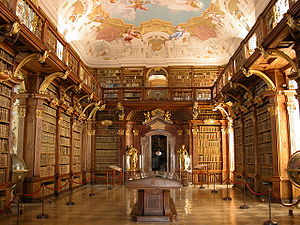
There are examples of sublime beauty, like the Balmoral hotel, the Walter Scott monument and of course Edinburgh castle, but they are clumsily linked by several hills, which pepper the city indiscriminately. The effect is similar to the reward felt by a reader who huffs and puffs their way through stodgy prose, wondering where it is all going, only to stumble suddenly on something quite profound.

Edinburgh

Edinburgh

On Thursday, I stumbled across the St John’s charity bookshop in Stockbridge. A poster in the window said “Clearance! Everything 50 pence” and I was inside as fast as my little legs could carry me.

It was cluttered and reassuringly musty. Bookish types sporting oversized anoraks and tufty hair browsed stealthily, building discerning piles of poetry, murder mysteries and natural history.

While I prowled the store, several dismayed customers asked the elderly couple behind the counter why everything must go.

“We haven’t got enough volunteers to keep it going,” said the man.

“Now where am I going to go for my books?” asked one lady and sighed. “If only I’d known, I would’ve given up a few hours,” said an English man, who blinked a lot and bought the collected works of Oscar Wilde.

“Well, get stocking up,” said the old lady. “Anything that isn’t sold will go into recycling.”

I didn’t need to be told twice. Some of the titles I had been perusing were so promising that the thought of them condemned to shredding alongside household bills and letters from the bank sent a shiver coursing down my spine.

I was tragically limited by the confines (56 x 45 x 25cm including wheels) of my hand baggage allowance. Nevertheless, I managed to add six books to my collection. It only set me back £3, which is about the cost of a glossy magazine offering to make me beautiful and thin.

I am now the proud owner of: The Personality of Animals by the appropriately named H Munro Fox, The Childhood of Animals by Sir Peter Chalmers Mitchell, Know Your Own IQ by H.J. Eyesenck, The Common Reader by Virginia Woolf, The Hill of Devi by E.M. Forster and most promisingly of all: The Intelligent Woman’s Guide to Socialism, Capitalism, Sovietism and Fascism Volume 2 by Bernard Shaw.

I opened the most humble-sounding of them, Virginia Woolf’s The Common Reader on the plane earlier. I kept it open on the bus and then on the underground and even brought it to bed with me.

Roger Fry's painting of Virginia Woolf Image source: http://en.wikipedia.org/wiki/File:Roger_Fry_-_Virginia_Woolf.jpg

Roger Fry’s painting of Virginia Woolf Image source: http://en.wikipedia.org/wiki/File:Roger_Fry_-_Virginia_Woolf.jpg

We travelled well together. Ms Woolf seemed to understand the dilemmas of contemporary blogging as early as 1925.

In her chapter “Modern Fiction,” she asks what about and why and how we should be writing. Baffling questions that the amateur blogger faces every day.

Sometimes I steal snatches of conversations I’ve had and slap them onto the blogosphere. Other times I talk about love or meat or peeing audibly.

Occasionally I think about weighty things like politics or God and think I should write about these things too, yet I can find nothing more to say.

And then there are the times I dream of invention. I wonder whether my paltry life experience could ever be transformed and trapped within the dusty covers of a big fat book.

It’s worth remembering that unless you’re an academic, Woolf’s chapter title doesn’t age well. “Modern fiction” is by nature a relative term. But what she says about the dilemmas of writing may apply to anything from Tolstoy to Twitter. She asks us to:

Examine for a moment an ordinary mind on an ordinary day. The mind receives a myriad impressions — trivial, fantastic, evanescent, or engraved with the sharpness of steel. From all sides they come, an incessant shower of innumerable atoms; and as they fall, as they shape themselves into the life of Monday or Tuesday, the accent falls differently from of old; the moment of importance came not here but there; so that, if a writer were a free man and not a slave, if he could write what he chose, not what he must, if he could base his work upon his own feeling and not upon convention, there would be no plot, no comedy, no tragedy, no love interest or catastrophe in the accepted style, and perhaps not a single button sewn on as the Bond Street tailors would have it. Life is not a series of gig lamps symmetrically arranged; life is a luminous halo, a semi-transparent envelope surrounding us from the beginning of consciousness to the end.

Sometimes I get stuck inside the semi-transparent envelope. I know I’m there when words fail me, or I lose the desire to write. It takes a hilly city, with rough cobble-stoned streets, place names that make me feel like I am Elizabeth Bennet and charitable book-sellers to break the seal.
“You’re not thinking of marriage, no?” asked Frau Bienkowski.

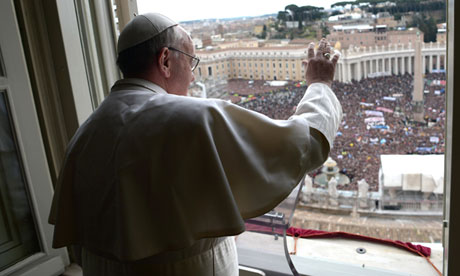
“So we have a new pope,” Frau Bienkowski said, as I handed her the bag of medium-sized apples and two packets of sugar-free sweets she’d ordered.

“He could have been a black man,” she continued. “It wouldn’t have mattered.”

“No!” I said.

“But there was something irregular about Benedict’s resignation, wasn’t there? Popes don’t just resign!”

I agreed it wasn’t their custom.

“Could you get us some coffee?” she asked, pushing her stroller over to me. “You can put the cups at the front!”

I pushed the Zimmerframe down the corridor and passed three ladies in wheelchairs. One of them had a remarkable face, like a gazelle. They were staring straight ahead. One of them was saying, “You could write a novel about a life, if you just think back to all your encounters. You could write a novel. You really could.”

I placed Frau Bienkowski’s cup in front of her, and she pushed one of her sugar-free sweets towards me.

“So tell me, how has work been this week?”

I told her I’d been busy and that the new pope was creating a lot of work for us.

“It’s good you’ve got work,” Frau Bienkowski said, “especially as you’ve booked flights to see your boyfriend!”

“I couldn’t agree more,” I said.

“You’re not thinking of marriage, no?”

“Well, it would be difficult logistically since we live in different countries,” I said, apologetically.

She nodded. A few weeks ago she’d told me that she thought German president Joachim Gauck really ought to marry his long-term partner, since she travelled with him in an official capacity.

A little later, we got talking about Germany. “We’ll never escape our past,” she said and paused.

“They could have just removed the Jews from official positions. But there were good Jewish doctors, good workers. Sending them to concentration camps, killing them was wrong.”

For the first time, I felt uncomfortable around Frau Bienkowski.

“Of course it was,” I said.

Frau Bienkowski presented me excitedly with a fashion catalogue. “Look what I got in the post!” she said.

We spent some time leafing through the pages and commenting on the clothes.

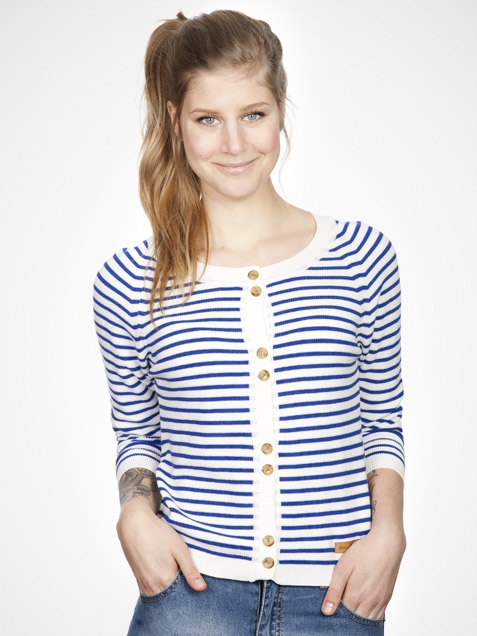
“I like that,” I’d say, pointing at a blue and white striped cardigan.

“Yes,” she’d reply, “It’s pretty, but look at the pattern on that blouse .. it’s a bit much, isn’t it?”

We looked at a model in high-heeled shoes. “Do you like them?” I asked.

“Oh yes,” she said.

“Did you wear such high shoes when you were younger?”

“Oh yes!”

“And could you walk in them?”

She smiled. “If you wear them, you walk in them!”

We read some more of the story about the cantankerous 100 year-old living in an Irish convent.

I apologised that I wouldn’t be able to see her next week.

“Don’t you worry!” she said. “This should never be an obligation. And tell Andrew I say hello!”

Blogileaks: Kate Katharina rocked by sell-out scandal

If you want to be rich and famous, you should definitely start a blog. It’s the only way to keep up with the Mark Zuckerbergs of this world.

Katekatharina.com is a case in point.

From the beginning, my sober treatment of issues such as my talent for gibberish, my reputation as a creep and my savant boyfriend left readers crying for more.

I had to purchase extra electronic storage to cope with all the fan mail I was getting. I rejected several offers to write for renowned publications on the principle that Katekatharina.com was a more reputable source than say, The New York Times.

After some time, it became impossible to walk the streets of Dublin without being accosted by an admirer of my prose. The effort of gazing at my feet modestly every time a particularly apt turn of phrase was repeated to me by a stranger became too great. I decided to move to Berlin, where I thought I could descend into relative obscurity and focus on my art.

A rare moment of calm from the crowds as I climb a tower in the early days of my time in Berlin.

A rare moment of calm from the crowds as I climb a tower in the early days of my time in Berlin.

But it was not to be. Here too, passengers on the underground tap me nervously on the shoulder and say “If you don’t mind me saying so, you look really like Kate Katharina from Katekatharina.com. Others are more aggressive, pushing through crowds to thrust a pen and a print-out of my latest post into my hands, crying “Bitte, bitte, ein Autogramm fuer mein krankes Kind.”

Yes, my route to fame and fortune has been paved with widgets and clusters of html.

Or possibly, it’s been a bit more like this:

I’ve written over 200 posts here. Sometimes I spend hours writing a serious piece contemplating the meaning of art, or describing a tiny dead mouse whose death still haunts me, while other times I chronicle my developing relationship with a 93 year-old woman or defend pigeons.

The mouse that haunts me still

The mouse that haunts me still

The effort has paid off. Last summer the embassy of a wealthy middle eastern country offered to pay me to write a piece outlining – among other facts – the wisdom of its ruler and the progress the country has made in the areas of human rights and gender equality. When I replied saying that I did not feel I could write an impartial piece given the requirements, they promptly reassured me that I could be “reasonable and objective,” as if I were simply displaying modesty.

They’d found my contact details through a referral to the blog from an article I’d written for The Journal. That particular article paid me handsomely in… exposure (?) and afforded me the pleasure of trawling through a host of comments, most of which misinterpreted my article to conclude I was a Paparazzi fiend.

A more recent success occurred when the Past Pupils Union of my secondary school read a post I had written reminiscing about audible peeing in the school bathroom. They posted it onto their page and my hits rocketed.

I rejected numerous offers from prestigious publications

I rejected numerous offers from prestigious publications

And then recently, someone working on behalf of the company X contacted me, offering me a modest sum in exchange for linking to their site.

I had a drink with my friend, another freelance journalist in Berlin.

“You’ll be compromising yourself,” she said. “And for €80?”

A niggling part of me thought she was right. “But,” I argued, “They said I could write about anything; I just have to link to their site.. I mean I link to sites all the time, many of them happen to be commercial! And Y is not immoral!”

“And,” I continued, ever more desperate. “Every time I want to watch a video showing death and destruction on the BBC website, I first have to watch a stupid ad telling me to ‘invest in reMARKable Indonesia.'”

“I know,” she sighed. “It’s terrible the Beeb does that.”

So, here I am, “selling out” for the first time. The compensation is €80 (I hope!) which will pay for my monthly transport. For the amount of hours I’ve spent thinking about how NOT to make this read like a sponsored post, it’s pittance.

If I were living in a time when people still paid for writing, I’d have earned a couple of hundred for this 800 odd-word piece.

But I’m not. I was born into the digital revolution.

So, for all the would-be bloggers out there, the most important piece of advice I can give you is to take yourself excessively seriously. Just like me.

Otherwise, the attention from the fans can get too much, and you begin to crave the days when your blog had a small, loyal readership and when you deliberated for days over whether to post a link to a website offering to help people see again.

Frau Bienkowski and the Irish Convent

Frau Bienkowski was sitting by an open window, soaking in the sunlight. She gave me a faint smile. It was not her usual welcome. She was in pain.

“Every limb hurts,” she said.

We had been planning to venture outside the moment we got some sun. I asked Frau Bienkowski whether she thought she could manage.

Ten minutes later she was pushing her stroller around the grounds, naming flowers and telling me about the people she knew living in the neighbouring buildings.

Every so often she stopped and sat on the ledge of her stroller.

“Am I slower than you thought?” she asked.

“Not at all,” I said. “I’ve only ever seen you in your armchair.”

We passed two caretakers smoking at a back entrance to the canteen. Frau Bienkowski called over to them. “I was faster last year!” They nodded sympathetically and one of them, a young woman with a scraped-back pony tail and jet black hair said, “oh, the curse of biology.”

Frau Bienkowski told me she remembered what flowers were blooming when the Russians came. “You don’t forget a time like that,” she said.

After our walk we went for coffee. I ordered a latte. “What’s that?” she asked.

I told her it was a mixture of espresso and steamed milk. She said she’d try it next time.

We chatted about parents disapproving of mixed marriages. She said it happened lots after the war and I said that in Ireland in the past, a Catholic-Protestant marriage could divide a family forever.

“You know, you’re only supposed to stay an hour,” Frau Bienkowski said after two.

“Do you have something you need to do?” I asked.

“I don’t want you to feel obliged, that’s all,” she said.

“Frau Bienkowski, we have discussed this before. This is a pleasure.”

“Oh, very well.”

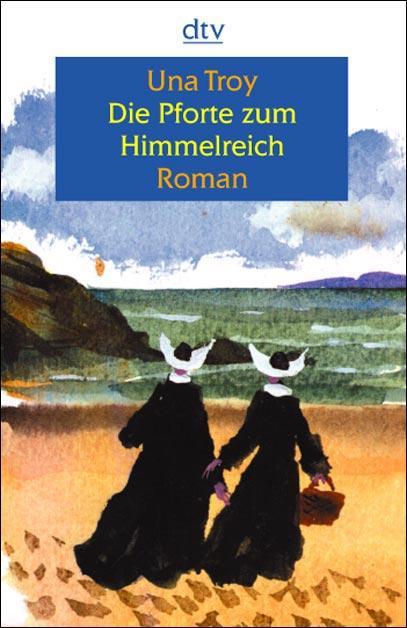
Back upstairs, Frau Bienkowski asked me to read from “Die Pforte zum Himelreich,” the book by Irish writer Una Troy which I brought her last week.

“I started it,” she said. “And it is very good. But my eyes became swimmy and I couldn’t read on.”

The scene I read was a dialogue between an eager 23 year-old upstart journalist and a 100 year-old woman in a convent. She was Ireland’s oldest person and he was vying for the scoop on how she’d managed to live so long. She gave smart-ass, wry responses.

I put on my best crotchety voice for the old woman and an effeminate whine for the young man. Frau Bienkowski laughed out loud three times.

“You should be a professional reader!” she said. “I can completely imagine that nun!”

When I left, Frau Bienkowski said, “You bring me such joy.” This time her smile was real. It made my day.

Frau Bienkowski’s Photograph

“How may I help you?” asked the chiselled librarian with grey hair and round eyes.
“Do you have any books in large print that you’d recommend for a 93 year-old?”

He typed into his computer and frowned.

“We have very few books in large print left,” he said. “The demand simply isn’t there. Old people are opting for audio books.”
“I suspected as much.”
“Wait though. Come with me. We do have selected titles.”

We snaked up and down the aisles at the back of the library. “Ah this one could work … and this! he cried, snatching a book every few shelves.

He left me with a pile, from which I selected Die Pforte zum Himelreich by Irish writer Una Troy, featuring nuns in small-town Ireland and an unconventional 100 year-old lady who stirs things up. I also took Ulla Lauchauer’s Ostpreußische Lebensläufe, roughly translated as “Biographies from East Prussia.”

“Yes, the story about the nun sounds interesting,” Frau Bienkowski, who was wearing green, said later.

Then I took out the book about biographies from East Prussia. “Can you bring me that photograph?” Frau Bienkowski asked, motioning to a frame hanging over her bedside table.

Frau Bienkowski balanced the black and white photograph on her knee. She turned on the lamp on her magnifying glass.

“This is my grandparents’ Golden Wedding Anniversary in East Prussia,” she said. “If you look carefully you can see the number 50 carved into the flower arrangement at the back.”

“We were a big family. That’s me at the bottom on the left,” she said pointing to a little girl with cropped hair and buckled shoes kneeling on the ground. “Those are my grandparents in the middle and those are my aunts and their husbands. These are my cousins.”

“She was killed,” she said pointing to an aunt. “So was she, my cousin too. He fled, and so did she.

“And this man” she said pointing to the back row of the photograph. “He was married to my aunt Anne.”

“She was very ill, and told him to flee alone. He did, and she died soon after. Years later we heard from him. He got away, and married again. But he said ‘She’ll never be my Annie.'”

“Yes, they are all dead now,” she said.

Later we talk about how her perm needs to be touched up, about how she would like some new clothes from the spring catalogue and how she left everything she owned at home when she moved into the nursing home.

“I don’t want to know what happened to it all,” she said.

Meat

Once upon a time, people thought black people should serve white people, gays should be killed and children should be seen and not heard.

Lots of people who thought that way were kind and charitable too. Among them were devoted husbands, loving wives and generous uncles.

It took hundreds of years for things to change. Now directors make films about Americans quarrelling about slavery, men loving men and sad, lonely children in big houses.

I think in the future, the films will be about charismatic vegans speaking out against factory farms.

Image Source: tmsfoodie.wordpress.com

Image Source: tmsfoodie.wordpress.com

This isn’t really a post about eating animals, but if you’re into that, I’d recommend reading Jonathan Safran Foer.

It’s about suffering caused by ordinary people.

Conditions for animals in farms the world over are so bad that watching a video about what goes on in ordinary farms almost makes me sick.

The suffering is so great you can barely even imagine it.

The animals we eat go through agony. The happiest moment is their death.

Most people know this in principle. They’ve seen the odd video about factory farming, read the occasional rant in favour of veganism and realised they’d feel pretty bad about eating their pet dog.

But they haven’t quite thought about it for long enough. Like me, they’ve turned off the videos when things get too uncomfortable and skimmed the final few paragraphs of those moralistic articles. They’ve conveniently and falsely associated the vegetarian/vegan diet with a hippy lifestyle, which they’re too busy paying taxes to support.

They’ve mistaken the argument against supporting sadistic cruelty with the one against eating meat at all. Some say “well, that’s the order of things” and others wear ironic t-shirts that say “Meat is murder. Tasty, tasty murder.”

Though I don’t eat meat, I’m not against it in principle. Having been a vegetarian for many years, the idea seems very strange to me, but should my health depend on it, I would go back to it. And I would sooner eat road-kill than a cheap burger. It is not the fact of the animal’s death that disgusts me, but the horror of the life it must endure.

The most important thing for me is to avoid contributing to needless, unimaginable suffering.

Living ethically is difficult. I’m no great example. Last week I bought six eggs from a lady with wild, white wiry hair selling her produce from a trailer. I made an omelette. Later when I looked carefully at the stamp on the remaining eggs, I saw that they had the second lowest rating for quality. I’d eaten eggs produced by hens kept in deplorable conditions.

Here in Germany, the “organic” industry is being rocked by a scandal of deception and mislabelling. It turns out that the expensive and well-sold “bio” products are not quite so bio after all.

According to my own principles, I should go vegan. I’ve thought about it and am held back by two factors: the fear that my health would suffer, and the high cost of animal substitutes designed for vegans.

Image source: www.change.org

Image source: http://www.change.org

The world we live in can seem farcical. I can follow the whims of celebrities across the world on Twitter, but I can’t tell you where my yoghurt came from.

I’ve lived in a city all my life. The only foods I’ve sourced have been blackberries from the garden, or the occasional potato at the bottom of the compost heap.

I am ignorant but not naïve. There is another way and it starts with widespread exposure to the horrors of modern farming. Looking away has always been the surest way of supporting what is immoral. Consumers of animal products have a moral obligation to find out about the industry they’re supporting.

The argument that everything is about profit has been brought to an immoral extreme in many industries, but in farming it has been bizarrely accepted.

Part of what makes humans put themselves on a pedestal above other animals is what many identify as a superior capacity for moral reasoning. The irony of that assumption in the context of the conditions allowed for meat production should not be overlooked.

I am no paragon of morality. But education and information have made me change my habits for the better. I’ve still far to go.

I firmly believe that the scale and depth of suffering being inflicted by humans on animals in our time will be the stuff of horror history documentaries in the future.

Our descendants will ask “How did people do nothing for so long?” They will consider us barbaric and sadistic. They will pity us for our immoral economy and greed. They will question how things went on for so long, even in a time of instant, mass communication.

None of that will happen soon. But give it a few hundred years, and people will say that among those who supported these practices were devoted husbands, loving wives, generous uncles, and even passionate pet-owners.

Watching the snow with Frau Bienkowski

“You should always avail of the free coffee here,” Frau Bienkowski said. “Sure, why wouldn’t you?”

“I did,” I assured her. “I had a latte downstairs. It was delicious.”

The dress Frau Bienkowski admired

The dress Frau Bienkowski admired

“Good,” she said, looking at me closely. “Now, this is a dress I haven’t seen before! It’s lovely!”

“Thank you!” I said and admired her pastel-coloured floral two-piece.

Outside, thick snowflakes were swirling in the air. “It’s such a shame about the weather,” said Frau Bienkowski.”I still have to give you a tour of the grounds.”

“And you promised to tell me the story behind the funny little statue outside,” I said.

“Don’t worry, I haven’t forgotten!”

“How have you been sleeping?”

“Not well,” said Frau Bienkowski. “The other night I was awake the whole night. When the alarm went off at 7 o’clock I just couldn’t face getting up. So when the first lady came in, I had to think of some reason to stay in bed, so I told her I had a headache.”

“She asked me where,” Frau Bienkowski continued, smiling wickedly. “So I waved my hand about and said from front to back. Of course they got the doctor to check up on me. Then they took my blood. And of course I’d a perfect reading.”

I laughed. “Would you not tell them you’ve trouble sleeping?”

“Ach, I told you before, I haven’t been able to sleep since my husband died. And that was a long time ago.”

“Do you listen to the radio or watch TV in the evenings?” I asked.

“Oh yes,” said Frau Bienkowski. “I only watch television in the evenings. But listen to this; the other day a message to turn down my TV came from a lady all the way down the corridor. There was no way she could have heard it. I even asked my next-door neighbours if they could hear my TV. They couldn’t. Sure we are all hard of hearing here.”

“Difficult neighbours can be found everywhere!” I said.

“That they can,” she said. “Now, tell me about these CD players.”

“Well, I did a price check,” I told her. “And the ones with the decent speakers are about €50. The smaller ones with low quality speakers are around €30, but you wouldn’t be able to hear from bed if we plug it in over there.”

“We’ll have to wait so” said Frau Bienkowski. “I spent €12.50 on that coffee jug last week,” so I can’t afford to spend any more money for a while.”

Frau Bienkowski looked at the clock. “Be careful you’re not late for your night shift!”

“Don’t worry, I’ve my eye on the time,” I told her.

“How long are you working tonight?” she asked.

“Until 2.30 in the morning,” I said. “When I’m on my way home, you’ll be awake in bed, hopefully with the radio on.”

“Yes,” she said.

On Love

I grew up in a large, cold house. In the winter, I would curl up beside the gas heater until I became dizzy from the fumes. We didn’t have anything fancy like instant hot water. If you wanted to have a shower, you had to plan at least 40 minutes in advance. Waiting for the water to heat up was an opportunity to work on my juvenilia, or to stare at people on the street below.

It was character-building, nineteenth-century-style.

It was the kind of cold that seeps through to your bones. Sometimes my father would suggest I dip my blue-white fingers into boiling soapy water to get the blood flowing again. Other times my mother would enter the kitchen in mid-summer and drape a gigantic coat over my shivering frame.

Like in all good Victorian novels, love shone through in actions, not words.

Earlier when I was wracking my brains about how to write about love in a way that was not insufferable, a memory – one of my earliest- popped into my head.

I was a small child, well below school-going age. The house was, you guessed it, cold and I was waiting virtuously outside the toilet. My mother emerged and lifted me onto the pea-green seat.

She had pre-warmed it, like a mother hen.

That was love.The Gift of Warmth

In my formative years, I continued to gravitate towards those providing warmth. I became enamoured by electric heater salesmen and canteen staff with large ladles of steaming hot soup.

Romantically too, I have favoured those offering to make me warmer. LSB’s shaggy hairstyle, spare coats and facial hair have proven to be a winning combination.

And I have to give it to him: LSB was quick to pick up on my requirements. Once in our early courtship, I was on a bus on the way to Crumlin. It was a dark and dreary night and we were going to a party. When I got off the bus, I found him waiting with a hot-water bottle.

That went down so well that on the New Year’s Eve just passed, he packed it again for our walk up Calton Hill.

A warm and fuzzy feeling, on demand.

Happy Valentine’s Day. This year, consider giving the gift of warmth.

Another cup with Frau Bienkowski

When I arrived at the nursing home earlier this afternoon, I passed a group of ladies pushing Zimmer frames and wearing feathered masks. Before I went up to Frau Bienkowski, I ordered a coffee downstairs. I was served by a lady with whiskers and a tail.

Frau Bienkowski said she would prefer to forgo the carnival celebrations downstairs, but we turned on the TV and watched an enormous red float make its way through the centre of Duesseldorf.

“When I was young,” Frau Bienkowski said, “we didn’t dress up that much for Carnival. But we had a masquerade ball.”

masq

“At midnight, you would take off your mask to reveal your face to your dancing partner.. Of course it wasn’t always a surprise. You knew some people by their hands, or the way they moved.”

She paused. “You aren’t wearing that beautiful pattern today,” she said, studying me carefully. “But that skirt is nice too.”

I complimented Frau Bienkowski on her green two-piece suit.

Then I emptied out my bag. “I brought something for you,” I said.

“Oh?”

“Well, since you said you liked reading, but that your eyes were no longer quite up to it, I took out some audio books from the library.”

“Audio books?”

“Yes, here have a look.”

“I didn’t know there was a such thing as audio books,” she said. “And you can take these out of the library?”

“You can! And you can even borrow films too,” I said. “Now, if you’ll excuse me, I have to go and borrow a CD player.”

“Will it be big?” asked Frau Buenkowski.

“It might be,” I said.

“Here, take this,” she said, pushing her Zimmer frame over to me. “And would you mind picking up some coffee too?”

I made my way down the hallway to the communal sitting room. Five ladies in wheelchairs were seated around a table, eating cake and drinking coffee.

“Did you hear the Pope has resigned?” said one.

“Oh, I knew that already!” replied another.

“On grounds of age,” chirped in a third.

I unplugged the CD player and popped it inside the basket of my Zimmer frame. I filled up two cups of coffee and balanced them precariously on top.

Frau Bienkowski and I listened to a few minutes of a German novel, read by the author himself.

“Do you think you might like this?” I asked.

Frau Bienkowski nodded. She looked happy.

“Which library did you go to?” she asked.

I told her. “Did you know that the building used to be a Sparkasse bank?” she asked.

I didn’t. “It was a vault, which the Russians plundered after the war. Back in the day, people had less jewellery, and they used to bring it there for safekeeping. One of my friends never saw her necklace again.”

My eyes were becoming wider. “Anyway,” Frau Bienkowski continued. “Tell me about what you’ve been up to.”

I told her I’d worked a rather uneventful night shift last night. Frau Bienkowski laughed. “It’s not every day the Pope resigns, is it? I don’t know why they picked someone so old in the first place.”

Frau Bienkowski, like me, suffers from insomnia. Hers is much worse. “I haven’t been able to sleep since my husband died,” she said. “Last night I was awake until 5 o’clock, but I got up again at 7. Routine is important.”

I asked her if she was plagued by racing thoughts.

“No,” she said. “My husband and I used to have wonderful times together. We went to the museum a lot. I have a wonderful talent to recall these happy thoughts. Some other people are riddled with anxiety at night, but I simply think of these good times with my husband.”

We talked for two more hours and I said I would call Frau Bienkowski later that week. She looked at me. “I never want you to feel obliged to come see me,” she said.

Frau Bienkowski, forgive me my bluntness but you could not be further from the mark. And this week, I am going to buy you a little CD player from Medienmarkt.

Coffee with Frau Bienkowski

“I don’t want to live to be 100,” Frau Bienkowski* said, stirring her coffee.
“No?”
“A lady here turned 101 last week,” she said. “That’s not for me!”

Frau Bienkowski is 93.

When I met her for the first time, she was nestled in an armchair with a newspaper and an enormous magnifying glass on her lap. The walls of her room were decorated with black and white photographs. Her husband and her son sat politely in their frames, wearing suits, ties and pleasant expressions.

“I think your son has your eyes?” I suggested.

“No,” she replied. “He had my nose. His eyes were blue like his father’s. But you can’t see that from the photographs.”

Frau Bienkowski’s husband died in the war; her son in a traffic accident. When she was left alone with her son, her parents helped out. She never forgot it and when they grew old, and she had lost her son too, she nursed them by herself, until they too died. Now she is living in a home in west Berlin, close to where she grew up and she has been kind enough to accept my weekly visits.

When I came into her room last week, she pointed at my dress and said, “Look at that pattern! It’s beautiful!”

LSB had given it to me for Christmas. It’s the pattern of a painting by Klimt. It’s actually a skirt but I have transformed it into a dress with the help of a belt and a big black bow.

“I used to be a seamstress,” Frau Bienkowski said. “I notice these things.”

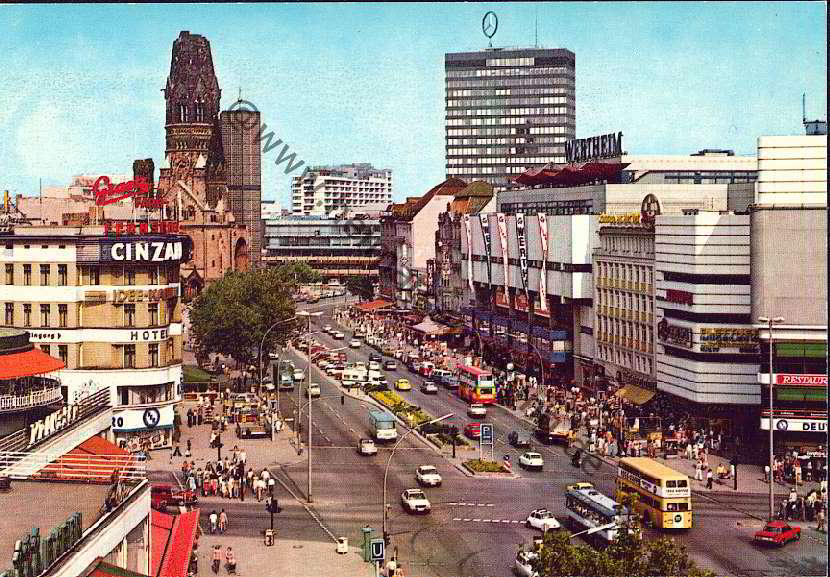
She worked in a shop on Kudamm, a famous shopping street in west Berlin. When it was fashion show season, she would stay up sewing until the early hours of the morning. She made ballroom dresses out of pure silks. The war interrupted her work and when she married she gave it up. She found it difficult, not working any more.

Many of her memories are of an occupied Berlin. “There was no talking to the Russian soldiers,” she said, “nor to the Brits either really. The Americans were all right actually.”

We talked about Prince William and Kate Middleton. “I wonder if the Queen will ever abdicate,” she mused, “and whether Charles will ever be king. The Dutch queen did; it was the right thing to do.”

She said she thought the Dutch royals seemed like a happy bunch.

Frau Bienkowski loves reading. She asked me to reach up to her bookshelf to take some titles down for her. She showed me a series of books about German royalty, and some stories of romance in India. I told her I was reading Anna Karenina. (still, the shame!). She said she had read it several times and seen the 1935 version of the film.

Next we read a little from the paper. Germany’s, former (as of yesterday) education minister Annette Schavan had been stripped of her doctorate from the University of Duesseldorf, for plagiarism. “They took it away, did they?” Frau Bienkowski asked. “Just like zu Guttenburg, she added, referring to the minister of defence, who resigned in 2011 after it was found that he too had copied large chunks of his doctoral thesis.

Frau Bienkowski grew up in a flat in a big house, where she had three very good friends who lived below. The group stayed in touch and only one moved to another area of the city. They’ve all died now but Frau Bienkowski keeps them alive in her head.

She met her husband at a dance.

I imagine that she was wearing an exquisite silk dress.

This morning, when I woke up missing LSB, I thought of Frau Bienkowski.

*not her real name.