Unknown's avatar

About Kate Katharina

Kate Katharina wltm people with stories for literary fling and maybe more.

Why Philosophy is best on the bus

I never thought I would be reading Bertrand Russell on the bus. Having endured a term of Critical Theory at college and made an ill-conceived investment in the accompanying reader (I was a Fresher; young and naive), I came to the conclusion that part of a Philosopher’s delight lies in deliberately employing obscure words and a surplus of relative clauses and that the general intention is to make oneself incomprehensible.

Not so with Bertrand Russell. You can read his prose while listening to snippets of conversations from the St Mary’s boys, the hum of the engine and the relentless beat of rain against the window pane.

As I was reading his essay On Being Modern Minded last week, I was struck by how much I could relate what he was saying to my own relationship to the world around me. Russell’s main argument is that the modern (post first world war) mind is stifled by an ever-increasing reliance on trends in thinking and that as a result people are scared to form their own judgements; held back by the belief that a more ‘contemporarary’ (and accepted) view will appear before they have had the chance to formulate their own.

Russell’s observations were rooted in the growing popularity of new philosophies and the tendency to impose them retrospectively on texts. Russell writes: “I read some years ago a contemptuous review of a book by Santayana, mentioning an essay on Hamlet ‘dated, in every sense, 1908’- as if what has been discovered since then made any earlier appreciation of Shakespeare irrelevant and comparatively superficial. It did not occur to the reviewer that his review was ‘dated, in every sense, 1936′”.

Russell was writing pre-Internet of course but in his world, ideas were moving more quickly than they had ever done before and at a speed that meant they were evolving before they could be fully digested. That may be why the behaviourism of the 1960’s led to some dubious parenting practices and why literary texts developed Marxist, then Freudian undertones overnight.

Our generation has the great advantage of easy access to a vast quantity of information so that any new tenet may at the click of a button be analysed in relation to the belief that preceded it. However, with such a vast amount of information available, it has become easier and easier to quit thinking for yourself.

I’m definitely guilty of this. Look at this blog post for instance: it’s Bertrand’s, not my own. Sure, we’re supposed to learn from each other but the amount of times I encounter something that seems at first glance incomprehensible and resolve to “google it” makes me uncomfortable. Am I incapable of assessing the importance of a news story myself? Can I not figure out what Joyce was about by reading his words alone? Have I lost my originality? (Can I google it?..)

Skimming is a skill I’m now supposed to teach and it’s something I’m not quite comfortable with. Sure, it’s practically important to teach students to find relevant information at speed but doesn’t that take the joy away from the ultimately satifying slog of analysing a text to death identify grammatical structures and unusual vocabulary? Would we be as well as to teach them to use google translate to extract the main points of a text?

I love the internet. It’s enabling, democratic and wonderful. Without a lot of self discipline though, it can also be disabling and anti-democratic, with messages being spread and consumned at a rate the human brain is incapable of keeping track of. If BR thought in 1950 that “The emotional tone of the world changes with equal rapidity, as wars, depressions, and revolutions chase each other across the stage. And public events impinge upon private lives more forcibly than in former days”, I don’t know what he’d think of the world as it is today. One to google ponder.

A tribute to Kim Peek: megasavant who inspired Rain Man

As part of an assignment for a writing course I’m taking, we have to choose somebody who has already died and to write their obituary. This is pretty far outside of my comfort zone but I took the opportunity to do some research on the savant Kim Peek, whose story I find both fascinating and extremely moving. What follows is no more than the result of some online research but I hope that it conveys how privileged I think the world has been to be exposed to this man and his incredible mind:

The first neurologist to see the baby Kim Peek was late for a golf game and told his parents that their son was “mentally retarded” and that he should be put in an institution. Half a century later psychiatrist Dr Darold Treffert described him as “a living google” and a “stellar savant”. Born on November 11 1951, Peek was the son of Mormon parents Fran Peek and Jeanne Willey Peek who resolved -in spite of advice from doctors- to take care of Kim in their own home and “to keep him happy and healthy”. Jeanne Willey Peek enjoyed an uncomplicated pregnancy but when Peek was born it was discovered that his Corpus Callosum-the part of the brain joining the two hemispheres- was absent. This resulted in an impaired ability to carry out motor tasks and to communicate conventionally but also served to facilitate the storage of an immense quantity and variety of information. Peek was not only reading encyclopaedias before the age of two but was also memorising their contents. At that age he developed the habit, which he maintained until his death, of turning books upside down upon their completion. Peek would read twenty or thirty books a day and was the only person known to be able to read separate pages of text with his left and right eyes simultaneously, regardless of the angle at which the book was placed. Peek managed to memorise over 9000 volumes using this method and was able to recall the facts, figures and historical events contained in them with astounding accuracy.

At the age of six, Peek was sent to a mainstream school but was expelled on the first day on account of “disruptiveness”. Lacking support from the American social services of the 1950’s, Peek’s parents employed retired teachers to educate him at home. Although he completed the High School curriculum at age 14, he was refused a certificate by the local authorities.

Peek’s life took a dramatic turn in 1984 when he visited a conference of the Association of Retarded Citizens in Arlington, Texas and was accosted by screenwriter Barry Morrow, who was much taken by his exceptional ability. Morrow’s script, which was later to become the highly successful Rain Man film starring Dustin Hoffman, was inspired by this first encounter. Though Hoffman’s character Raymond Babbitt differed substantially from Peek, Hoffman spent six hours with Peek, studying his mannerisms and attempting to imitate his particular habits which included rocking motions and monotone utterances.

In spite of Fran Peek’s initial reluctance to put his son on ‘show’, Hoffman made a particular appeal to him to “take him out and show him to the world”. The opportunity to do just that arose when Hoffman paid tribute to Peek during his Oscar acceptance speech, which propelled him to the attention of the media.

Peek’s parents had separated in 1975 and after the success of Rain Man, Peek spent the remainder of his life with his father touring the world and speaking at conferences and schools. As a matter of principle, they did not accept money for these appearances. Peek loved to challenge audience members to ask him difficult questions and was delighted at the impressed response his great knowledge elicited. At one event a little girl ventured forth to the microphone with the question “Who built outer space?” to which Peek replied in monotone (and to great applause) “God made the heavens and the earth”. At each talk Peek and his father left a card behind them which read “”Learning to recognise and to respect differences in others and treating them like you want them to treat you will bring the joy we all hope for”. The unwavering commitment of Peek’s father to just that message and the willingness of people to listen to it ensured that he will be remembered (in psychologist Larry D Beal’s words) as “an amazing human being that life could have very well passed over”.

Reflections on the mirrors in Bewleys

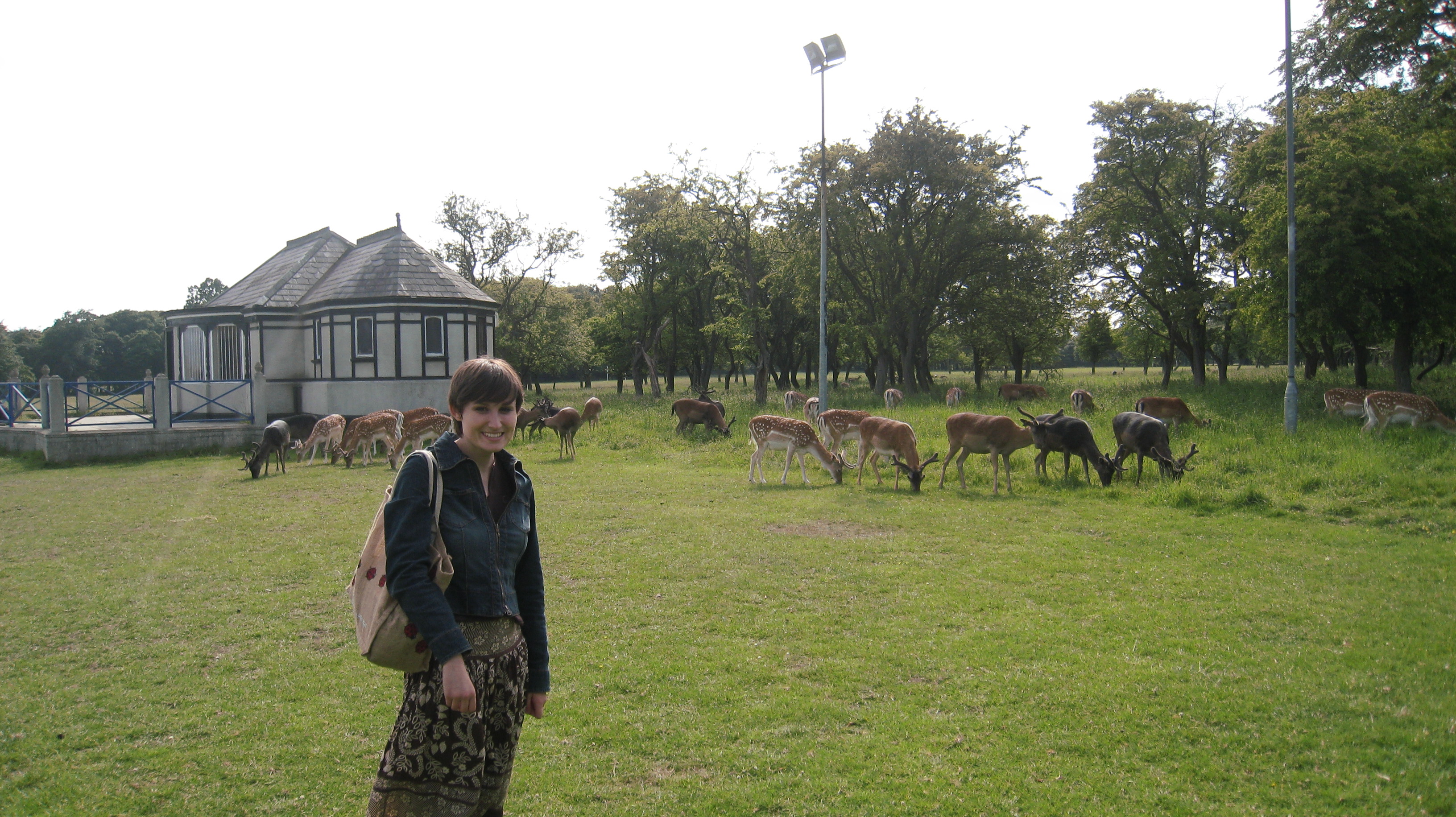
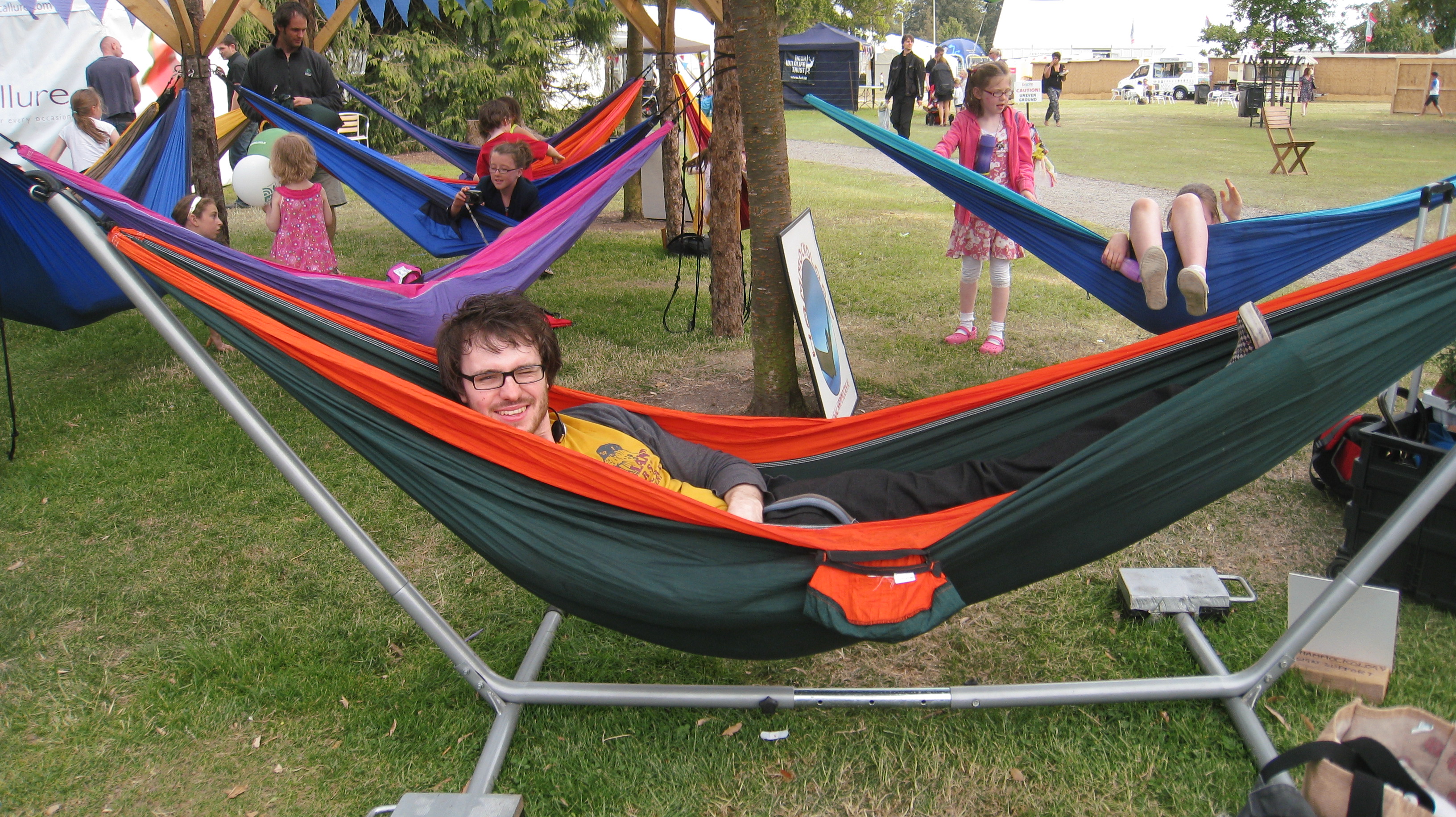
Saturday was a day I’d like to bottle for future swigs when things are not so rosy. Like all great days, it began with a marvelous breakfast in bed, which my LSB prepared while I dozed. After that we ventured out to the Phoenix Park to visit the Bloom Garden Festival. The park was cloaked in intermittent sunshine and the people were out in their drones to soak it up. Even the deer seemed unusually contented; regarding the topless men passing by with their 99 cones with the graceful bemusement of which their species is only capable. Inside the Bloom exhibition, I divided my time between admiring the delightful lambs on “display”, lazing in the (promotional) hammock area and loitering by the vegy burger stand. In the evening, LSB and I spent a few hours in Bewleys, finalising our (provisional) life plans (more of which in future posts).

Having finished my hot chocolate orange and gobbled up the amaretto biscuit that had accompanied LSB’s mocha, the evening was drawing to a close and it was time to go home to announce details of my (now revised provisional) life plan to my parents. On our way out, we took a trip to the toilets.

While I was in the cubicle (third up), I heard somebody exclaim, “I know you from somewhere”. The voice was middle-aged; soft but firm. There was a pause and I was imagining a reunion between two ladies who had attended the same embroidery evening class some months ago. But the second voice said “No, I don’t think so”. Hers was a more confident, even voice.
There was another pause which I didn’t want to interrupt so I delayed flushing the toilet. The lighter voice spoke again “you must take great care of yourself”. At this point I flushed and made my exit. In the mirrors were two faces. One lady had sunken, hollow eyes and wispy grey hair. She was applying mascara. The other had carefully shaped eyebrows and a heap of dyed red hair, which sat on her head like Marge Simpson’s, minus the length.
I was washing my hands very thoroughly and casting my gaze into the two mirrors next to mine. It was the red lady’s turn to speak: “I do indeed. I take great care of myself. I go salsa dancing three times a week”.
“Do you?” the lady in grey exclaimed. “I love salsa dancing. I have done that myself”.
“Have you?” the red lady replied, looking at her now.
“It looks as if you take great care of yourself”, the grey lady repeated.
“Ha”, said the red lady, laughing now, “I have to match the young men I partner in my dancing”
“I’d say you do”, said the grey lady very seriously, turning to look at her from the side.
“Well, my husband says I look great”, said the Red Lady.
The grey lady stared at her. “Oh! Are you married?”
“I am”, said the red lady, suspiciously.
“Well you must take great care of yourself” said the lady in grey, replacing the cap of her mascara and zipping up her bag.
“Bye”, she said.
“Bye now” said the Lady in Red,turning to me as I was looking busy waving my hands beneath the hand dryer. She made a face as if to say “WEIRDO”.
“I’d take it as a compliment”, I said.
“I certainly will”, she retorted, “I think we’d both had a glass of wine”
“Maybe” I agreed, finally making my way out to LSB, who had been waiting patiently the whole time. “Keep up the salsa dancing”, I called back as we left and LSB asked sourly “so you’ve a new best friend then?”
“I do .. and she takes great care of herself” I tell him as we go our separate ways after a wonderful day out.

A blast from the past: Bertie Ahern’s Irish legacy

Bertie Ahern’s blend of endearing naivety and wily opportunism is representative of a peculiarly Irish mindset, which has dominated the body politic for at least the last decade.

Bertie Ahern is grinning up at me with scrunched up nose and open-topped shirt. I find him perched comfortably at the top of page 70 of the July 4 edition of the Irish News of the World, where he has conceded that “there are questions to be answered and issues to be resolved” and that “all of the players should realise that it is time to hold their hands up and then move on.” In his capacity as sports columnist for the aforementioned publication, he is of course referring to England’s dismal performance in the world cup. His blend of endearing naivety and wily opportunism is representative of a peculiarly Irish mindset, which has dominated the body politic for at least the last decade.

As its most successful exponent, Bertie Ahern stood smiling over the country throughout its period of extraordinary prosperity and glided to a swift resignation conveniently in advance of its crippling economic demise. At the launch of his autobiography last year, he told David Frost that accusations that he had received bribes from property developers were unfounded and based on nothing more than that ‘one guy said that the other fellow told him he did’. A polished Cleggeron he may not be, but his colloquial circumlocution renders him a similarly slick smooth – speaker.

The Irish gift of the gab is not just about sliding through the nets though. Our eager benevolence and uncomplicated approachability represent the ideal of a mobilised community spirit. When Joe Duffy spoke recently to a woman living in the west of Ireland who confessed to feeling lonely and depressed in her surroundings, within minutes calls flooded in from strangers offering chats over cups of tea and spare rooms in Dublin, where she was on a housing waiting list. With similar vehemence, homeless charities have launched an impressive campaign against the demolition of empty houses in the outskirts, suggesting instead that they be made available to shelter the homeless.

I was born an invincible Celtic tiger cub and have developed lately into a scavenging graduate, competing to take on unpaid work so that some day a philanthropist will discover an archive of my eclectic and unpublished scribblings and plead with me if they may not immortalise them in serialisation – at any price. Like Ireland’s dream of winning the world cup, it is a goal worth striving towards in the strangely reassuring certainty that it will never be achieved. It is this paradoxical conviction of both success and failure, which makes possible the symbiotic relationship between self-deprecation and delusion, which has contributed to Ireland’s staggering economic rise and fall.

Bertie Ahern’s curious decision to keep his money under his mattress rather than in a bank account is the mark of both madman and genius, each masquerading as the quietly quotidian everyman, drinking still as Taoiseach in his local pub and insisting on going to Mass every week in spite of his cohabiting relationship with a woman not his wife. Paradox and irony thrive in a culture where emotion is self-consciously privileged over intellect. When Ireland rejected the Lisbon treaty, it did so with an impish ‘let’s see what happens’ attitude. The ‘No’ vote was not an indictment of Europe, but rather a concentrated attempt to get on the government’s nerves. After all, they had burst our bubble. Having wedged ourselves between Scylla and Charybdis, we grinned and voted ourselves out second-time round, much to the annoyance of the UKIP.

In a televised debate about head shops, it was claimed by a frustrated liberal that Ireland is a country where laws are set “not by experts but by Joe Duffy”. Indeed, when our former Taoiseach concludes as sports expert from the pages of a tabloid that “no one person should be made to be the scapegoat for what was a collective failure” one can only smile at the audacious success of his opportunism and shake one’s head at the grave irony of his accompanying naivety.

On books, buyers and balloons

It’s a wet and windy Saturday afternoon. The Spanish protestors gathered at the Spire have painted balloons with slogans forecasting a Revolution. Moore Street is quiet but for a vendor who’s shouting “umbrellas aunl’ a foiva” again and again and again. Inside the Ilac centre, broadband salesmen and the pumping beats from cheap clothes stores are competing for shoppers’ attention. A little boy pressed into a communion suit is dragging his parents into Game. Then, as you go up the stairs and the automatic gate pulls you in: silence.

Seated at one of the desks is a man who has taken off his brown leather watch and propped it up against an empty bottle of peach ice tea. If you are close enough, you can hear the swish of his highlighter pen over a paragraph about marketing strategy. The air is musty and the carpet tattered. A security guard moves suddenly and the keys attached to his belt jingle to the background hum of a hoover, which has just come on.

The faces are either young and foreign or Irish and old. There’s a special table reserved for the elderly and at it spindly fingers are crinkling the pages of newspapers. Blu-tac-ed to one of the shelves is a laminated poster, which reads “Books can help”. There’s a single title lying on that shelf. It’s called When Parents separate- helping your children cope.

A girl drops a pile of books on the counter and asks whether she can return them. The librarian, a lady with a wispy brown bun and rosy cheeks looks carefully at the screen: “Now, I have to tell you, there’s a bit of a fine on your account”. The girl’s eyes flash briefly, “ Yeah, I paid that in Pearse Street last Monday..” The lady’s nose scrunches up a little. “Em.. These are the titles we have here as overdue: With My Lazy Eye, The Colloquial Guide to Arabic and Homecoming. Is that right?” “That’s right”, the girl replies. “But I paid €4.50 for those in Pearse. It’s all cleared on my online account.” The lady pauses. ”hmm”, she says. Her lips curl into a smile. “Alright, I’ll take you at your word”. “Thanks”, the girl mutters awkwardly. “I wouldn’t l..”

The stench of a tweed suit comes and goes. For a split second, it’s silent again. Then the bounce of a book spine as it’s returned to the shelf: Closing time. Outside, it’s cleared up. Yer man is selling fake Adidas tracksuit tops now. The protestors are gone from the Spire but there’s a single black balloon bopping about in the breeze.

Do you mean what you say?

Remember Senator John McCain? He- that -promoted -Sarah Palin -to -Vice- Presidential- candidate? And daughter Bristol to equivalent reality TV stardom?
Well, I’m happy to say that this month marks the two- year anniversary of his inclusion in my Undergraduate essay of the title The Field of Pragmatics is concerned with how people manage to mean more than their words seem to say. Discuss how they do this, with reference to Grice’s maxims.
It was a dull essay, believe me, but Senator JMC managed to spice things up about 1500 words in.
You see, one day in 2008, when JMC was on his campaign trail, an elderly lady supporter petitioned him for a quick word about his no-hoper opponent, Barack Obama. She told JMC proudly that she had “read about him”. JMC nodded in sympathy. By God, hadn’t he had to do his own reading up on that guy. It was the lady’s next utterance that scored the inclusion in my essay. She asked simply; “he’s an Arab?”, to which McCain- swiftly removing the microphone from under her- replied “no, he’s a decent family man … and citizen”.
The whole interchange was a delight to me. It justified the discipline of pragmatics as the study of meaning beyond words and made clear to me that language is as much about what’s not said as what is. Of course, the obvious implication in this interchange is that being an Arab and a decent family man are mutually exclusive. Were this to have been made explicit however, JMC would have been immediately asked to answer to accusations of racism. As his response was veiled in an (arguably irrelevant) compliment to Obama’s family values and citizenship (oh, the irony!) however, he faced no such charges.

Paul Grice was a linguist with a mission. He wanted to create a taxonomy of the unspoken rules that govern the kind of communication that generates meaning beyond words. You can read all about his maxims here but in short, he believed that successful communication relies on adherence to a few basic rules: tell me what’s true, tell me what’s relevant, don’t flood me with information, be polite. So, when I ask you whether you like my new haircut and you tell me that you think long hair really suited me, I can assume, based on the maxims of relevance and clarity, that you are politely answering “no”.

Saying what you mean is so rare that shows like Curb Your Enthusiasm exploit it as a particular kind of comedic art. Sugar-coating our utterances and beating about the bush are so ingrained in our psyche that they have come to represent what we consider civil society to entail. An insidious underbelly is revealed however when we consider the larger-scale effects of such rigid use of linguistic decoration. As recently as last week, the White House claimed that Bin Laden was killed “after a fire-fight”. What emerged later however, was that he couldn’t in fact have had any part in the fire-fight, since he wasn’t armed. When we hear the term “firefight” it’s fair to assume that both parties (now there’s an incongruous word) exchange fire, isn’t it?

Things don’t seem to go so well for those who do say what they mean though. Poor Old Gordon Brown had a terrible time during his campaign trail last year when he called a lady a “bigoted woman”. Even though she was.

At the end of King Lear, Edgar reminds us to “speak what we feel, not what we ought to say”. Respect to Mr Brown for favouring William Shakespeare over Alistair Campbell.

My Juvenilia and The Opening Line That Wasn’t

I was 16 and practically the same but for a hideous mane of long, straggly brown hair with orange highlights. I had just finished struggling through The Satanic Verses. I’d taken it to Germany where I spent many a journey on slow trains, puff-puff-puffing their way through the Bavarian countryside, with the battered book on my knee, trying to make sense of it all. Bizarrely-named angels, and evil and the Muslims didn’t like it: it went something like that. Still though, I used torn up bits of receipts from purchases of Puffreiss Schokolade in Müller to mark interesting passages, which I later transcribed into a notebook, in case I ever decided to emulate Rushdie’s descriptive style, which I must have assumed would be a piece of cake.

My literary aspirations began early in life; in fact they were very much present before I could read and write. At the age of three, I was inspired by numerous attempted break-ins to our home to compose my first work of non-fiction, which I titled “The Book of Burglars”. It was a no-nonsense guide to local criminals, which I penned with help from the local Gardaí, who had shown me an enormous, hard-bound book with an austere brown cover full of photographs of known criminals in the Rathmines area. I illustrated the book interpretively and filled its pages with line after line of elaborate pencil swirls, which I supposed represented the words I was imagining writing. In hindsight, it was rather a reasonable conclusion to draw, given that I had witnessed countless adults sign their name with a scribble that bore no resemblance to the letters of the alphabet of which I had by then become cognisant.

When I subsequently added literacy to my repertoire, I concentrated my efforts on the story of Spook, a castle-dwelling ghost-child, who gets separated from his parents only to be re-united with them at a banquet, where he enjoys (what in my 6-year-old eyes was) the ultimate consolation prize after an agonising ordeal: a drink of 7Up.

As I turned nine and became politically aware, (where such consciousness has since departed is anybody’s guess) my literary efforts were directed to a novella on the subject of the war in Kosovo. Alina’s Story told the tale of a girl and her family struggling to come to terms with the effects of ethnic cleansing in her village. It was written as part of a class project and my older sister of 13 kindly agreed to be my editor. Her decisions and re-writings may have been difficult to reconcile with my original vision, but I was convinced of her sagacity and the finished work is testament to her editorial skill.

Alina's Story, First Edition

When I turned 16, my hairstyle and literary interests took a new direction. I became immersed in the realm of the hypothetical and was in no small part inspired by Rushdie to create an unintelligible literary landscape of my own. It was my solipsistic phase, you see. I considered the predominant preoccupations of my life: self-loathing and the feeling of inadequacy and decided, delightedly that I would transmute these singular insights into a mytho-historical landscape. I imagined a people and land far away from mine and outside of the inconvenience of an established historical timeframe. These people lived in a country that looked precisely how I had pictured Rushdie’s India to be. They had inherited self-loathing, which was rooted somewhere in a bitter historical event (possibly a world war) which had generated, across generations, a learned guilt. I wrote 26 words of that epic work. I have lost the original to a large mainframe Pakard Bell computer but I had enough foresight to commit the 26-word opening line to memory. Here I admit it, for the first time to public view. It went like this:

The self-hatred of the Rahadan race was not ancient, but had existed long enough for the Purkhan family of four generations not to know anything else.

That line concluded my Juvenilia. Little did I know then to what my literary aspirations would amount: a paltry offering of my miscellaneous adventures to the blogosphere. Should have stayed in the genre of mythic-realism. Glad the orange highlights grew out though.

A Royal Flush

I imagine that just about now, a rogue-ish Prince Harry is pulling back his hand-carved mahogany chair, after a few too many gulps of Montrachet 1978, to deliver his Best Man’s speech. I can almost hear the tap-tap-tap of his silver spoon on the rim of his wine glass and oh, despite the royal fuss of it all, what I’d do to be a fly on the crystal chandelier; or indeed one of the couple’s three HUNDRED “close” (but probably only facebook) friends.. There’s nothing for it but to deflect my curioisity by pondering the following five nuptial nuggets:

1.Kiss me, Kate?
When William and Kate kissed for the second time during the balcony scene, one of the BBC royal correspondents commented that “She was game, he less so”. Having watched this scene repeatedly and considered the comment, I am convinced of its inaccuracy . As delightful as Kate’s putative enterprise is- when watched carefully- it is clearly William who initiates Peck Two, unless I am missing some subtle display of microexpressions?

2. Wed-lock?
It’s well known that changes in temperature cause the limbs to expand and retract and it’s only natural that beneath her poise and exquisite cherry-lipped smile, the Princess was experiencing immense physiological imbalance. It was an agonizing few seconds, but William did finally succeed in encircling Kate’s blood-starved ring finger with a golden hoop- but what if he hadn’t managed? Could he have asked little bro for a hand?

3. How many times had they practised their vows?
They fail – they endearingly fail – to keep straight faces as they repeat before the eyes of God what they have been stumbling over ad nauseum for weeks.

4. Is William’s receding hairline indicitative of his humility?
It certainly is. As Prince, he could have opted for all sorts of cover-up treatments, and the fact is, he didn’t.

5. Does Princess Catherine’s academic future lie in the history of meterology?
Unlike most disciplines, meterology shows a distinct bias for future events over retrospective analysis. It was widely reported that Kate’s first official statement was that she was “glad the weather held up”. I believe this sagacious remark to be representative of an impressive and rapid immersion into the royal fixation with the past. At the same time, it adds a little authority and glamour to the utterance: “Lovely weather we’ve been having!”

And now to return to Harry’s speech, which he should be wrapping up about now: God save them all.

The Wild West or just a quiet town?

A boy of 15 is standing still; thigh-deep in muggy river water. His pomona green Wellington boots are just visible beneath the surface. It’s about six in the evening. He is alone, and the town about him sleeps. He is fishing.

“That’s a lonely image”, I say as we watch him from a distance.

We are leaning against a stony wall by the riverbank. I am unzipping my camera case gingerly because I want to remember the stillness and his solitude when a blonde-haired man of about thirty staggers, stony-eyed towards us.

“Don’t you dare take my picture”, he yells. “You’ve no right, you sons of bitches. You’ve no fucking right at all”.

Startled, I glide the camera down and wait for him to pass. He is still ranting as he shuffles away. He is alone and mad maybe, if mad is a thing.

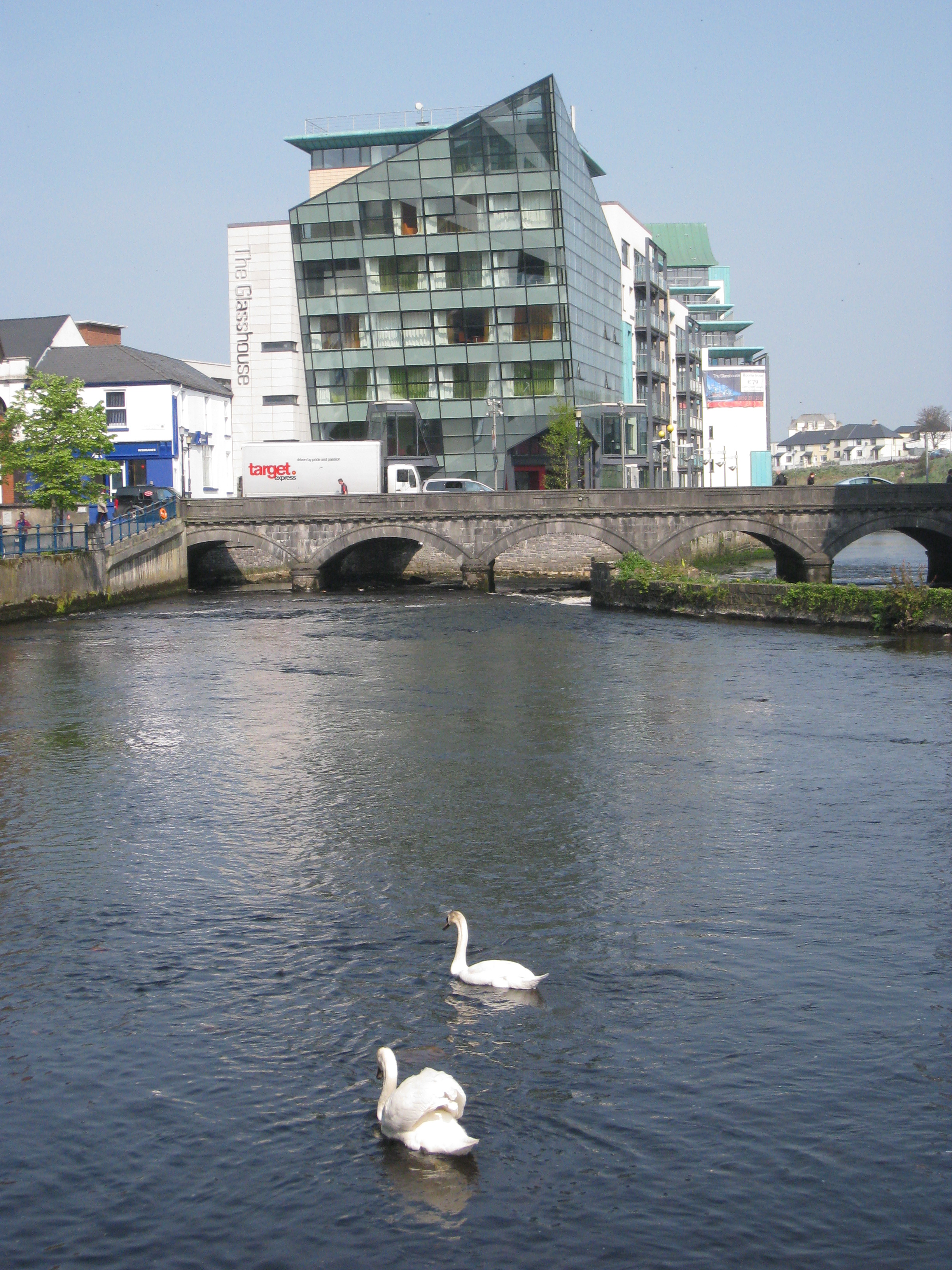
This was our first of impression of Sligo and the scene I have just described took place just metres away from the impressive glass structure of our hotel, which is shaped like an enormous boat, and obscures the little twist of the river as it stretches itself into an estuary.

The Glass hotel, Sligo

Later that night, after a walk through the town, Andrew asked, “so what do you think of it?” I paused, because this was our special break away and you’re not really supposed to acknowledge that it’s not perfect until months later, when you joke about it and realise that the other thought it was a bit shit too.

“It’s a bit dead”, I said. That was indisputable. As dusk settled, the town was lifeless but for a line of three drunken old men, smoking outside their local.

You’d have to move, if you were our age, we agreed, unless you were a farmer or wanted to work in a tattoo parlour, of which there were a disproportionate amount in the town.

We spent only three days in Sligo but it was long enough to perceive how fuzzy a boundary divides what is still and unspoilt from what has been forgotten.

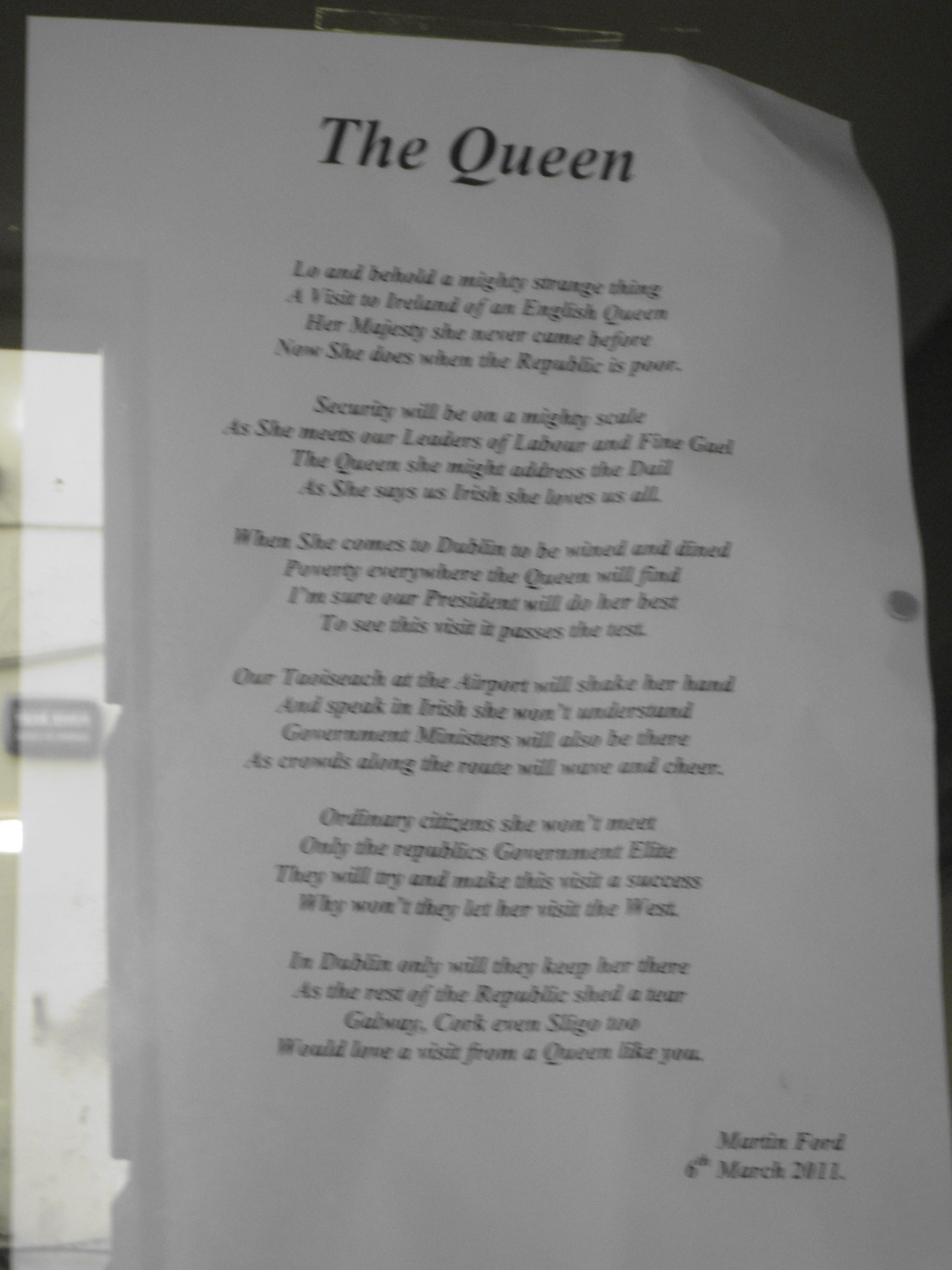
One of the first things we noticed in Sligo town, was a page stuck with blu-tac to the door of a bank (of all places!). It was a reminder of what’s been forgotten. A man, a poet, had penned some verses, on the subject of the queen’s visit. In the penultimate verse, he asked simply “Why won’t they let her visit the west?” And indeed the following day, as we climbed Knocknaree and observed the beautiful, rocky wilderness that surrounded us, it was hard to believe that this wild, unspoilt landscape wouldn’t be to Her Majesty’s taste. And yet, the way I had described Sligo town the night before as “dead”, was as if stillness were a sin.

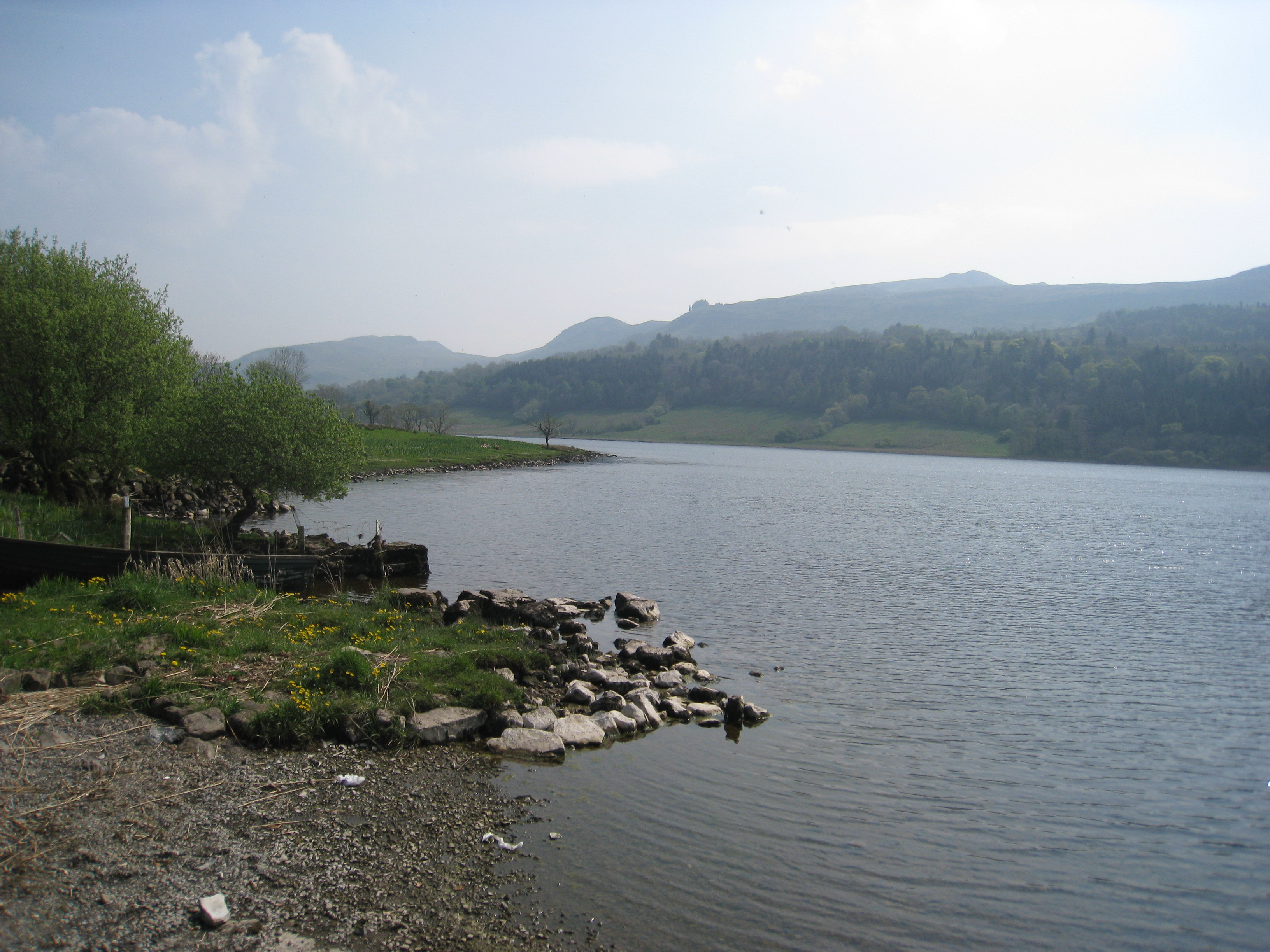
And when on our last day we visited the majestic lake at Glencare (strictly in Leitrim, but whatever) and the waterfall that inspired Yeats in his poetry we were cast under a spell. Beneath gleaming sunshine, the lake water lapped with low sounds by the shore and there was not a soul to be seen. It was beauty unbridled. It didn’t need the Queen’s visit to make it so. It was too beautiful for words or tourist brochures.
And looking back, I am glad that I never did take the fisher boy’s picture. Without that angry, lonely interruption to the peace, his stillness wouldn’t have resonated into prose.

The lake at Glencare

Plans for my retirement

Rupert - Image courtesy of prospect.rsc.org

For some time now I have been contemplating retirement with singular focus. My requirements are modest but particular. For one, I intend to continue living in the cosy, two-storey red-brick, rat-and-mouse-proof house by the canal which I acquired for next to nothing in my mid-to-late twenties during an immoderate slump in the property market. In spite of the life of reluctant employment I have led, I will not be lured by idleness. I will occupy myself with both a vegetable patch and herb garden and feed the fruits of my daily weeding to my guinea pig, Rupert and his rabbit friend, Baltishar, who will munch dandelion leaves in amicable silence while gazing at me adoringly.

I will cultivate my faculties by daily mastery of the ancient Arabic scripts, having established firm mastery of the basics in quarter life. In the attic will be housed a superior telescope where I will while away long nights in contemplating the stars.

I willl engage in late rebellion by smoking hash for the first time, and by taking part in an extreme sport. Though it may seem uber-efficient- given my care-free lifestyle- I might take hallucinogens on the occasion of my first parachute jump. I will enjoy in equal measure my subscription to New Scientist and to Rolling Stone. I will engage in risk-taking behaviour on account of having achieved longevity, which fear of failing at, had held me back before. (Details of my quarter-life crisis can be found here). If LSB has had enough of me, I will become promiscuous.

Speaking of LSB, we are taking the train to Sligo in the morning for a jaunt in the northwest and for some time to ourselves, for the first time in aaaages. I hope that the mytho-poetic landscape there will inspire me to finalise plans for my retirement.