Unknown's avatar

About Kate Katharina

Kate Katharina wltm people with stories for literary fling and maybe more.

When Final Fantasy 7 turns real

A while ago I was working on a story about poverty in Germany. I found out about a place called Kaffee Bankrott, where people go to get cheap meals and emergency shelter.

I went there one grey and humid afternoon. On the way in, a group of young men speaking a foreign language looked me up and down. I smiled at them stupidly. I always do that when I’m nervous.

The cafe was full. Some people looked down-and-out. Others were in suits. Everyone was staring at me.

There’s something despicable about walking into a place like that and telling people that you’re a journalist – working on a story about poverty.

image source: http://www.strassenfeger.org/archiv/topic/21.kaffee_bankrott.html

image source:www.strassenfeger.org

But that’s what I did – I approached an elderly man with a long beard.

“No,” he said.

I looked at his friend.

“No.”

But something about my polite response to rejection must have softened them.

The first man made a joke. “That guy’s a millionaire,” he said, pointing to his shabby companion. “He’s not what you’re after.”

I laughed. “That’s another story then,” I said. “I’ll be back for it!”

I began circulating again. I am relatively good and identifying an open face. There weren’t any here.

But then I spotted a blonde head bent over an A4 pad. A middle-aged woman was sitting alone, smoking and writing furiously. I was drawn to her like a magnet.

I told her who I was, what I was doing, that I was Irish. The latter is a bad habit I’ve developed so that I seem like more of an outsider. It cushions the blow when you act like an idiot.

“Well then we can talk in English,” she said.

I was too stunned to ask why she could speak perfect English and why it sounded as if she’d learnt it in America.

We made an arrangement to meet the following week.

This is the write-up of the interview which was published in an English language broadsheet last month.

Café Bankrott in Berlin’s Prenzlauerberg district provides cheap meals and a place to stay for people in need. 49-year-old Astrid Baty comes here nearly every day. She gets a coffee, takes out a notepad and pen, lights a cigarette and begins to write, furiously.

Her stories are based on the Final Fantasy video game series. But, she says, “I could easily write a book about my own life.”

Astrid Baty was born in Bochum in western Germany and grew up in the state of Saarland on the French border. After she left school, she trained to become a painter-decorator. There were 8 girls and 240 boys in the class. She didn’t find work in the area so instead got a secretarial qualification. From 1983 to 1990 she lived in the south-western state of Baden-Würtemberg and worked as an office clerk to a broker.
Then at the age of 26, she moved to the United States, where she was to stay for the next eleven years. Within weeks of arriving, she had found a job. She worked as a cartoonist, drawing for small newspapers, as well as for the Marvel company.

“When I arrived, I didn’t speak a word of English,” she says. “But within three months I picked it up. “I read the same Stephen King novel page-by-page in German and English.”

In the more than a decade she spent in the United States, Astrid Baty was never out of work for more than two weeks.

“It helped that I was willing to move 3000 miles,” she says, laughing. She lived in New York, Florida, Los Angeles and Oregon. Her favourite job was with the Salvation Army, helping victims of the Los Angeles earthquake.

source: finalfantasy.wikia.com

source: finalfantasy.wikia.com

In June of 1996, Astrid Baty got married. Five years later however, the marriage broke down. The collapse of her relationship and the election of George W. Bush were behind her decision to move back to Germany. “I began to get the feeling that people who were not born in the US were beginning to be pushed aside,” she says.
Back in Germany, she was offered a job with Lufthansa. “I was going to work at the counter because I had two languages,” she says. “But then September 11th happened and that was the end of that.”

Since then, life has been a struggle. She returned to Saarland and worked in a so-called “mini-job” cleaning a bakery, which paid €400 a month and supplemented her unemployment benefit.
But the job was humiliating. “I was the only one who’d come in every day,” she says. “Eventually I quit the job. I’m not a slave.”

She continued her job hunt but to no avail. “I always get the same response – we’ll call you if something comes up.”
The problem, she believes, is not lack of qualifications, but her age. “I’m not 25 and I don’t have the figure of Claudia Schiffer,” she says.

Still unemployed, Astrid Bates moved to Berlin in 2009. “Saarland was too small,” she says. “Berlin was like New York. I thought there would be more possibilities there.”
Her big hope was to get a job at the new Berlin-Brandenburg airport, which was due to open in 2012. But that project has been plagued by delays and the opening date has been pushed back indefinitely. “It won’t be open until 2075!” she says, chuckling.

Unable to support herself, Astrid Baty ended up on the street for a short time, before somebody told her about Café Bankrott, which is run by the Strassenfeger street newspaper group. The organisation provides emergency accommodation and Astrid Baty stayed there for six months before being provided with a flat from social services.

She volunteers in the kitchen at Café Bankrott and occasionally sells the Strassenfeger. Her impression is that people buy more from women than men. “It also helps that I’m not drunk or on drugs,” she says. “I always make sure I dress well when I’m selling.”

She thanks an old teacher for introducing her to a book which put her off experimenting with drugs. “At school we read Wir Kinder von Bahnhof Zoo by Christiane F and I’ve never forgotten it,” she says. It is a true story of a girl living rough in the area around the Bahnhof Zoo station of the former West Berlin who becomes a drug addict and prostitute. “The idea of selling your body to pay for drugs… it was a horror,” she says.

In 2012, Astrid Baty experienced what could be described as a horror. “I had a sore back,” she says. “But thought nothing of it.” The next thing she knew, she was in hospital. “I had no idea I’d had a heart attack,” she says. She spent a week in intensive care and went through three weeks of rehabilitation.

“They took good care of me,” she says. But in October of last year, she had more heart trouble. As a result, even if she were to get a job, she is now no longer allowed to work more than three hours a day. That puts her on an alternative disability benefit, known as ‘Erwerbsminderungsrente’, which is in the process of coming through.
Both of Astrid Baty’s parents are deceased and she has no contact with her brother. She’s lost touch with her friends in America too.

It’s a situation that would drive many to despair. But Astrid Baty insists that despite her plight, she is happy.

“What’s the use of whining?” she asks. “I overheard a girl complaining about the weather recently. What’s the point in that? We can’t change it!”

“I also have a hobby to keep my mind occupied,” she says. “I write.”
The notepad in front of her contains pages and pages of immaculate script. “I write fan fiction,” she says. “The stories just come to me – it’s like seeing a movie in front of my eyes.” She got her first games console in the United States and has been an avid gamer ever since. A search for her username, “Moonshadowcat” on Germany’s leading fan fiction site, http://www.fanfiktion.de reveals dozens of stories and also directs to a self-built website in both English and German which Astrid Baty uses to promote her services as a painter, translator and secretary.

But if she is cynical about anything, it’s politics. “We get support. But the problem is – while I live on €378 a month, the politicians are earning thousands.”
“Okay, I smoke,” she concedes. “But the money’s still not enough to cover everything else, like train tickets, heating, food, clothes and toiletries.”

She doesn’t believe much will change after the election. “For little people like us, it’ll be the same.” But, she says, she will turn out to vote. “I can’t complain about anything if I don’t vote.”
When it comes to the future, Astrid Baty is ambivalent. “I’ve no big plans,” she says. “I would love to go back to the US. But that’s not possible … I would like to find work.”

Her dream job would have something to do with computers and writing. “Give me a computer and I can do almost anything,” she says.

In the meantime, she plans to keep writing and coming to Café Bankrott, where she has made friends. “But who knows how long I’ve got left after my heart attack?” she says.

This is what slipping through the net looks like.

It’s not a sob-story. Astrid is resilient. And she is content.

The stories she writes are homo-erotic. She has suggestive lips and she laughs a lot. She views death relatively casually.

She has more dignity than most.

But her story represents the tragedy of lost potential.
What I’ve learnt from Edward Snowden

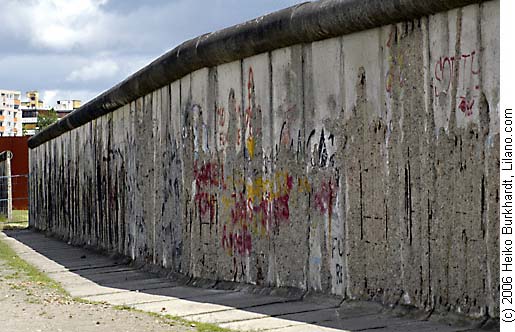
Mauerpark is home to some of the few remaining slabs of the Berlin Wall. They are dotted neatly along Bernauer Straße and flanked by a visitors’ centre and tower. Tourists climb the tower and look down on the street, imagining it divided in two.

A few weeks ago, a Mercedes pulled up on Bernauer Straße. Michelle Obama and her daughters got out. They were met by a man in a black suit. As they made their way into the visitors’ centre, he gestured to the area around them and they nodded attentively. A few minutes later, I saw their tiny heads at the top of the tower.

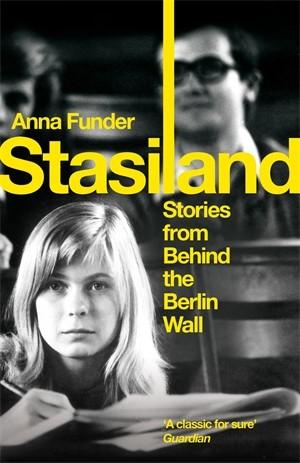
Lately I’ve been spending my evenings on the other side of the park, closer to the stalls housing ponies and goats and pens full of guinea pigs. I go there after work and read Stasiland. It’s a paperback with a yellow and black cover. The ‘L’ of the title has been extended to separate Stasi from and. I avoided it for months, admiring instead the bold colours of its spine, which stood out like a bee among the other titles on my shelf. I had got it into my head that it would be a bleak read; more of a history lesson and less of a story.

I was wrong. It is compelling and original. The author, Anna Funder, tells remarkable stories in unsentimental language. She is a master of observation – a fitting tribute to her task, which is unravelling the lives of East Germans constantly under surveillance.

I don’t just go to Mauerpark to read though. I go to watch.

There are two places I like to sit.

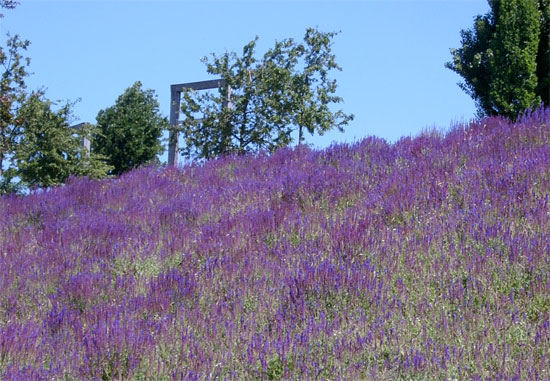
The first is on the top of a hill covered in purple flowers that look like lavender but which somebody told me, categorically, they are not.

The second is in an arena made of concrete. On Sundays, an Irishman with a battery-powered box moderates enormously popular karaoke sessions there. During the week though it is populated by shaggy-haired men playing guitar, groups of teenagers with shisha pipes and old stooped figures moving quickly up and down, collecting the glass bottles people discard on the ground. Later, they recycle them for cash.

Once I observed three teenagers in an unequal relationship. They were sitting in the centre of the arena. The two girls would kiss and hold hands while the boy sat beside them drinking beer. Then one of the girls would break off from the other to wrap her arms around the boy and climb onto his knee, while the other sat alone. The relationship seemed to intersect around one of the girls; the other two didn’t touch. After some time, the girls took each other’s hands and walked away, leaving the boy – and me- watching them from behind.

Karaoke in Mauerpark

karaoke in Mauerpark

I also watch people setting up picnics, cooing at their babies and shooting basketball hoops.

It doesn’t occur to me that I am being watched.

The office where I freelance is close to Mauerpark. My job requires me to write about German news, in English, very fast. In the past few weeks, one face has been appearing on top of several of my stories.

image source: Wikimedia

image source: Wikimedia

It is young, chiselled and bespectacled.

It’s Edward Snowden. There is a stock photograph that the agencies have which is a still from an interview that was recorded last month.

I’ve looked at it carefully. Snowden is facing the camera at an angle. His image is reflected in the mirror behind him and his expression is tense but firm.

When I write about him I use terms like “NSA whistleblower” and “fugitive” because that’s what everybody else is calling him.

I dutifully record the sequence of events as they appear in the agency feeds and try to come up with snappy headlines to fit the stories.

But the more I see Snowden, the more uncertain I become.

When it broke that US intelligence agencies were monitoring vast amounts of telecommunications, I was surprised it was a story.

Wasn’t it a given?

I wasn’t alone in my reaction. Others have told me, somewhat sheepishly, that they too expected it to be the case.

News of microphones in EU offices did shock me though. Unlike the internet, they are tangible devices. People need to conspire to plant them. They feature in detective novels and in the Cold War.

And as sometimes happens, I began to question myself.

‘Virtual reality,’ I thought, is an oxymoron. Spying on the internet requires forethought too.

And taking the technology for granted only adds to its sophistication.

Most of the time I am content to be gratefully bamboozled by how it is that the face of my friend in South Sudan can pop up on my screen or that my boyfriend and I can share a beer together – he in Edinburgh and I in Berlin.

But reading Stasiland and writing about Edward Snowden has caused me to uncover an uncomfortable truth of my own.

I have underestimated the capabilities of those in power. And I have become inert, thanks to a life full of comfort.

I escaped World War II by just fifty years and was four when the Cold War sort of ended.

But I figured – out of laziness – that nobody could be watching me and that those that are being spied on, probably deserve to be.

I have, it seems, a trust in authority that has only just become explicit.

Edward Snowden, a disillusioned geek, is just five years older than me. I am impressed by the hysteria he has unleashed. It, rather than anything he’s revealed, has shaken me up.

I’ve learnt that I live in a world where a plane carrying Latin American dignitaries can be forced to ground on the suspicion that a tech-clever ex-contractor could be on board. I’ve learnt that the balance of power in the West is an uncomfortable thing. And I’ve learnt something I keep learning: that I know very little about anything at all.

Yesterday, my colleague and I took our lunch to Mauerpark. She had bought a punnet of raspberries and we were munching them in the sun. A man with sun-tanned skin was loitering close by, watching us. After a while he lay down on the grass and curled up with his back to us.

Then suddenly we felt him looming. He asked, in Spanish, for a raspberry. When we gave him one, he disappeared.

Minutes later, a man in sunglasses, shorts and a baseball cap raced towards us.

“Was that guy just now hassling you?” he asked. He sounded panicked.

“No” He just wanted a raspberry,” my colleague said.

“Have you got everything?” the man said. “Quick, check for phones and money!”

We rummaged through our bags. Everything seemed to be intact.

“You sure?” the man asked. He was rushing onto the road.

“Wait,” we called after him. “Is everything okay?”

“Yeah,” he said, without stopping. “I’m a cop.”

“Auf die Minute!”

Auf die Minute! Frau Bienkowski says, glancing at the clock which hangs to her right.

This is always my greeting. It is the third and final thing that happens before we shake hands.

First I knock twice on the door. Frau Bienkowski says “Ja” in two syllables, which she stresses equally.

And as I am pushing open the door and making my way past where her coat hangs, she says it.

Auf die Minute! – to the minute!

Once, Frau Bienkowski had another visitor – a lady – when I knocked on the door at precisely 3 o’clock.

Auf die Minute! they said in unison, because Frau Bienkowski had told the lady that I come exactly on time, every time. And we all laughed.

“So gehört es sich auch,” – that’s how it should be – I retort as I take the hand she has outstretched.

Sometimes Frau Bienkowski playfully teases me about my punctuality.

“You must pace around the corridors!” she says.

“The corridors? Are you joking? I go for a walk in the gardens!”

It is a source of immeasurable pride that my punctuality amuses and reassures a German. A 94-year-old German at that.

I have not told Frau Bienkowski that she alone benefits from my impeccable timekeeping and that back home, my parents are bemused by what they called my “scurry” – a trademark dash out the door which I perform with my shoulders hunched forward, my head down and usually missing an item vital to the appointment I am trying to make.

Today Frau Bienkowski is wearing a yellow jumper with short sleeves. She matches the apricots I have brought her.

“I couldn’t find the Turkish apricots which you requested,” I tell her. “These are Greek.”

“Oh, perfect,” she says.

“And they are still a little hard. But I chose them deliberately because they go soft so quickly.”

“Absolutely right,” she says, digging out her purse and pouring coins onto the table. “Now, what do I owe you?”

“Nothing,” I say. “I get a monthly travel allowance of €25 for visiting you, which I do not use because I walk. I think it’s well spent on apricots.”

“Katechen,” she says, as more coins topple out of her purse. “I swear to you, I will not ask you to get me anything ever again if you do this!”

“But I don’t need the…”

“Katechen!”

“They cost €2.29,” I say.

“Good,” she says. “Take €2.50.”

“Ha! You must be joking.”

Frau Bienkowski digs her fingers through the netting of the plastic container. She gropes the apricots, pressing them with her forefinger and thumb.

“Let’s have one each,” she says.

I take them and rinse them under the tap in her toilet sink.

To the left there is a plastic shower seat, where Frau Bienkowski sits when she gets her back washed.

“It is the only thing I can’t do for myself,” she has told me many times. “I can still do everything else. I can get dressed, and make my way downstairs for lunch. I always say, as long as I still can, I will…But I can’t reach my back any longer.”

We sit by the window, munching apricots.

It is a dull day, but every now and then, the sun breaks out from behind the clouds.

On the window sill is a line of pots.

“Look,” Frau Bienkowski says, pointing to the pot of carnations I brought for her birthday.

They are deep pink and in full bloom.

Why people stop blogging

You can spot them miles away.

Blogs that have been abandoned by the successful.

As the days and months go by, the posts became sparser.

A dig through the archives reveals evidence of more humble times – detailed descriptions of trips to the supermarket, unsolicited critiques of films,dramatic confessions that nobody really cares about, anecdotes about odd family gatherings and photographs of asparagus.

Posts become weightier. Themes like politics and history rear their ugly heads.002

Success becomes a legitimate reason to write a blog post.

Out with the grainy pictures of home-made jam and in with shiny pictures of cook book launches.

Links to appearances in more well-read publications begin to appear, like acid being poured on a wilting flower.

Enough, I say.

I’m sorry I haven’t blogged in a while.

But don’t worry. I haven’t become a massive success.

I’m just guilty of benign neglect.

And I’ve also been surprisingly busy.

And, alright, if you MUST know, I’ve been writing quite a lot for other publications.

Sickening, I know.

But I haven’t forgotten where I came from.

I’m still Kate Katharina, creep supreme and number 1 fan of the lampsilis mussel.

Last month, I interviewed a 49-year-old woman whom I met in a homeless shelter.

She spoke to me in fluent English.

Every day, she goes to a café run by a homeless charity, where she sits, smoking and writing Final Fantasy 7 fan fiction.

I’m planning an entire post dedicated to that encounter soon.

Last week, I went down to Bernauer Strasse, where Michelle Obama and the girls were visiting remnants of the Berlin wall.

In the blistering heat, I interviewed a few people who had gathered to welcome them.

One of them was Ruben, a Dutch civil servant, who had driven all the way from Holland for the Obama visit.

His enthusiasm was infectious.

After I’d taken his photograph and the Obamas had departed, he asked me whether there was a loo anywhere in the area.

I wasn’t sure if this was off-the-record.

As the road was closed off and most of the cafes on the street were shut, I took him back to the little three-person office where I freelance and presented him to my colleague as “Ruben, a Dutchman who is going to use our facilities.”

I’ve also been working on- www.berlinab50.com which is a blog aimed at Berliners in the 50-or-over category. I’m guessing that doesn’t include most of my present readers.

And I’ve been visiting Frau Bienkowski, who has vowed never to let slip again that she was invited to dine on asparagus in palatial surroundings.

Rivalry in the home can become quite intense.

And LSB was over for a few days too.

I took him up in a giant air balloon and fed him with falafel.

And we had our first ever experience with a disposable grill set.

And on that intriguing note, let me leave you with a link to an article I wrote last night for an Irish paper.

the promise to do my very best to blog more regularly again.

Legs

“So many beautiful young women’s legs are wasted by wearing trousers,” said Frau Bienkowski.

I nodded sympathetically. I was in an asymmetrical chequered skirt and thick brown tights.

“Your hair looks very nice today,” she said. “Is it freshly-washed?”

“I washed it this morning though that’s not unusual. But I’ve been out in the rain.”

She nodded. “That could explain it; it’s sitting very nicely.”

I wheeled the Zimmerframe down the corridor and picked up two cups of coffee.

“Here, have this 200 gram-bar of chocolate,” Frau Bienkowski said.

“Oh, I couldn’t possibly..”

“They’re putting me on a diet, I’m getting too fat!”

“Oh, if you insist!”

Outside the rain pelted down. The sky was white and grey. The trees swayed sadly and their leaves hung limp.

“Weren’t we waiting for a rainy day to clear out the cupboard?” I asked.

“Oh, but it’s Sunday.. are you sure?”

image source: centralavenuepub.wordpress.com

image source: centralavenuepub.wordpress.com

“Sure as can be.”

“Why don’t you use that walking stick to pull out all the stuff at the bottom?”

I fetched the dark mahogany stick and poked absurdly around the bottom of the cupboard, pulling out piles of clothing, carrier bags, cardboard boxes and four rolls of kitchen paper.

We made several piles: too big, too small, keep, discard.

I held up some wide navy trousers.

“They’re for hospital,” she said. “My only pair! Put them in the hospital bag.”

Later, we continued reading from Una Troy’s book about the cantankerous Irish nun.

I read a passage detailing the monotony of convent life. Frau Bienkowski nodded the whole way through.

“Just like here,” she said.

Afterwards I asked her whether she’d listened to the audio book.

“No, Katechen” she said. “I’m so listless and uninterested in life. I sit here and keep my eyes closed.”

“But you could just try it out for five minutes,” I insisted.

“Yes,” she said. “I could. But I am depressed. Well, I don’t know whether I am. But the weather doesn’t help. Every day is the same.”

“You have a lively mind,” I said. “You need more stimulation.”

“The friend I told you about last time,” she said. “She was a year younger than me. We used to bet about who would die first. I said since she was younger it’s only right that I would go first. But she died last year.”

“Anyway, Katechen. How is Andrew?”

“He’s well. Working diligently on his dissertation.”

“And when are you next free?”

“I’ll check my diary.”

“Now, I don’t want you to…”

“Enough, Frau Bienkowski.”

She smiled.

“Thursday?”

“Thursday.”

She came with me to the lift.

“Thank you, Katechen.”

“Thank you.”

The doors slid closed but her eyes were sparkling and she was smiling before she disappeared from view.

How to be a hit among your chosen demographic

If, like me, your natural disposition is ill-suited to the modern-day rat race, I would recommend infiltrating a group of seniors. After extensive exposure, I discovered age to be the single greatest factor affecting my personal popularity.

In fact, among the over-65s, I enjoy close-to-celebrity status.

Here’s how you could too.

1. Develop a permanently pleasant and attentive expression

For years I thought that when people said I was a good listener, they were being kind about me being a poor speaker. But it turns out that years of pretending to listen to people who bored me allowed me to develop a highly attentive expression and an uncanny ability to match my face to the appropriate tone of the conversation, despite not being consciously aware of the topic under discussion.

This makes you appear wholesome and respectful, two of the most coveted characteristics among the over-65s.

2. Use your nationality to your best advantage

After tricking seniors into liking me with my pleasant and attentive expression, I tell them that I’m Irish. They use this information to justify their positive first impression. “Oh, Ireland,” they say. “So lovely and green!” Once when I gave up my seat for an old lady on the train, she said “I bet you are not German! They have no manners any more.” When I confirmed that I was, in fact, Irish she said “I knew it!”

3. Start a blog and employ an unusual marketing strategy

As well as visiting Frau Bienkowski, I’ve started volunteering at a seniors’ club. It is an incredible place and I have started counting down the days until I am old enough to sign up to all the activities offered there, from herb-tasting and cooking classes to tango dancing and Chinese conversation. Along with four other lovely volunteers, I’ve set up a blog called Berlin ab 50 where there’ll be articles, podcasts, videos and more catering to the over-50’s living in Berlin. If you’re over 50 or German or reading this right now, you should check it out!

If you follow and adapt these handy tips, you too could become instantly popular among your chosen demographic.

“Getting an abortion in 1953 wasn’t that easy.”

In 1953 Frau Bienkowski’s friend, who was having an affair with a married man, got pregnant. Though she’d had abortions before, she couldn’t get one this time. She had a baby daughter.

The man left his wife. Frau Bienkowski advised her friend not to marry the man. But she did.

After a few years they moved from Berlin to the south of Germany, where his family was from. Frau Bienkowski didn’t like the man. He wasn’t very nice and he drank a lot. He had other children too. Frau Bienkowski and her friend fell out over him for a while.

A few weeks ago, when it was Frau Bienkowski’s birthday, the woman called her.

She’s 89 now and her husband is dead. But the daughter grew up to be a wonderful woman.

“I said to her,” said Frau Bienkowski, prodding her fork into her kiwi cake, “I said, you went through a terrible few years. But look what you’ve got now. A wonderful daughter.”

It all turned out for the best, Frau Bienkowski said. Now she has a diligent daughter – a medical assistant – to take care of her in old age.

Frau Bienkowski and I talked about abortion. I told her it was illegal in Ireland. She had heard about the case of Savita Halappanavar.

Even though her friend now has a lovely daughter to take care of her in old age and her own beloved son died, Frau Bienkowski, 94, and I, seventy years her junior, agreed that Ireland should legalise abortion, and not just if a woman tells three doctors she’s suicidal.

When Frau Bienkowski was young, the pill wasn’t available. “You had to be really careful,” she said.

I told her that when my mother came to Ireland, people went to Georgian houses where doctors illicitly provided them with condoms.

“Contraception is probably still forbidden in Ireland,” Frau Bienkowski said, laughing.

I assured her that, thankfully, it was not.

But I told her that women go to England to get abortions. “Oh, is it legal there?” Frau Bienkowski asked. For her, England and Ireland are pretty much one.

“I’m surprised there’s such a demand for abortion these days though,” Frau Bienkowski said. “With so much contraception available.”

Frau Bienkowski and I talked about men. She knew several who were serially unfaithful.

I said I didn’t like people who wanted to have an exclusive partner and also lots of secret ones. I said I could understand people wanting to have sex with lots of different people, and liking open relationships. But that deceit drove me up the wall.

Frau Bienkowski agreed.

Then she asked: “So how are things with Andrew? What’s the story with his plans?”

“I have good news,” I said.

She looked intently at me. “Yes?”

“He’s moving to Berlin!” I said.

“That’s to my advantage,” she said.

Here eyes were sparkling. “That means you’re staying!”

“It sure does,” I said. “I’m not going anywhere for a while.”

“That’s to my advantage,” she said again.

The wheelchair man

A couple of weeks ago, I decided it was warm enough to wear the pretty party dress my sister gave me for my birthday.

I arranged an evening to go with my outfit.

LSB put on a shirt and tie. I squirted on some perfume and off we went.

We chased each other down the street. We got ice-cream that came in giant cones. We went to see a movie.

Afterwards I told LSB I was taking him to a bar in the east of the city called Madame Claude.

just before we encountered the man in the wheelchair

just before we encountered the man in the wheelchair

I didn’t tell him about Madame Claude’s alluring gimmick : the furniture there hangs upside down, fixed to the ceiling.

I’d seen pictures on the Internet and it made me think of the Mad Hatter’s Tea Party or of the scene in Mary Poppins where everyone laughs so much they float up to the ceiling.

On our way up to the station platform, we passed a big, dirty man in a wheelchair with his trousers down, defecating.

I caught his smell. We went on up the stairs.

When we got to the top, we took a glance back down.

The man’s wheelchair had overturned.

It was a busy night. Some people were rushing for the train. The man lay on his side, his trousers still down.

LSB and I pushed back against the stream of people going the other way.

I moved towards to the man and said stupidly, “Are you okay?”

Another lady stopped.

She had round eyes and her lips were pursed.

She tugged the man on the arm and tried to haul him up. Then another man came along. He was a friend of the man on the ground. He had a grey beard and dark eyes.

The lady held the wheelchair steady while the man’s companion hoisted him back into his seat.

He landed in a lump. His friend bowed his head in thanks and ushered us away with a few polite waves of his hand.

He didn’t want our help.

On our way back up the stairs, I asked the lady if we should have called an ambulance.

She looked tired, her face was full of resignation. “No,” she said. “Not against his will.”

Madame Claude

Madame Claude

LSB and I went to the upside-down bar. A French band was performing an intimate gig in a dimly-lit basement back-room. They played long, instrumental songs that sounded like beautiful, sad landscapes. In between, they spoke to the little crowd in formal, polite English. After the show I bought their CD.

LSB and I got a drink. Above our heads, tables, chairs, vases, and a pair of slippers were glued firmly to the ceiling.

It was a novelty.

But if our perspective did shift that night, it was down to a big and dirty man, his proud friend and the still image of a wheelchair turned on its side.

The Devil you don’t know

My last visit to Teufelsberg

My last visit to Teufelsberg

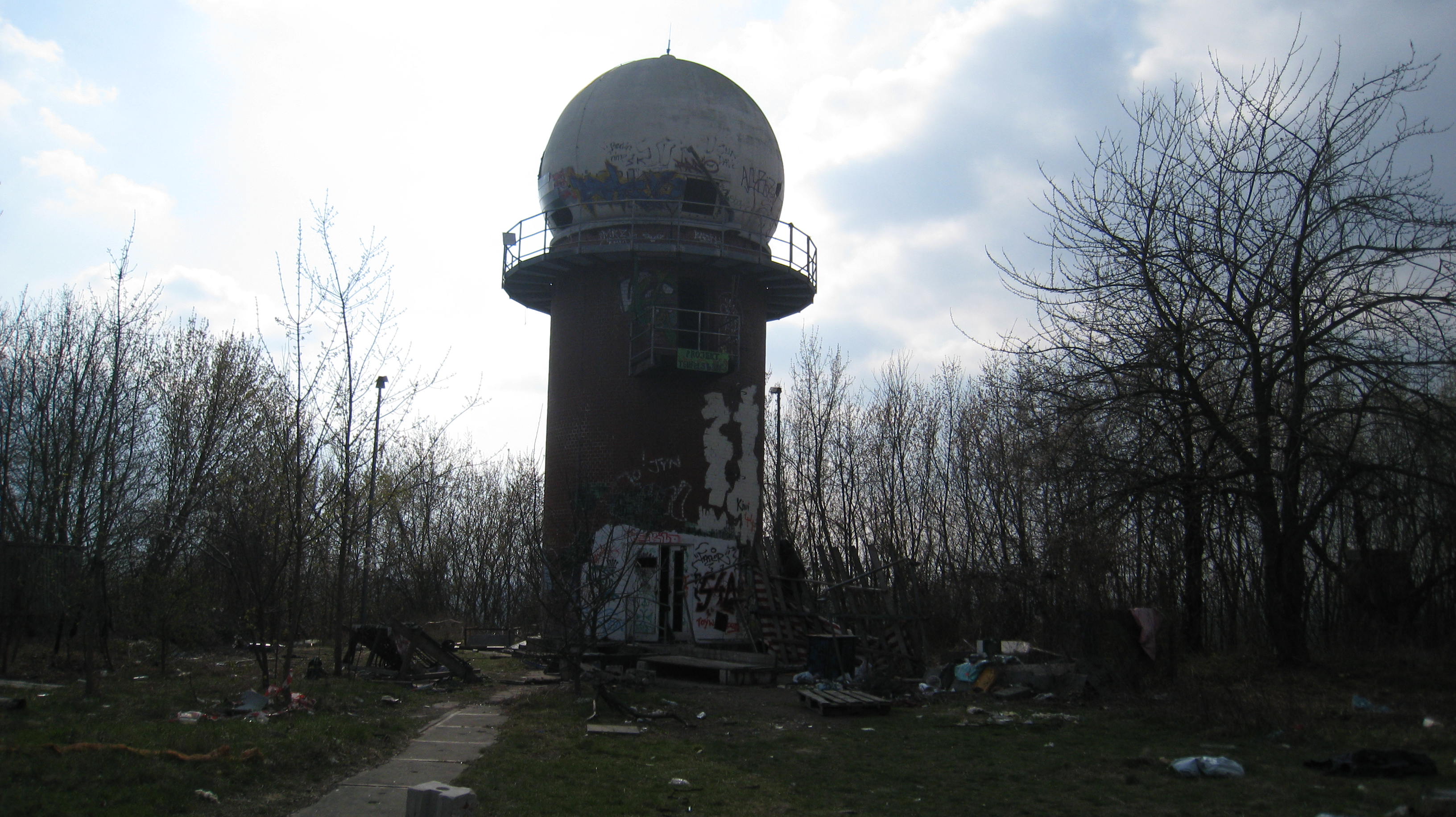
I thought LSB might be missing Edinburgh’s hills, so I decided to take him up “Teufelsberg,” or “The Devil’s Mountain,” to see a Cold War spy station that is crumbling to pieces.

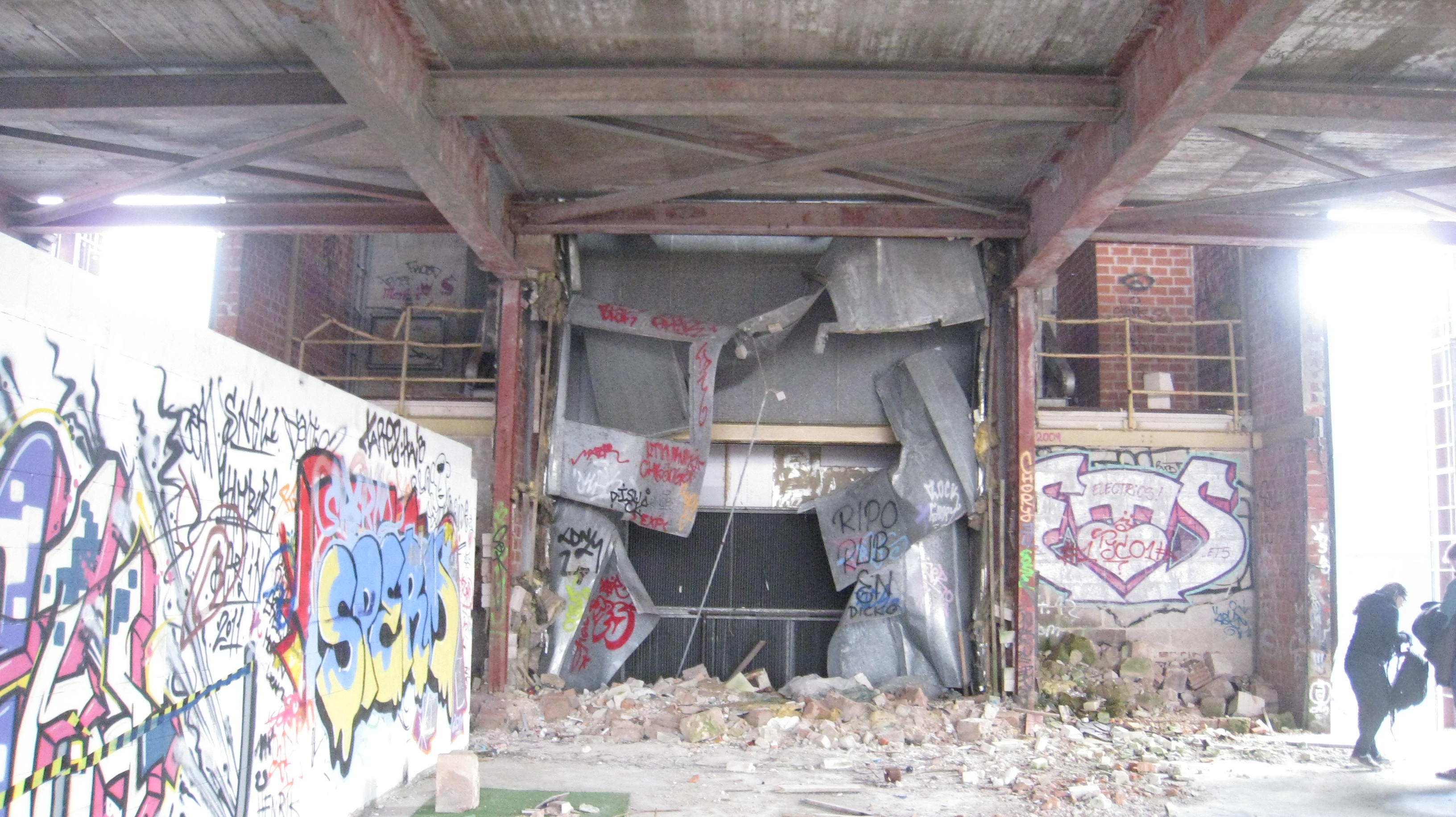
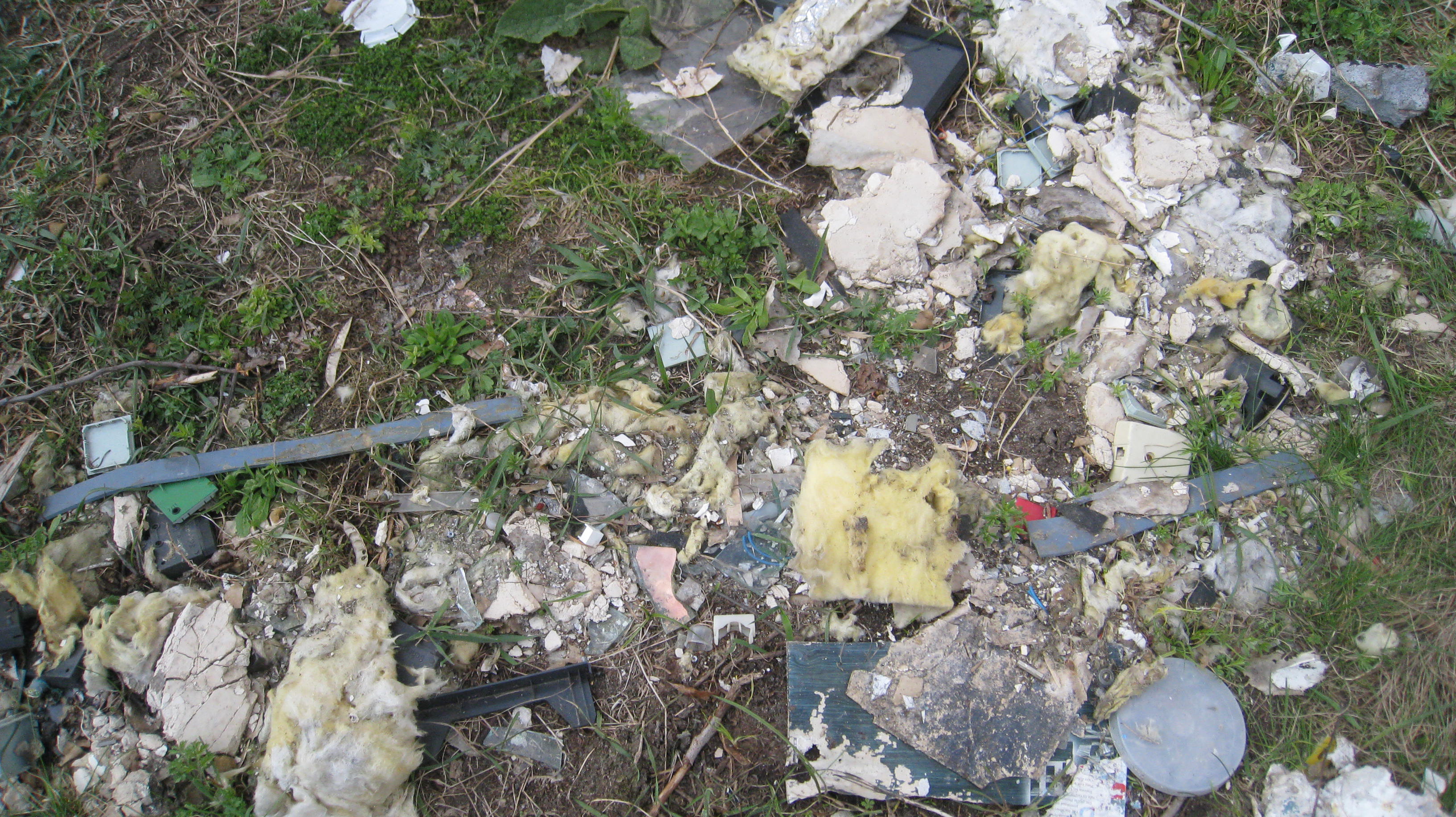
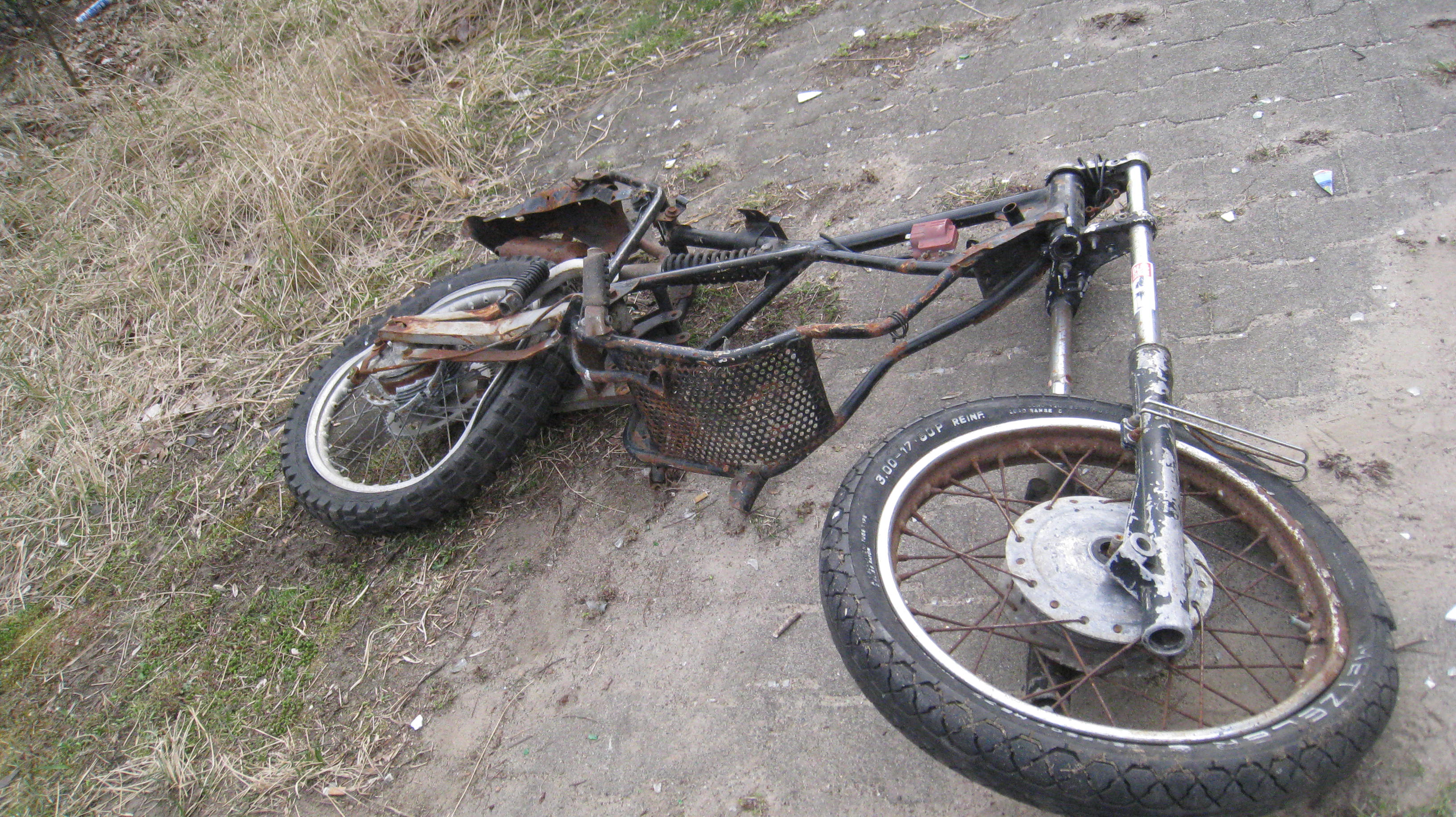
The station is surrounded by a fence. Last time I was there, I clambered through a hole in it. Inside there was a vast spy column and a huge building, both falling apart. And graffiti, everywhere. And gaping holes in the concrete floors. Yellow felt lining and rusty bicycles lay strewn on the ground.

This time, all the holes in the fence were closed up. We walked around and around and thought about making our own.

My last visit to Teufelsberg

My last visit to Teufelsberg

Suddenly we encountered a commotion.

There’s nothing I like more than a commotion.

A man dressed in camouflage gear and a green beret was standing by steel gates, barring entry to the facility. He had his chest puffed out.

A group of tourists were standing by the fence, fretting. Their friend was inside the facility and he was not answering his phone.

“Oh my God, we need to get him out,” said one.

“Dude, don’t worry, he’s out of battery,” said another.

“Hi,” I said, “what’s going on?”

“These guys won’t let us in unless we pay €7,” one of them told me. “But we think they’re dodgy.”

I took a closer look. Three men were stationed in a triangle outside the gates.

Apart from the one with the green beret, there was a lad of about nineteen. He was wearing baggy jeans and a cap. Another man in a brown jacket was standing very still and watching us from a tree.

Our conversation took place in English.

“This is complete bullshit,” said one of the tourists. “These guys are just trying to make money.”

“I like the guy’s beret,” said another. “He’s sure playing the part.”

The man in the green beret kept his chest puffed out and gazed ahead with steely resolve. When he was asked why we couldn’t enter without paying he said “It’s patented.”

My last visit to Teufelsberg

My last visit to Teufelsberg

I’ve never been in a fight but something in the air felt like one was brewing.

I caught the eye of the youngster in the cap. He had a harmless, roguish face. I took a liking to him though I suspected he was a criminal. He didn’t speak much English. He struggled to explain that the facility was now managed by a really cool dude and that it wasn’t safe to go inside, but for €7, we could take a tour.

I startled him by breaking into German.

“What’s the deal?” I asked. “Why can’t we go in like before?”

“Dude,” he said. “I know it kind of blows but you see, it’s not really safe to go in.”

“Really?” I said. “But it’s safe if you pay?”

He looked sheepish.

“No you see, you go in for a tour,” he said finally.

“I see,” I said. “How did you get this ‘job’?”

“I’m friends with these guys you see. I used to come here all the time and I loved it. And now I’m training to be a gardener and this cool guy is doing up the place and that’s how I got involved.”

“Who is this guy?”

My last visit to Teufelsberg

My last visit to Teufelsberg

“Shalmon Abraham.”

“And he is your boss?”

“Um, yeah.”

“Can I Google him?”

“Oh, I never said that,” he said, looking at my feet. “By the way, I really love your shoes.”

“Thanks,” I said. (I got them in a vintage store in Rathmines.)

We chatted some more. My new criminal friend had been to Ireland. He said he liked the sheep and had visited Belfast.

Meanwhile, there was more commotion. The group of tourists said they were calling the police but the man in the green beret said he would call them first.

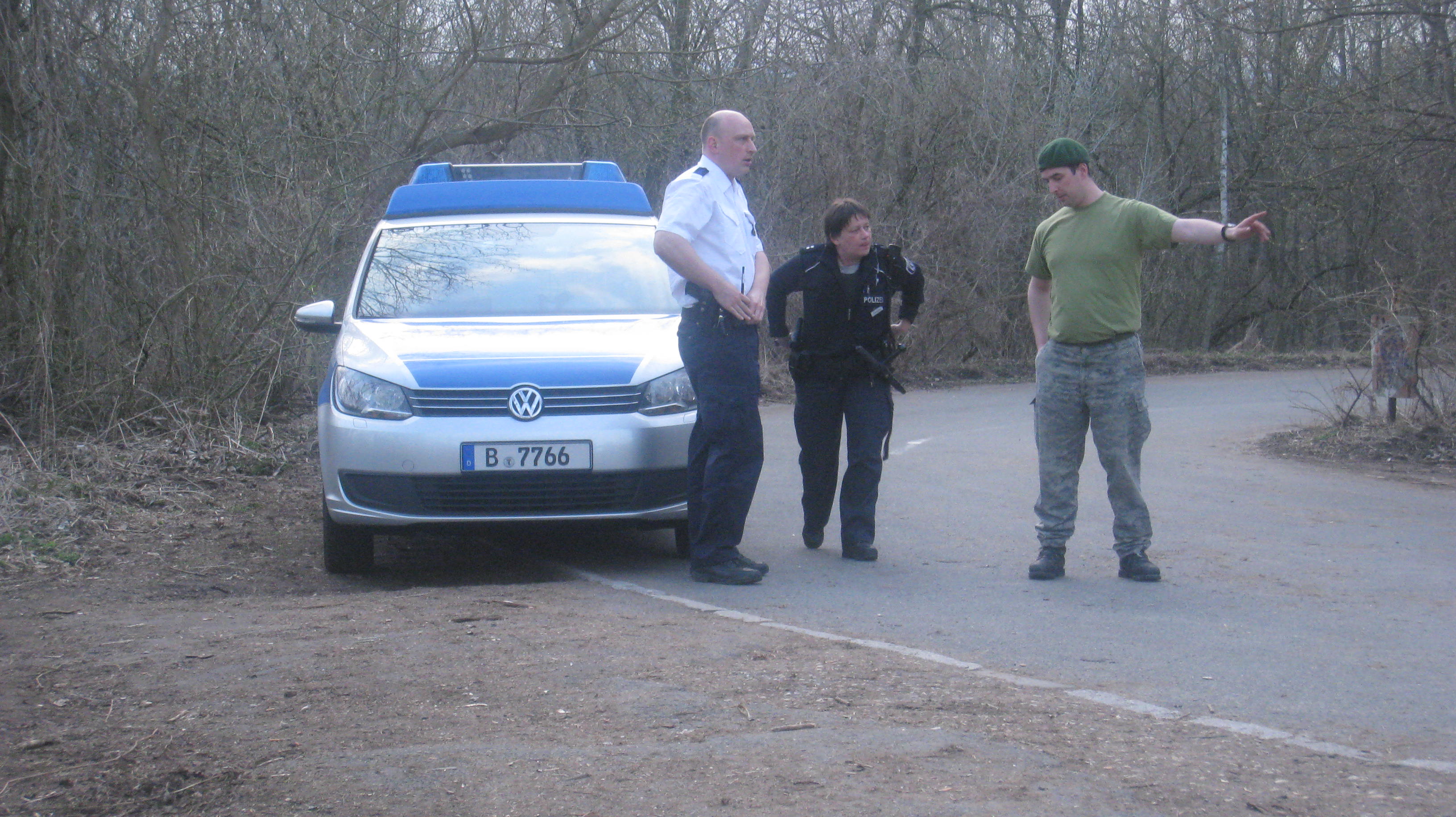
Police arrive and speak to man in green beret

Police arrive and speak to man in green beret

So he did.

LSB and I stayed on scene, chatting to the tourists and to the youngster from the other camp who had admired my shoes.

“You know, I really did use to like coming here to hang out too,” he said. “I’m just kind of on the other side now.”

It was like Romeo and Juliet.

Suddenly a man and a little girl walked out of the facility, accompanied by a petite, gamine French girl.

'Shalmon Abraham' speaks to two film-makers and French 'tour guide'

‘Shalmon Abraham’ speaks to two film-makers and French ‘tour guide’

“Hey man,” my possibly-criminal friend said to the man. “How’d you enjoy the tour?”

“She didn’t say a word,” the man said, motioning to the girl. “Barely even when I asked her a question!”

A little while later, a police car drove up the hill.

I decided this was a breaking news situation so I retreated close to a hedge to take some pictures.

A policewoman got out of the car and had a talk with Mr Green Beret. A policeman talked to the tourists, whose friend had meanwhile emerged unharmed from the facility.

Then a man in a white body suit appeared.

“That’s Shalmon Abraham,” said my new friend.

Shalmon Abraham did not take off his mask when talking to the police.

Police talk to tourists

Police talk to tourists

I asked the policewoman if the facility was really “patented.” She said it was.

I asked her when. She told me years ago.

I said I had been here a year ago and had encountered no unofficial looking men dressed in military gear barring my entrance.

She said that was strange.

I took some more pictures. Then LSB and I climbed another hill.

When we got to the top, he said “Let’s charge €6.50. We’ll undercut them!”

At home, we Googled Shalam Abraham. He exists (under is nuclear power suit). He’s a 28 year-old artist. And evidently, he has friends in high places.

Frau Bienkowski meets LSB

“Are you alone?” Frau Bienkowski asked as I poked my face through the door.

“No,” I said. “I’ve brought somebody for you to meet.”

LSB was on his best behaviour. Earlier, he’d been fretting about the propriety of his shoes and had asked how he would know the appropriate time to shake hands.

Wandering through the streets of Berlin in the past few days, we’d rehearsed the following sentence ad nauseam:

Es freut mich, Sie zu treffen. Ich habe schon viel von Ihnen gehoert. (=It’s nice to meet you. I’ve heard a lot about you)

LSB is a fast-learning savant but word order is not his forté.

Frau Bienkowski held out her hand. LSB smiled nervously and got ready for his moment.

But he wasn’t quick enough.

“Es freut mich, Sie zu treffen. Ich habe schon viel von Ihnen gehoert,” Frau Bienkowski said.

LSB gaped at her. “Freut mich, freut mich,” he said.

I had already recommended LSB’s services as a wheelchair driver, which meant that for the first time, we could venture outside the grounds.

Frau Bienkowski had the afternoon all planned out. She had a plastic bag full of laundry which we were to drop off at the dry-cleaners before going to the coffee shop next door.

Frau Bienkowski wanted a pot of coffee and a small treat. LSB and I decided to share an enormous piece of Zupfkuchen, a decadent chocolate-cheese cake of Russian descent.

When we brought it to the table, Frau Bienkowski looked disgusted.

“You are to have a cake each” she said. “On no account will you be sharing.” She turned to LSB, who looked bewildered and bemused. “Get yourself your own,” she said. “Go on.”

I translated for LSB. He waved his arms about ineffectually. Frau Bienkowski became sterner and LSB got back up to examine the cakes on display.

“I wish he were that obedient to me,” I said as we watched him choosing a pastry. Frau Bienkowski laughed. “You are too young to be sharing cake. It’s ridiculous.”

From the window of the café Frau Bienkowski could see the neighbourhood where she grew up. “There used to be a tram on this street,” she said. I asked her whether she remembers horses and carriages.110

“Yes,” she said. “There used to be a track for horses.” But it, along with the tram was abolished when Hitler came to power.”

“Why?”

“They widened all the roads,” she said. “For the rallies.”

She said she remembered watching them as a girl.

“What were they like?”

She paused. “They were exciting.”

Frau Bienkowski asked us to take her back to the old people’s home through the park.

The sun was out and the birds were singing.

“After the war,” Frau Bienkowski said, “there were no trees here. Everything had to be used for fuel. There was nothing left.”

Back in her room, I asked Frau Bienkowski if I could show LSB the photograph of her family.

“Yes,” she said. “Take it down from the wall so he can see better.”

I asked LSB to guess which child was Frau Bienowski.

He chose a toddler with wispy hair looking to the side.

But it wasn’t Frau Bienkowsi. She was the little girl kneeling on the bottom left, with short hair and buckled shoes.