Celebs Spotted in Sandymount: LSB with lover in self-service till tiff

There was only one News of the World to be had today. It was torn and soggy and lay abandoned on a shelf in Tesco, Sandymount. As always, LSB was first to spot it. “There’s one there, Katzi” he said, “but it’s a bit of a mess”.

I picked up the grubby scraps of newssheets and examined them carefully. I’d been into every newsagent between Rathmines and Sandymount and: nothing. Nothing but broadsheets brimming with supplements sealed in surround wrap, and boxes full of half-price jammy dodgers.

I wanted the last- ever copy. And scarcity is a great fuel to desire.

I wanted it so that in years to come – if this whole teaching-writing thing doesn’t work out – I can advertise it on e-bay as a journalistic artefact. A wealthy media tycoon will invest and my fortune will be made. In public, my friends will praise my foresight but privately they will deeply regret popping their own copies into the green bin.

On the other hand, if this whole teaching-writing thing does work out, I will be moving in the kinds of circles where possession of such a sordid journalistic relic will afford no small amount of Fleet Street cred. Either way, my quality of life will improve.

But I was in a bind. Nobody was going to want a dirty, torn copy, and by the time I was ready to sell it, there’d probably be a NOTW nostalgia app available for the iphone26.

Today's NOTW; the last ever.


I dropped it back on the shelf with an exaggerated sigh.
“You’ve never bought the News of the World before, have you Katzi?”, LSB asked tentatively.
“No, no of course not”, I answered- rather ashamed that LSB was made of more moral fibre than to suspect me of a mercenary motive.
“I suppose I’ll get the Sunday Times then”, I said, grumbling all the way to the self-service till, where I tried scanning the main headline in favour of the barcode repeatedly, much to LSB’s contained mortification.

“Katzi”, he whispered “you put the coins in this side”.
“Yes I know”, I answered briskly. “Obviously”.

As we were sipping our mocha (his) and cappuccino (mine) a little later, I had a look at the front page of the Sunday Times. I could not believe my eyes.
“LSB?”, I ventured.
“Yes, Katzi?”
“Is Amanda Brunker very famous?”

“Well Katzi She is quite famous as an Irish celebrity,” he answered, measured as always.

“Hmm”, I said.

“Why do you ask?”

“She was profiled in the Irish Times yesterday” I said “but I’d never heard of her. Has everyone heard of her?”

“Most people”.

“Oh.”

“I saw her video on youtube yesterday” I said. “She’s awful”

“Yes Katzi, she is”.

“How come I’ve never heard of people that everyone else has?”

“I don’t know, Katzi”.

I allowed a pregnant pause to occur.

“I should have read the News of the World more” I said with gravitas, tossing aside the Sunday Times Culture section and diving into my scone.

.
On pens and penises

Meet Gilbert and Gubar; two ladies whose collaborative feminist treatise The Madwoman in the Attic opens with the question “Is the pen a metaphorical penis?”

I’ve had a long look at my black felt tip. It doesn’t appear virile- though of course that ejaculation might be premature.

For decades, academics and journalists have been considering women’s place in the world. They have been characterised as angels, whores, monsters and mothers. In the name of progress, their gift in writing has been likened to a product of the male reproductive organ.

In western society, traditional notions of a woman’s place in the home have become taboo. Of late, the idea that a woman might choose to become a fulltime mother rather than a professional has been rendered unthinkable.

The reluctance to accept that a woman may decide on motherhood over career advancement was exemplified by a New York Times article by Jack Ewing published last week, which meditated on the surprisingly small number of German women who return to fulltime work after availing of the government-paid 12-month parental leave.

The writer laments the fact that “Despite a battery of government measures … only about 14 percent of German mothers with one child resume full-time work, and only 6 percent of those with two”. He goes on to cite example after example of corporate bodies where only a tiny proportion of women have ended up at the top. Part of the problem, he muses is that “most schools still end at lunchtime, which has sustained the stay-at-home-mother image of German lore”.

While it’s worthwhile to draw attention to gender disparities in top corporate positions, the discourse that surrounds it – while well-intentioned – does a good job of enforcing the idea that women remain passive beings with little control over the course of their lives.

Ewing expresses the misgiving that “when it comes to empowering women, no Teutonic drive or deference seems to work”. Far from promoting any egalitarian cause, such speculation denies women the right to make life choices outside of a socio-political narrative, which subtly yet forcefully dictates that having a career is more worthy than caring for a child and that empowerment can only be measured in economic terms.

Germany is a good example to focus on to illustrate the point. Government measures strongly support the mother in the workplace – she is allowed 12 months parental leave with pay and is guaranteed her job back at the end of it. Although it’s probable that a larger proportion of mothers return to part-time work, the fact that only 14% go back to a fulltime career is indeed surprising.

In the absence of financial and political disincentives however, the fact that is continuously over-looked, is that women are opting not to return to work. Instead of being respected as free agents, those that make this choice are treated as victims of a social order which is portrayed as significantly less than the sum of its egalitarian parts.

For true parity to exist, the Men are from Mars and Women are from Venus mantra must be debunked. Ewing describes Germany as “one of the countries in most need of female talent” (my italics) but doesn’t define what he means by the term. If male and female talent aren’t viewed with equality, the prospect of a roughly 50:50 breakdown of gender in all sectors of professional life is unrealisable.

Furthermore, unless it’s accepted as equally scandalous that the proportion of male nurses is equivalent to that of female corporate executives, a discussion of gender can never be detached from a social weighting in favour of money.

Were society’s priorities reversed, public discussion might centre around the outrage that a man’s right to parental leave is considerably more restricted than a woman’s, that a boy’s emotional development is stunted by the expectation that he will advance up a corporate ladder and that the male body is no more than a military tool.

While you can’t spell “metaphorical penis” without pen, as I look again at my black felt tip I begin to think that Gilbert and Gubar might have been feminists equipped with rather (pardon me) fertile imaginations.

Irish judges above the law? Objection!

A small and silent rebellion is taking place on our shores. Though they remain anonymous, the twenty-two dissenters are known to carry hammers. A number among them are purported to disguise themselves with a mass of white curls, which they pin to their heads. They are protected by Article 35 of the Constitution and the extent of that defence will be put to the Irish people in a referendum next September. Should it be passed, the band of twenty-two judges who have elected not to make a voluntary contribution to the revenue in lieu of the levies imposed upon all other public sector workers will be forced to take a cut in pay as their 126 colleagues have already seen fit to do.

The judiciary must remain independent, so for that reason Article 35.5 of Bunreacht na hEireann states simply that The remuneration of a judge shall not be reduced during his continuance in office. From a political, psychological and economic perspective such reasoning is utterly non sequential.

Given that the aim of such a clause appears to be to prevent judges from state influence, that purpose is itself contradicted by a notable omission. Judges’ pay may not be reduced but it may be increased at the whim of a minister looking for a favour, for example. The possibility of a salary rise is the principle behind performance-related pay, which employers use as an incentive in order to encourage workers to perform in line with their expectations and desires.

The difference between loss aversion; working to avoid a drop in salary and performance-related pay is trivial from a psychological perspective. As a motivating factor, the distinction lies in personality type: some people are more encouraged by risk avoidance and others by self-advancement. There is no reason why judges should be disproportionately oriented toward the former.

There is another principle that has been overlooked in the omission in Article 35.5 however, which is psychologically universal. You see, if somebody does you a good turn, you like to return the favour. If the Minister decides to increase pay, there’s a niggling, self-imposed obligation to display gratitude by performing in accordance with his desires. Social theorists have called it Reciprocal Determinism and in everyday parlance we say: I scratch your back; you scratch mine.

Of course, all of this speculation treats the individual as a machine: you put this in and you get that out. The prospect that judges will carry out their duties in relation to their salary is akin to considering that teachers will write report cards for students in accordance to their pay slip and that a nurse’s bedside manner fluctuates in tandem with his or her remuneration. It’s well known that poor conditions lead to sloppy work but in the case of judges, sloppy work results in poor decision making generally rather than in partiality.

Furthermore, where an entire class of workers is in question, an individual is less likely to respond with venom than in a case where their pay alone has been cut.

Where the issue of judicial partiality arises glaringly obviously is in the appointment procedure. Since candidates need to be selected by the Oireachtas and favoured by the president, the hope of a justice system independent of political influence is thwarted before it has any hope of being established.

This Septermber, when the people cast their votes to elect their president they are by extension influencing the selection of their future judges. It is this cosy relationship between politics and judicial administration which Article 35.5 sustains rather than prevents.

The measures taken by the new government to curb these relationships have so far been encouraging. Leo Varadkar’s threat not to reappoint all seven of the board members of the DAA should the bonus allotted to Chief Executive Brendan Collier not be reversed is a sign that a new era of political responsibility might be upon us. Brendan Howlin’s plan to cap salaries of future Chief Executives of Commercial state companies is also a signal that politics is moving away from its traditional links with largescale enterprise.

As they beat their hammers on their oak writing tables and whisper “Objection” in advance of September’s Referendum, the twenty-two dissenters will inevitably privately concede that the scrapping of Article 35.5 represents good riddance to bad rubbish. Objection over-ruled.

Enda Kenny: The teacher that Ireland needs?

If Ireland loves an underdog story, it has all it could wish for in Taoiseach Enda Kenny. In less than a year, he has gone from leader of an opposition party whom nine members of his front bench did not support to heading a government party with an approval rating of 41%.

Resilience, tenacity and no small amount of luck have been the hallmarks of his success.

Though his entry into the Dáil at age 24 may have been facilitated by the vacancy of his late father’s seat, his rise in that chamber came gradually and faced its fair share of setbacks.

He spent nearly 10 years on the opposition benches and failed to be promoted when Garret Fitzgerald became Taoiseach in 1981 and 1982. In 2001 when John Bruton resigned leadership of the party following a vote of no confidence, Kenny contested the leadership unsuccessfully. The following year, when Fine Gael suffered its worst ever electoral performance, he was reported to have prepared a concession speech in anticipation of losing his seat, though he did in fact manage to take the third of five seats in his constituency.

Enda Kenny’s strength lies considerably less in his rhetoric than in its tone. He can inject equal measures of passion into expressing indignation at Fianna Fáil’s “crippling government” and pride at Ireland’s “performance” on the world stage during the recent state visits.

And of course he’s had serendipity on his side too. Not only did he replace the least popular government in Ireland’s history but he has also hosted impeccably staged visits from the two most important heads of state, from Ireland’s perspective.

Kenny himself describes his leadership as teacherish. In fact the four years he spent working as a primary school teacher (before he was elected to Dáil Eireann at only 24) would have entitled him to draw a pension of €100,000 in April of this year, having in his own words “simply being paying into it” since his excedingly premature retirement.

Though it has been thirty-six years since Enda Kenny taught the times tables, his performance in office thus far indicates that his politico-teaching strategy may well be amounting to quite a success.

He told Ryan Tubridy on the Late Late Show that he intended handing over report cards to his minsiters and made a point of expressing pride in his people’s performance during the state visits. He even went as far as explictly pointing out that not one person had “shamed him” – as if he were a trainee teacher and Ireland his trophy class performing for an inspector. In this way, Kenny espoused the essential quailities of a conscientous teacher: a tendency toward supervision, evauluation and praise when merited. At the same time he let slip the less popular characteristics of didacticism and condescension.

It will take immense ambition and steadiness to reawaken the disillusioned pupil that Ireland has become. But as somebody who has suffered his own setbacks and flings with public opinion, a teacher that genuinely cares could just be what Ireland needs at this time. After a long hiatus, Enda Kenny’s teaching career has now begun in earnest.

Ikea and Ireland: a practical love affair

On its way to the blue and yellow superstore in Ballymun, the 13A (officially known as the “Ikea Bus”) passes three horses grazing lazily on a patch of grassland. At the entrance, a Swedish flag flutters in the breeze alongside the tricolour and opportunistic taxi drivers line up to ferry the furniture of impulsive bus passengers.

Inside, The Stereophonics’ Have a nice day provides a soft soundtrack to three Corkonian ladies who are perusing a kitchen/living room display unit. One of them is pointing at a collection of cream-coloured cookie jars: “they’re gorgeous, aren’t they?” she asks her companions, but gets no response. One of them is occupied with opening and closing the door of a bookcase to reveal again and again the flatscreen TV it conceals. “Look how it slides” she gasps in the direction of the third, who is regarding a navy shelving unit with a little suspicion; “I wouldn’t be mad about the colour”, she says, adding “it must be the fashion now”.

Around the corner, in the bathroom display area, a father has one hand curled around the bar of his shopping trolley and the other clasped to a lead attached to his toddler. Inside his trolley is a tiny sleeping baby lying flat on its back beside a large plastic toolbox. A few metres away a couple kissing by the fabric stand is separated by a middle-aged man in glasses, who strokes a piece of material and casts a thoughtful glance in the direction of the sofas in front of him.

It’s 3 pm on a Monday in June and Ikea is awash with customers. A cursory glance about the car park, which is decorated with pretty picnic table displays, reveals that shoppers have come from far and wide. At least one third have travelled from outside of Dublin. There are a particularly large number of registration plates from Cork, Kildare Longford, Meath, Kerry and Wexford and the accents inside the store represent this diversity. It’s far from just Irish accents that can be heard though. In the kitchen display area Polish children play with saucepans and mothers soothe their children with cooing foreign sounds.

How can it be that in Recession-depression Ireland, shoppers are coming in their droves to buy flat-pack furniture and frozen cinnamon buns? In the 12 months leading up to last August, Ikea Ballymun made a pre-tax profit of €11.4 million, making it one of the most profitable stores in Europe.

Ikea seems to be ergonomically designed to thrive in a recession. Its emphasis on accessibility and transparency as well as on low prices appeals to a public, which has lost faith in a politics dominated by wastage and concealment. In sum, Ikea defines “customer friendly”.

The entire store is constructed with the busy, multi-tasking customer in mind. Underneath the escalator at the entrance are a number of wheelchairs so that older and less mobile customers can navigate the store with ease. At every corner you can pick up a measuring tape, note-cards and pencils to keep track of your shopping. It would be easy to become frustrated trying to find your way through such an enormous store but measures have been taken for that eventuality too. You can find a map at every turn and each time you are about to enter a new section a sign helpfully vouches safe a missive along the lines of “By taking this shortcut you will miss workspaces, kitchens and dining.” (Heavens forbid.)

In Ikea, customer-friendly means “family-friendly”. On the ground floor, an enormous play area (“Smålan”) provides children with a huge quarter in which to expend their energy. It’s supervised and free. In the restaurant there are microwaves available for parents to heat up their babies’ bottles. Adjustable high chairs are available for toddlers of all sizes and there’s even a quiet nursing area for mothers who wish to breastfeed their babies in private. There’s a fold-out changing table in the downstairs toilet too.

There’s a great emphasis on communicating the manufacturing process to the consumer. In the living room display area for example, there is a large glass box housing an armchair. Attached to it are two mechanical levers which press again and again into the seat and back of the chair. Though it looks like some bizarre modern art fixture, the sign above it explains that this chair, like all sold in Ikea is undergoing quality testing: “Only if it withstands the pressure and still functions as well as before is it approved”.

As if furniture weren’t enough, the food is customer-friendly too. The “meatballs for all” mantra is sincere. You get a plate of 10 for €3.95 and for 50 cent you get a cup of coffee and a cinnamon bun. The soup of the day is less than two euro and you can be full up for less than a fiver. From the window of the restaurant, you can see what remains of the Ballymun tower blocks and on closer inspection, a cluster of mobile homes and caravans amidst some unwanted furniture strewn in a rubbish heap.

As they make their way to the tills, the Corkonian ladies stop to admire the pink and white orchidaceae and agree that with quality stalks like those they’re “dirt cheap”. They pick up a pot each and proceed to the checkout.

Why my career as a jouster was doomed to fail

I – KateKatharina – have never had poise and I never shall. For one, I was born with poor posture and no amount of my mother’s creative corrective strategies succeeded in straightening a back that was destined to curve. My movements too are sloppy and graceless. I scurry along; hunched forward with ostensible purpose (an elementary error) rather than amble breezily about my business, accomplishing tasks with efficiency while looking like I am casting but an impartial eye on my surroundings.

I have observed (obssessively) people that do in fact possess poise. Their handsbags (unlike mine) are never overflowing and they seem to have an ingenius packing strategy of which they are largely unaware. They never fumble for change for the bus or wear their dresses inside out (two of my favourite things) and their schedule is always just busy enough but never ever hectic.

In short, people with poise are cool as cucumbers whereas KateKatharina has the relative gracelessness of an aubergine. In this context, I release for the first time to public view footage of my jousting attempt at a medieval children’s festival in Bratislava.

The iron horse I have mounted was designed for children. During the day, I had not seen a single child fail in the mission which I finally mustered up the courage to undertake in the cover of night. If you laugh half as much as LSB did (and does) you will have a pain in your tummy.

Poise. Who wants poise?

Why Philosophy is best on the bus

I never thought I would be reading Bertrand Russell on the bus. Having endured a term of Critical Theory at college and made an ill-conceived investment in the accompanying reader (I was a Fresher; young and naive), I came to the conclusion that part of a Philosopher’s delight lies in deliberately employing obscure words and a surplus of relative clauses and that the general intention is to make oneself incomprehensible.

Not so with Bertrand Russell. You can read his prose while listening to snippets of conversations from the St Mary’s boys, the hum of the engine and the relentless beat of rain against the window pane.

As I was reading his essay On Being Modern Minded last week, I was struck by how much I could relate what he was saying to my own relationship to the world around me. Russell’s main argument is that the modern (post first world war) mind is stifled by an ever-increasing reliance on trends in thinking and that as a result people are scared to form their own judgements; held back by the belief that a more ‘contemporarary’ (and accepted) view will appear before they have had the chance to formulate their own.

Russell’s observations were rooted in the growing popularity of new philosophies and the tendency to impose them retrospectively on texts. Russell writes: “I read some years ago a contemptuous review of a book by Santayana, mentioning an essay on Hamlet ‘dated, in every sense, 1908’- as if what has been discovered since then made any earlier appreciation of Shakespeare irrelevant and comparatively superficial. It did not occur to the reviewer that his review was ‘dated, in every sense, 1936′”.

Russell was writing pre-Internet of course but in his world, ideas were moving more quickly than they had ever done before and at a speed that meant they were evolving before they could be fully digested. That may be why the behaviourism of the 1960’s led to some dubious parenting practices and why literary texts developed Marxist, then Freudian undertones overnight.

Our generation has the great advantage of easy access to a vast quantity of information so that any new tenet may at the click of a button be analysed in relation to the belief that preceded it. However, with such a vast amount of information available, it has become easier and easier to quit thinking for yourself.

I’m definitely guilty of this. Look at this blog post for instance: it’s Bertrand’s, not my own. Sure, we’re supposed to learn from each other but the amount of times I encounter something that seems at first glance incomprehensible and resolve to “google it” makes me uncomfortable. Am I incapable of assessing the importance of a news story myself? Can I not figure out what Joyce was about by reading his words alone? Have I lost my originality? (Can I google it?..)

Skimming is a skill I’m now supposed to teach and it’s something I’m not quite comfortable with. Sure, it’s practically important to teach students to find relevant information at speed but doesn’t that take the joy away from the ultimately satifying slog of analysing a text to death identify grammatical structures and unusual vocabulary? Would we be as well as to teach them to use google translate to extract the main points of a text?

I love the internet. It’s enabling, democratic and wonderful. Without a lot of self discipline though, it can also be disabling and anti-democratic, with messages being spread and consumned at a rate the human brain is incapable of keeping track of. If BR thought in 1950 that “The emotional tone of the world changes with equal rapidity, as wars, depressions, and revolutions chase each other across the stage. And public events impinge upon private lives more forcibly than in former days”, I don’t know what he’d think of the world as it is today. One to google ponder.

Reflections on the mirrors in Bewleys

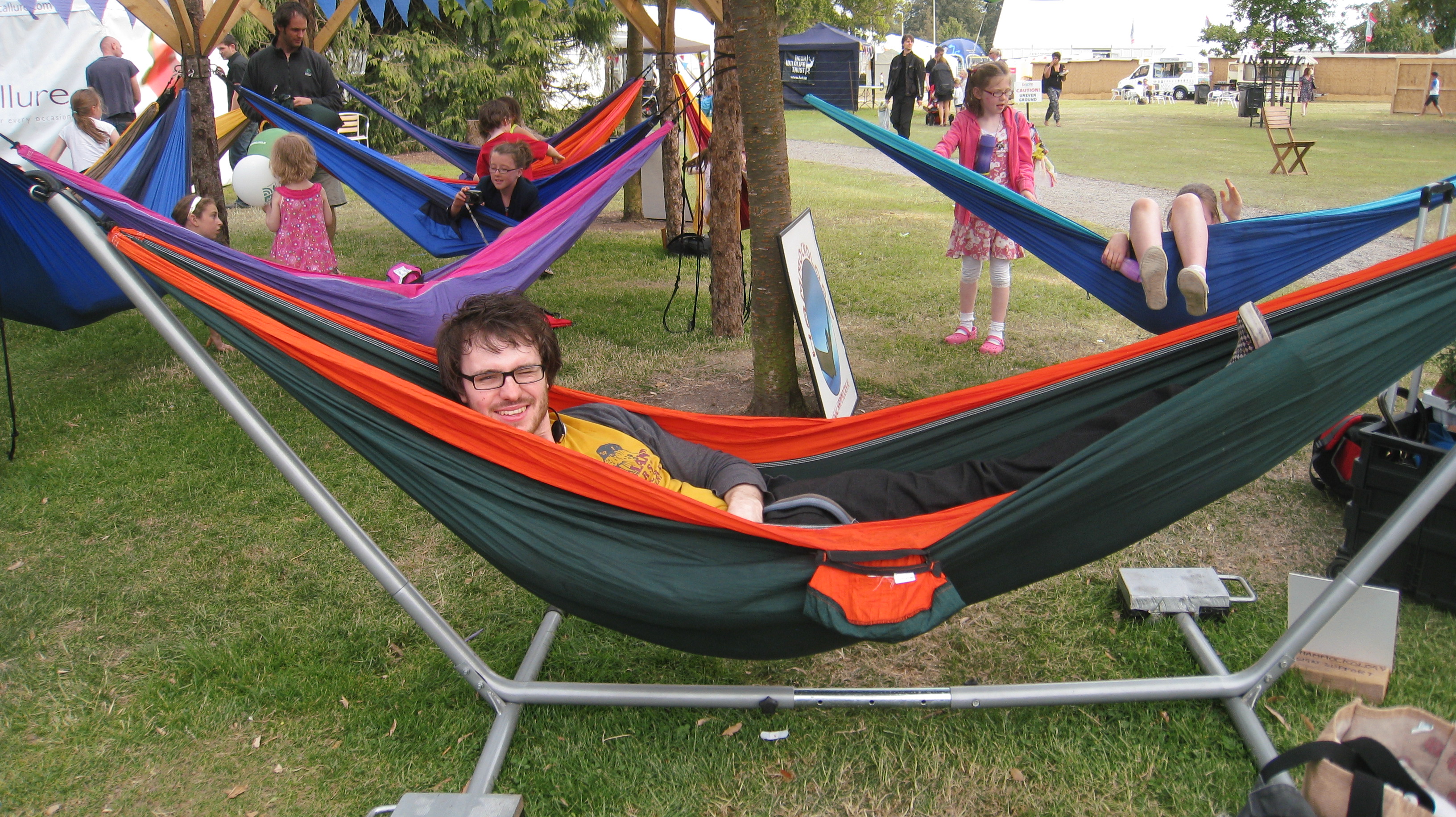
Saturday was a day I’d like to bottle for future swigs when things are not so rosy. Like all great days, it began with a marvelous breakfast in bed, which my LSB prepared while I dozed. After that we ventured out to the Phoenix Park to visit the Bloom Garden Festival. The park was cloaked in intermittent sunshine and the people were out in their drones to soak it up. Even the deer seemed unusually contented; regarding the topless men passing by with their 99 cones with the graceful bemusement of which their species is only capable. Inside the Bloom exhibition, I divided my time between admiring the delightful lambs on “display”, lazing in the (promotional) hammock area and loitering by the vegy burger stand. In the evening, LSB and I spent a few hours in Bewleys, finalising our (provisional) life plans (more of which in future posts).

Having finished my hot chocolate orange and gobbled up the amaretto biscuit that had accompanied LSB’s mocha, the evening was drawing to a close and it was time to go home to announce details of my (now revised provisional) life plan to my parents. On our way out, we took a trip to the toilets.

While I was in the cubicle (third up), I heard somebody exclaim, “I know you from somewhere”. The voice was middle-aged; soft but firm. There was a pause and I was imagining a reunion between two ladies who had attended the same embroidery evening class some months ago. But the second voice said “No, I don’t think so”. Hers was a more confident, even voice.
There was another pause which I didn’t want to interrupt so I delayed flushing the toilet. The lighter voice spoke again “you must take great care of yourself”. At this point I flushed and made my exit. In the mirrors were two faces. One lady had sunken, hollow eyes and wispy grey hair. She was applying mascara. The other had carefully shaped eyebrows and a heap of dyed red hair, which sat on her head like Marge Simpson’s, minus the length.
I was washing my hands very thoroughly and casting my gaze into the two mirrors next to mine. It was the red lady’s turn to speak: “I do indeed. I take great care of myself. I go salsa dancing three times a week”.
“Do you?” the lady in grey exclaimed. “I love salsa dancing. I have done that myself”.
“Have you?” the red lady replied, looking at her now.
“It looks as if you take great care of yourself”, the grey lady repeated.
“Ha”, said the red lady, laughing now, “I have to match the young men I partner in my dancing”
“I’d say you do”, said the grey lady very seriously, turning to look at her from the side.
“Well, my husband says I look great”, said the Red Lady.
The grey lady stared at her. “Oh! Are you married?”
“I am”, said the red lady, suspiciously.
“Well you must take great care of yourself” said the lady in grey, replacing the cap of her mascara and zipping up her bag.
“Bye”, she said.
“Bye now” said the Lady in Red,turning to me as I was looking busy waving my hands beneath the hand dryer. She made a face as if to say “WEIRDO”.
“I’d take it as a compliment”, I said.
“I certainly will”, she retorted, “I think we’d both had a glass of wine”
“Maybe” I agreed, finally making my way out to LSB, who had been waiting patiently the whole time. “Keep up the salsa dancing”, I called back as we left and LSB asked sourly “so you’ve a new best friend then?”
“I do .. and she takes great care of herself” I tell him as we go our separate ways after a wonderful day out.

A blast from the past: Bertie Ahern’s Irish legacy

Bertie Ahern’s blend of endearing naivety and wily opportunism is representative of a peculiarly Irish mindset, which has dominated the body politic for at least the last decade.

Bertie Ahern is grinning up at me with scrunched up nose and open-topped shirt. I find him perched comfortably at the top of page 70 of the July 4 edition of the Irish News of the World, where he has conceded that “there are questions to be answered and issues to be resolved” and that “all of the players should realise that it is time to hold their hands up and then move on.” In his capacity as sports columnist for the aforementioned publication, he is of course referring to England’s dismal performance in the world cup. His blend of endearing naivety and wily opportunism is representative of a peculiarly Irish mindset, which has dominated the body politic for at least the last decade.

As its most successful exponent, Bertie Ahern stood smiling over the country throughout its period of extraordinary prosperity and glided to a swift resignation conveniently in advance of its crippling economic demise. At the launch of his autobiography last year, he told David Frost that accusations that he had received bribes from property developers were unfounded and based on nothing more than that ‘one guy said that the other fellow told him he did’. A polished Cleggeron he may not be, but his colloquial circumlocution renders him a similarly slick smooth – speaker.

The Irish gift of the gab is not just about sliding through the nets though. Our eager benevolence and uncomplicated approachability represent the ideal of a mobilised community spirit. When Joe Duffy spoke recently to a woman living in the west of Ireland who confessed to feeling lonely and depressed in her surroundings, within minutes calls flooded in from strangers offering chats over cups of tea and spare rooms in Dublin, where she was on a housing waiting list. With similar vehemence, homeless charities have launched an impressive campaign against the demolition of empty houses in the outskirts, suggesting instead that they be made available to shelter the homeless.

I was born an invincible Celtic tiger cub and have developed lately into a scavenging graduate, competing to take on unpaid work so that some day a philanthropist will discover an archive of my eclectic and unpublished scribblings and plead with me if they may not immortalise them in serialisation – at any price. Like Ireland’s dream of winning the world cup, it is a goal worth striving towards in the strangely reassuring certainty that it will never be achieved. It is this paradoxical conviction of both success and failure, which makes possible the symbiotic relationship between self-deprecation and delusion, which has contributed to Ireland’s staggering economic rise and fall.

Bertie Ahern’s curious decision to keep his money under his mattress rather than in a bank account is the mark of both madman and genius, each masquerading as the quietly quotidian everyman, drinking still as Taoiseach in his local pub and insisting on going to Mass every week in spite of his cohabiting relationship with a woman not his wife. Paradox and irony thrive in a culture where emotion is self-consciously privileged over intellect. When Ireland rejected the Lisbon treaty, it did so with an impish ‘let’s see what happens’ attitude. The ‘No’ vote was not an indictment of Europe, but rather a concentrated attempt to get on the government’s nerves. After all, they had burst our bubble. Having wedged ourselves between Scylla and Charybdis, we grinned and voted ourselves out second-time round, much to the annoyance of the UKIP.

In a televised debate about head shops, it was claimed by a frustrated liberal that Ireland is a country where laws are set “not by experts but by Joe Duffy”. Indeed, when our former Taoiseach concludes as sports expert from the pages of a tabloid that “no one person should be made to be the scapegoat for what was a collective failure” one can only smile at the audacious success of his opportunism and shake one’s head at the grave irony of his accompanying naivety.

On books, buyers and balloons

It’s a wet and windy Saturday afternoon. The Spanish protestors gathered at the Spire have painted balloons with slogans forecasting a Revolution. Moore Street is quiet but for a vendor who’s shouting “umbrellas aunl’ a foiva” again and again and again. Inside the Ilac centre, broadband salesmen and the pumping beats from cheap clothes stores are competing for shoppers’ attention. A little boy pressed into a communion suit is dragging his parents into Game. Then, as you go up the stairs and the automatic gate pulls you in: silence.

Seated at one of the desks is a man who has taken off his brown leather watch and propped it up against an empty bottle of peach ice tea. If you are close enough, you can hear the swish of his highlighter pen over a paragraph about marketing strategy. The air is musty and the carpet tattered. A security guard moves suddenly and the keys attached to his belt jingle to the background hum of a hoover, which has just come on.

The faces are either young and foreign or Irish and old. There’s a special table reserved for the elderly and at it spindly fingers are crinkling the pages of newspapers. Blu-tac-ed to one of the shelves is a laminated poster, which reads “Books can help”. There’s a single title lying on that shelf. It’s called When Parents separate- helping your children cope.

A girl drops a pile of books on the counter and asks whether she can return them. The librarian, a lady with a wispy brown bun and rosy cheeks looks carefully at the screen: “Now, I have to tell you, there’s a bit of a fine on your account”. The girl’s eyes flash briefly, “ Yeah, I paid that in Pearse Street last Monday..” The lady’s nose scrunches up a little. “Em.. These are the titles we have here as overdue: With My Lazy Eye, The Colloquial Guide to Arabic and Homecoming. Is that right?” “That’s right”, the girl replies. “But I paid €4.50 for those in Pearse. It’s all cleared on my online account.” The lady pauses. ”hmm”, she says. Her lips curl into a smile. “Alright, I’ll take you at your word”. “Thanks”, the girl mutters awkwardly. “I wouldn’t l..”

The stench of a tweed suit comes and goes. For a split second, it’s silent again. Then the bounce of a book spine as it’s returned to the shelf: Closing time. Outside, it’s cleared up. Yer man is selling fake Adidas tracksuit tops now. The protestors are gone from the Spire but there’s a single black balloon bopping about in the breeze.