Gambling on the American Dream

Newark train station, New Jersey.

Homeless men rush to open the door for you. Then, looking you right in the eye, say: “Do you think you could help me out, Ma’m? Spare a few cent?”

Inside, unfortunate people sleep with their belongings on the grand benches in the waiting hall. Some stay  seated – their chins slumped against their chests, while others curl up in a fetal position.

But one woman, more than any other, captured my attention. She was old; seventy at least, with thin lips and narrow-set eyes.

She was very slight and unlike most people at the station, white. Her hands were gnarled; her fingers protruded at all the wrong angles.

She slept for an hour, her disjoined hand resting on the brown carrier bag beside her.

When she woke up, she hooked her hand under the bag and shuffled away, agonizingly slowly.

I watched her empty spot until she returned.  She had bought a packet of Doritos at the station shop. She formed a cup with her hand and dug deep inside the bag.

That’s how I left her as I eventually got up to catch a Greyhound bus to Philadelphia.

"20060627 Trump Taj Mahal from Pacific Avenue" by Original uploader was TonyTheTiger at en.wikipedia(Original text : en:User:TonyTheTiger) - Transferred from en.wikipedia(Original text : own picture). Licensed under Creative Commons Attribution-Share Alike 3.0 via Source: Wikimedia Commons http://commons.wikimedia.org/wiki/File:20060627_Trump_Taj_Mahal_from_Pacific_Avenue.jpg#mediaviewer/File:20060627_Trump_Taj_Mahal_from_Pacific_Avenue.jpg User: TonyTheTiger

Trump’s Taj Mahal Creative Commons (c)User TheCatalyst31 originally uploaded by TonyTheTiger source: http://en.wikipedia.org/wiki/Atlantic_City,_New_Jersey

A few days later, after my sister’s wedding, we decide to take a day trip to Atlantic City. Known as the “Las Vegas” of the retired, it is exactly as horrifying as it sounds.

Casinos, gaudy and gigantic, dominate the shoreline. Along the seaside promenade, you can see obese electronic wheelchair users stopping to charge up at designated points. It is a Monday afternoon in July and the casinos are full of elderly people, their eyes glazed over recurring pictures of fruit on the slot machines.

If you turn your back to the promenade though, you can take in the beautiful horizon over the Atlantic Ocean.

A handful of children are in the choppy water, jumping to catch the waves of a faraway ferry.

Every now and then a speedboat glides past. It’s got a large digital display board advertising a restaurant in a nearby casino.

On the way back to the station, I see from a distance a small hunched figure on a bench nursing an enormous soft drink. She has on a headscarf. Beside her is a brown carrier bag.

As I get closer, I recognize the gnarled hands and sunken face.

Maybe she has a pensioners’ travel pass. Or perhaps the ticket inspectors turn a blind eye because of her age. Maybe she does the commute between Newark and Atlantic City every day, just for something to do, or somewhere to go.

The American dream, I think to myself, has been one giant gamble.

Help! I am an insufferably smug gardener

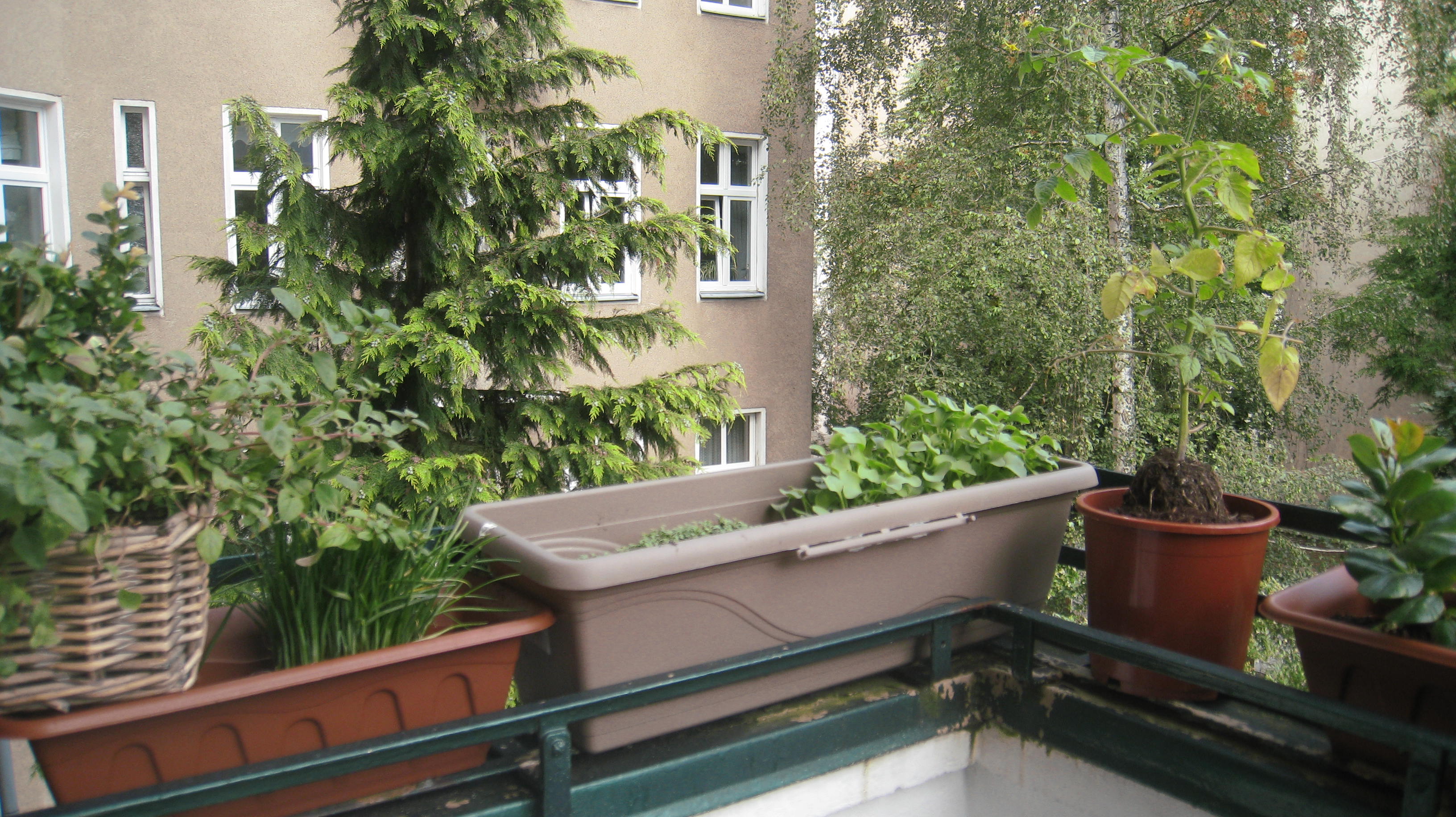
Okay, I admit it. Ever since I planted some radish seeds and bought a pot of dahlias, I’ve become quite insufferable.

I’d been looking for a new hobby, you see. My small, north-facing balcony was looking sad and bare so I decided to take up gardening. But before you could say “from seed to sprout” my hobby had become an obsession and I was finding myself boasting about my zucchinis at social events.

My plant-purchasing habit has since spiralled out of control and my balcony can no longer accommodate my botanic buys. The obvious solution might be to stop acquiring vegetation but instead, I have directed my attention to house plants.

Look at my beautiful plants!!! Aren't they just wonderful?

Look at my beautiful plants!!! Aren’t they just wonderful?

I recently signed up to the Berlin section of Freecycle, an online portal where users offer to give away items they no longer want. You can imagine my excitement when I discovered that someone in Friedrichshan was giving away a Crassula ovata, known more commonly as the “money tree.” He also mentioned that he intended to shed two spider plants (or Chlorophytum comosum, to nerdier naturalists).

The kind stranger lived on the sixth-floor of an uninviting block of flats close to Alexanderplatz. Upon disembarking the lift, I encountered several entrances boarded up with concrete. It occurred to me that the promise of a free money tree may have lured me into a murderous, Communist-style Venus Fly trap. But soon enough a young man appeared and led me to his doorstep, where the three potted plants were ready for collection.

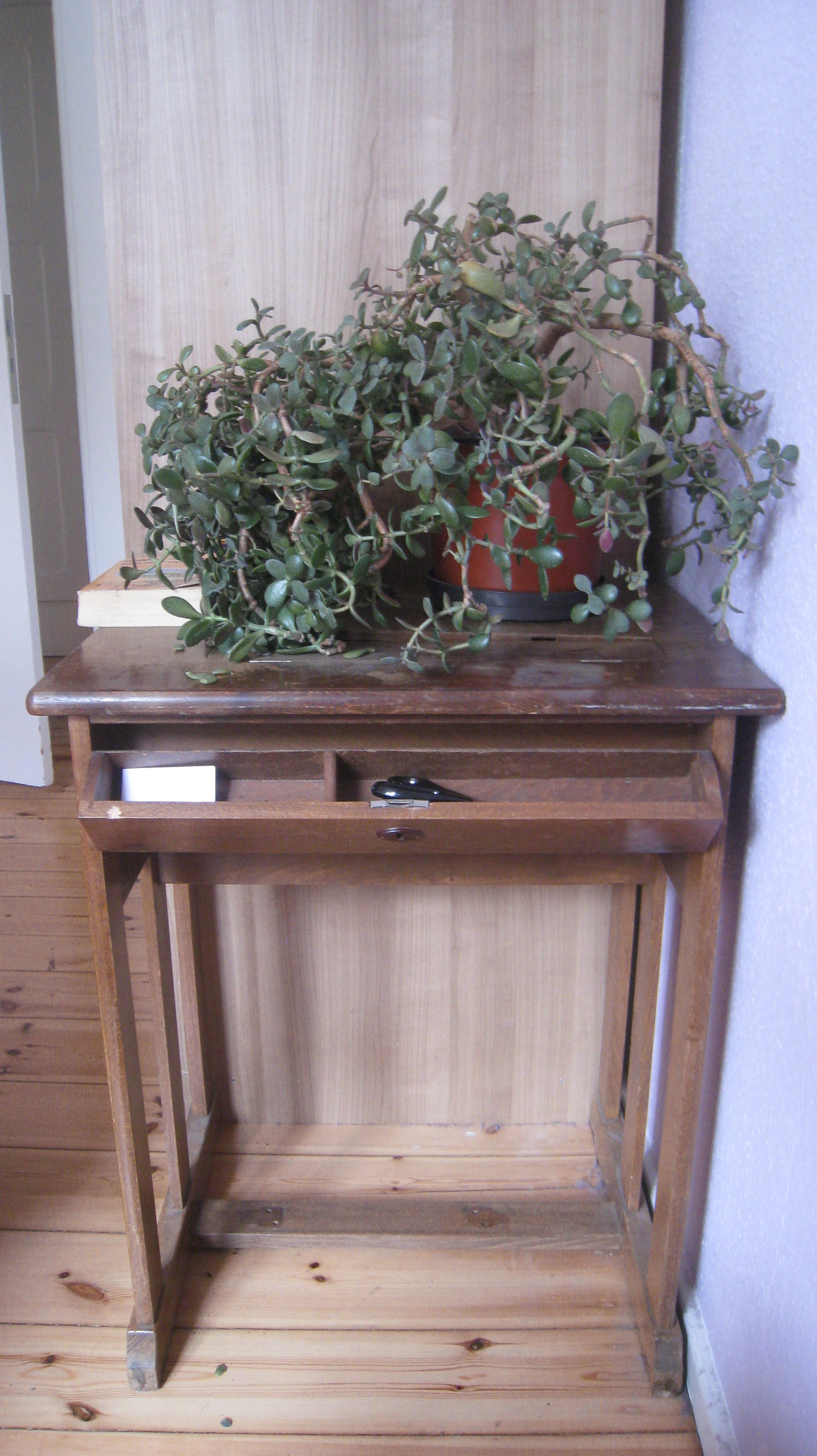
This money tree is NOT a desk plant.

This money tree is NOT a desk plant.

The money tree turned out to be several times larger than I had expected. It became clear to me that this was not going to be the desk plant I had envisioned.

My benefactor was slight and shy and appeared quite keen to keep our encounter brief. He expressed some sympathy with me for having to ferry the portly plants across the city and advised me to re-pot the money tree.

As well as receiving quite a lot of attention on the tram, I was a little concerned about the fact that I was on the way to a work social event and would not have time to stop by at home to drop off my tree.

Needless to say, arriving at a bar wielding an enormous plant proved an ideal opportunity once again to regale my colleagues with my latest botanic news.

It would seem wrong to sign off without mentioning that my oregano is doing well, that my cress is developing nicely and that both made a flavourful appearance in my omelet this morning.

My radishes are ravishing! And my cress is far from crass.

My radishes are ravishing! And my cress is far from crass.

Streetwalking in Schöneberg

I had some time to kill the other night, so I walked up and down Bülowstrasse. It’s in the Schöneberg area of Berlin, where Albert Einstein, Hans Fallada and David Bowie all lived at some point.

It was only 7 o’clock, so I was surprised to see prostitutes lining the streets so early. There were six of them. Two emerged linking arms from a shop before separating to take up position.

They weren’t anything like the prostitutes at Hackescher Markt who are both glamorous and absurd in their identical fishnet tights, baby-pink corsets and furry boots.

These women looked eastern European. They didn’t have a uniform, but they were all wearing  plastic strappy high-heels; the kind you’d find in a basement store in the Ilac Centre in Dublin, full of artificial light and pumping music.

The youngest of them had brown hair, very narrow shoulders and was wearing denim hot-pants. She had earphones plugged in while trying to hail down cars.

The oldest woman wasn’t bothering to show her legs. She was dressed casually in jeans and a leather jacket. She had reddish-brown hair and looked bored.

The woman whose face I can’t forgot was standing near a lamppost supporting a campaign poster for Germany’s neo-Nazi NPD party. It featured a fish-bowl picture of an old lady under the slogan: “Geld für Oma statt Sinti und Roma.” (“Money for Granny, not the Sinti and Roma”)

The woman had her hair scraped back into a ponytail. She was performing her job awkwardly – trying to hail down cars by forming a stop sign with her hand, like a police officer would do to check a driver’s insurance.

Tears were running down her cheeks.

No one stopeed but she kept on sticking her hand out at the passing cars.

The place that out-Catholics Ireland

As soon as the “Berlin-Warsaw Express” chugged across the border, the Virgin Marys began to appear. Some of them stood scarecrow-like and alone in their shrines at the edge of wheat fields, while others guarded the entrances to farm houses. Rosy-cheeked and smiling demurely beneath their blue shawls, they reminded me of home.

It was the first indication that I was on my way to a country with the potential to out-Catholic Ireland.

While the Virgin Mary may be rural Poland’s icon of choice, the late Pope John II reigns supreme in Warsaw. The former pontiff is carved into statues, pasted onto posters and a favourite among street artists, who sell paintings of his face alongside still-lifes of fruit bowls and flowers.priest

The adulation isn’t limited to the capital either. Last year, the Daily Mail reported that a businessman in the southern city of Czestochowa had erected a 45-foot statue of John Paul II, whom he believes intervened to save his son from drowning.

LSB and I soon got used to meeting some version of John Paul II at every street corner. We even began greeting him with a “Howeyeah JPII.” But it didn’t take long for us to realise that he’s not the only Roman Catholic actively revered in Warsaw.

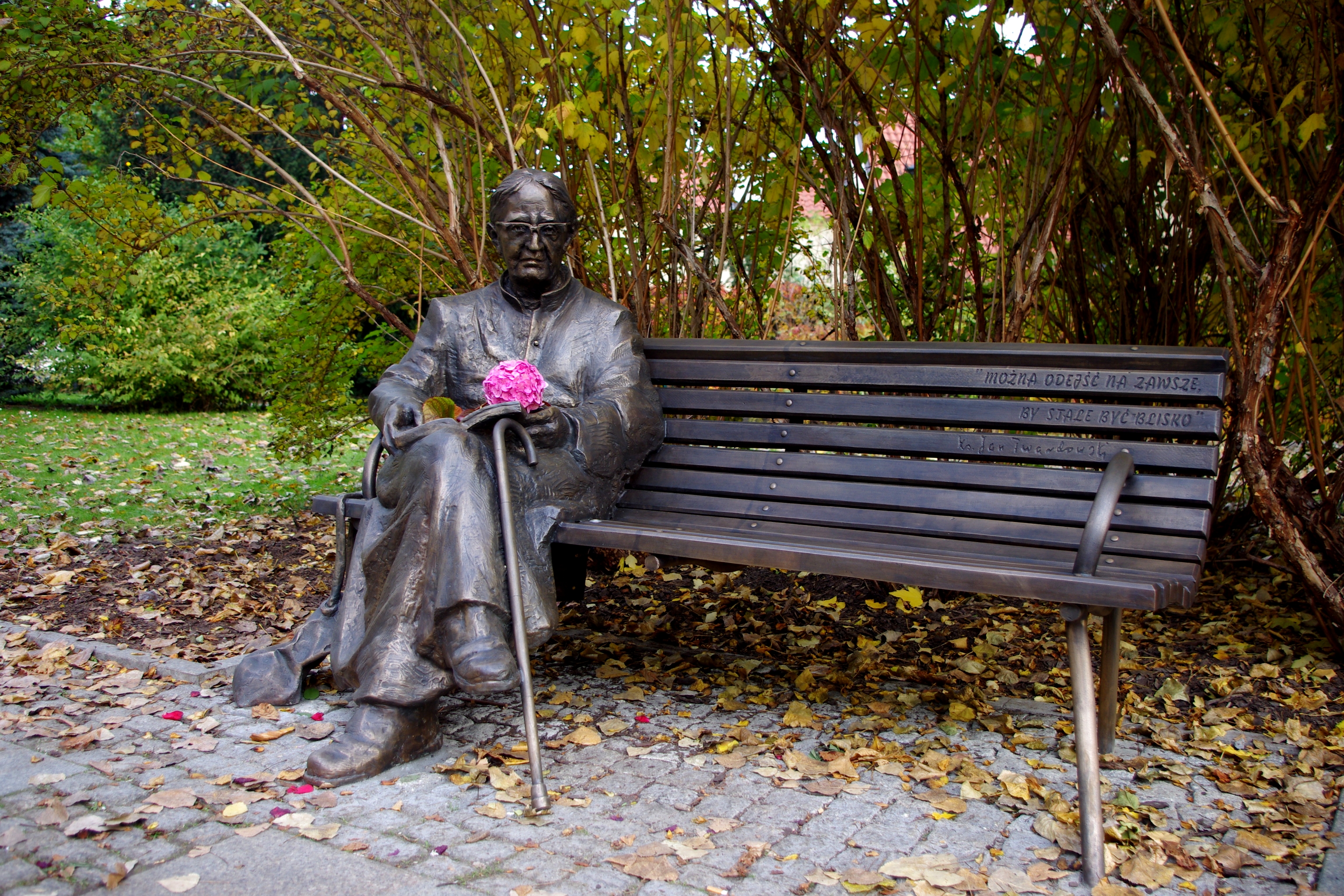
In hindsight, I should have known better than to meander towards a park bench occupied by a life-size bronze statue reading a book. In my defence though, it reminded me of the Patrick Kavanagh statue by the canal in Dublin, a place where I have never been accosted.

LSB and I were basking in the sunshine beside the statue when we were approached by an elderly lady, who stood before us, staring. I smiled at her and she began speaking in Polish.

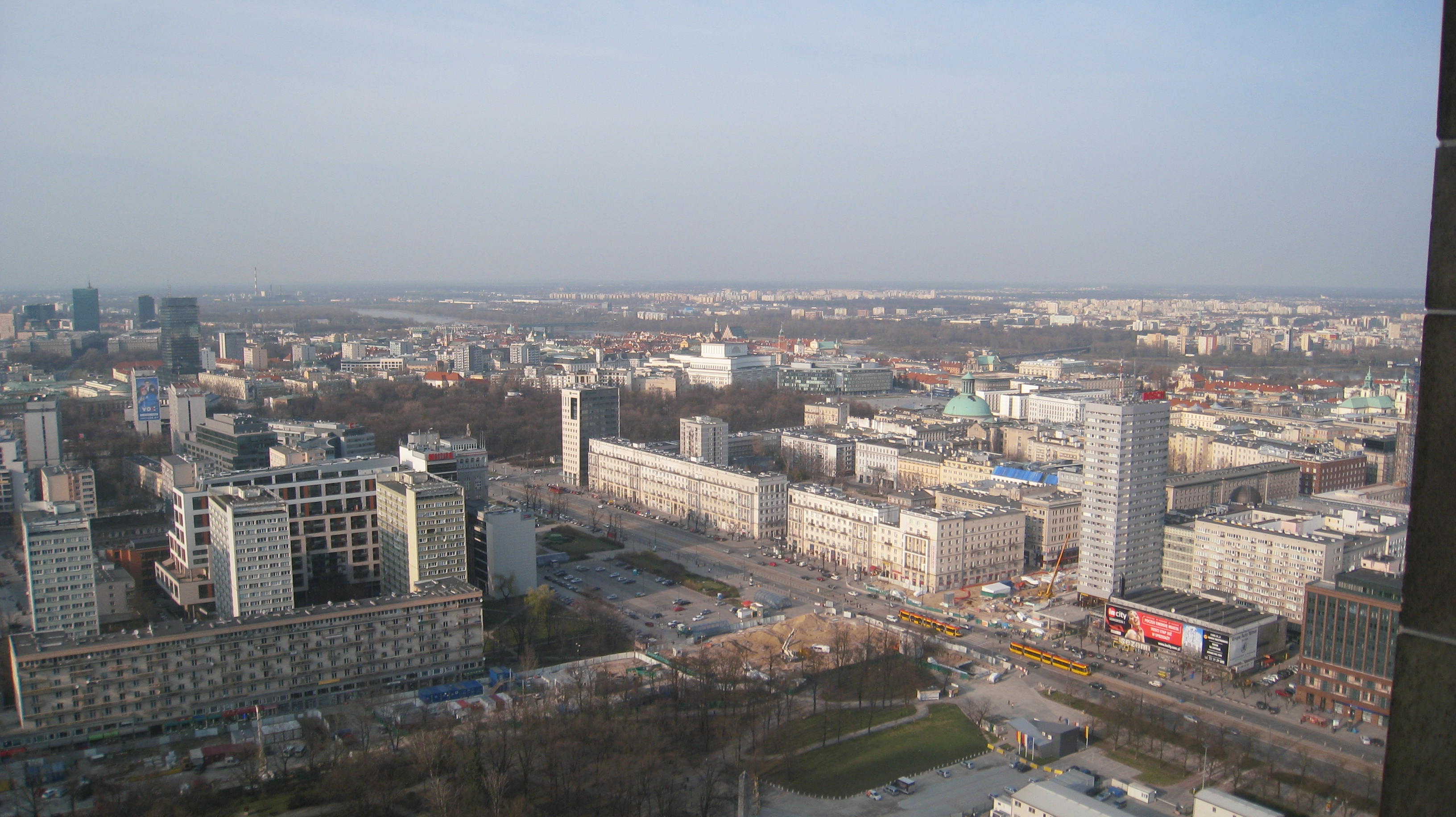
Warsaw skyline -- view from the Palace of Science and Culture

Warsaw skyline — view from the Palace of Science and Culture

“Erm… No… Polski,” I responded apologetically.

She gestured excitedly at the statue. I shrugged my shoulders as politely as I could.

She talked some more, then motioned at us to stay put while she went away.

A few moments later, she came back with an elderly man.

He had a pleasant tanned and wrinkled face and was wearing a Nike sweatshirt.

“English?” he said and we nodded enthusiastically. “I have… um. little English,” he said, laughing.

“This man,” he said, pointing at the statue. “Jan Twardowski. He… um…” he cupped his hands around his neck to indicate a collar and the word came to him. “Priest. Yes. Priest!”

“Oh!” I said. “Thank you! I didn’t know who he was.”
“Yes!” he said, delighted. “Priest… important priest… and also poet!”
“Priest,” the lady repeated, delighted. “Yes, priest!”
“Ah,” I said. “What a beautiful place for him!”
“Yes, yes, beautiful!” they agreed.

They left happily.

A few moments later, another party comprising two women and a man in a wheelchair arrived and stopped in front of us. They stayed there for quite some time and I began to shift uncomfortably in my seat.

Though there were several vacant benches elsewhere, I thought they were perhaps trying to covet our spot. “Would you like to…?” I said, motioning to get up.

“No, no,” the lady pushing the wheelchair said, waving her hand.
Suddenly I noticed a presence to my left. When I turned I discovered a third woman on her knees by my feet, praying.

This, I thought, is one step away from Pope-shaped perogies.

Kate Katharina appears in rag, LSB brings home bottled water

Some of you might have noticed that I’ve been blogging less since LSB moved here. But, as my psychology professor used to enjoy pointing out, correlation does not equal causation.

I mean, of course we do spend the occasional evening in streaming epsiodes of 7th heaven. (We’re on Season 5 – Mary is in big trouble because – instead of going to college – she’s working at a pizza joint where she makes unsuitable friends who smoke pot and have premarital sex).

The Camdens of 7th Heaven. Image source: Wiki Media

The Camdens of 7th Heaven. Image source: Wiki Media

But, truth be told, most of the time we are awfully busy having our own lives and co-habiting on the side.

Take this week for instance. LSB started an internship at an advertising agency, where he gets “thinking time,” free yoga classes and and an endless supply of bottled water. (His interview for the position took place on a bean bag).

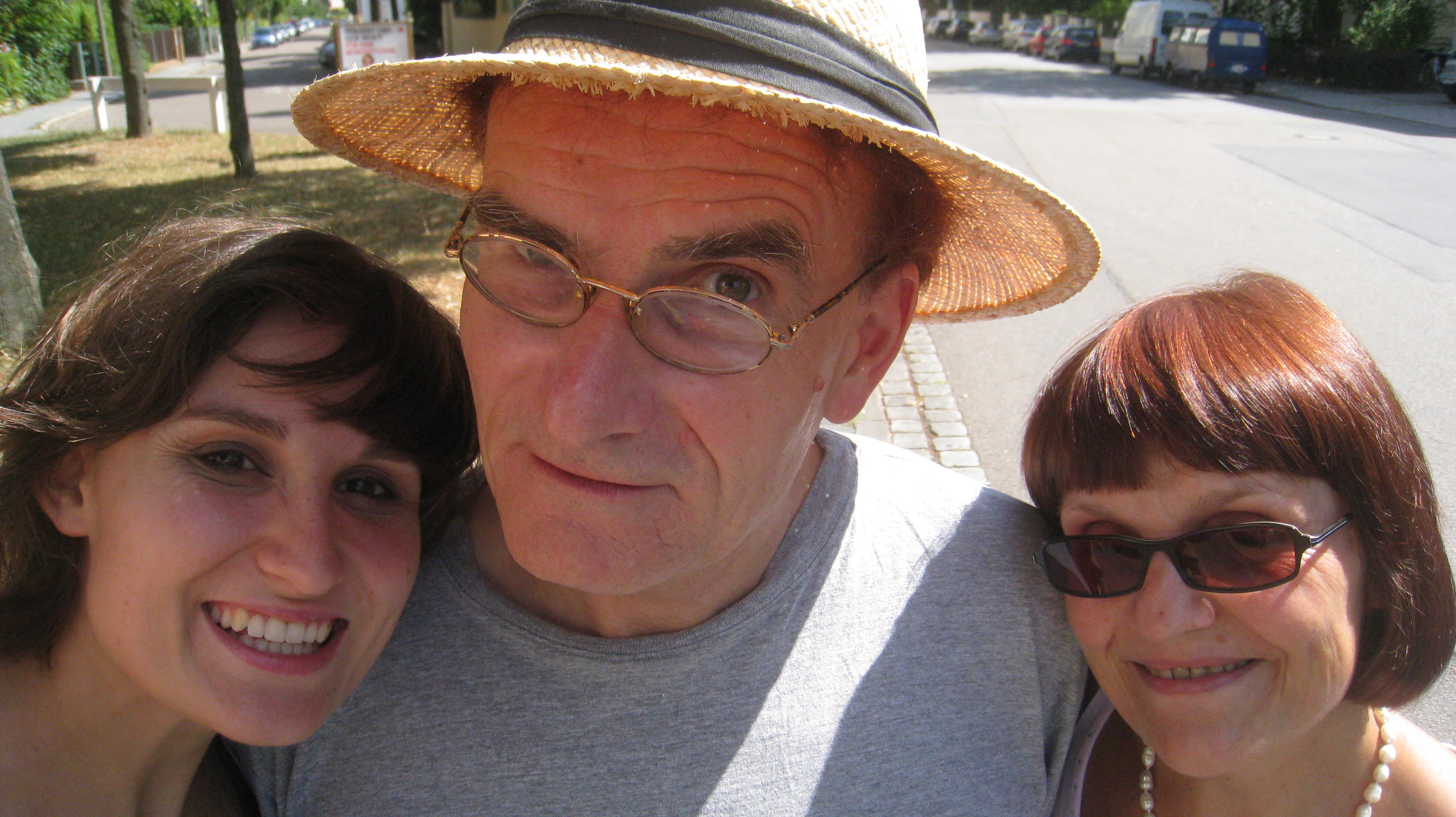
I, on the other hand, made it into the notorious BILD tabloid – Germany’s equivalent of the Daily Mail – with the seniors’ blogging project I co-founded last year. The blog – Berlin ab 50 is a place for the over 50’s in Berlin to share their experiences of getting older in the city.

Safe to say, I was a little bewildered that BILD – the world’s second best-selling newspaper with a circulation of nearly four million requested an interview with us.

And cynic that I am (in fairness, BILD is a rather nasty publication) I wondered whether my group of senior bloggers – three of whom are in their sixties – were sitting on a big dirty secret. Had they been in the Stasi? Had an ill-advised fling with a high-ranking official?

With a gulp, I wondered whether perhaps I was the villain of the story. However, I quickly realised I was far too much of a square to make it legitimately into the pages of a rag. Bloggers in BILD! source: http://www.bild.de/regional/berlin/berlin-aktuell/drei-seniorinnen-haben-einen-internet-blog-34082682.bild.html

Well, as it turned out, the BILD journalist was a very nice young woman who spent a whole hour asking us questions about our blog. Her colleague – a thin photographer who tried not to look bored during the interview – got the three seniors in the group to pose with laptops and smart phones around a table on which he had strategically placed some coffee cups.

The article, which you can see here, leads with the bold headline “We are Berlin’s oldest bloggers.”

Of course, our hits went through the roof. And then we started getting media requests from everywhere. We’ve even been invited to go on television.

I know.

Speaking of television, you’d be surprised how many people write to it.

You see, another reason I’ve been awfully busy in the past few months is that I’ve taken on additional job at the international broadcaster where I work. It’s in the Zuschauerpost or “Viewer Correspondence” department and it’s my job to answer the e-mails and letters people send to the television station. When I took the job lots of people said: “Why on earth would you want to do that? Only crazies write in to TV stations.” To them I say: perk of the job.

I get some very sad mails from people in developing countries who have access to a television but not to adequate medical care. And I get some very entertaining complaints. I derive a guilty pleasure from composing eloquent replies to ridiculous requests.

But it comes on top of my regular job as a writer and translator at the company, my shifts at The Local, my senior’s blogging project and my treasured visits to Frau Bienkowski.

Oh, and did I mention LSB and I found a flat? And moved into it?

preparing for a 7th Heaven session.

preparing for a 7th Heaven session.

Well, we did. More on all of that to come. But for now, it’s time for beer and a bit of 7th heaven. Got to get our priorities right.

(By the way, this post from The Atlantic about the worth of blogging as a medium, inspired me to finally sit down and write a post again! Check it out- it’s definitely worth a read)

On life and death and the sanitary towels in between

“I thought that at my age I could no longer cry,” said Frau Bienkowski. “But this morning, the tears came.”

Frau B had spent the whole day trying to get hold of a packet of sanitary towels because ever since her hip operation, she has been unable to retain water.

But the person in charge of making the fortnightly order was on holiday and nobody had thought to take over his duties.

In the end, one of the volunteers popped over to the chemist’s to pick some up. They weren’t the right kind, but they would do for now.

“I’d be lost without Frau Lintz,” said Frau P of the lady in question.

The nursing home is short-staffed because there have been an unusually high number of deaths over a short space of time, leaving several rooms empty.

Frau B's egg timer. Source: www.amazon.com

Frau B’s egg timer. Source: http://www.amazon.com

Money is tight and management won’t increase the staff-patient ratio. So when a certain number of residents die without being replaced, the carers lose their jobs too.

Death at the nursing home is a small table placed outside a bedroom door. On it is a candle and a framed photograph of the deceased.

A few months ago there was a table outside the room opposite Frau B’s.

“The lady across the way died,” Frau B said, matter-of-fact.

And another time she said: “Every night when I go to sleep I pray that I won’t wake up.”

In other circumstances, the sentences might sound tragic.

But if I have learnt anything from my weekly visits, it is that welcoming death is not the same as abandoning life.

Frau B and I are seventy years apart but we talk like sisters – about boys and clothes and death and what’s in the news.

image source: centralavenuepub.wordpress.com

image source: centralavenuepub.wordpress.com

We laugh out loud at the absurd hen-shaped egg-timer she’s been given instead of an alarm clock and I bring her several packets of the sweets her doctor has told her not to eat.

We continue reading the book about the cantankerous Irish nuns, even though we get through about ten pages each week and I’ve been paying library fines for months.

Recently, we found out that we both get dressed up for my visits.

“Sure who else notices what I’m wearing?” Frau P asked with a smile and I told her I felt the same way.

So if death is a small table, life is the perm Frau B insists on getting touched up every week.

And the moments we spend laughing at silly hen-shaped egg-timers and the humiliated tears we shed about elusive sanitary towels are the beautiful and tragic bits that happen in between.

When life and art collide

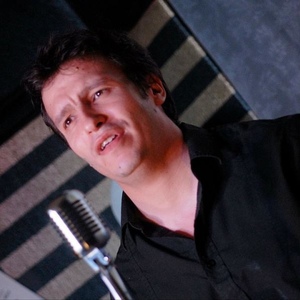
I went to see a one-man show at the Edinburgh Fringe festival this week. The performer’s name was Alain English and his show was advertised in a slim booklet which listed all the events you could go to free-of-charge.

The three-line blurb mentioned that English had Asperger’s Syndrome and had written a book about his experiences.

As I was entering the little venue at Cowgatehead, a man loitering outside handed me a flyer. It was for the show I was about to see.

“Thanks!” I said. “This is the one I’m here for.”

The man looked sideways past me. It was his face on the flyer.

I took a seat in the third row of the theatre and for a while I was alone. Then a middle-aged couple arrived and sat across from me. They were followed by two men, one of whom was tall with bleached blonde hair and had red-painted fingernails.

image source: myspace

image source: myspace

And that was it. An audience of five.

Alain English, who has a wide forehead and bulbous eyes, entered the room and headed straight for the back corner of the stage, where he turned his back to the audience, raised his shoulders and took a deep, audible breath.

Then he whipped around, charged to the centre of the stage and began to shout poetically. Mostly about what it felt like to be overwhelmed by conversations. They were like blisters bursting in his brain, he said.

Then he cut off his poetry and began talking conversationally. It was still scripted but the effect was almost off-the-cuff. He said that as a child he lived entirely in his imagination, where he resided as a superhero. When he started school he categorised his male classmates as either heroes or villains. The little girls became princesses or damsels in distress. He was – he admitted- both bullied and a bully himself. He just didn’t quite get the world. Or maybe it didn’t get him.

Then he launched back into poetic language.

English continued the show like this – performing dramatic bursts of poetry punctuated by what was essentially his own biography.

Alain the awkward child grew into Alain the frustrated, isolated adolescent. But he had a solicitous mother who – having seen her son transformed while playing a role in an amateur dramatic production- enrolled him in theatre school.

There he met his teacher and long-time mentor, Annie Inglis, who believed in him. At theatre school he felt free, yet outside he remained constrained and unhappy.

Receiving a diagnosis of Asperger’s Syndrome changed little and he was amazed to find that his beloved Annie Inglis knew about it before he did. I’m a professional, dear she said simply.

Alain dreamt of achieving fame and fortune as an actor. But people advised him to study something useful at university. Something he could “fall back on.”

So he did – and performed in plays in his spare time. But things still weren’t right. He discovered alcohol, then depression. On the closing night of one of his performances, he got drunk, came on to another actor’s girlfriend, almost got into a fight and spent the rest of the evening crying in the toilet.

He worked in boring temp jobs and kept getting fired for being odd.

He went on the dole but had to fight to keep his benefits. His father retired and with it went Alain’s financial back-up.

Then his beloved Annie Inglis died and the hole in his life became yet bigger.

Life, he seemed to be telling the five of us who had now been with him for an hour, was rather disappointing.

And he was running out of things to fall back on.

But then he began to roar again. And this time it was poetry.

“There’s this myth about being an artist created by the media. It’s that either you are famous or you are nothing. That unless you’re a celebrity, you don’t count for anything.”

“That’s a fallacy, a distortion,” he spat.

I shifted in my chair.

“This is the truth of a real artist’s situation. It’s not the fame but the process of artistic creation. That’s the real reason we do what we do. This is how we connect with the world around us. THIS is how we live.”

The tiny theatre was suddenly electric.

“Fall FORWARD on your failures, as well as your successes .. Fall forward on your own terms and no one else’s!””

“Don’t fall back, fall FORWARD. …” he yelled at the five of us.

Silence. And then we clapped like mad.

“Thank you. Thank you. Thanks so much for coming,” he said. “I, er, don’t have a hat to pass around. But I am selling some of my CDs with my poetry.”

The man with the red-painted fingernails was first out the door to buy the CD and have a chat.

I was still inside the theatre as I heard him say, “That was the best show I’ve seen at the Fringe.”

“WHAT?!” Alain roared from outside the door.

The couple across from me and I exchanged a smile.

“I’m serious mate, you made me cry,” said the red-nailed man.

Alain may not be the best poet in the world but that day, he sold five CDs to an audience that had been treated to something rarely authentic.

Familienfest 2013 Part 1

The train journey to Familienfest 2013 was hot and sticky. I got a seat in the bicycle carriage opposite a large dog with a sad, deformed paw.

My mother met me at the platform in Regensburg. She was so tanned that earlier, when she was in the health-food store buying vegetable spread, the cashier had asked her where she’d been.

“Ireland,” she’d said.

We ate mini dumplings for dinner and then my mother said, “Kate, we really need to rehearse.”

We darted into the next room and she took out some pages from a plastic pocket.

“These are yours,” she said, handing me three sheets containing typed verses. Beside every second one she’d written K, which stood for me.

We began to recite.

“You must speak slowly and dramatically,” my mother said.

I did.

“Excellent,” she said.

After all, it’s not every day you deliver the gift of Bavarian citizenship to your husband and father through rhyme.

Then we practised singing the Bavarian anthem in harmony.

In just a few hours, Familienfest 2013 would officially open and there would be no excuse for tumbling over words or singing off-key.

My father had been due to arrive any minute. But then I checked my phone to find he had texted to say his plane had failed to take off.

My mother’s faced dropped as the unspeakable possibility sunk in that he might not make it.

But all was well. It was just some technical fault. They changed planes. All going well, he would be in Regensburg by midnight.

We killed time by examining our props.

image:www.katekatharina.com

image:www.katekatharina.com

What I’ve learnt from Edward Snowden

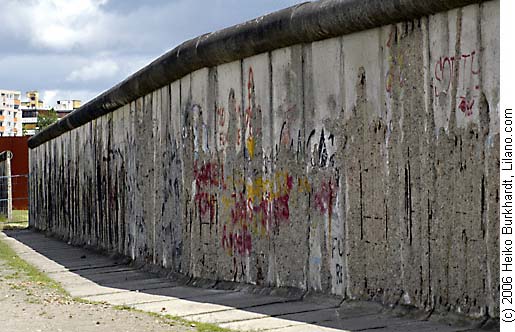
Mauerpark is home to some of the few remaining slabs of the Berlin Wall. They are dotted neatly along Bernauer Straße and flanked by a visitors’ centre and tower. Tourists climb the tower and look down on the street, imagining it divided in two.

A few weeks ago, a Mercedes pulled up on Bernauer Straße. Michelle Obama and her daughters got out. They were met by a man in a black suit. As they made their way into the visitors’ centre, he gestured to the area around them and they nodded attentively. A few minutes later, I saw their tiny heads at the top of the tower.

Lately I’ve been spending my evenings on the other side of the park, closer to the stalls housing ponies and goats and pens full of guinea pigs. I go there after work and read Stasiland. It’s a paperback with a yellow and black cover. The ‘L’ of the title has been extended to separate Stasi from and. I avoided it for months, admiring instead the bold colours of its spine, which stood out like a bee among the other titles on my shelf. I had got it into my head that it would be a bleak read; more of a history lesson and less of a story.

I was wrong. It is compelling and original. The author, Anna Funder, tells remarkable stories in unsentimental language. She is a master of observation – a fitting tribute to her task, which is unravelling the lives of East Germans constantly under surveillance.

I don’t just go to Mauerpark to read though. I go to watch.

There are two places I like to sit.

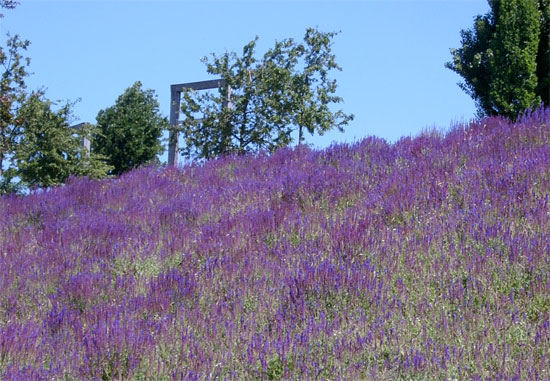
The first is on the top of a hill covered in purple flowers that look like lavender but which somebody told me, categorically, they are not.

The second is in an arena made of concrete. On Sundays, an Irishman with a battery-powered box moderates enormously popular karaoke sessions there. During the week though it is populated by shaggy-haired men playing guitar, groups of teenagers with shisha pipes and old stooped figures moving quickly up and down, collecting the glass bottles people discard on the ground. Later, they recycle them for cash.

Once I observed three teenagers in an unequal relationship. They were sitting in the centre of the arena. The two girls would kiss and hold hands while the boy sat beside them drinking beer. Then one of the girls would break off from the other to wrap her arms around the boy and climb onto his knee, while the other sat alone. The relationship seemed to intersect around one of the girls; the other two didn’t touch. After some time, the girls took each other’s hands and walked away, leaving the boy – and me- watching them from behind.

Karaoke in Mauerpark

karaoke in Mauerpark

I also watch people setting up picnics, cooing at their babies and shooting basketball hoops.

It doesn’t occur to me that I am being watched.

The office where I freelance is close to Mauerpark. My job requires me to write about German news, in English, very fast. In the past few weeks, one face has been appearing on top of several of my stories.

image source: Wikimedia

image source: Wikimedia

It is young, chiselled and bespectacled.

It’s Edward Snowden. There is a stock photograph that the agencies have which is a still from an interview that was recorded last month.

I’ve looked at it carefully. Snowden is facing the camera at an angle. His image is reflected in the mirror behind him and his expression is tense but firm.

When I write about him I use terms like “NSA whistleblower” and “fugitive” because that’s what everybody else is calling him.

I dutifully record the sequence of events as they appear in the agency feeds and try to come up with snappy headlines to fit the stories.

But the more I see Snowden, the more uncertain I become.

When it broke that US intelligence agencies were monitoring vast amounts of telecommunications, I was surprised it was a story.

Wasn’t it a given?

I wasn’t alone in my reaction. Others have told me, somewhat sheepishly, that they too expected it to be the case.

News of microphones in EU offices did shock me though. Unlike the internet, they are tangible devices. People need to conspire to plant them. They feature in detective novels and in the Cold War.

And as sometimes happens, I began to question myself.

‘Virtual reality,’ I thought, is an oxymoron. Spying on the internet requires forethought too.

And taking the technology for granted only adds to its sophistication.

Most of the time I am content to be gratefully bamboozled by how it is that the face of my friend in South Sudan can pop up on my screen or that my boyfriend and I can share a beer together – he in Edinburgh and I in Berlin.

But reading Stasiland and writing about Edward Snowden has caused me to uncover an uncomfortable truth of my own.

I have underestimated the capabilities of those in power. And I have become inert, thanks to a life full of comfort.

I escaped World War II by just fifty years and was four when the Cold War sort of ended.

But I figured – out of laziness – that nobody could be watching me and that those that are being spied on, probably deserve to be.

I have, it seems, a trust in authority that has only just become explicit.

Edward Snowden, a disillusioned geek, is just five years older than me. I am impressed by the hysteria he has unleashed. It, rather than anything he’s revealed, has shaken me up.

I’ve learnt that I live in a world where a plane carrying Latin American dignitaries can be forced to ground on the suspicion that a tech-clever ex-contractor could be on board. I’ve learnt that the balance of power in the West is an uncomfortable thing. And I’ve learnt something I keep learning: that I know very little about anything at all.

Yesterday, my colleague and I took our lunch to Mauerpark. She had bought a punnet of raspberries and we were munching them in the sun. A man with sun-tanned skin was loitering close by, watching us. After a while he lay down on the grass and curled up with his back to us.

Then suddenly we felt him looming. He asked, in Spanish, for a raspberry. When we gave him one, he disappeared.

Minutes later, a man in sunglasses, shorts and a baseball cap raced towards us.

“Was that guy just now hassling you?” he asked. He sounded panicked.

“No” He just wanted a raspberry,” my colleague said.

“Have you got everything?” the man said. “Quick, check for phones and money!”

We rummaged through our bags. Everything seemed to be intact.

“You sure?” the man asked. He was rushing onto the road.

“Wait,” we called after him. “Is everything okay?”

“Yeah,” he said, without stopping. “I’m a cop.”
Why people stop blogging

You can spot them miles away.

Blogs that have been abandoned by the successful.

As the days and months go by, the posts became sparser.

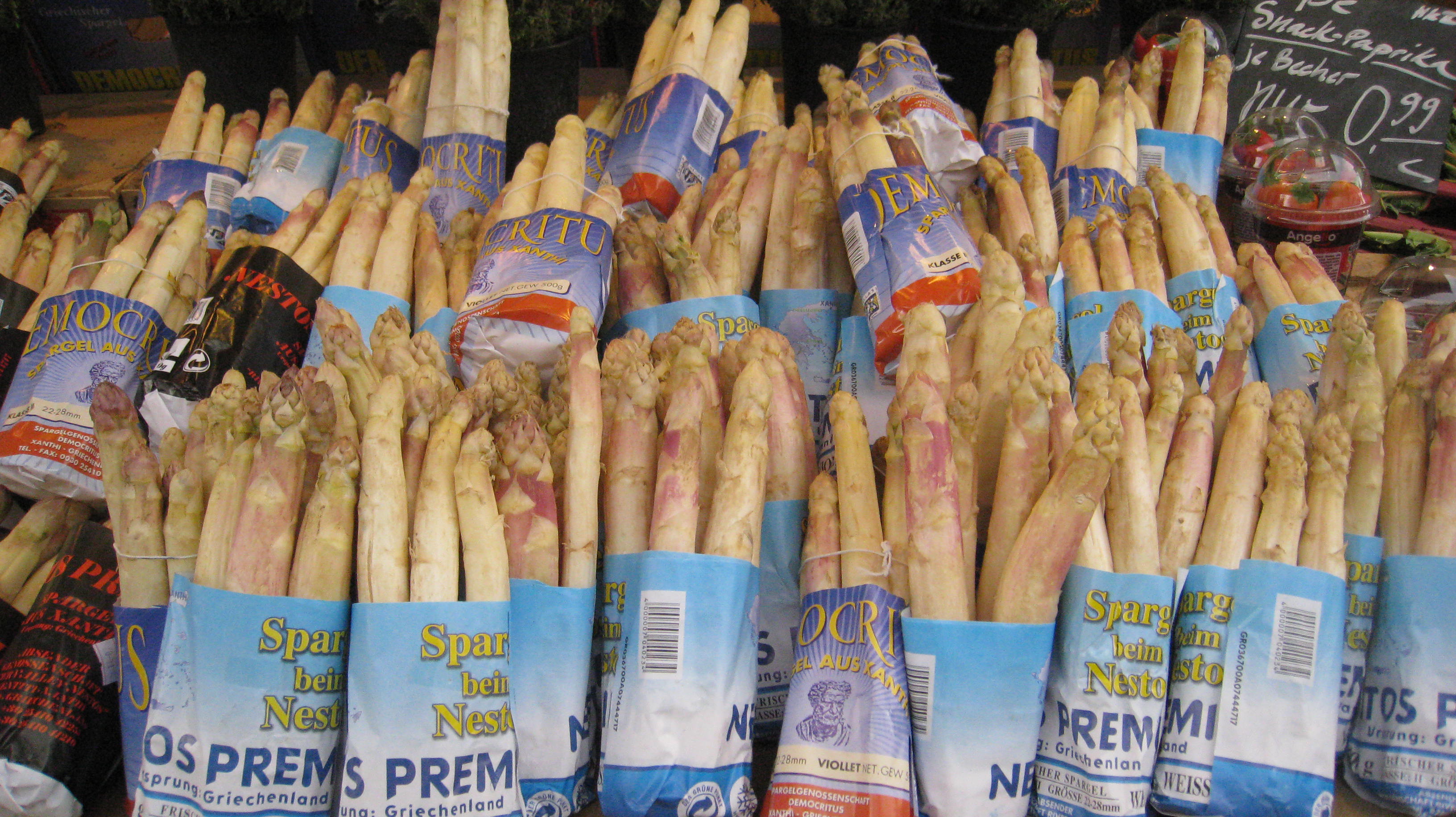
A dig through the archives reveals evidence of more humble times – detailed descriptions of trips to the supermarket, unsolicited critiques of films,dramatic confessions that nobody really cares about, anecdotes about odd family gatherings and photographs of asparagus.

Posts become weightier. Themes like politics and history rear their ugly heads.002

Success becomes a legitimate reason to write a blog post.

Out with the grainy pictures of home-made jam and in with shiny pictures of cook book launches.

Links to appearances in more well-read publications begin to appear, like acid being poured on a wilting flower.

Enough, I say.

I’m sorry I haven’t blogged in a while.

But don’t worry. I haven’t become a massive success.

I’m just guilty of benign neglect.

And I’ve also been surprisingly busy.

And, alright, if you MUST know, I’ve been writing quite a lot for other publications.

Sickening, I know.

But I haven’t forgotten where I came from.

I’m still Kate Katharina, creep supreme and number 1 fan of the lampsilis mussel.

Last month, I interviewed a 49-year-old woman whom I met in a homeless shelter.

She spoke to me in fluent English.

Every day, she goes to a café run by a homeless charity, where she sits, smoking and writing Final Fantasy 7 fan fiction.

I’m planning an entire post dedicated to that encounter soon.

Last week, I went down to Bernauer Strasse, where Michelle Obama and the girls were visiting remnants of the Berlin wall.

In the blistering heat, I interviewed a few people who had gathered to welcome them.

One of them was Ruben, a Dutch civil servant, who had driven all the way from Holland for the Obama visit.

His enthusiasm was infectious.

After I’d taken his photograph and the Obamas had departed, he asked me whether there was a loo anywhere in the area.

I wasn’t sure if this was off-the-record.

As the road was closed off and most of the cafes on the street were shut, I took him back to the little three-person office where I freelance and presented him to my colleague as “Ruben, a Dutchman who is going to use our facilities.”

I’ve also been working on- www.berlinab50.com which is a blog aimed at Berliners in the 50-or-over category. I’m guessing that doesn’t include most of my present readers.

And I’ve been visiting Frau Bienkowski, who has vowed never to let slip again that she was invited to dine on asparagus in palatial surroundings.

Rivalry in the home can become quite intense.

And LSB was over for a few days too.

I took him up in a giant air balloon and fed him with falafel.

And we had our first ever experience with a disposable grill set.

And on that intriguing note, let me leave you with a link to an article I wrote last night for an Irish paper.

the promise to do my very best to blog more regularly again.