Ever the Bridesmaid…

Frau Bienkowski hasn’t managed to marry me off yet, which is a pity since she likes a good wedding. She’s always talking about William and Kate’s and is the first to know about the appearance of a new photograph of Prince George.

She’s interested in failed marriages too. Like those of former president, Christian Wulff who, scandalously, separated twice. And she thinks it’s high time his successor, Joachim Gauck marries his long-term partner. After all, Frau B says, she accompanies him to most official events.

source: Creative Commons Robbie Dale www.anonlinegreeworld.com

source: Creative Commons Robbie Dale http://www.anonlinegreeworld.com

Luckily for us both, our appetite for wedding-related stories has recently been whetted by living vicariously through my sister, who got married in Philadelphia in July.

Frau B was there every step of the way.

She was thoroughly briefed on the suitor. And on how he met my sister.

(“Everything is possible online these days!” she had said approvingly)

She knew all about  the navy bridesmaid dresses, which we ordered online for $25. She knew my sister was making her own wedding cake. And she had a good knowledge of the guest list too.

Ever the stylist, she worried about how I would wear my hair on the day. She suggested I get the same cut I had last December.

I have documented my fear of hairdressers here before. Believe me, they get worse when you cross the Atlantic. My cutter had scraggly blue hair and dreadful manners. She refused point-blank to cut the shape I wanted, instead insisting, “It’s 2014  dude. You sister is getting married! Try something new.” She also accused me of frequenting “old lady salons.” (She’s right obviously; hip salons don’t have libraries attached.) I ended up with a stupid cut. Relieved I wasn’t the bride.

Frau B was also privy to my pre-wedding music-related woe.(PWMRW; primarily affects  amateur musicians, according to DSM X)

I had brought my violin back from Dublin at Christmas after my sister hinted she might want my (other) sister and me to play during the ceremony.

Things were going okay at first, though I hadn’t played in years. My fingertips were getting tougher and I was playing halfway in tune. Then one night, when I was doing my floor exercises (as you do) LSB tried to step over me to get to the couch.

Except he tumbled over my open violin case instead. I watched as if in slow motion as he landed, knees first on top of the instrument.

Snap. Crack. An expletive.

I twisted out of my yoga pose faster than you can say “downward dog” in time to see my E string spring loose. Then the A string. Then the bridge collapsed. It was all very traumatic.
Source: Wikipedia

Source: Wikipedia

I had to bring it to the Geigenbaumeister. He fixed it for €10 and told me he’d had a Stradivarius in earlier that week. Frau B told me I’d got lucky. She was right. Could have been much worse. Could have been a collapsed Stradivarius bridge.

When I visited her last week, Frau B said: “Tell me everything about the wedding. Then show me the pictures.”

I told her that my sister was objectively the most beautiful bride there’s ever been.

That the wedding took place in a medical museum which boasted among its displays a gigantic colon. (Available for guests to view before dinner).

That everyone survived the violin duet.

That the cake was spectacular.

That my tough big sister had to try really hard not to cry during the (self-written) vows.

That I had to try even harder.

When I showed her the pictures,  Frau B said. “My! What long hair your sister has got!”

On life and death and the sanitary towels in between

“I thought that at my age I could no longer cry,” said Frau Bienkowski. “But this morning, the tears came.”

Frau B had spent the whole day trying to get hold of a packet of sanitary towels because ever since her hip operation, she has been unable to retain water.

But the person in charge of making the fortnightly order was on holiday and nobody had thought to take over his duties.

In the end, one of the volunteers popped over to the chemist’s to pick some up. They weren’t the right kind, but they would do for now.

“I’d be lost without Frau Lintz,” said Frau P of the lady in question.

The nursing home is short-staffed because there have been an unusually high number of deaths over a short space of time, leaving several rooms empty.

Frau B's egg timer. Source: www.amazon.com

Frau B’s egg timer. Source: http://www.amazon.com

Money is tight and management won’t increase the staff-patient ratio. So when a certain number of residents die without being replaced, the carers lose their jobs too.

Death at the nursing home is a small table placed outside a bedroom door. On it is a candle and a framed photograph of the deceased.

A few months ago there was a table outside the room opposite Frau B’s.

“The lady across the way died,” Frau B said, matter-of-fact.

And another time she said: “Every night when I go to sleep I pray that I won’t wake up.”

In other circumstances, the sentences might sound tragic.

But if I have learnt anything from my weekly visits, it is that welcoming death is not the same as abandoning life.

Frau B and I are seventy years apart but we talk like sisters – about boys and clothes and death and what’s in the news.

image source: centralavenuepub.wordpress.com

image source: centralavenuepub.wordpress.com

We laugh out loud at the absurd hen-shaped egg-timer she’s been given instead of an alarm clock and I bring her several packets of the sweets her doctor has told her not to eat.

We continue reading the book about the cantankerous Irish nuns, even though we get through about ten pages each week and I’ve been paying library fines for months.

Recently, we found out that we both get dressed up for my visits.

“Sure who else notices what I’m wearing?” Frau P asked with a smile and I told her I felt the same way.

So if death is a small table, life is the perm Frau B insists on getting touched up every week.

And the moments we spend laughing at silly hen-shaped egg-timers and the humiliated tears we shed about elusive sanitary towels are the beautiful and tragic bits that happen in between.

A stitch in time

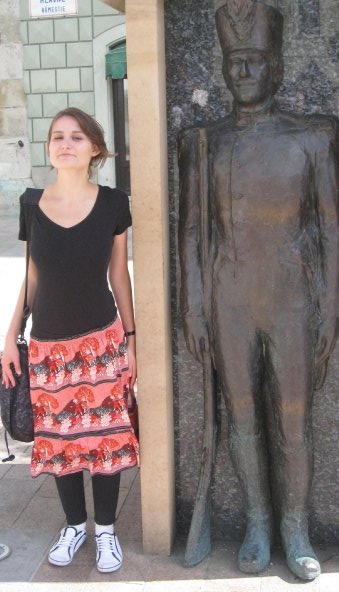
The last time I visited Frau Bienkowski I was wearing a red cotton skirt. The pattern featured lots of identical girls and boys holding hands and strolling past apple trees.

“What lovely material,” she said, motioning for me to come over so she could have a closer look.

“Yes, I love it,” I said. “But the problem is that the elastic at the waist has come loose and I’ve got into a terrible habit of tying it into an ugly knot to stop it falling down.”

“Bring it to me next week and I’ll sew it up.”

“Oh no..”

“Do. I can’t guarantee that it’ll be pretty but it’ll do the trick.”

I called my mother on Skype. I was deeply ashamed of my elastic knot. It stood for both incompetence and laziness.

“You should let her do it, Katzi,” my mother said. “I’m sure she’d love to do something for you.”

So last Friday I went to the Turkish market. And as well as purchasing six avocados and three mangos, I bought some elastic and a little sewing kit.

“Did you bring the skirt?” Frau Bienkowski asked the moment I entered her room last Saturday.

“I did. And pears too.”

“Good. Now, let me have a look.”

I handed her the skirt and rummaged in my bag for the sewing kit and the elastic.

“Can you thread me a needle?”

I tried but Frau Bienkowski wanted a double thread.

I tried again.

“Oh but that’s a little too short, Katechen,” she said.

I tried a third time. This time Frau Bienkowski approved.

“Good,” she said. “Now, how about you either read to me or tell me about your week while I get a start on this.”

I could have told her about my week, which was rather eventful, but I got distracted.

Frau B’s hands were flying. She tore out my ugly knot of elastic and started weaving stitches furiously. The waistband was restored in minutes.

Then she asked me to put my finger and thumb on the flap where she’d placed the last stitch and told me to come over to her armchair so she could measure my waist.

Her hands moved the elastic easily about my waist.

With a few marvellous swoops, she sewed it in. She wasn’t even looking at what she was doing. When she saw how astonished I was, she said: “But Katechen, this was my job. You never lose the feel for it.”

My red cotton skirt used to live at the bottom of a large wicker basket. It shared its home with an enormous plastic nose, several berets and a pair of bee’s wings. I used to match it with ugly purple beads when I pretended to be the Queen of England.

Wearing the skirt while inter-railing in the summer of 2009.

Wearing the skirt while inter-railing in the summer of 2009.

With the terrible dawn of adolescence, my dressing-up basket was cast into the bottom of a basement wardrobe.

Years later I re-discovered it and found that the skirt’s loose elastic made it a one-size fits all. The queen’s skirt had turned boho-chic.

I took it with me when I went inter-railing in 2009 because it was light and didn’t crumple easily. I also fancied myself as some kind of honorary gypsy in it; a fantasy I indulged in while gazing out the windows of the slow trains which hauled me through eastern Europe.

Frau Bienkowsi, her fingers moving like those of a master pianist across a keyboard, broke the silence.

“Katechen,” she said. “I don’t want you to say Sie to me any longer. “I’m not Frau Bienkowski any more. I am Lotta.”

“Had he ever said he loved me?” she wondered.

“Last night I was lying awake thinking about my husband,” said Frau Bienkowski. “And I wondered whether he had ever told me that he loved me.”

“I thought back and realised he never had,” she continued. “I think he would have considered it unmanly.”

“And did you ever say it to him?” I asked.

“No. I think if I had asked him, he would have replied, ‘haven’t you noticed?’”

“Lots of men aren’t good at expressing their emotions,” I said.

“Yes,” she said. “And he did bring me flowers.”

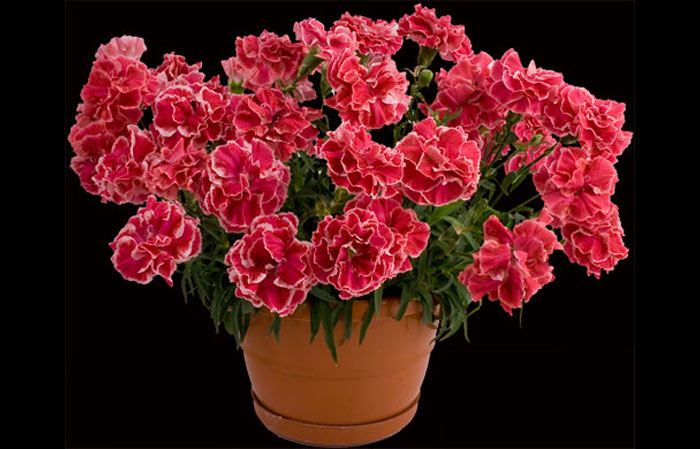
I looked over at the windowsill. The carnations, whose longevity has astounded us, were now wilting.

“Do you think I should get rid of them?”

“I think it’s time,” I said.

source: wikimedia.org

source: wikimedia.org

Our conversation meandered.

Frau Bienkowski told me about a carer at the home who earns just €1000 a month. She is a Lithuanian law graduate in her fifties.

We talked about the possibility of Germany introducing a minimum wage, and what the outcome of Sunday’s election might be.

Frau Bienkowski follows politics closely. Last week, I sent off her postal vote.

She’s voted for the same party all her life.

Frau Bienkowski thinks Merkel is machthungrig – hungry for power- but also “ruhig” – or calm.

Even though Germany is in a good place, the poor are getting poorer.

Frau Bienkowski is anxious about LSB finding a job. He has been here for just five days. I told her that he was at home learning German.

“He’s diligent, is he?” she asked.

“He is,” I said. “He’ll find work. But for the moment, he needs to focus on learning the language.”

“Absolutely – there’s no point worrying about it this side of Christmas.”

Frau Bienkowsi says she pities young people out of work. It was the same in 1928, she told me. Unemployment was rampant.

Then Hitler rose and things changed. A man Frau Bienkowski knew had been out of work for ages. Then he got a job building a motorway. His wife was delighted.

Hitler re-built the army, even though he wasn’t allowed.

Men were kitted out in brown uniforms and had work again.

Frau Bienkowski got married just before the war broke out. She got pregnant, then her husband was conscripted. In 1940 her son was born.

“I prefer not to think of the time after the war,” she said. “It was so hard. We had no money.”

She will never forget the generosity of the Americans during the blockade.

“We gathered at Tempelhof airport,” she said. “And they dropped down packets of food for us.”

Then Frau Bienkowski wanted to talk about her winter clothes. They’re stuffed in a large box because her summer wardrobe takes up all the cupboard space.

We agreed to leave re-arranging the clothes until October in case of an Indian summer.

I told Frau Bienkowsi that LSB has complained about my many clothes taking up all the cupboard space and about how his t-shirts hang neatly, discontentedly from the top of the wardrobe door.

She laughed, her eyes lighting up with amusement, and told me to send him her love.

“Auf die Minute!”

Auf die Minute! Frau Bienkowski says, glancing at the clock which hangs to her right.

This is always my greeting. It is the third and final thing that happens before we shake hands.

First I knock twice on the door. Frau Bienkowski says “Ja” in two syllables, which she stresses equally.

And as I am pushing open the door and making my way past where her coat hangs, she says it.

Auf die Minute! – to the minute!

Once, Frau Bienkowski had another visitor – a lady – when I knocked on the door at precisely 3 o’clock.

Auf die Minute! they said in unison, because Frau Bienkowski had told the lady that I come exactly on time, every time. And we all laughed.

“So gehört es sich auch,” – that’s how it should be – I retort as I take the hand she has outstretched.

Sometimes Frau Bienkowski playfully teases me about my punctuality.

“You must pace around the corridors!” she says.

“The corridors? Are you joking? I go for a walk in the gardens!”

It is a source of immeasurable pride that my punctuality amuses and reassures a German. A 94-year-old German at that.

I have not told Frau Bienkowski that she alone benefits from my impeccable timekeeping and that back home, my parents are bemused by what they called my “scurry” – a trademark dash out the door which I perform with my shoulders hunched forward, my head down and usually missing an item vital to the appointment I am trying to make.

Today Frau Bienkowski is wearing a yellow jumper with short sleeves. She matches the apricots I have brought her.

“I couldn’t find the Turkish apricots which you requested,” I tell her. “These are Greek.”

“Oh, perfect,” she says.

“And they are still a little hard. But I chose them deliberately because they go soft so quickly.”

“Absolutely right,” she says, digging out her purse and pouring coins onto the table. “Now, what do I owe you?”

“Nothing,” I say. “I get a monthly travel allowance of €25 for visiting you, which I do not use because I walk. I think it’s well spent on apricots.”

“Katechen,” she says, as more coins topple out of her purse. “I swear to you, I will not ask you to get me anything ever again if you do this!”

“But I don’t need the…”

“Katechen!”

“They cost €2.29,” I say.

“Good,” she says. “Take €2.50.”

“Ha! You must be joking.”

Frau Bienkowski digs her fingers through the netting of the plastic container. She gropes the apricots, pressing them with her forefinger and thumb.

“Let’s have one each,” she says.

I take them and rinse them under the tap in her toilet sink.

To the left there is a plastic shower seat, where Frau Bienkowski sits when she gets her back washed.

“It is the only thing I can’t do for myself,” she has told me many times. “I can still do everything else. I can get dressed, and make my way downstairs for lunch. I always say, as long as I still can, I will…But I can’t reach my back any longer.”

We sit by the window, munching apricots.

It is a dull day, but every now and then, the sun breaks out from behind the clouds.

On the window sill is a line of pots.

“Look,” Frau Bienkowski says, pointing to the pot of carnations I brought for her birthday.

They are deep pink and in full bloom.

Legs

“So many beautiful young women’s legs are wasted by wearing trousers,” said Frau Bienkowski.

I nodded sympathetically. I was in an asymmetrical chequered skirt and thick brown tights.

“Your hair looks very nice today,” she said. “Is it freshly-washed?”

“I washed it this morning though that’s not unusual. But I’ve been out in the rain.”

She nodded. “That could explain it; it’s sitting very nicely.”

I wheeled the Zimmerframe down the corridor and picked up two cups of coffee.

“Here, have this 200 gram-bar of chocolate,” Frau Bienkowski said.

“Oh, I couldn’t possibly..”

“They’re putting me on a diet, I’m getting too fat!”

“Oh, if you insist!”

Outside the rain pelted down. The sky was white and grey. The trees swayed sadly and their leaves hung limp.

“Weren’t we waiting for a rainy day to clear out the cupboard?” I asked.

“Oh, but it’s Sunday.. are you sure?”

image source: centralavenuepub.wordpress.com

image source: centralavenuepub.wordpress.com

“Sure as can be.”

“Why don’t you use that walking stick to pull out all the stuff at the bottom?”

I fetched the dark mahogany stick and poked absurdly around the bottom of the cupboard, pulling out piles of clothing, carrier bags, cardboard boxes and four rolls of kitchen paper.

We made several piles: too big, too small, keep, discard.

I held up some wide navy trousers.

“They’re for hospital,” she said. “My only pair! Put them in the hospital bag.”

Later, we continued reading from Una Troy’s book about the cantankerous Irish nun.

I read a passage detailing the monotony of convent life. Frau Bienkowski nodded the whole way through.

“Just like here,” she said.

Afterwards I asked her whether she’d listened to the audio book.

“No, Katechen” she said. “I’m so listless and uninterested in life. I sit here and keep my eyes closed.”

“But you could just try it out for five minutes,” I insisted.

“Yes,” she said. “I could. But I am depressed. Well, I don’t know whether I am. But the weather doesn’t help. Every day is the same.”

“You have a lively mind,” I said. “You need more stimulation.”

“The friend I told you about last time,” she said. “She was a year younger than me. We used to bet about who would die first. I said since she was younger it’s only right that I would go first. But she died last year.”

“Anyway, Katechen. How is Andrew?”

“He’s well. Working diligently on his dissertation.”

“And when are you next free?”

“I’ll check my diary.”

“Now, I don’t want you to…”

“Enough, Frau Bienkowski.”

She smiled.

“Thursday?”

“Thursday.”

She came with me to the lift.

“Thank you, Katechen.”

“Thank you.”

The doors slid closed but her eyes were sparkling and she was smiling before she disappeared from view.

“Getting an abortion in 1953 wasn’t that easy.”

In 1953 Frau Bienkowski’s friend, who was having an affair with a married man, got pregnant. Though she’d had abortions before, she couldn’t get one this time. She had a baby daughter.

The man left his wife. Frau Bienkowski advised her friend not to marry the man. But she did.

After a few years they moved from Berlin to the south of Germany, where his family was from. Frau Bienkowski didn’t like the man. He wasn’t very nice and he drank a lot. He had other children too. Frau Bienkowski and her friend fell out over him for a while.

A few weeks ago, when it was Frau Bienkowski’s birthday, the woman called her.

She’s 89 now and her husband is dead. But the daughter grew up to be a wonderful woman.

“I said to her,” said Frau Bienkowski, prodding her fork into her kiwi cake, “I said, you went through a terrible few years. But look what you’ve got now. A wonderful daughter.”

It all turned out for the best, Frau Bienkowski said. Now she has a diligent daughter – a medical assistant – to take care of her in old age.

Frau Bienkowski and I talked about abortion. I told her it was illegal in Ireland. She had heard about the case of Savita Halappanavar.

Even though her friend now has a lovely daughter to take care of her in old age and her own beloved son died, Frau Bienkowski, 94, and I, seventy years her junior, agreed that Ireland should legalise abortion, and not just if a woman tells three doctors she’s suicidal.

When Frau Bienkowski was young, the pill wasn’t available. “You had to be really careful,” she said.

I told her that when my mother came to Ireland, people went to Georgian houses where doctors illicitly provided them with condoms.

“Contraception is probably still forbidden in Ireland,” Frau Bienkowski said, laughing.

I assured her that, thankfully, it was not.

But I told her that women go to England to get abortions. “Oh, is it legal there?” Frau Bienkowski asked. For her, England and Ireland are pretty much one.

“I’m surprised there’s such a demand for abortion these days though,” Frau Bienkowski said. “With so much contraception available.”

Frau Bienkowski and I talked about men. She knew several who were serially unfaithful.

I said I didn’t like people who wanted to have an exclusive partner and also lots of secret ones. I said I could understand people wanting to have sex with lots of different people, and liking open relationships. But that deceit drove me up the wall.

Frau Bienkowski agreed.

Then she asked: “So how are things with Andrew? What’s the story with his plans?”

“I have good news,” I said.

She looked intently at me. “Yes?”

“He’s moving to Berlin!” I said.

“That’s to my advantage,” she said.

Here eyes were sparkling. “That means you’re staying!”

“It sure does,” I said. “I’m not going anywhere for a while.”

“That’s to my advantage,” she said again.

Frau Bienkowski meets LSB

“Are you alone?” Frau Bienkowski asked as I poked my face through the door.

“No,” I said. “I’ve brought somebody for you to meet.”

LSB was on his best behaviour. Earlier, he’d been fretting about the propriety of his shoes and had asked how he would know the appropriate time to shake hands.

Wandering through the streets of Berlin in the past few days, we’d rehearsed the following sentence ad nauseam:

Es freut mich, Sie zu treffen. Ich habe schon viel von Ihnen gehoert. (=It’s nice to meet you. I’ve heard a lot about you)

LSB is a fast-learning savant but word order is not his forté.

Frau Bienkowski held out her hand. LSB smiled nervously and got ready for his moment.

But he wasn’t quick enough.

“Es freut mich, Sie zu treffen. Ich habe schon viel von Ihnen gehoert,” Frau Bienkowski said.

LSB gaped at her. “Freut mich, freut mich,” he said.

I had already recommended LSB’s services as a wheelchair driver, which meant that for the first time, we could venture outside the grounds.

Frau Bienkowski had the afternoon all planned out. She had a plastic bag full of laundry which we were to drop off at the dry-cleaners before going to the coffee shop next door.

Frau Bienkowski wanted a pot of coffee and a small treat. LSB and I decided to share an enormous piece of Zupfkuchen, a decadent chocolate-cheese cake of Russian descent.

When we brought it to the table, Frau Bienkowski looked disgusted.

“You are to have a cake each” she said. “On no account will you be sharing.” She turned to LSB, who looked bewildered and bemused. “Get yourself your own,” she said. “Go on.”

I translated for LSB. He waved his arms about ineffectually. Frau Bienkowski became sterner and LSB got back up to examine the cakes on display.

“I wish he were that obedient to me,” I said as we watched him choosing a pastry. Frau Bienkowski laughed. “You are too young to be sharing cake. It’s ridiculous.”

From the window of the café Frau Bienkowski could see the neighbourhood where she grew up. “There used to be a tram on this street,” she said. I asked her whether she remembers horses and carriages.110

“Yes,” she said. “There used to be a track for horses.” But it, along with the tram was abolished when Hitler came to power.”

“Why?”

“They widened all the roads,” she said. “For the rallies.”

She said she remembered watching them as a girl.

“What were they like?”

She paused. “They were exciting.”

Frau Bienkowski asked us to take her back to the old people’s home through the park.

The sun was out and the birds were singing.

“After the war,” Frau Bienkowski said, “there were no trees here. Everything had to be used for fuel. There was nothing left.”

Back in her room, I asked Frau Bienkowski if I could show LSB the photograph of her family.

“Yes,” she said. “Take it down from the wall so he can see better.”

I asked LSB to guess which child was Frau Bienowski.

He chose a toddler with wispy hair looking to the side.

But it wasn’t Frau Bienkowsi. She was the little girl kneeling on the bottom left, with short hair and buckled shoes.

Frau Bienkowski’s three fried eggs

Frau Bienkowski was wrapped in a blanket, wearing a nightie.

“I’m not at all well. My nose is blocked, I lay awake all night and I keep breaking out in sweats.”

“Oh no!” I said.

I moved closer, and placed a large box wrapped in orange paper on her lap. “I’m sorry I couldn’t see you on Tuesday,” I said. “But Happy Birthday!”

Her face changed.

“Oh no, Katechen, you weren’t to do that.”

“Open it,” I said.

“But it’s so big!”

“Go on.”

She tugged gingerly at a piece of Selotape. “I’m going to keep the paper.”

As she worked on the other corner she said, “I think I might know what this is.”

image source: www.amazon.com

image source: http://www.amazon.com

“Well, you just wait and see if you’re right.”

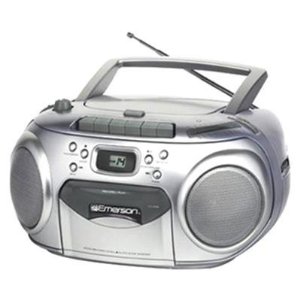
She lifted the sheet covering the top of the box to reveal the radio CD player I’d bought in Media Markt just a few hours earlier.

She blinked. “But it’s such a big present. I need to give you some money.”

“Nonsense,” I said.

“But Katechen…”

Keine Widerrede! Now, tell me about your birthday party.”

She paused.

“Well,” she said finally, “Seven of us met downstairs for coffee and I got lovely flowers. They came from the Internet. Nowadays, you can get everything on the Internet.”

“It’s true!”

“Anyway,” she continued. “On my birthday, they said I could choose to have any meal I liked. And I knew exactly I wanted.”

“Really?” I asked. “What did you want?”

“A fried egg,” she said. “I crave them so much.”

“And did you get one?”

“I got three!” said Frau Bienkowski. “You might think that’s a lot, but they were tiny; this small,” she said, and made a little circle with her forefinger and thumb.

“And were they good?”

“They were delicious.”

“Do you not usually get eggs here?”

“Oh, just scrambled,” she said. “But I’m sick to death of scrambled.”

I remarked that this seemed a happy kind of home.

“Well,” she said. “Maybe for a year or two. But I’ve been here for five. You’re not supposed to be here that long. Most people arrive and die after a year or two. But me – I’m still here.”

“I had one good friend here for two years,” she continued. “But then she had a stroke and died. You do grieve…”

“Of course,” I said.

I took out some photographs of LSB and my family, which I’d promised to show Frau Bienkowski.

LSB and I before a college ball

LSB and I before a college ball

She reached for her magnifying glass and turned on the light.

The first was a picture of my family at the legendary Familienfest last year.

She moved her magnifying glass over each of our faces. “These are my sisters,” I said. “And that’s my mum, and this is my dad.”

She lingered over my father’s face, examining it carefully. He was wearing his trademark scowl, which he reserves for people with cameras and for reading electricity bills.

“He’s handsome,” she said. “I might have fallen for him too.”

“He’d be delighted to hear that!” I said.

My family at Familienfest 2012

My family at Familienfest 2012

Next up was a picture of LSB and me all done up before going to our college ball a few years ago. “He has such brown eyes,” she said. “Like you. Your children will have even darker eyes again.”

Frau Bienkowski looked at another picture of my sisters and me and asked for our ages.

“And they’re not married either? None of you?”

“Nope, none of us!” I said. “Maybe some day.”

Frau Bienkowski remarked on how nice it was to have such a big family. She herself, had just one son. But he and his girlfriend died in a car crash more than thirty years ago.

“At least I have memories,” she said. “People who never had children have none.”

I provided a clunky translation of the English expression Don’t cry because it’s over, laugh because it happened.

“It’s true,” said Frau Bienkowski. I nodded, and we were silent for a little while.

“By the way,” she said later. “That drink you got last time..”

“My latte?”

“Yes!” she said. “I heard a report about it on the radio. Next time we go down to the café, I want to get one. It sounds very nice!”

“We will absolutely get you a latte next time,” I said.

Frau Bienkowski knows all about LSB. She even knows that he’s coming to visit me soon.

“You’ll bring him here, won’t you?” she said.

“Oh yes, he’d love to meet you! “But you’ll have to help me teach him some German words.”

She smiled. “I will!”

I took the CD player out of its box and plugged it into a socket.

I placed an audio book CD into the player.

A man’s voice filled the room.

“Can you hear that?” I asked.

“Yes,” said Frau Bienkowski. She looked happy.

When I got up I had to step over a cord attached to the lamp on the table between us.

“The bulb blew the other day,” Frau Bienkowski said. “And the type of bulb the lamp uses has been discontinued. Luckily, Frau Brein once got me a batch of ten, which will last me until I die.”

“You’re not thinking of marriage, no?” asked Frau Bienkowski.

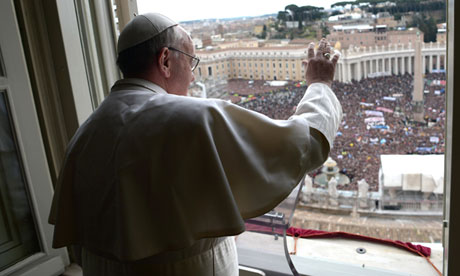
“So we have a new pope,” Frau Bienkowski said, as I handed her the bag of medium-sized apples and two packets of sugar-free sweets she’d ordered.

“He could have been a black man,” she continued. “It wouldn’t have mattered.”

“No!” I said.

“But there was something irregular about Benedict’s resignation, wasn’t there? Popes don’t just resign!”

I agreed it wasn’t their custom.

“Could you get us some coffee?” she asked, pushing her stroller over to me. “You can put the cups at the front!”

I pushed the Zimmerframe down the corridor and passed three ladies in wheelchairs. One of them had a remarkable face, like a gazelle. They were staring straight ahead. One of them was saying, “You could write a novel about a life, if you just think back to all your encounters. You could write a novel. You really could.”

I placed Frau Bienkowski’s cup in front of her, and she pushed one of her sugar-free sweets towards me.

“So tell me, how has work been this week?”

I told her I’d been busy and that the new pope was creating a lot of work for us.

“It’s good you’ve got work,” Frau Bienkowski said, “especially as you’ve booked flights to see your boyfriend!”

“I couldn’t agree more,” I said.

“You’re not thinking of marriage, no?”

“Well, it would be difficult logistically since we live in different countries,” I said, apologetically.

She nodded. A few weeks ago she’d told me that she thought German president Joachim Gauck really ought to marry his long-term partner, since she travelled with him in an official capacity.

A little later, we got talking about Germany. “We’ll never escape our past,” she said and paused.

“They could have just removed the Jews from official positions. But there were good Jewish doctors, good workers. Sending them to concentration camps, killing them was wrong.”

For the first time, I felt uncomfortable around Frau Bienkowski.

“Of course it was,” I said.

Frau Bienkowski presented me excitedly with a fashion catalogue. “Look what I got in the post!” she said.

We spent some time leafing through the pages and commenting on the clothes.

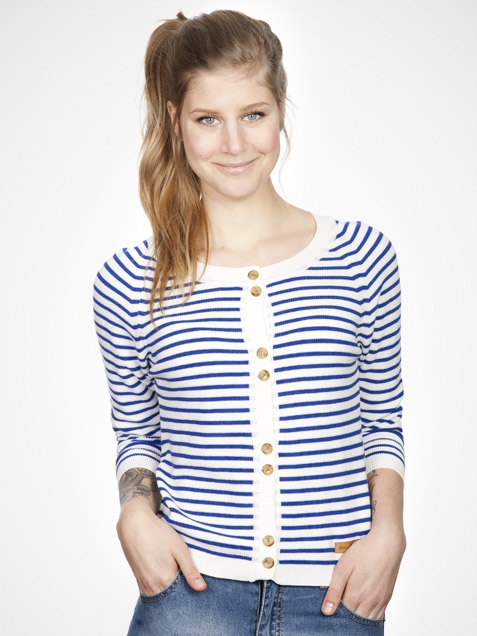
“I like that,” I’d say, pointing at a blue and white striped cardigan.

“Yes,” she’d reply, “It’s pretty, but look at the pattern on that blouse .. it’s a bit much, isn’t it?”

We looked at a model in high-heeled shoes. “Do you like them?” I asked.

“Oh yes,” she said.

“Did you wear such high shoes when you were younger?”

“Oh yes!”

“And could you walk in them?”

She smiled. “If you wear them, you walk in them!”

We read some more of the story about the cantankerous 100 year-old living in an Irish convent.

I apologised that I wouldn’t be able to see her next week.

“Don’t you worry!” she said. “This should never be an obligation. And tell Andrew I say hello!”