Confessions of an Arabic student: Ordering Falafels And Sounding Like A Pirate

Monday was a very important day for me. It wasn’t Christmas, or my birthday, or the day I competed in the Slovakian jousting championships. In fact, it was an occasion of much greater significance.

Ladies and Gentlemen, boys and girls, and she-who-serial-googles-‘snails’-to-land-here, last Monday evening, I learnt the last four letters of the Arabic alphabet: ط, ظ,
ع and غ.

Those final four characters had been hanging over my classmates and me for a full three weeks. Our Mudarrissa (مدرسة) kept promising we’d get to them the following lesson, but we got tied up learning how to attach possessive pronouns to objects like chairs, bags, chickens and doors and how to ask for falafels.

The four offending letters had been left until the end because native English speakers tend to mispronounce them because we lack an equivalent sound. The most felonious one is: غ.

“Who wants to pronounce this one?” asked the Mudarissa, pointing at the lone-standing, three-shaped character with a hat she’d printed on the board.

(Teacher tip: Never, ever ask open questions)

An eerie silence descended.

“How about …. you. Kate?”

“Agggghhhrr”, she said.

“Aaarr” I replied, as if I was at the dentist. She shook her head.

“Agggghhhrrr” she repeated.

“Rrrrrrrrrgh” I tried once again, only to cause her to shake her head more violently.

“No. It’s AGGGGHRRR. Not “RRRRRR”.

“AAAAGRRR?”.

“No.”

This went on for some time. I estimate that I voiced the letter incorrectly seventeen times before she gave up on me. I was prepared to continue indefinitely but the other students were beginning to shift in their chairs and smother giggles.

It might not seem like a big deal to seasoned polyglots, but I am pretty glad I’ve got this far. You might remember that Arabic has twenty-eight letters, which change shape according to their position in a word.

What’s now happened – since Monday- is that I can look at a word and actually read it –albeit incredibly slowly. Of course as most standard Arabic script doesn’t mark vowels, what I’m reading could have a myriad of actual pronunciations. The point though is that I’m now in a position to consider those possibilities.

Today I started using facebook in Arabic. My profile picture was immediately transported to the other side of the screen and the ads offering me Masters Degree Courses in John Hopkins University switched to the left. In an effort to learn new vocabulary, I diligently copied and pasted some of the Arabic characters into Google translate. The Arabs, I’ve learnt have a way with words. They may not have the time to mark their vowels, but they do translate ‘unlike’ as “cancellation of admiration”.

H-A-L-A-L

Life for LSB has become yet more tedious since my initiation into the Arabic language. We can’t pass a kebab shop without me reading “H-A-L-A-L” (حلالا) extremely slowly while missing the English translation that accompanies it. The other evening, on Camden Street while we were on the way to meet a friend for a hot port and a natter, I reeled off everything I could say in Arabic complete with elaborate supporting gestures.

“That is a beautiful and new car!”, I said pointing to a rusty 1993 fiat punto. “I am Kate Katharina.” “Pleased to meet you.” “Give me a falafel please”.

Beauty? I just can’t nail it.

I found myself eating a sourdough sandwich alone on a bench in the Jervis Shopping Centre last week. From where I was sitting (right outside Forever 21) I had a perfect view of The Nail Bar, where two ladies were being treated to a French manicure and the attachment of gel nails.

The two clients, perched on stools with their hands stretched out in an arc before them bore an uncanny resemblance to a pair of begging lapdogs. The more I gazed at them the greater my desire to laugh and when I could bare it no longer, I let out a little giggle, which caused the man next to me, who was minding his teenage daughter’s shopping bags, to turn and stare.

I’m pretty confident that I’m the least nail-savvy woman in Ireland. I’m not sure if I even own nail polish, after my recent mass exodus of make-up of age ten years or more from my room. I’ve never had my nails done and the two or three attempts to paint my own in my early teenage years resulted in odd splashes of green glitter, which still pepper my carpet.

image from ftv12.tk

In case it seems as if I’m condemning the common cuticle, I promise you I am not. Sure we couldn’t do without them. They’re an anatomic necessity. Wikipedia puts it just beautifully:

“A nail is a horn-like envelope covering the dorsal aspect of the terminal phalanges of fingers and toes in humans, most non-human primates, and a few other mammals”.

Personally, I find them useful to pick at when nervous or for opening tricky plastic packaging.

I just don’t care how they look.

Don’t get me wrong. Perfectly-shaped contours are always nice. Anything well painted is a pleasure to look at.

The problem is, I don’t look at nails. I do not take sneaky downward glances to check out other women’s fingertips and I very rarely seek to improve the condition of my own.

Truth be told, their appearance is a matter of complete indifference to me.

It’s not for lack of vanity. I love clothes and good eye make-up and a gentle foundation. I flick through photographs of celebrities before I choose a haircut and I always turn to stare at interesting-looking people or those with beautiful clothes. I guess the reason that I’m indifferent to nails is that I think their cultivation is of little or no consequence to the overall appearance of a person.

I know, I know: I can already hear the cries of despair. It’s all about the detail. A real lady pays attention to her body from head to toenail. Each nail is a tapestry waiting to be coloured with exquisite strokes of blood red, deep blue and neon pink. A lady with fine nails is a lady with a well-kept mind.

Maybe so, but I just can’t see the point of it. Nails are tiny, breakable and their pinkish hue makes them naturally delicate and petal-like. Making them longer, or sharpening them or attaching sticky stuff to them seems to represent an awful lot of effort with little promise of reward.

I guess you have to be a connoisseur.

On my way out of the Jervis Centre I watched a pretty Spanish girl being stopped by a salesman in a black t-shirt. He asked her whether he could see her nails. She laughed a little and put out her hand. He took it in his and pretended to examine it carefully. Her nails were short enough, with a glimmer of pink sheen. He wasn’t pleased. He whipped out a special little square gadget and began rubbing her nails with it. Judging by his facial reaction, and her reluctant smile, they had been transformed. He swept her away to his stand, where she bought his tool. He popped in into the bag for her and she was on her way.

Talk about nailing your market.

Am I the only one that doesn’t get the hype? Are you a perfect-nails kind of gal? Are you a man with a penchant for well-painted lady-nails? Does the idea of breaking a nail fill you with fear? Is this another example of my inability to see the trees for the wood? Answers on a postcard, please.

Leprechauns trade in gold as downturn hits the streets

On North Great George’s Street this morning I saw a woman pushing a buggy with her belly while using her hands to scrape a scratch card with a coin. I imagined the baby going flying as she raised her arms in jubilation but alas, it didn’t happen. This morning wasn’t her lucky day.

I enjoyed the image though, particularly as it happened right outside the tacky off-license at the corner where a few days ago I saw the homeless man who sits on O’Connell Bridge (with his rabbit and dog) buy booze. He stuffed his rabbit into his shopping trolley and held the dog under his arm while he rummaged for coins to buy his cans. He could have gone to Centra but he was looking for good value. Aren’t we all?

If these moments tell us anything about the Irish, it’s that we’re damn good at recessions. If it’s a quirky economic downturn you’re after, look no further than Dublin city centre.

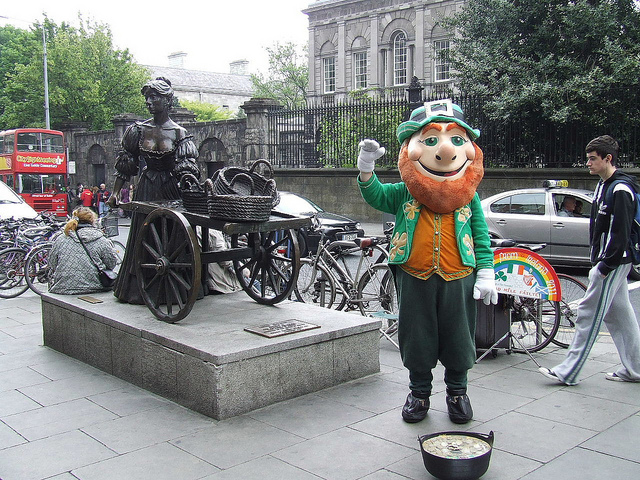
Without a doubt the creature that has benefitted most from the downturn is the Leprechaun. This being, formerly associated with ancient folklore and American gullibility, (“Do you really have leprechauns in I-Ur lend?“) has experienced an unprecedented comeback in times of austerity. On Grafton Street you can find a man of about two and a half-foot who has painted his face orange, attached a ginger beard to his chin and placed a pot at his feet. He looks a little like an Oompa Lumpa from the original Charlie and the Chocolate Factory film. If you felt sorry for him I think the joke would be on you; he’s probably making a killing. Size matters.

Size matters so much among opportunistic leprechauns that the one that hovers around the Molly Malone statue is enormous. His artificial head is about six times as big as his own. He waves his gigantic leprechaun arms awkwardly at passers-by and of late he has decorated his crock of gold with silver tinsel. The other day I saw him leaning against a lamppost on the phone, with his huge fake head under his arm. He didn’t look Irish, which made it all the more wonderful. He’s probably an economic downturn migrant from the BRIC area who’s heard that no one throws a recession session quite like the Irish.

It’s not all fun and games though. There are feuds on the streets; warring factions have developed. Resentment is building.

You can see why.

Way before economic opportunism was in fashion, an old man from Cavan had an idea. He decided to put on a tweed cap and a patchwork waistcoat and sit on Molly Malone banging on a badhrán. The tourists loved it. He’d motion to them to come sit beside him and encouraged them to take photographs. He even bought spare tweed caps for them to pose with in the pictures. Once, when I was in my first year of university, I pretended to be a German tourist just to get a picture with him. If somebody else tried to sit down on the statue beside him, he’d snarl at them and tell them to clear off. He had the kind of audacity I can only dream of.

The good old days


It may be easy to mark your territory when the property market’s booming but things have changed. A few weeks ago, I saw my tweed-capped friend outside River Island, patting his badhrán with a sour face. Two American tourists stopped to have a look at him and quick as lightning he beamed. After both of them had had a go of the badhrán and dropped a few euro into his cap, he pulled them closer to him. Pointing at the giant leprechaun parading around Molly Malone, he whispered conspiratorially, “See that leprechaun? Don’t bother with him; He’s a fake”.

Budgets aside, recessions in Ireland are pure Gold.

Also, if you find this post facetious, you can read a serious piece about my opinion of the Irish here.

Enda’s National Address goes down a storm

Curled up in a blanket with a cup of camomile tea at 9.30 to watch Enda address the nation. Nice and cosy. The anticipation was killing me during the weather. I usually love watching Jean Byrne talk about unsettled conditions but it wasn’t her place today. Talk about stealing Enda’s thunder.

Got the three-day summary anyway and then – hurray – grim-faced Enda appeared in his red tie. He looked tiny in front of those enormous flags. Wonder how it feels to be on a wooden chair with the weight of the nation’s deficit upon you. Did anyone notice the upside-down glass? Talk about half empty. Not a drop. You’d think he’d have got thirsty addressing the nation for that long, but these are the times we’re living in. Silver quill on the desk made it all very official didn’t it? I swear he was looking me in the eye the whole time though. Wonder if everyone got that. Might be a Mona Lisa trick they teach you in the Dáil.

Anyway, he was very fluent. Don’t care if he had it all on a screen because he was looking me in the eye. Told me I wasn’t responsible for the crisis. Relieved. We’re spending 16 billion more than we’re taking in though. Not so good. Liked the way he said “Eamonn Gilmore and I” – best of friends. Said they’d imposed losses on some bondholders. He forgot to say which. Ah well, there was a lot to be said.

And then, last thing I expected, he thanked me! For my “courage, character and sense of responsibility”. Ah Jaysus Enda. It’s the least I can do. Any time. You’re doing fairly well yourself, with all your kite flying and addresses to the nation.

Might be because I’m an English teacher now but really noticed the Taoiseach’s emphatic ‘B’s and ‘P’s. The way he said that lower rate of interest on “Bborrowings” will save “ten Bbillion” in time and that we have to “Bbuild on those first steps” and how “Ppublic sector Ppay”’s been cut. Kind of charming.

Said a few times he wished he didn’t have to say this but he does. Ah, Enda.

In fairness, he didn’t shy away from the serious stuff. It’ll take years to recover, we remain fragile, change won’t come quickly enough for many people out of work.

And after all that, still with steely blue eyes directed at me he says: “I am VERY OPTIMISTIC”. He wants to make Ireland the best small country to do business, to raise a family and to grow old”. Good on ya, Endo. Yes we can. But rather you than me.

Oiche mhaith now, Taoiseach. And for God’s sake, have a sip of water. You must be parched.

For Enda’s back story, click here.

Enda's red (ad)dress

Is your plumber a “drainage artist”?

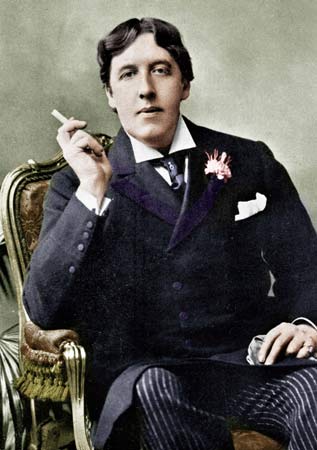
Oscar Wilde, who made a pretty living out of making subversive, witty and astute social observations said, “All art is entirely useless”. After all, he was one to know. Having written a handful of droll plays and a novel about a portrait taking over the life of its sitter, he was still bound by the tedium of life’s practical problems. His dirty dishes didn’t disappear when he flung a leather-bound poetry anthology at them, nor did the flat tyre of his carriage auto-inflate to the sound of Beethoven’s fifth symphony.

Oscar Wilde


Wilde’s facetiousness would have been reviled by Stephen Dedalus, the 22 year-old hero of Joyce’s Portrait and later of Ulysses.

Young Stephen takes art extremely seriously as did the many ‘greats’ before him. In the “Proteus” episode of Ulysses he’s strolling down Sandymount Strand and decides to close his eyes as he walks to see how far he can get in the ‘dark’. He takes a few steps but just before he opens his eyes again a suitably verbose thought strikes him: “Open your eyes now. I will. One moment. Has all vanished since? … Basta! I will see if I can see. See now. There all the time without you: and ever shall be, world without end.”
Stephen, self-absorbed and brilliant wants to know if the world continues to exist when he stops seeing it. Unfortunately of course, he will never find out because he can’t have his eyes open and closed at once.

Me being ridiculous on Sandymount Strand


Wilde’s idea that art was –in practical terms – absolutely useless and Stephen’s anxiety about the relationship of his senses to the outside world make for nice discussion points about the purpose and perception of art.

These days it’s not difficult to be classed as an artist. I’ve heard pedagogues described as “teaching artists” and people that roll dough as “pastry artists”. I’m all for it. The idea that there’s such a thing as an “artist” who exists on a plane of perception loftier than that of mere mortals is archaic and implausible. While the indiscriminate use of the term “artist” might be democratising and flattering to the individual, in effect it has now become a pleasant synonym for “skilled”.

Since it’s now acceptable to use the term “art” to refer to general skill rather than individual genius, Wilde – were he still here-would have to admit that “art” in its broadest understanding has become very useful indeed. I’m sure he would have delighted in calling in a “drainage artist” to unblock his toilet.

There’s something deeply unsatisfying about sealing off the definition of art as coterminous with “skill” though. To be skilled may be considered a favourable, functional quality leading generally to better prospects but doesn’t being an artist require something more than just know-how? A particular kind of sensibility perhaps? What happened to the image of the melancholic artist living in a hut penning poetry about his unrequited love? What about the assumption that pure art is “divinely” inspired?

Christopher Witcombe, Professor of Art History at Sweet Briar College, Virginia traces the emergence of the modern understanding of the artist back to the sixteenth century. He argues that during that period, “A work of art was believed to contain an extra indefinable spiritual essence”. This “divine” inspiration was impossible to explain and so the Italians referred to it as “un non so che” (I don’t know what), which was later taken up by the French, who called it the “je- ne-sais-quoi”.

People naturally became fascinated with the mysterious, god-like figures who created celestial masterpieces. Theories about their personalities and temperaments emerged and thinkers came to the consensus that the quality, which predestined an individual to become an artistic genius, was melancholia. It wasn’t a new idea; Aristotle had thought it before, and Hippocrates guessed that it occurred as a result of a build-up of black bile in the body.

Not much has changed. We’re still fascinated with the idea of “artists” today. And no, I’m not talking about the ones that teach our kids, roll our pastries and fix our toilets. Language is constantly changing, but no matter how loose the term “artist” has become, we still differentiate in our own way between those possessing a skill and those with an innate “genius” quality.

Present-day admirers, like their Renaissance counterparts, continue to elevate their artist heroes to deity status. One of the many adoring comments under a youtube video featuring the actress Natalie Portman claims “if you don’t like Natalie Portman you don’t like God”.

One of my students, a middle-aged French lady, once said that she considered Lady Gaga an artist in the “true sense”. I’m not sure how she justified it, but she reinforced the widespread assumption that ‘pure’ artistry actually exists.

Is Lady Gaga a "true" artist?


Luckily, we’re living in an era of relentless scientific inquiry and rather than accepting that true artists are born god-like to inspire us with awe, we can test the theory by removing some of the potential confounders.

Gene Weingarten of the Washington Post set out to do just that in 2007. He asked world-renowned concert violinist Joshua Bell to help him conduct an experiment to determine whether people would recognise the intrinsic value of art in the absence of relevant context. Bell was an ideal specimen for such an experiment. His playing had been famously described by Interview Magazine as doing “nothing less than tell human beings why they bother to live.”

Weingarten asked Bell to pick up his violin, dress up in jeans and a cap and perform for 45 minutes at a Washington metro stop during rush hour. Just days before, he’d sold out Boston’s Symphony Hall, with tickets $100 a piece.

During Bell’s performance, 1070 people hurried by without stopping, 27 gave money, and seven paused to listen for at least a minute. At no point did a crowd gather. One lady recognised the performer and gave him $20, which amounted to a significant portion of the total $32 and change he made that day.

So context matters. When people are in a rush, they’re not primed to recognise brilliance, or even as many describe Bell, genius. They’re not used to train stations playing host to maestros and anyway, they’re not really in the mood for “art”. The kids need to be picked up, and the laundrette closes at 2.

Knowledge matters too. The difference between a virtuoso violinist and an amateur is easy to identify if you’re a classical music enthusiast, or if you play yourself. Not so if you’ve never consciously listened to anything like it before.

Unless of course, a truly essential or “divine” quality really does exist, in which case, we should be able to identify it without prior knowledge or relevant context.

Which brings us right back to Sandymount Strand, where Stephen Dedalus, himself a wannabe artist is testing his own perception against the idea of an objective reality.
It’s a futile attempt because it’s impossible to escape the bounds of his own perception. Stephen can’t ‘see’ with his eyes closed and he can never be sure of what happens to the world when he shuts it out with darkness.

When I was at school, I found it strange that entire groups of friends seemed to like the same music. It confused me and sometimes it made me unsure of what I really liked and what I thought I should like. Was artistic appreciation a prerequisite for forming bonds? Or did people simply like the music their friends liked, because they were primed to see its value? It’s impossible to know really. Teenage sensibilities seemed to be invested heavily in film and music, and less so in visual art and writing. I couldn’t imagine lunchtime conversations featuring encyclopaedic knowledge and endless speculation about the direction of Irish sculpting or the American short story back then.

One of the most appealing attributes of art is that it evades definition. Is a well-placed mahogany chair “art”? What about a stickman figure Picasso may have penned when he was drunk? We delight in arguing about these questions because deep inside us, the idea of “art” as something pure and divinely inspired hasn’t vanished. We talk about skill, because it’s measurable: This genius savant has an IQ of ‘200’ and that performer could play the trickiest passages from Chopin at the age of seven.

New York Times columnist David Brooks
argues that the possibility to become an artistic genius lies in all of us. All it takes, he feels, is diligent practice, single-focus and proper mentorship. He reminds us that the brain is plastic, and that we “construct ourselves through behaviour”.

The Irish Times recently reported on a study that found that when subjects gazed at artwork they found particularly beautiful, they experienced a surge of Dopamine, (known as the “reward” neurotransmitter) through the brain at levels equivalent to gazing at a loved one.

In this experiment, the brain simply responds to a visual stimulus, which it has already categorised as beautiful. The Irish Times conclusion that “these findings have significant implications for Government policy” is a leap too far however. The study tested subjects with pre-existing notions of beauty. It did not explore other potential pleasure-stimuli, like a beautiful view, the smile from a stranger, a spontaneous meeting or the feeling of soft sand under your feet.

Dopamine pathways aren’t just activated by a masterpiece. They also play a key role in the progress of addiction as well as during eating and sex.

Society shouldn’t formalise art. It should encourage us to look more deeply at the world around us and to be creative in what we class beautiful. If you’ve lived all your life in a high-rise block of council flats littered with crisp bags and dirty runners, you might not be flooded with dopamine when you visit an art gallery. Maybe though, when you look outside your window and see a flower popping its head out of the box you planted it in, you will feel a rush of pleasure.

Oscar Wilde, who had “nothing to declare” but his own “genius”, fell victim to a society, which classified art into moral highs and lows. His love- surely the highest of all art forms-for another man landed him in prison in Paris, where he died a pauper’s death. Maybe it was this world of narrow definitions, which Stephen Dedalus was shutting out when he walked in darkness along Sandymount Strand.

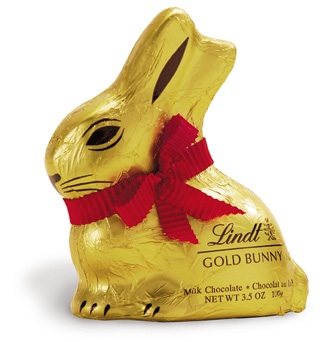
High Art and Low Art don’t exist. Every one of us can experience moments of intense pleasure and awe. It can be at the taste of your first Lindt bunny after Lent, at the birth of your first child, or in the look in the eyes of your grandmother as she knits you a Christmas sweater. It can be in the middle of traffic in an ugly part of town or in the vast expanse of a city’s art gallery. It’s all around us.
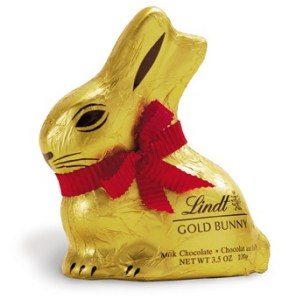
Lindt Bunny Joy

American Diary:Part 3 Underground Culture

November 2nd was my birthday. It began at a subway station in New York when the digital time display switched from 23.59 to 00.00. I didn’t notice because I was transfixed to an old man, who was playing the flute. He had a hunchback, a grey moustache and sad eyes. I gave him a dollar.

LSB saw the time change though. He’d been watching it. “The first act of your birthday is a noble one: Typical Katzi”, he said, flattering me, because it was my birthday and because he is kind.

Subways in New York are grubby places. They are for poor people and for people who read large books with city library stamps printed on their spines.

They are full of crazy people and sad stories. At every stop you can see the same slumped figure: somebody with their arms folded around their knees and their head tucked into their chest, motionless. You can find them on benches or hidden away in the corners.

New York is a busy place so the forgotten people talk to themselves. I counted about half a dozen men – all black- who were having conversations with themselves. I even checked their ears to see if they had any fancy devices. They didn’t.

There are so many faces on the subway that it’s hard to remember any. I stared at one lady because she looked ordinary. I wondered if I’d recognise her face if I ever saw it again. She was middle-aged, with shoulder-length auburn hair. She had peach-brown skin and a round face. I don’t remember the colour of her eyes and I might not know her if I saw her again.

The rudest man in the world works at 103rd Street station. He sits in a plastic box. His job is to advise commuters who don’t know how to work the machines or who would like to purchase a ticket but don’t have the correct change.

If you want to talk to him, you have to speak into a little microphone through the screen, which means that everybody around can hear what you want to say.

This man is the rudest man in the world because when you approach him, he roars into his microphone “ASK”.

He doesn’t say “Hello” or “How can I help you” or even “Yes?”

When LSB approached him, he yelled “ASK”

LSB was a little taken aback. LSB is polite at all times.

He bent tentatively towards the microphone.

“I was wondering if it’s possible to get a one-day metro ticket”

“NO”, the man replied and banged his fist on the counter.

“Oh…” said LSB

The man snarled and yelled “SECOND QUESTION”.

He said it as a statement, not a question.

But LSB didn’t have a second question, because his first seemed to have caused grave offence.

“You’d never get that in Ireland” we said because Ireland is small and flat and as my mum says, it’s a good place to be an eejit.

At another subway stop one evening, a young musician was playing guitar. I didn’t give him any money but LSB did. LSB is quiet and noble. The rifs followed us onto the train. It was cold and dark outside but the carriage was musty and cramped.

I have another story about the underground, but that will have to wait, because LSB and I have something important to investigate.

American Diary Part 2 – Make poetry not paper hats!

In a shop on the banks of the Delaware river in Philadelphia I picked up a book with the title “Newspaper Blackout” by Austin Kleon. I thought it would be about the decline of print media but it wasn’t. It was a book of poems.

In 2008 Kleon was just out of college and living with his girlfriend. He was trying desperately to make it as a short story writer but he had writer’s block. His girlfriend had stacks of the New York Times at home and Kleon, struggling to find any of his own words, resorted to the papers, which had millions. Armed with a permanent marker, he began to read and to draw lines through the words he didn’t need. He was left with the realisation that although he’d “never wanted to be a poet, .. dang if they weren’t poems”.

He posted some of his poems on his blog. Over time, they began to get attention and it wasn’t long before his work was featured on NPR’s Morning Edition.

Kleon says “writing should be fun. Everyone can do it”. It something that I have to remind me of sometimes when I’m staring at a blank computer screen late at night.

I was teaching an advanced English class today and decided to give “newspaper blacking out” a go. There were only three students in the class: a girl from Saudi Arabia and two boys from Japan and Switzerland. We read a few of Kleon’s poems first and then I gave them each a chunky board marker so they could try their own.

I’d picked up three metroheralds on the way to work. We chose to work on the cover story – the guilty verdict in the Jackson doctor case. I gave them about five minutes to complete their poems. Three completely different pieces materialised: three unique ideas jumped from the same article.

I tried my own when I got home today. Not sure I’d really call them “poems” but it was fun to eliminate words at will. See if you can read them here:

What I like most about Kleon’s poems is that you feel part of the craft of writing. You have the sense that these words were chosen actively, by eliminating others. I wonder if this kind of crafting is at odds with the processes of writing creatively. One of the biggest differences is making newspaper blackout poems is that you’re not bound by the structure of the sentence, which usually ensnares you as you begin to write. This kind of writing allows you to draw pictures and to bounce ideas abound without worrying whether your sentence is grammatically and aesthetically pleasing.

Check out Kleon’s Work at http://www.austinkleon.com

#Occupydamestreet exposes what’s good about Ireland

I admire the Occupy Dame Street protesters. On a night like this, as the wind pounds on my window panes and the rain pours down, I imagine them huddled together discussing the agenda for the day ahead. They are a peaceful bunch, who have spent their days postering trees with quotes from Fight Club rather than hurling abuse at the workers whose premises they occupy.

In spite of my self-confessed lack of understanding of the economy, I don’t share their belief that bankers represent the evil 1% of the population and that 99% (the “rest of us”) are their unequivocal victims. It can’t be as simple as that. I’m also not sure whether the protest has any concrete aim but it is certainly drawing attention to the displeasure of many as a result of the actions of few.

What really interests me about this protest is how it exposes the Good in our society.

Here are a group of people occupying a central location and plastering around it slogans determined to undermine the country’s main financial institution.

And yet, it’s peaceful. No aggressive guard has entered the scene, and yelled “Hey, you angry hippy, move it or I’ll shoot”. No protester has screamed abuse at the passing bankers to which they attribute a decline in society’s moral code.

Instead, the public casts a glance, takes a look around, enjoys a talk with a protester about the meaning of life and ambles on, equipped to make its own mind up.

The Occupydamestreet movement tells me a lot about what’s right with this country; the assurances that we take for granted are those for which so many of the Arab Spring protesters have died for.

So inspired have I been by #occupydamestreet that I’m off to #occupywallstreet in the morning. I’m visiting my sister in Philadelphia. She emigrated there two years ago, but not before hosting an “emigrate-like-its-a-recession-party”. When I ask her about her job she tells me that she analyses butt samples but I have a funny feeling there might be a little more to the job of geneticist than that. I’m gutted to be missing the election. If there’s anybody apathetic enough to vote for my first choice I’d be most obliged. Mail me privately for my politics.

I intend to update you on my travels in the Free World but should that not be possible, I will record my thoughts in my little blue copy book and transcribe them at a later date. See you on the other side of the Atlantic!

A Eurovision Song Contest winner, a former gunman, a poet and a James Joyce impersonator… It can only be an Irish presidential election!

A Eurovision Song Contest winner, a former gunman, a poet and a James Joyce impersonator are among the seven presidential candidates who are gathered together in a television studio in the west of Ireland. The poet is speaking fluently in the national language while his companions shift uncomfortably in their chairs, silently rehearsing the few words of Irish which they have prepared and will produce promptly when their turn comes before they can revert to the safety of English. While the poet speaks, English subtitles appear on the bottom of the screen and he voices his concern about appearing “bad-mannered” to the other candidates by using the native tongue.

It’s the fourth televised debate which the candidates have participated in as part of a presidential race that can be described as anything but dull. The debate is taking place in the studios of the only Irish-language broadcaster, TG4 and has been advertised as “bilingual” as a concession to the six candidates who – in spite of having been obliged to learn Irish for their entire school-life cannot claim fluency in the language.

Ireland, having ousted the long-dominant Republican party Fianna Fáil in the general election last March, is in the throes of a shift in political power. If the opinion polls are to believed, when the Irish go to the polls again next Friday, this time to elect a president to replace Mary McAllese, who has served two full terms amounting to fourteen years, they will demonstrate that they have not lost their appetite for change.

The historic, large-scale demise of the party which ruled during the years of Ireland’s economic boom has had an unprecedented effect on the course of this presidential campaign. The Fianna Fáil party, which was has been more or less dominant for the last twenty years lost a record number of seats in the March election, giving way to their centre right rivals Fine Gael and the centre left Labour party to form a coalition government in their wake.

In order to build up its party from the roots and to avoid another humiliation at the polls, Fianna Fáíl decided not to run a candidate in the election. This gave way for the republican party, Sinn Féin- which has an historic association with the Irish Republican Army, a terrorist organisation responsible for scores of deaths in the height of the conflict in northern Ireland between Protestants and Catholics – to offer the electorate a candidate of their own.

They chose Martin McGuinness, former IRA chief and deputy first minister of the northern Irish Assembly (formed as part of the Good Friday Agreement between unionists and nationalists). Though he has chosen to run as an independent candidate, in the minds of the Irish people, he is inextricably linked to Sinn Féin.

In stark contrast to the party’s strong performance in the general election last March, the Fine Gael candidate, Gay Mitchell, who is the most pro-Europe of all the contestants is performing extremely poorly in the opinion polls. At last count, he had only 8% support, not significantly ahead of Dana, with the least support at 2%. Eurovision star of 1970 , former member of the European parliamant and ultra Catholic, Dana firmly believes that Ireland’s sovereignty is under threat from Europe. In more than one debate she has arrived armed with the small and humble-looking Irish Constitution in one hand and the larger European one in the other and repeated her mantra that as president, she would refuse to allow one book to smother the other. While this appears to be Dana’s only rallying call to the presidency, she produces it with wide-eyed, evangelical fervour, which is compelling to watch. Her own campaign has been marred in controversy after members of her family in America alleged that her brother and campaign manager had sexually abused a relative. She’s also been called up on “renouncing” her Irish citizenship in order to gain dual citizenship in America, particularly in the context of her campaign to maintain Irish sovereignty.

Another Independent candidate, gay-rights campaigner and James Joyce impersonator, David Norris has also been the subject of intense media controversy since it emerged that he wrote – in his capacity as Senator and on Senate-headed notepaper- to the Israeli authorities to seek clemency for his lover, who had been convicted of statutory rape of a 15 year-old boy. He pulled out of the race, waited for things to calm down, then re-entered it.

During the televised debates, Norris has claimed to be the only “independent” candidate in the race, much to the consternation of fellow Independent, Mary Davis, who is running for office predominately on the strength of having established the Special Olympics – a large-scale and extremely successful sporting event for those with intellectual disabilities. She has also had to fight off strong criticism- in her case for sitting on a number of government boards, some of which left her in receipt of six-figure sums of money. Among her assets is undoubtedly her first name which she shares with the last two Irish presidents. Were she to win and serve at least one term, Ireland would have been subject to a ‘Mary’ for a total of twenty-eight years.

The whole crew


The two front runners are currently Labour party candidate, Michael D Higgins and entrepreneur and former Fianna Fáíl affiliate Seán Gallagher. The former –a wizened poet whose work can be seen on the Dublin commuter trains accuses the latter of espousing the values of pre-recession Ireland, while the latter- the youngest of the candidates- promises to support Ireland abroad and to get the country moving again. Currently the leader at 39%, the electorate seems ready to forgive Gallagher his association with the party which they slaughtered at the polls last March.

The vision of all seven candidates has been continuously challenged by interviewers, who remind them that the role of Irish president is essentially nominal, and that the position affords no real political power, other than the extremely rarely exercised right to refuse to sign a bill into law.

In response, the candidates hark back to the achievements of outgoing president, Mary McAleese, who has been lauded for fulfilling her mission of ‘building bridges’ across divided communities. Her most remarkable accomplishment and the event that will no doubt dominate her legacy, was the orchestration of the visit of Queen Elizabeth of England last May. In the same week that saw the visit of President Obama, the Irish people watched with incredulity as Ireland welcomed a British Head of State for the first time in its history since becoming a republic. Most didn’t believe that they would see it in their lifetime.

The visit was an enormous success for Anglo-Irish relations. Dressed in an emerald green suit, the Queen bowed her head at a memorial to the Irish rebels that died in the 1916 Rising against British rule. But it was at the state dinner in Dublin castle, that the really remarkable thing happened: Queen Elizabeth II of England, in an Irish-designed dress laced with delicate shamrocks, rose from her chair and solemnly addressed her audience as “A Cháirde”, the Irish expression for “my friends”.

The sound of the English Queen paying homage to the Irish language and culture moved some, if not many to tears.

The struggle for the presidential candidates to find many more words than the Queen of England herself during the “Irish Language” debate revealed the incongruities that are still gripping this little nation, which – desperate for an export-driven recovery from economic ruin- continues to struggle with its own identity.

http://www.rte.ie/news/av/2011/1018/media-3084191.html

Katekatharina’s Blog is one year old today!

Today Katekatharina’s Blog is one year old. To celebrate I am working late and going to my Arabic class. In my head though, I’m in a hammock clutching a yellow balloon with “Happy First Birthday” written on it in Comic Sans.

Blogging is terribly fun and at first it was terribly hard to keep up. I set up at least three different blogs on various sites before sticking with this one. WordPress’ format is foolproof. Believe me, I have tested it. It’s easy to use and it makes the things you write look quite pretty. The photographs you upload know intuitively where they should land and in what size they should appear. Critics say all our sites look the same: I say: “but look at the selection of themes we can choose from!”

This time a year ago, I was in the same bed I’m typing from now but in a different place. Then an indefinite void lay ahead of me whereas now I have an -albeit dangerously short-term- plan worked out.

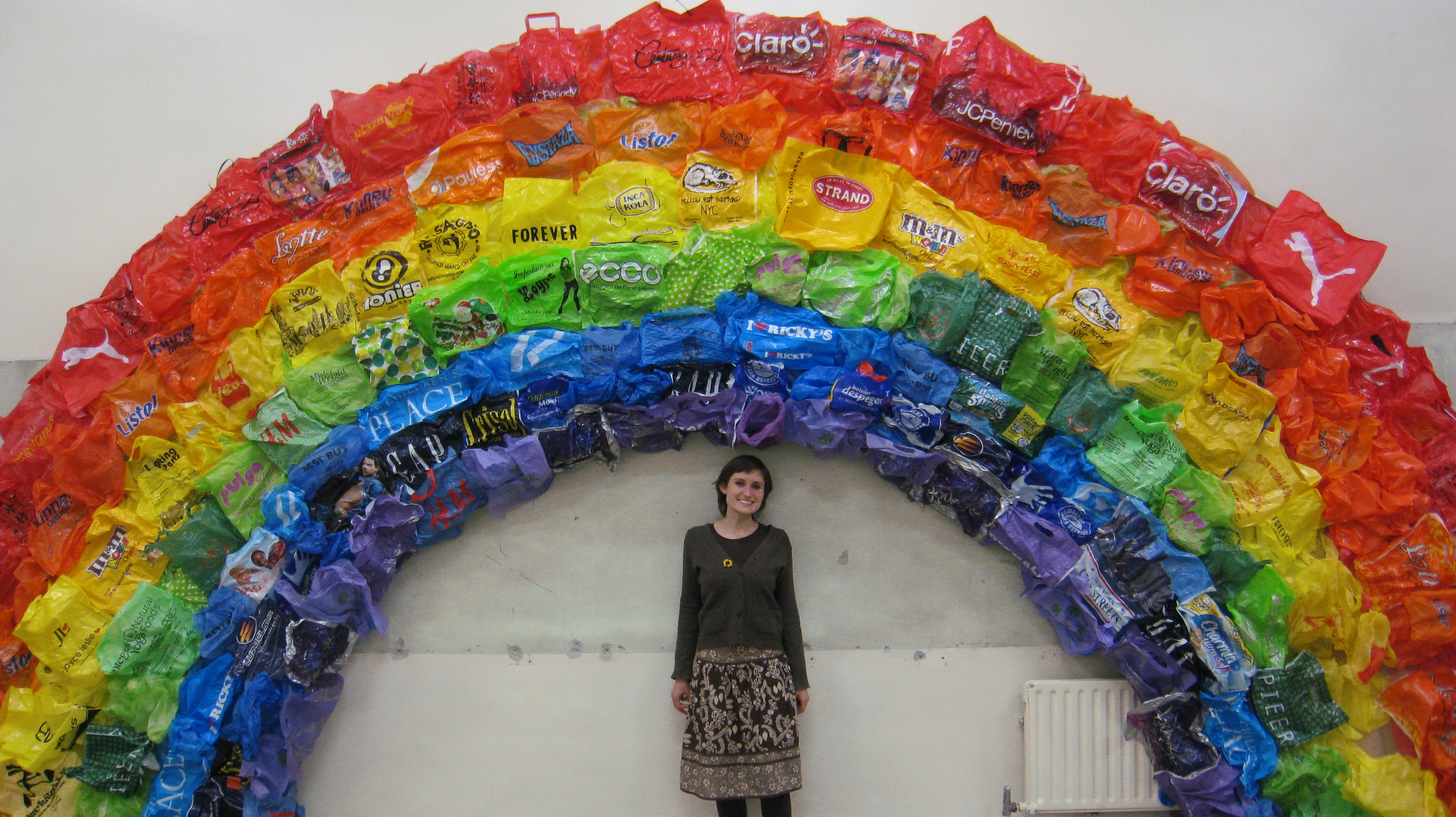
Birthday Rainbow from Dublin Contemporary


The best bit about blogging is when someone reads what you’ve written. That’s why people write on the internet. It’s not like a diary, where you reveal your innermost thoughts but it’s confessional all the same and looking back over a year’s worth of entries, I guess I can see some characteristic themes emerging.

I seem to write a lot about things I see. For me, images form an easier structure than the course of events. I think that’s why I favour feature writing over news reporting. I seem to like write a lot about language and quite a bit about LSB too. These are two of my favourite things I guess. My tone has become less formal in the last year too. My aspirations of maintaining a crisp and detached tone were tempered by the realisation that even very serious journalists enjoy copious use of the personal pronoun.

The most popular blog posts are not the ones that I have sweated over. They are the ones which were fastest to write and which were “tagged” with terms that searchengines were a fan of that day. I get a lot of referrals to a post I wrote about the closure of Waterstone’s Bookshop last February, a piece about brain plasticity, LSB’s Valentine Day surprise and my Confessions of a teacher. It is a great pleasure to skim the search terms upon which people are referred to my site. As I told you last week, a disproportionate amount of my hits come from people googling images of snails and phrases like “inappropriate teacher-pupil relationship”

I have a wonderful friend who lives in Bayreuth in Germany. Really, she’s my mum’s friend but I have applied for joint custody because I like her very much. She sent me an e-mail last week to let me know that she occasionally reads my blog. And on the same day, a boy I’ve never met dropped me a line from where he was too. We’d connected over our blogs a year ago only to discover we graduated from the same college in the same year and both wanted to get into writing. Things that like can transform your day.

Ironically, my first blog post was titled “A last resort” and was in fact taken from a column I had in Trinity College’s The University Times (then The Record). You can check it out here.

Happy Birthday to my wonderful readers, especially to you that has googled ‘snail’ again. Thank you so much for all your comments! Have a slice of cake sometime today for me. And please, let me know what you’d like to see on Katekatharina’s blog before she turns two. Got a challenge for me? Something you think I should investigate? Try out? Get over? Let me know.