Hair today, where tomorrow?

Echart Tolle is all about living in the present and listening to the senses. I hear him speaking on the John Murray show before rushing out (naturally..) to get my hair cut. Although I am power-walking with intent, I pretend that I am hanging out sensualy without purpose. I take note of the dark and crunchy leaves on Mountpleasant Avenue and mould the relative smoothness of its concrete path into an aesthetic pleasure. Before I can wait for the little green man, the traffic at Portobello has glided to a sublime appreciation of life’s industrial hum.

I arrive in Stephen’s Green breathless but full of life. Unfortunately I have no cash, so after a mindful trip to the ATM machine I arrive a respectable seven minutes late for my appointment. As usual, I am getting my hair cut by trainees. You can tell that they are trainees because they listen carefully to what you tell them you want done and before they begin, they ask you if your scalp ever gets itchy, because they have been told to ask this question. As I am getting a bib wrapped around me like a baby, I watch the group of ten girls who are taking a class in the corner of the salon. They are creating elaborate ballroom styles on uniformly attractive mannequin heads. Agreeing with Michelle, my stylist that I am a ‘medium-dark blend’ of a person with a penchant for autumn colours, I begin to flick through Marie Claire and alight at the few pages which boast sustained passages of prose. I stumble across three articles on the same theme: living in the moment. It seems to be the mantra of  my day. One is written by a woman who had a lesbian relationship with her best friend after (and later while) being in a relationship with the father of her child. The next is a story of contented single life by a woman in her late 30s, who now befriends rather than resents her many exes. The last tells of the regrets of an Oxford graduate for feeling intimidated by her toff-ee friends for three years instead of quitting after one and joining Smash Hit magazine as had always been her dream.

I like self-help. I think the idea of ‘living in the moment’ is fascinating. The scientist in me wants to find out:can it be? Is Echart Tolle really motivated to have a chat with Dawkins, Gaybo and Murray by an appreciation of the quotidian or is he, like most of us, drawn to the notion of acclaim? It’s difficult to ‘live in the moment’ when you are a (nearly totally) unemployed graduate still living at home. After yet another job rejection yesterday morning, I think I may be ready to disregard the future though.  The past; dull and continuous might just have to come second to the present, which (while tense) is reassuringly habitual. I am not getting started on the conditional, but Echart Tolle would be proud.

Echart Tolle and purple flowers

Me shorn.. for the moment

Being Made or Maid?

Rarely a day passes that I do not crave the spongey intellect of my eight-year-old self. It was a time when the pursuit of knowledge was its own goal and when quality entertainment constituted Sabrina Spellman turning Libby into a goat. It was a period of unbounded potential: I could grow up to be whatever I wanted.

I grew up; Sabrina went to college, dyed her hair red and Harvey Kinkle retreated into the obscurity of dubious work as an extra. I took the liberal arts route, with a minor in Psychology and a major in English literature; I began to scavenge for work. The world ceased to be my oyster. Open doors glided firmly, frustratingly to a close.

But what about the gritty, perverse cosiness of graduating into a Recession? The hopelessness and indignation I connect almost nostalgically with historical novels in which hardship is accompanied by the image of a struggling family gathered around an open fire, discussing wistfully their unfulfillable dreams for the future.

There’s a lesson in humility to be had from it all too. The innocent yet ostentatious certainty of worldy success possessed at age eight has become tainted by the knowledge that being a graduate does not confer on me the automatic privilege of joining the working class. 

And why should it, when 72 million children in this world do not have the privilege of an education and 1.1 billion people have inadequate access to water? They are employed trying to survive. My struggle is healthy while theirs is a heinous injustice. Perhaps it is them and not myself that I should be attempting to serve. It’s something that never occurred to me at the age of eight, when the world still worked on magical principles.

When magic plans fall flat and food is scarce.

How’s Tricks?

Having spent a considerable portion of the day attempting to manipulate a loop of string into impressive shapes, I am resigned to what I always knew: that I am helplessly impractical. As the quest for employment meanders through paths untrodden, I find myself a soon-to-be-teacher of ‘puzzle solving’ to 6-7 year-olds, classified as “highly-gifted”.  I had planned on opening with an etymology lesson. My tenet – that the knowledge of word origin, at age 7 sets in place the principles upon which future semantic puzzles may be solved- seemed structurally sound. Alas, it was not to be. My superiors alerted me gently to the fact that the emphasis was on fun activities, like tying knots and performing magic tricks.

Luckily, I have books on both.

Indeed, I am being too hard on myself: today’s achievemnent was not insignificant. I learned how to form a piece of string into the shape of a tea cup and saucer. Furthermore, I can now release a ring in the clutches of complex folds with a swift movement of my forefingers and thumb. When my left hand is consealed by a large hankey, I can subtly slip a button up my sleeve to make it disappear. The addition of certain numbers on a pre-arranged grid always amounts to 34.

 I am determined to present these tricks with the relentless enthusiasm that is the responsibility of every teacher to convey. In fact, I am genuinely looking forward to setting my scholarly babes the challenge of creating their own board games. Before then, however, I must take a deep breath before trying to master ‘Bunch of bananas’, and matchstick diagrams of the form ’make one move to form three equilateral traiangles’.

What I learned online today about Global Leadership

Hamid Karzai is in tears. He’s scared about his son’s future and he wants the fighting to stop. It’s a global news headline and so we are watching him cry all day, everywhere, on repeat. Bob Woodward’s claim that he has been diagnosed with depression accompanies the BBC report on his emotional outburst. http://www.bbc.co.uk/news/world-south-asia-11424198

Meanwhile, back at the ranch ‘Pistol Bristol’ is preparing to Dance With The Stars. In her introductory clip, she dances pseudo-sexily while announcing herself as “public advocate for teen preagnancy prevention”. Her mentor advises her to dress “like her mom” at the beginning of her performance and then “kebam” rip it off into something really sexy.  http://www.youtube.com/watch?v=89yiGsd2ARA Later,she tells Jay Leno that RIGHT NOW, her mother is out hunting. Also, she’s not heartbroken after her break-up with Levi. She is a “really independent person” and is now going to focus on being a good mom. By Dancing With The Stars.http://www.youtube.com/watch?v=lb4lS4sQdkU&feature=related If you listen carefully at 3.29 you can hear the mother take possession of her daughter’s speech.  

On thedailybeast.com Kirsten Powers is accusing Obama of suffering from an empathy deficit. She bases her accusation on his cool response to two despairing suppporters at a local townhall meeting. She’s keen to stress that “Nobody is asking Obama to have a meltdown. That would hardly be presidential”. In other words: he is not to do a Karzai.

Afghanistan has a literacy rate of 30%. Its president is weeping. There is the daily threat and reality of suicide bombings in marketplaces and children are too afraid to go to school. The 2012 US Presidential candidate hopeful is hunting an animal I haven’t heard of and her daughter has been promoted to the position of office manager, where she deals with offers to Dance With The Stars via text message. Having agreed a stimulus package and brought through a healthcare bill, the deficit Obama should be most worried about, is his emotional one. It’s just another day in online comment on global leadership.

The Wrong Track

He was between ten and three quarters and eleven and a half years old; tall enough, round-faced, sandy-haired with pale pink skin. He had this gentle, good-natured look about him but as I was watching him buy his luas ticket from the machine at Dundrum I noticed a numb intensity in how he stared straight ahead while pressing frantically the buttons on the screen. Then he picked up his ticket, turned away and began to cry. The tears came in a flood and he had to gasp for breath. His friends; four or five boys in the same age bracket looked sadly on but said nothing. There was another six minute wait. 

It proved too hard a thing for my mother and me to watch. We approached quietly and asked him was he alright. His friends moved in around us and began to talk. “We got punched just now”, said one. “..just outside the two euro shop”, said another. “By whom?”, we asked. “lads, our age”, they said. “… we were waiting for Emmet”, said one “and these guys saw us and were waiting for us to pass and when we did they punched us and got him in the back of the head.”

Nobody saw, but “they were wearing Adidas tracksuits” and there were “four of them”, the boy, who was still crying told us. I looked at him: he was the biggest. He had all the strength and none of the instinct of a fighter and those boys had smelt it out in an instant.

I don’t care if the kids in tracksuits come from backgrounds of low socio economic status. It is an insult to the impoverished to associate them, by way of a knowing nod, with mindful aggresion and malicious instincts.

If I were Minister Whatshisface, I would encourage Gardaí time and resources to be allocated to tackling, with conscientiousness the culture of cruelty in children which, unaddressed, leads to the reality of brutal relationships, violent attacks and ruthless behaviour in adulthood. The brain is a plastic organ: these boys need not be destined to enjoy the suffering of others. 

I want to see the four boys in Adidas tracksuits separated. I want to see them in a uniform of somebody else’s design, picking up litter by themselves for thirty minutes each day for a month in a sealed off area of, let’s say –  the Dundrum shopping centre. I want them not to be punished for grievous bodily harm in the future, but now for taking pleasure out of somebody else’s terrified eyes and breathless crying. I want them to receive a small, tokenistic reward at the end of their month-long endevours. They should feel the humiliation that they have inflicted and in turn reap the rewards of a job well done.          

Each one of the boys thanked us as they alighted in Cowper. Safe home, we wished them.

The Two-Taled Tea Test

So there I was browsing in the Palais de thé of Wicklow Street wearing a chequered brown dress and carrying a bag made of recycled Rittersport chocolate wrappers (This to become important later). I was leaning over a pot to smell a blend of rooibis tea when I felt a tap on my shoulder. I turned to face a girl: blonde, bright-eyed, curly-haired, affable, tall.  

‘HIIIII!! how ARE you? … good to see you!!’ she cried ,smiling effusively at me. I looked briefly, and with great intensity into her face. No, I did not know this girl.

I responded with alacrity, matching with exactitude her smile and demeanour: ’Hi there!! I’m doing well thanks!! how about yourself? I’m just browsing for tea – it’s a lovely shop here isn’t it?’

‘Oh, it’s gorgeous’ she said – ‘here, smell this one, it’s the most popular blend’.

‘Oh, that’s lovely actually’, I said, ‘though I really think I’m most tempted by the rooibus blend’

‘I love that one too’, she admitted, before asking ‘.. so what are you up to now?’

I paused. She’d hit upon a toughie. It all depended on from what context she knew, or thought she knew me.

I eliminated school, former workplaces, friend-of-a-friend and distant relative. I was left with college and in a flash there came an hypothesis. Could she be a version of a Mary Claire, who studied psychology with me in first year? She had had dark skin and brown hair then and we had barely spoken but there was a certain je ne sais quoi (quite literally) about her that seemed familiar.

Yes, I thought. This is Marie Claire. I sighed with relief as she prompted, ‘You must be finished now..?’

‘Yeah’, I agreed, ‘all done and out in the real world..’ sigh ‘What are you up to yourself?’

She was telling me all about her pastry internship when along trotted a shop assistant. He had an asymetrical haircut and selection of piercings. ‘I spotted you from afar’, he said to me. ‘I knew from your outfit when you came in that I wanted to talk to you’.

He continued, looking at my acquinatance ‘You know that I sing opera to Mary Claire  morning and night’.

The name was music to my ears. Suspending bewilderment, I pondered to him that Marie Claire was a lucky girl..

‘And she doesn’t know it’, he said wistfully before gliding away.

I recovered my equanimity. ‘Do you know him?’ I asked.

She laughed ‘Oh yeah, I used to work here’, I just came in for a chat today as I was passing.’

‘I see!’ And I did. She was, beyond all reasonable doubt, Mary Claire of first year of college who had since worked as tea mistress and pastry artist. She was the same Mary Claire who had been friends with a friend from college with whom I’m in regular contact.

Smug in my superior knowledge I asked ‘Do you see much of Alex still?’

Her face went blank. ‘Alex?….. em?’

I faltered a little. ‘Alex.. yeah he was in psychology with us..’ (you were considerably more acquainted with him than you have ever been with me, I thought)

‘hmmm, I’m sure he’ll come back to me’, she said cheerfully.

‘Oh, yeah he will, I’m sure. He’s actually written the first draft of a novel’, I added.

‘wow, impressive!’ she said. ‘I’m sure I’d know him to see’

A good fifteen minutes had passed and as well as being confused afresh, I was fearful I would be late for a coffee date.

I made my way to the till to pay for my rooibus tea. Asymetrical haircut guy threw in a dozen free tea bags and winked as he undercharged me.

I thanked him very much.

‘Don’t thank me; thank her’, he said, pointing at Mary Claire.

I flashed her a sheepish smile. ’Thanks Mary Claire’, I said as I rushed out to the sober, reassuringly familiar buzz of Wicklow Street. I vow to return, incognito in the same outfit, swinging by my side the recycled Rittersport wrapper bag.

****************************************************************

 (Paul Grice does a great job of explaining why most people don’t just blurt out: ‘I don’t know you’ and Stephen Pinker’s idea of ‘plausible deniability’ explains away my reluctance to use Mary Claire’s name before Asymetrical guy had confirmed my hunch)

The Which Blair Project

 In matters of business and politics I share the bewilderment of E.M. Forster’s character Mrs Wilcox, who asks, “Why do people who have enough money try to get more money?” and claims that she is “sure that if the mothers of various nations could meet, there would be no more wars.”

Mrs Wilcox’s desire to understand motivation and personal responsibility in business and politics is less naïve and unsophisticated than is suggested by the author of Howards End. As Tony Blair releases his aptly-named “A Journey”, the spotlight is cast firmly toward the mind and away from the body politic.

As if Tony Blair’s premiership has retrospectively been subjected to a magnifying glass of the mundane, the rubber gloves of the Queen and half bottle of wine before bed, as well as the bickering with Brown become intimately linked to revelations about WMD, sexed up dossiers and the ban on fox hunting.  

The documentation of conflict between the public and private self has existed for centuries if not millennia and semblance of their successful co-existence remains the hallmark of a media savvy politician. President Obama courted the idea of a blurred distinction between public and private as he invited the world to accompany him in his choice of the perfect puppy to install in the White House and his wife as she watered the patches of her organic vegetable garden. The habit of familiarity backfired however when he referred in an interview to his bowling skills as akin to those of competitors in the Special Olympics. It was a particularly poignant moment for those of us who had believed that Obama struck a rare balance between the public and the private. But oh how we relish the untoward entry of private mumblings into the public sphere! When a stressed Gordan Brown entered into his car during the election trail and muttered that a supporter he had just encountered was a “bigoted woman”, reporters on the scene became breathless with excitement.

While Blair succeeds in couching his public performance in a language of (albeit formal) familiarity, Brown, whom Blair accuses of having “zero” emotional intelligence does not. Emotional intelligence should not however be mistaken for empathy; particularly not in a political context. One suspects that when David Cameron lost a child, Brown’s move to cancel Prime Minister’s Questions  was motivated by no more than the indiscriminate sympathy of one who has endured a tragedy for another that now encounters it. Empathy is unbridled; emotional intelligence stores up for release the cleverly latent bi-product of self-preservation. Blair’s memoirs are an expression of emotional intelligence. Battling against his branding as war criminal, he fights for his name by supplying details of intimate conversations and personal weaknesses. 

Curiosity has got the better of me and though I share Mrs Wilcox’s self-consciously confused conclusions about the world, I should not mind taking a gander to Easons with her this Saturday to catch a single glimpse of the man’s many faces.

The Tree of Life: at the Root of it All

At the top of Bray Head last Saturday, while tucking in to an exquisite quorn chicken baguette of his making, my boyfriend explained to me E=MC². He did a really good job; there was a lot of imaginary rock throwing into the water and the thermos flask of mocha doubled up as a handy representation of the speed of light squared. He told me about nuclear fusion and fission – about subatomic structures and the search for the “god” particle. Absent mindedly I munched my pringles and watched the sea, trying to fathom it all. It began to rain.

Our descent proved phsyic(s)ally yet more intense. I had nerd questions to ask and gnarly roots to stumble over. I sort of wish I hadn’t let my apprehension of mirrors, electricity and maths prevent me from studying physics for the Leaving Certificate. An in-depth knowledge of the stuff is probably the closest you are going to get to the meaning of life.

In the second episode of Channel 4’s programme about Amish teenagers during their “Rumspringa” phase, a pure-faced, bonneted Amish girl points to a tree and asks the artist in Kent whom she is visiting how it could possibly have come from “nothing”; by which she means ‘no God’. She is incredulous at the idea of evolution. Her alternative narrative of aboresque origin; the biblical creation story –  in spite of its obvious falsity – suddenly appears to me strangely, ironically sophisticated. God, as existing outside of time makes redundant the need to explain relativity and progress: the hallmarks of evolution. While Amish girl looks at a tree and classes it begotten not made, scientists dig deeper and deeper and deeper to identify subatomic structures … until they arrive at: Nothingness; the “god” particle; claritas?

It is simply impossible for me to understand this until there evolves in my brain a further imaginative and existential dimension – as King Lear said –  surely “nothing can come from nothing”?

We reach the foot of the hill: the inside of our heads beating to the buzz of billions of neurons. The view up is tree-lined and the magnificent cross at the peak bears its arms like branches. I need to pee.

“Dad, Can I be a Liberal with a Conservative Mindset?”

When my dad is reclining, he is usually in an armchair with half an eye on the television or slouched at the kitchen table nibbling lidl cream crackers. At these times, I fire questions at him to which he responds, occasionally and with delay. Sometimes they seek shamelessly his affirmation and affection: “Liebst du mich noch, als Mensch und als Katzi?” (Do you still love me, as a Person and as a Katzi? – a strange interrogative habit I developed as a child) and at other times they take the form “Dad, explain NAMA to me in simple terms” or “How could a cloned cow’s milk be harmful when it’s genetically identical to the healthily lactating beast, whence it came?” In matters political we disagree almost as a rule but there is a certain reserved pride in the unreasonable poetry of his Burkean perspective that appeals privately to me in spite of my liberal tendencies. In May I spent a week in London gaining work experience with the “comment is free” website of the Guardian. In an endless, gleaming open-plan newsroom with TV screens hanging at every corner and Skynews always on silent, the images of pomp and ceremony accompanying the Queen on her errands were unanimously ridiculed. A young editor came in bleary-eyed one morning to exclaim that the previous night, she had met with “Cambridge” graduates and it was “intolerable”. Newsroom talk was in the vein of “crazy anti abortionists” and “religious fanatics”. It was very coffee machines and carrot cake – a happening, progressive place. Now don’t get me wrong. In broad terms, I stand for pretty much everything the Guardian does. Gay rights, social justice, religious freedom, the right to non- belief and women’s freedom of choice. But in that small section of the newsroom, I sensed a scorn for those of a different perspective or vintage, which made me quite uncomfortable. Perhaps the assumption of an egalitarian sensitivity in my idea of ‘liberalism’ is flawed and has little or nothing to do with its politics. Perhaps the build-up of resentment at being treated with less than indifference by my ‘boss’ fuelled in me an empathy for those flawed institutions of antiquity that were at one time well-intended. Maybe I was a bit bitter that nobody ever told me I could take a lunch break or asked me whether I’d like to join them, or asked me where I was from, or how the hostel I was staying at down the road was treating me. Maybe it made me worry that common courtesy has become conservative. Maybe I’ll ask my dad.

Bertie Bowls and World Cups

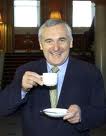
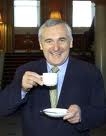
Bertie Ahern is grinning up at me with scrunched up nose and open-topped shirt. I find him perched comfortably at the top of page 70 of the July 4 edition of the Irish News of the World, where he has conceded that “there are questions to be answered and issues to be resolved” and that “all of the players should realise that it is time to hold their hands up and then move on.” In his capacity as sports columnist for the aforementioned publication, he is of course referring to England’s dismal performance in the world cup. His blend of endearing naivety and wily opportunism is representative of a peculiarly Irish mindset, which has dominated the body politic for at least the last decade.

As its most successful exponent, Bertie Ahern stood smiling over the country throughout its period of extraordinary prosperity and glided to a swift resignation conveniently in advance of its crippling economic demise. At the launch of his autobiography last year, he told David Frost that accusations that he had received bribes from property developers were unfounded and based on nothing more than that ‘one guy said that the other fellow told him he did’. A polished Cleggeron he may not be, but his colloquial circumlocution renders him a similarly slick smooth – speaker.

The Irish gift of the gab is not just about sliding through the nets though. Our eager benevolence and uncomplicated approachability represent the ideal of a mobilised community spirit. When Joe Duffy spoke recently to a woman living in the west of Ireland who confessed to feeling lonely and depressed in her surroundings, within minutes calls flooded in from strangers offering chats over cups of tea and spare rooms in Dublin, where she was on a housing waiting list. With similar vehemence, homeless charities have launched an impressive campaign against the demolition of empty houses in the outskirts, suggesting instead that they be made available to shelter the homeless.   

I was born an invincible Celtic tiger cub and have developed lately into a scavenging graduate, competing to take on unpaid work so that some day a philanthropist will discover an archive of my eclectic and unpublished scribblings and plead with me if they may not immortalise them in serialisation  – at any price. Like Ireland’s dream of winning the world cup, it is a goal worth striving towards in the strangely reassuring certainty that it will never be achieved. It is this paradoxical conviction of both success and failure, which makes possible the symbiotic relationship between self-deprecation and delusion, which has contributed to Ireland’s staggering economic rise and fall.

Bertie Ahern’s curious decision to keep his money under his mattress rather than in a bank account is the mark of both madman and genius, each masquerading as the quietly quotidian everyman, drinking still as Taoiseach in his local pub and insisting on going to Mass every week in spite of his cohabiting relationship with a woman not his wife. Paradox and irony thrive in a culture where emotion is self-consciously privileged over intellect. When Ireland rejected the Lisbon treaty, it did so with an impish ‘let’s see what happens’ attitude. The ‘No’ vote was not an indictment of Europe, but rather a concentrated attempt to get on the government’s nerves. After all, they had burst our bubble. Having wedged ourselves between Scylla and Charybdis, we grinned and voted ourselves out second-time round, much to the annoyance of the UKIP.  

In a televised debate about head shops, it was claimed by a frustrated liberal that Ireland is a country where laws are set “not by experts but by Joe Duffy”. Indeed, when our former Taoiseach concludes as sports expert from the pages of a tabloid that “no one person should be made to be the scapegoat for what was a collective failure” one can only smile at the audacious success of his opportunism and shake one’s head at the grave irony of his accompanying naivety.