The Jibbertalky

I have few accomplishments to recommend me; I cannot draw, my recitals on the pianoforte are clumsy at best and I have neither a talent for embroidery nor the gift of graceful movement. The one area in which, after much searching, I have found myself to excel is in the ability to produce plausible-sounding Gibberish at will.
Though it is far from my best, you may have a listen here.

I have found that the children I babysit for nextdoor can speak Gibberish fluently but that older, more refined people sometimes struggle with the language. My Long-Suffering-Boyfriend (LSB) for example, speaks only pidgeon Gibberish, but enough to get by in most situations. I can only aspire to match some day the eloquence of Charlie Chaplin, the world’s only native speaker of Gibberish as he introduced the world to Sauerkraut.

I think my good friend Stephen Pinker would have a lot to say about Gibberish. He mentions Lewis Carroll’s 1872 nonsense poem The Jabberwocky in his book The Language Instinct as appealing to our hard-wired knowledge of and acquired predictions about language. If he were to condescend to read my blog and then stoop even lower to follow its links, I imagine he would point to the patterns of intonation in my speech as consisting of a mad mishmash of the grammatical structures of the languages I have been exposed to and that he would herald subtleties in prosody as indicative of uniformity in the portrayal of emotion through language.

I believe that my penchant for Gibberish is also connected to my tendency toward deceit. Let me explain. In order to compensate for my shockingly limited general knowledge, I periodically fabricate bizarre facts and relate them to my nearest and dearest. Once, for instance, on a rather dull bus journey from York to London, I turned suddenly to my LSB and said, “Did you know that T.S.Eliot was the first known poet to use the word peanuts in a poem?” A look of intelligent surprise crept over his face. I knew he would remember it for life.
“Really?”, he asked rhetorically.
“No”, I said, “I just made it up”. He looked at me, searchingly.

On another occasion, I broke a comfortable silence with the slow, dramatic outburst: “On gelded wheatgrass glides the linnet’s wing”.
“What’s that?”, he asked.
“Oh, just Milton”, I said with the nonchalance of a pouting fish.
“Really really?”
“No. Sorry.”

Since I always confess my wrongdoing within seconds of a Gibberishish utterance, I rarely suffer the consequences of my perjury. Having pondered the matter privately at length however, I have come to the conclusion that at the root of my silly amusement lies my inability to see the trees for the wood.

Looking for the Trees in the Wood.

You see, as I’ve mentioned before, I like to take a fly’s eye of the world. I find pleasure in understanding how people work, how language works, how the brain wires itself. My ineptitude resides in my lack of interest in the details; I am perfectly content to marvel at brain plasticity, but I’d be damned if I memorise the precise nature of the neurotransmissions that allow me to type this prepostrous post at four in the morning.

I may never be afforded the opportunity to advertise my unconventional charms to Mr Darcy, as Lizzy Bennett was, but were the opportunity to arise, I would do my very best to present my bad habit as an … impediment.


A Brief Treatise on Colin Firth’s Possession of Charm

Interaction of eyes and lips to produce Charm.

Colin Firth has made me cry eleven times in the past week; once while gazing with melancholic resolution toward Elizabeth Bennett, once while strolling with her through the grounds of Longbourn, once on the occasion of his wedding day and eight times as vexed and sensitive King, battling with a speech impediment.

It’s the rare interaction of eyes and jaw that does it for me. When the subtly determined curl of his lips is softened by his lost, intelligent eyes I become an emotional wreck. In these instances, he brings to life Ezra Pound’s definition of the ‘image’ as that which presents “an intellectual and emotional complex in an instant of time”.

A Charming Metaphor

Charm twirls itself about you like a ribbon; its intellectual appeal lies in its emotional reserve; it is a tease. Natalie Portman has it as does the German political interviewer Sandra Maischberger. Bryan Dobson possesses it and so too does Alexis Bliedl, but only when she is Rory Gilmore.

Charm, though extremely useful as a sexual tool need not take a seductive route. It’s interesting to note that when a brash young man accosts a lady at a bar with a chat-up line below her dignity she will often remark saractically “… charming” to her girlfriends after he has departed. Furthermore, it is customary for members of the general population to find scantily- clad women parading in stillettos and clutching bottles of Corrs Light as lacking in charm.

Potentially charmless girls

The perception of charm requires a little effort and as such the fruits of its identification carry an emotional value: we place worth on that in which we invest our energies. This is not to reduce charm to a mere self-serving bias but rather to highlight that intellect and emotion or “head and heart” are not always as far removed as we believe them to be.

To be charmed is one matter; to be charming another. Countless pamphlets have been penned on the latter so I thought it time to thrust open the question to the blogosphere: what charms you?

On Growing a (de)Tail

I hit my forehead against the side of a glass shelf in the Birkenstock shop at 36 Wicklow Street this afternoon. The blow inflicted a sharp pain which faded until this evening, when I absent-mindedly rubbed my forehead as I was watching Upstairs Downstairs on BBC4.

The man behind the till in the Birkenstock shop was old, with the air of an indifferent butler and if he noticed my accident, he masked his perception with perfection.

Then I met my friend Reuben at Central Bank. He had on shorts and as I approached him he was reading. There’s that way that we all stuff a book out of sight or yank earphones into a tangle when somebody we have been waiting for approaches us suddenly. A universal movement away from ourselves and into that self-governing realm of conversation.

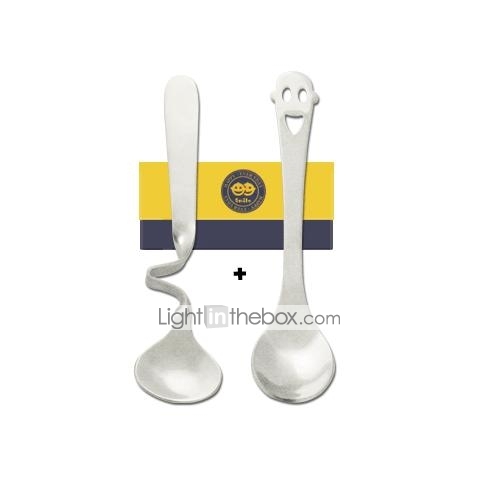
Reuben’s cup had flowers on it and contained lemon and green tea, but mine was glassy and plain. We both got bendy spoons though, which hovered over the rims of our cups and I didn’t notice until Reuben pointed it out, that the spoons were smiling. When it was time to pay, I put a tiny sum into the tip jar and took a mint. I felt bad when the waitress offered me a mint after, because that meant I had taken mine out of turn.

On the way home I crossed the road because there were boys in tracksuits on my side. In Centra, the Irish Times was sold out but there was a handful of London Times and Independents left over.

My mum read me two German Christmas stories tonight. She is the best reader in the world.

During Upstairs Downstairs my dad cupped his hands expectantly so I threw him a Malteser. After that I threw Maltesers at him without his hands being cupped.

In Avoca, a table yelled for my mum and two girls gave her effusive hugs. Grateful, smiling students of hers. It moved me strangely. I was feeling tender today, with preoccupations of an uncertain future. We met the mother again, as we were walking into Zara. She said it was ‘crazy’ in there.

There is a golden button missing from my coat. It came that way, but I have a spare because my boyfriend is magic and he went into AWear and asked for one once. They ripped a button off a faulty coat for him and I have been meaning to sew it on for seven weeks. I wondered today where that button was, but then, outside the Pound Shop in Rathmines, I felt it in the undersized pocket of my coat.

My sister and I sat beside the fire and when our feet touched by accident, her toes recoiled and danced away in disgust. She left the room to talk to her boyfriend while I listened to my mum’s stories. When she came back, we talked about epigenetics and how everything is related to everything.

I told my mum about what Ian McEwan said. That to write, is to have a detail, and not a story. That Atonement sprang from a single observation of his bossy elder daughter directing and staging a play. That a single detail can grow into love and war and betrayal and atonement and a moving masterpiece.

I’ve a lot more to gather, but this was a start.

I wish there were a fly in my eye.

If I were a fly, I would crawl up billboards and over the faces of celebrities advertising shampoo. If I got peckish I’d fly to my nearest bakery and alight on an almond bun. I’d avoid flying on my own on dull days in case I got trapped in a spider’s web that’s only visible in the sun.

I’m not a fly though and so I’m forced to navigate the world conventionally. I have to get a job to buy an almond bun. I need to battle against the forces of economic psychology to buy cheap supermarket own-brand shampoo with no promises of instant glamour and folical success. And I can crush a spider’s deathtrap with my fist.

I just finished ‘reading’ (three of the seven essays consist of a series of images with no words) John Berger’s Ways of Seeing and though there was a lot I read too superficially to grasp, the last essay, which focusses on publicity and consumerism, got me thinking about the place where I drank a whiskey and lemonade last Saturday night.

It was the basement of a nightclub on the quays called ‘Gypsy Rose’. The walls, table-tops and tshirts of the band were decorated by gothic-style roses and a backdrop of despondent-looking skulls with over-sized teeth biting into shotguns. The lighting was dim, the band playing exceptionally loud and the decor scarlet and deep purple. My flowery green dress, polo neck and snow boots flouted the dress code.

Nearly everyone there had multiple tattoos. My friend told me that it’s a familiar haunt of the ‘tattoo society’. I thought he meant to break it to me that I’d walked in on some political social, but actually he just meant that it’s full of people with tonnes of tattoos, which I could see for myself.

If they weren’t musuclar skinheads wearing band tshirts, they were charmingly nerdish-looking and in leather trenchcoats. The girls had edgy jet black hairstyles and facial piercings and next to them I looked like a ridiculous daisy sprouting from a graveyard patch of bleeding roses.

The whiskey was good and in spite of its unreasonable volume, so was the band. And yet, there I was with my eyes convincing me that I shouldn’t be there.

No biggy; just not my kinda place, I mused on the luas home.  I just like it more mellow, with pots of tea and shisha and perhaps an acoustic guitar in the background. “Damn hippy indie chick” somebody probably sighed as I took out my book.   

I think I find comfort and shame in equal measure in the personalised telescope through which I view the world. I’m comforted because by knowing through sight what I am not I can guess what I might be instead. I am ashamed because I never look through the lens for long enough to understand fully what it is that I am not.
***************************************************
PS – I would love to capture, spookily, the Zeitgeist in a piece of prose. I can’t, because I am much too busy lounging in my own world view. If I were a fly,I might get trapped in a web of images, but at least I’d have had the privilege of a bird’s eye view of the world.

Reflections On A Winter Wonderland

I trod upon this Winter Wonderland two nights ago; perhaps you can see my footprints in the snow. This is my mother’s hometown of Regensburg, Bavaria and I am seeing it for the first time in the winter. I know it from the summers of childhood and adolescence as the place where first I splashed my toes into cool drinking-water fountains and then wandered moodily into the branches of H & M and Müller in the hope of diversion from the obligations of ‘extended family’ holidays.

The German side of my family is enormous – my mother is the fourth child of nine and at last count my cousins tallied close to thirty. My memories of the summers between about 1995 and 2007 are rooted in a certain self – consciousness about the German I spoke, which I perceived as stilted in comparison to the Bavarian twang and slang with which my relatives conversed. Aware and anxious from a young age that I had but a single afternoon to persuade each branch of the German relatives of my lively personality and engaging wit, I presented invariably an image of dullness and excessive politeness which they perceived (with accuracy) as shyness and awkward sensitivity. I had an awful lot of fun in Regensburg too though – I was particularly fond of the twisty yellow waterslide at the local pool and the vast availability of playmobil and wooden dolls’ house accessories in the toy -shops. When my Grandmother moved out of the family home and into a flat nearby, she dedicated her biggest free space to a playroom for her grandchildren. There she set up a shop (or ‘Kaufladen’) which she supplied with a wooden till and weighing scales, dried apples from the garden, miniature packets of raisins and cinnamon-topped marzipan balls; all of which could be purchased in tiny cone-shaped paper bags, which she provided for her customers. It was marvellous.

Such feelings return to me as I sit on a Regensburg and Grandmother-bound train with my boyfriend, who is not a part of these memories but who has the most incredible ability to absorb and to understand information and to remain quite silent as he does so; only to amaze me with evidence of his awesome memory at appropriate points in the future.  For instance, he has recited in order the names of my mother’s brothers and sisters without ever having been formally taught, recalled anecdotes about my relatives that I don’t even remember fabricating and has learned (albeit not with great accuracy) the lyrics of the family song (yes, there is one) which is performed at the approximately bi-annual family gathering.

I would forgive you for accusing me of having notions of one day appearing on one of those ancestry-tracing television shows like ‘Who do you think you are?’ . To practise for such an occasion, I ask Andrew to take a picture of me on arrival at Regensburg train station.  I attempt to look restrained and dignified, humbled and delighted (as those minor celebrities do at important and scripted moments in the discovery of their past) but it is too much for me and I end up pointing with mock excitement at the sign above my head.

The journey begins and we battle through a blizzard along the Danube on the way to my Grandmother’s flat. We are startled by a baby rat as it darts for cover under the inches-deep layers of snow by the riverbank. When we arrive, we are heaped with white powder. I am nervous as I ring the bell – it has been three and a half years since I last saw my Grandmother and at that time I was not romantically attached. She opens the door and pops her head out. She motions us in as if we were meals on wheels. It is wonderfully reassuring. She brews a herbal tea and we sip it as the blizzard outside continues. She tells me that she misses packing Christmas parcels for her Grandchildren; it is beyond her competencies now, she tells me, as the children are looking for gadgets and games she doesn’t understand. I tell her how I loved playing shop in the playroom and how I remember her paper bags and dried apples. She smiles and tells me she has found old letters that her children wrote to the Christkind (the German equivalent of Santa Clause). I ask her eagerly if I may see them. I may. She gets up to fetch them, and I whisper a few words to Andrew, who has remained mute at the head of the table (Andrew speaks no German and my Oma no English). I leaf through the letters of my youngest aunts: they have asked for an anorak and an extendable pencil and have promised the Christkind that they have been brave Kinder all year.

Outside my Oma's flat

After an hour and a quarter, we shake hands goodbye and venture back out. We are station-bound again but have decided to check out the Christmas market by the Castle before we leave. We are ankle deep in glistening snow. Burning torches light our way to the courtyard, where stalls of mulled wine and gingerbread lure us through the cold. Four men play Christmas carols on old-fashioned horns. Beyond the glistening snowflakes and torch flames, the castle gleams. I buy Andrew a baked potato and he buys me a woolly hat. We leave our footprints in the snow. We miss our train and spend all evening in a Winter Wonderland I feel is part my own.


Waking up to Smell the Coffee

There is nothing like take-out coffee;  its cardboard warmth, its frothy goodness and the biting cold with which it battles. It’s 8.00 a.m. and I am thinking  about it with intensity while power-walking into town. Alas, I am wanting what I cannot have: I am too late to stop for coffee.

Since Tuesday, I have been attending a TEFL course in North Great George’s street, whose buildings boast impressive bursts of red ivy which are modesty excluded from its otherwise ostentatious (yet merited) title. I haven’t seen morning-time for months and so I am slightly smug as I accept a few too many copies of Herald-AM, which those directionless enough still to be asleep must forego. The damp and golden leaves on Mount Pleasant Avenue and the chill in the air suggest a sludgy promise to me; for the next month, my compulsive google job -search sessions are on hold as I join the pleasurable rank of those with a place to go each morning. 

My speed-walk is a collage of brown and orange coffee cups with a backdrop of swaying morning drunkards, slick black business suits and slowly-moving traffic. A man is walking his shaggy sheep dog and his husky down Camden Street and there is a bag of brocoli waiting to be stewed into pub grub outside The Bleeding Horse. I feel like I am watching over the city as it wakes.

In the back of my mind, I am thinking about the class I have to teach later on and whether my clothes are on the right-side up, which is not a given, since I left the house on Tuesday with my dress on inside-out. Andrew Bird is giving me an aural massage as I flick through the Herald AM and decide whether, hypothetically, given the time, I would get a white chocolate mocha or a caramel machiato.

And then –  at the end of Harcourt Street –  leaned against the Postbox, I see her slouched. I have been watching her for months now. She has on every day an off-white fleece and blue jeans. Bent over and biting a cigarette, I see cupped in her hands an empty coffee cup.

Generation X Factor: Reeling in the Years

It’s October 25th, 2023 and I’m curled up with a glass of red wine and a Potential Life Partner (PLP) watching 3D Reeling in the Years. Brian Cowen’s epic nasal congestion interview of 2010 is clogging up the surround sound, and sexy PLP, who has been absent-mindedly  playing Snake Fourth Dimension on his iphone 32 looks up and gasps. “That’s Biffo from Fair City!”, he shouts with excitement, “he looks so young and sober there!”

I sigh. “He used to be a politician, honey”

He is incredulous. “No way! Are you joking me?”

“He was the Taioseach.”

“Are you serious?” I nod, remembering that I love him for his culinary expertise, but not his intellect.

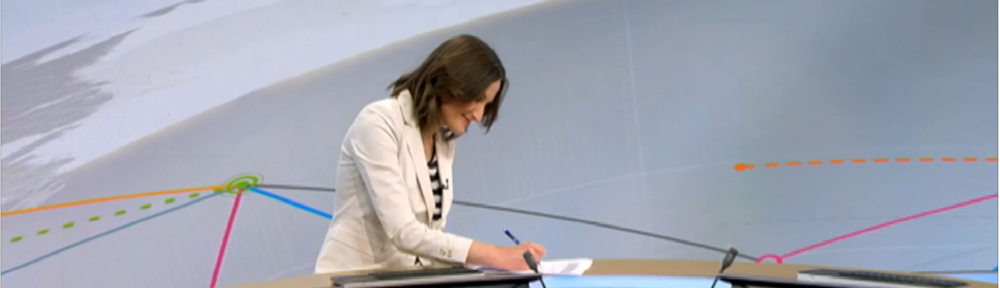
Now they are showing old news clips of the thirty-three miners who were trapped underground in Chilie for 69 days, as they emerge to embrace their loved ones. The images ignite a flash of recognition in me. I had completely forgotten about those poor guys! I wonder what they’re up to now and how many of them are still miners. The old RTE format is so quaint – before the six-one news begins they show a series of 2D images of people pausing as they go about their daily business to observe the Angelus. The Newsroom backdrop is completely flat and Sharon Ní Bheolain has blonde hair, which she wears in loose shoulder-length curls. Though it suits her, I prefer her as a mature brunette.

And then -oh the memories – the old X Factor theme music comes on. PLP perks up. “Aw, d’you remember?” he sighs as a close-up of a young Simon Cowell’s gritty stare fills up the screen. I nod; “Yeah that was a golden year, wasn’t it?” I cosy up to PLP and giggle “You’re wearing Simon Cowell’s aftershaveright now, aren’t you?” He smiles sheepishly. “Is it the one I got you for Christmas last year?” I ask.

Simon Cowell in 2010

He nods; “Yeah, it’s his XY Factor range. It says on the bottle that it’s genetically proven to make you smell like a popstar for at least eight hours.” I look at him fondly. I can smell the success in our future.

We begin to smell burning.

“Shit!”, PLP exclaims, rushing out to the kitchen to take out of the oven the chicken that we purchased earlier as part of Tesco’s Mary Byrne-patented €10 meal deal.

PLP manages to work his magic though and serves me up a second glass of wine with my burnt chicken and side of mashed potato. He puts his arm round me. It’s almost time for Fair City, when Biffo the barman will finally have to face up to the trouble he has got himself in to; having borrowed more for a late license than he can afford to pay back. “I’m dying to know how he’s going to get himself out of this mess”, muses PLP as he sings along to the Fair City theme tune.

Drama Queen and The Ghost in the Machine

I am massaging my jawbones, thrusting by body forward and shouting an emphatic “Ah”. Then I am on the floor, hoisting my left arm up and down mechanically while grunting. Every few seconds somebody jumps in and joins with a repetitive movement justified by a plausible industrial buzz. The time is 7.20 pm, the place Rathmines town hall and the evening class I signed up for: Drama and Acting. 

Rathmines Town Hall

Today’s project; a warm-up and opening of the vocal passages followed by the creation of a giant 20-person-linked machine, which becomes progressively more complex as new members join it, is proving highly successful. Beyond the layers of mechanics, the ghost in the machine is concentrating hard.

Since we twenty odd locals – many of international origin – joined the class, we have been engaged in weekly displays of prepostrous behaviour. In week one we were asked to select a partner and decide which one of us would be the bossy one and which the submissive. The bossy boots was to lead their partner on daily adventures of their invention employing only the language of command. I partnered Sherry, a lady twice my age and thrice my grace. I was the boss and she my subservient. I led her around, making her jog by my side, pass me over her food in my favourite restaurant, and finally, bury a cat which I found lying on the roadside on the way home.

The predominant focus of these classes has been on improvisation, which Julie Poland, a business-coach blogger describes as “art with a strong foundation in science”. She is right, because to improvise is to create but also to reflect the maxims that guide successful interaction. Whether that interaction be with music, movement or other people, the key is to recognise patterns and to glide around them, using instinct as your guide.

My formal introduction to improvisation happened last summer, when I was studying as part of an international programme at the University of Bayreuth in Germany. I was only there for four weeks, but by the end of it, I was a proficient waffler in the German langauge and able to jump into a situation at just the right time to alleviate a waning scene. On the final night, there was to be an international farewell celebration and the drama group was to perform a selection of its improvisation-themed antics. “Kate”, said Thomas, the drama student and Bayreuth- local who had run the workshops, “We’re going to get you up to perform the object-imrov by yourself, mm kay?” “mm, WAS?” I replied, slipping firmly back into Kate Katharina Ferguson. ” I don’t vanna”.

He was having none of it, and stymied by my stiflingly sweet self, I couldn’t even make a scene. Ten minutes later, 150 people are watching in a dimmed performance area as I am called up to represent the drama group. Super-cool Teutonic Thomas explains the premise of the game to an eager audience. “Kate is an alien and this is her first visit to our world. She will be given an object and has to use the communication and motor skills indigenous to her own planet to make sense of it. Kate does not know what object she will be handed”. He motions to me to come forward.

From behind his back, he produces: a deodrant can. No biggie, sure don’t I love the attention. That’s it. Secretly, haven’t I always wanted to be an extrovert, and sure, haven’t I been waiting patiently for years and years for the chance to emerge with a can of deodrant and be… extrovert.

There is no option but to stop being Kate Katharina Ferguson. I detach myself in miliseconds and begin to make noises I consider eastern -European-sounding. With gestures of varying intrigue and reservation, I manipulate the cylidrical object in my possession. I have never commanded this much sustained attention in my life. The more I move the more I lose myself in the moment and when Thomas’ clap comes, signalling the end to my performance, I feel Kate Katharina gradually regain possession of body and mind as I shuffle a little awkwardly to the edge of the crowd and make mortified eye contact with my friends. Yonder though, the feeling of delight.

My improv performance in Germany

As somebody who is damned if I’ll shout to be heard, improvisation is an ideal way to command but not demand attention. Like the sensation of intoxication, improvisation interferes pleasantly with the inhibitory areas of the brain, which usually remind you not to order Sherry to bury an imaginary cat, regardless of how much it would amuse you. 

So forget the psychobabble  – sometimes trying to be something you’re not is the greatest favour you can do yourself. What do you think?

That is like so funny, NOT.

Try as I might, there is little in this world I find less funny than Anchorman. In these two minutes and twenty eight seconds, designed to tickle my funny bone and whet my apetite for more, the temptation to lol is absent and the possibility of lmaoing and rofling out of the question. But why then do I find frumpy Maeve Higgins and her sister having the banter while baking hilarious when  Ron Burgundy’s string of faux pas invariably leaves me straight-faced? Is what you find funny not more than simply a matter of which way the cookie crumbles?

Cognitive Psychologists believe that what you find funny depends on your interpretation of the incongruous. Which incongruities in particular amuse you depend on the level of intellectual effort required to recognise the inconsistency. Let’s take Stand Up comedy. It’s thought that jokes about rape get a laugh not on account of particularly twisted audience members but rather due to their acknowledgement that a taboo is being flouted and that on top of that, the Unspeakable is being treated with flipancy.

I have been thinking a lot in the past few days about the things that do and don’t make me laugh. Sarcasm never does.  The mental effort required  ro recognise the blantantly incongruous: that somebody is saying the opposite of what they mean just doesn’t cross the threshold of intellectual toil necessary to cause me to chortle. (Each to their own I guess….. :NOT?!) 

I am reduced to convulsions of laughter however by anything that approaches the Ridiculous, as long as it is left discreetly packaged in the Understated. Rape jokes don’t do it for me, but hidden camera shows, in which those taken in treat their pranksters (sometimes even consciously) with the sobriety appropriate to a genuine situation make me laugh. In these scenarios, you’ve got the obvious incongruity of the joker acting as something he’s not. In addition however, you have the intellectual pleasure of watching the punked-ee respond in accordance with the conversational and societal maxims they have imbibed through experience. Furthermore, the possibilities of their own moulding of the situation and the potential to ‘play along’ with the prankster leaves an element of unpredictability which itches my funny bone.

Speaking of the Unpredictable reminds me of the eighth wonder of the world: the apparent hilarity of a short clip that my parents watch without fail, every New Year’s Eve on Bavarian television. The clip is a black and white British sketch of the title “Dinner for One” and dubbed into German for maximum comedy. It portrays an imaginary dinner party given by a senile lady of royalty- status. The lady, imagining that she is surrounded by prestigious guests orders her butler to fill their glasses and heap their plates. The catchphrase of the dopey butler is the polite question:”Same Procedure as Last Year?” which is invariably answered by the delusional hostess in the affirmative. As well as that line, what makes my parents hysterical is the increasingly intoxicated state of the butler as he downs the drinks of the imaginary guests and falls repeatedly over the head of a tigerskin mat. Before I set off in hope of actual intoxication last New Year’s Eve, I watched with incredulous amusement as my parents came close to rofling off the sofa.

Given that I am pretty certain of my genetic relationship to those I call my parents, I cannot but conclude that there is no such thing as “Intelligent Humour”. What I can say without a doubt though, is that what you find funny is a representation of the way you view the world. And that may well depend on which way the cookie crumbles.

Pendulums and Prodigies: Sorry Love, You Just Don’t Get It Yet.

Last Friday night I grabbed some plastic clothes hangers from my wardrobe. I cut some string and attached to it a blob of red playdough. Then I tied the string to the hanger and asked my mum to hold it high and steady as I set my little pendulum a-oscillating. I was preparing for my Psychology class the following morning, where I was to introduce my prodigies to Piaget’s theory of child development.

Piaget believed that cognitive development happens in distinct stages. Fundamental shifts in thinking patterns lead to the simultaneous development of ever more sophisticated competencies. For example, when a baby is born, it relies entirely on its reflexes; it clutches and sucks to survive. In the months that follow, it learns that it is a phsyical entity separate from its surroundings, that objects continue to exist even when out of sight and that control can be exercised over the same objects. These realisations, or shifts allow the baby to experiment with its toys, to imitate those around them and to co-ordinate its movements to achieve a goal. 

Piaget also believed that the developing child is active in its own development. No blank canvas, salivating stimulus-response theory for him, thank goodness. He proposed that at age 11 or 12, children reach the most sophisticated cognitive stage, which changes little into adulthood. He called this stage the Formal Operation period and characterised it by the ability to think in the abstract, to hypothesise, to form ideals and to employ the scientific method.

To test whether children had reached this stage of reasoning, he devised The Pendulum Problem, which brings me right back to my plastic coat hangers, playdough and string. Piaget set children the task of investigating what factor affects how quickly a pendulum swings from side to side. He gave them strings of different lengths and provided them with objects of various weights, alongside professional-looking hooks rather than plastic clothes hangers. If the children were able to test each factor (weight, string length and force) by keeping all other factors constant, and come up with the correct answer: that oscillation rate depends only on string length, he deemed them Formal Operataionalists and capable of learning algebra, pondering human existence and reasoning empirically.

As I stand at the front of the class on Saturday morning, armed with my coathangers, playdough and string, I am amused at the uniformly perplexed expression on the faces in front of me. Before I distribute my materials, I ask sneakily, as if it is an aside, whether anybody in the class is under 11. Three put up their hands. As I am dividing them into groups, I unite, casually the three youngest, and watch with pleasure my very own scientific method in progress.

An older group of boys in front isolates the potential factors immediately and adds a further variable to the equation; the position on the coat hanger from which the string swings. Another group is moulding its playdough into the shape of feline heads, but sensibly keeping their size and weight constant. I alight at the youngest group and watch them operate. I am steering the groups, without giving anything away. “So what factors may you have to change?” I prompt them “Weight”, says one. “Good!” say I, “what else?” “The length of the string!”, says another. “Let’s change them both”, choruses the third. I watch in facsination as they take a short piece of string, attach to it a light weight, before comparing it to a long piece of string with a heavy weight.

 I never dreamed that I would vindicate old Piaget. Of course it wasn’t super-scientific, but it made me think seriously about whether fundamental shifts in thinking may really occur throughout the lifespan. David Anderegg, an American child therapist blogged last year about the death of developmental psychology. He describes a kindergarden teacher, who with the best intentions, refuses to allow her charges to move around the room because they are getting ready for school, where they will have to sit quietely. Rather than allowing the little ones to enjoy the challanges of their natural developmental stage, he argues that this policy only robs children of the intrinsic joy associated with exploring more about themselves and their environment.

As I am explaining all this to my scholars, I wonder whether the Under 11s are insulted by Piaget’s inference that: Sorry Love, You Just Don’t Get It Yet.