Unknown's avatar

About Kate Katharina

Kate Katharina wltm people with stories for literary fling and maybe more.

The ninetenth-century novel that sheds light on 21st century backwardness

I finished Fontane’s Effi Briest on the train back from Warsaw. Maybe I shouldn’t have. The tale of a young girl who marries a much older, politically ambitious man doesn’t end well. I burst into tears while reading the final passage. LSB, well used to my delicate sensibilities, patted my back and let me blow my nose in his scarf. Then I hid my face in his coat to avoid the stares of my fellow passengers.

Image source: Wiki Commons (c) H.-P.Haack

Image source: Wiki Commons (c) H.-P.Haack

*Spoiler Alert*

On the surface, it’s easy to see why I found the story upsetting. 17 year-old Effi is married off to Baron von Instetten, who was once in love with her mother. They move into a creepy house in the middle of nowhere. A huge shark carcass hangs in the entrance hall and Effi is scared by the strange sounds coming from an empty upstairs room. Instetten dismisses her fears and spends most of his time travelling and pursuing political ambitious in Prussia. Lonely and shunned by all but a good-natured apothecary, Effi descends into depression.

She gives birth to a baby girl and recruits a suicidal woman to nurse her.

Enter Major Crampas. He’s a married man with a reputation for infidelity. He makes advances on Effi and implies that her husband is using her fears of the haunted house to “educate” her. One night while taking a sledge ride, Crampas kisses her. It’s a nineteenth century novel, so either the rest of the affair is glossed over, or it doesn’t go any further than that.

In any case, the years go by and things improve when the family moves to Berlin and Effi can finally bid goodbye to the creepy house with the shark carcass. But while Effi is away breathing in sea air to increase the chances of bearing a son, Instetten finds old letters from Crampas in her sewing box.

Instead of being heartbroken, he’s mortified at what society will think of him. He challenges Crampas to a duel and shoots him dead. Then he banishes Effi and deprives her of seeing her daughter. Years later, when he grants a single visit, Effi realises that her daughter has been poisoned against her. Her health declines. Eventually, Effi’s parents take pity on her and allow her to come home. She dies full of remorse at age 29.

That was the bit that got me. Effi dies believing herself monstrous. Despite the fact that she was undoubtedly the victim of a stifling, money-driven, image-obsessed society with a questionable understanding of a woman’s worth, as well as of sexual consent.

Now we get to the crux of it. I wasn’t just in floods of tears because of Effi. After all, she’s fictional!

What made me really inconsolable was recognising that young women these days are still being subjected to outrageous social pressures. And that many, like Effi, accept the blame for things which are not their fault.

Let’s take the fact that Effi’s parents have control over her sexual and marital fate. Nineteenth century craziness, right? Not really. A recent documentary followed the purity movement in the United States, where apparently one in six girls takes a pledge to stay a virgin until she marries. Specifically, it followed the troubling phenomenon of “father-daughter purity balls” where teenage girls, many of them much younger than Effi, pledge that their father will be their only boyfriend until they marry.

What about power dynamics in relationships? Did young Effi really have a choice when the sleazy Crampas came on to her in the sleigh? A video on Upworthy which went went viral last week features a young woman promoting what’s dubbed “consent culture.” She details in crystal clear language what consent is and what it is not. She argues that in some cases, consent is impossible. For example she says, “you can’t get consent from someone you have power over.” Well over a hundred years after Fontante wrote Effi Briest, campaigners still need to spell out that some relationships are by their very existence, exploitative. Echoes of wealthy, manipulative Crampas preying on young and vulnerable Effi are all around us.

Finally, let’s consider the image-based culture Effi is subjected to. She’s paraded around society, where she is expected to display flawless beauty. Last month, 17 year-old singer Lorde took to Twitter to express her frustration that a publication had doctored an image of her to correct her skin blemishes. “Remember flaws are ok :)” she tweeted to her 1.46 million followers.

If only that, and the other important messages Fontane was sending us, would actually catch on in the 21st century.
The place that out-Catholics Ireland

As soon as the “Berlin-Warsaw Express” chugged across the border, the Virgin Marys began to appear. Some of them stood scarecrow-like and alone in their shrines at the edge of wheat fields, while others guarded the entrances to farm houses. Rosy-cheeked and smiling demurely beneath their blue shawls, they reminded me of home.

It was the first indication that I was on my way to a country with the potential to out-Catholic Ireland.

While the Virgin Mary may be rural Poland’s icon of choice, the late Pope John II reigns supreme in Warsaw. The former pontiff is carved into statues, pasted onto posters and a favourite among street artists, who sell paintings of his face alongside still-lifes of fruit bowls and flowers.priest

The adulation isn’t limited to the capital either. Last year, the Daily Mail reported that a businessman in the southern city of Czestochowa had erected a 45-foot statue of John Paul II, whom he believes intervened to save his son from drowning.

LSB and I soon got used to meeting some version of John Paul II at every street corner. We even began greeting him with a “Howeyeah JPII.” But it didn’t take long for us to realise that he’s not the only Roman Catholic actively revered in Warsaw.

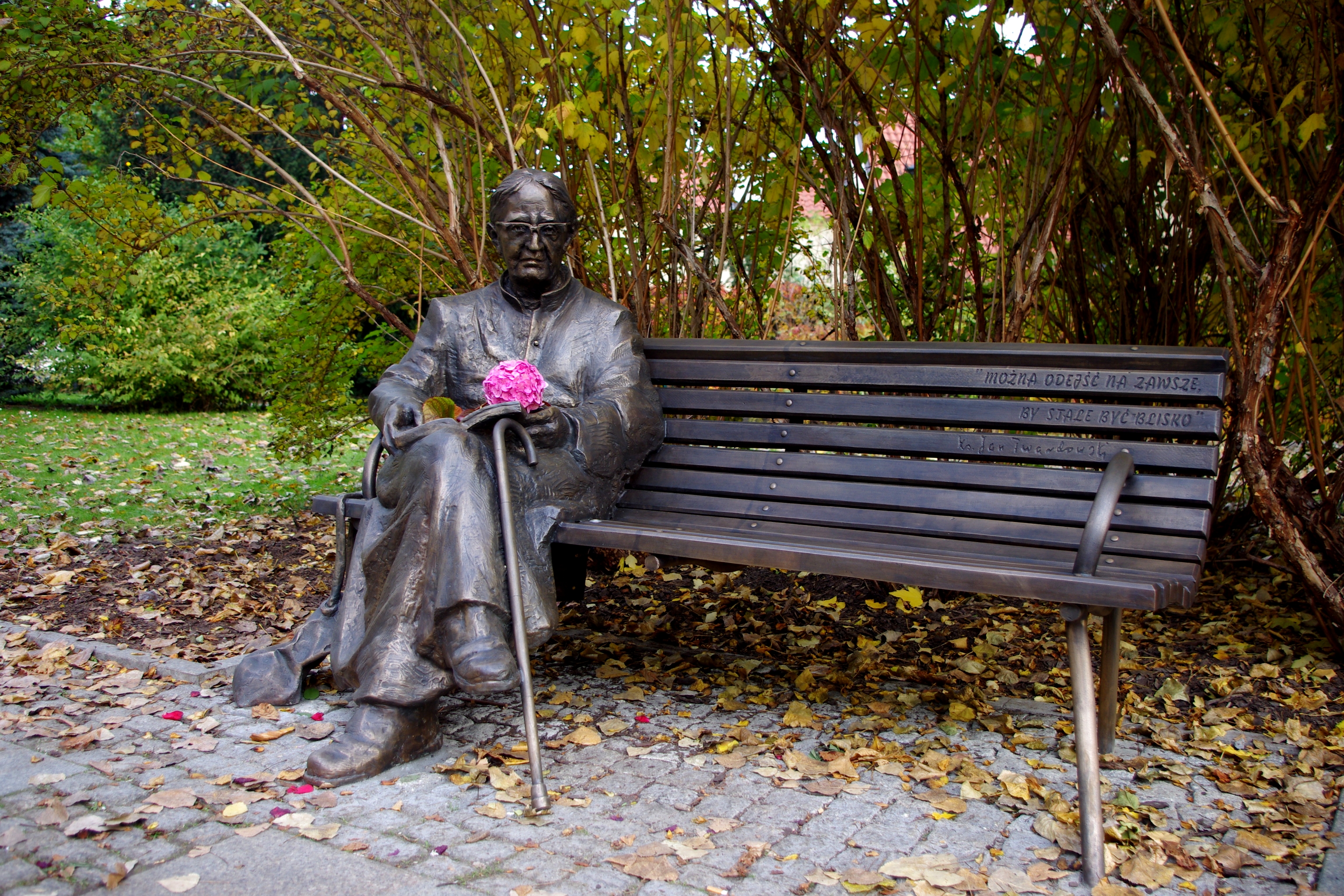
In hindsight, I should have known better than to meander towards a park bench occupied by a life-size bronze statue reading a book. In my defence though, it reminded me of the Patrick Kavanagh statue by the canal in Dublin, a place where I have never been accosted.

LSB and I were basking in the sunshine beside the statue when we were approached by an elderly lady, who stood before us, staring. I smiled at her and she began speaking in Polish.

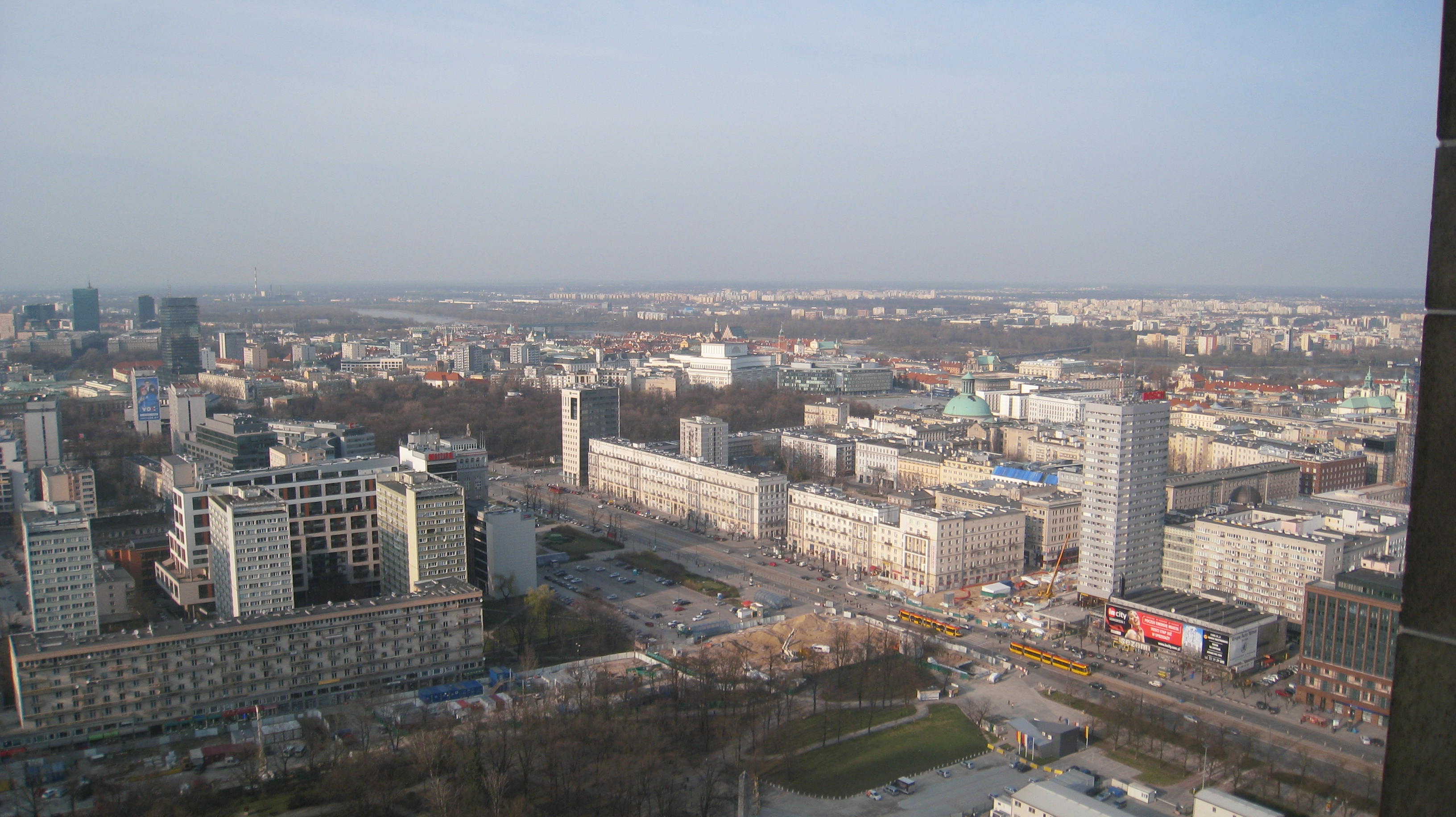
Warsaw skyline -- view from the Palace of Science and Culture

Warsaw skyline — view from the Palace of Science and Culture

“Erm… No… Polski,” I responded apologetically.

She gestured excitedly at the statue. I shrugged my shoulders as politely as I could.

She talked some more, then motioned at us to stay put while she went away.

A few moments later, she came back with an elderly man.

He had a pleasant tanned and wrinkled face and was wearing a Nike sweatshirt.

“English?” he said and we nodded enthusiastically. “I have… um. little English,” he said, laughing.

“This man,” he said, pointing at the statue. “Jan Twardowski. He… um…” he cupped his hands around his neck to indicate a collar and the word came to him. “Priest. Yes. Priest!”

“Oh!” I said. “Thank you! I didn’t know who he was.”
“Yes!” he said, delighted. “Priest… important priest… and also poet!”
“Priest,” the lady repeated, delighted. “Yes, priest!”
“Ah,” I said. “What a beautiful place for him!”
“Yes, yes, beautiful!” they agreed.

They left happily.

A few moments later, another party comprising two women and a man in a wheelchair arrived and stopped in front of us. They stayed there for quite some time and I began to shift uncomfortably in my seat.

Though there were several vacant benches elsewhere, I thought they were perhaps trying to covet our spot. “Would you like to…?” I said, motioning to get up.

“No, no,” the lady pushing the wheelchair said, waving her hand.
Suddenly I noticed a presence to my left. When I turned I discovered a third woman on her knees by my feet, praying.

This, I thought, is one step away from Pope-shaped perogies.

In Warsaw

I’ll be back soon with news of my adventures in Warsaw, the trials and tribulations of shopping for a soon-to-turn 95 year-old and an update on my quarter-life crisis.

Bis bald!

Five reasons The Wolf of Wall Street should not win an Oscar

I went to see The Wolf of Wall Street. I really shouldn’t have. I can’t think of any film I’ve ever enjoyed less. I’ve racked my brains but – nothing. It’s the worst. At 180 minutes, it’s also practically interminable.

It’s about an entirely one-dimensional stockbroker called Jordan Belfort whose primary concerns are making money, snorting cocaine and paying women to have sex with him. So far, so Wall Street cliché.

Belfort starts small by fraudulently trading low-value penny stocks and goes on to develop a financial empire. He becomes addicted to drugs, yachts, sports cars and prostitutes. His relationships crumble and –here’s what you definitely weren’t expecting – so does his business.

Image source: Wikipedia

Image source: Wikipedia

If the story itself is dull, the way it’s told is offensively mundane. The clichés of excess are repeated ad nauseam. When Belfort is not cultivating a cult of personality on the trading floor, he’s either in a drug-induced state of delirium or the company of a prostitute. On two occasions, the twin traits of substance abuse and misogyny are artfully combined when Belfort snorts cocaine from a prostitute’s butt crack and later from his girlfriend’s cleavage.

If that weren’t bad enough, Belfort narrates the film’s events in an amazingly irritating and over-stated voice-over.

You might have guessed by now that I’m not exactly a fan of this film, which has inexplicably been nominated for five Academy Awards. Here are as many reasons The Wolf of Wall Street shouldn’t win any:

1. It’s not believable

Although it’s based on a true story, it manages to come across entirely implausible. Given the insane lifestyle Belfort leads, there’s no way he’d be in a position to develop a multi-billion dollar business in such a short space of time, nor would he be able to train his incestuous and apparently simpleton employees to trick intelligent people into investing millions in stocks they hadn’t heard of.

2. It lacks subtlety.

For three hours, we are subjected to endless scenes of debauchery and excess. The tired stereotype is then drilled in further with Belford’s tedious voice-over in which he reinforces his addiction to money, drugs and sex. It’s just too one-dimensional to be realistic, not funny enough to be a farce and not subtle enough to be poignant. It has no message whatsoever.

3. No character development

None of the characters develop in any way. Belfort remains obsessed with money, power and sex, as do his employees. Belfort’s father is just another flat supporting character with an unexplained anger control problem. Belfort’s first wife doesn’t have any identifiable personality in the first place (she is, after all, a woman) and his second uses sex as a currency from beginning to end. All the other women are prostitutes, who have no discernible thoughts, feelings or intentions.

4. Ridiculous depiction of women

Belfort’s first wife plays an extremely minor role, which is limited to helping him find his job trading penny stocks and being hysterical when she catches him with the woman who is to become his second wife. His second wife, who marries him for his money, communicates entirely through sex. She is more attractive than his first wife, so she doesn’t have to bother giving Belfort any emotional support. Instead, she has sex with him in exchange for yachts and jewellery and deprives him of it as a punishment.

5. It’s too long.

Every time the screen darkened my heart leapt with anticipation. But it carried on, relentlessly. Since there was no character development, no believable plot and no message to interpret, I just sat there, counting down the minutes.

In hindsight, I should really have invested the cost of the ticket into a penny stock… But like so many, I was duped into a highly dodgy investment.

*******************************************************************************************************************

The real Jordan Belfort seems pretty insufferable too. But at least he’s real:

Should I get married to avoid the home for superior spinsters?

“That house,” Frau Bienkowsi said, taking a break to sit on her Zimmerframe beside a patch of buttercups, “was for war widows and a better sort of unmarried girl.”

“It could be the place for you!” she continued, half-seriously. “After all, I need to see that my Katechen will be looked after if things with Andrew don’t work out.”

Frau B believes firmly in marriage. Perhaps I would too, if the choice were between it and a red-brick home for spinsters.

She cannot fathom why German president Joachim Gauck has a Lebensgefährtin instead of a wife and why my sisters and I have yet to tie the knot.

I like some things associated with marriage, like commitment and companionship but dislike others, like lavish weddings and the idea that a relationship undergoes a qualitative change just because you day “I do.”

For people of Frau B’s generation, marriage had as much to do with economics as it did with love.

I wonder whether a whole lot has changed.

In Germany, matrimony is encouraged by the tax system. The comically-named “Ehe-Splitting,” (marriage splitting) policy allows married couples to pay tax at a rate determined by their average income. Couples save money by allowing the bigger-earner to avoid a higher tax rate.

Kate Katharina wedded to  hot chocolate while otherwise unattached

Kate Katharina wedded to hot chocolate while otherwise unattached

I have not ruled out sometime marrying LSB, especially if he asks politely.

But the prospect of living out my dying days in a home for “better sorts of unmarried girls” will happily have nothing to do with my decision.

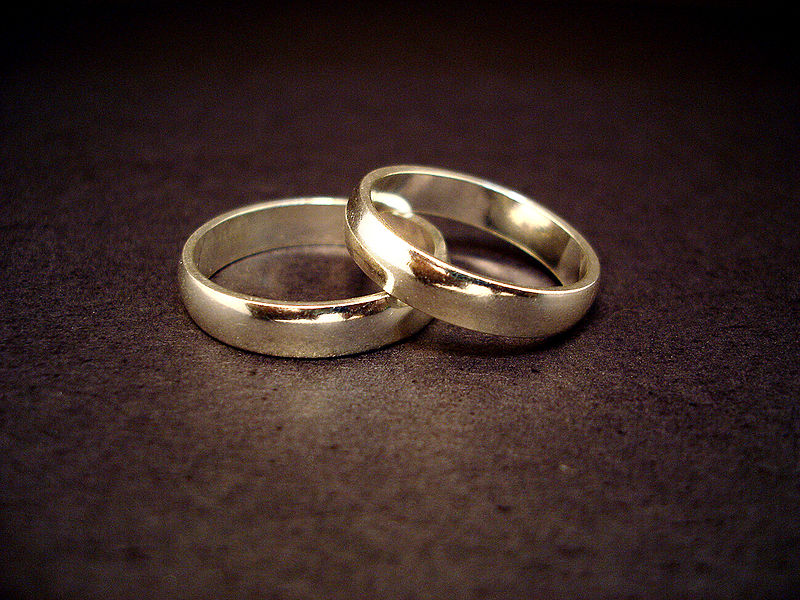
Source: Wikipedia

Source: Wikipedia

And for the time being, I’ll avoid both institutions, thank you very much.

********************************************************************************************************************

PS – LSB has himself written about the institution of marriage. It’s in response to the debate about gay marriage raging in Ireland at the moment. It’s very clever and persuasive and you can read it here.

World Apart

I get the U8 to work.

Berliners call it the Drogen Linie – a title it’s earned.

Men and women with drooping eyelids and sad shuffles inhabit the line.

On the platforms, people with trolleys containing their belongings shine torches into bins looking for bottles to recycle.

Once, a girl with black eyes got on my carriage. Her dark hair was pulled back loosely and she had on a flowing skirt. She was breast-feeding a big baby, who was clinging on to her very pregnant belly. The baby was playing with a copper coin.

It toppled to the carriage floor. The lady sitting opposite picked it up and handed it, almost apologetically, to the girl. She took it. Her fingernails – black with dirt. She was no more than fourteen.

I get out at Gesundbrunnen, in the middle of the line. In the eighteenth century, the area was famous for a spa dedicated to the Prussian Queen Louise.

source: Wikipedia

source: Wikipedia

When it joined the city of Berlin a century later, Gesundbrunnen became a working class district. Today, over half of its residents are people Germans describe as having a Migrationshintergrund, or “migrant background.”

The term includes people like me but in the media it’s almost synonymous with second and third generation Turks whose parents and grandparents arrived in the 1960’s and 70’s as Gastarbeiter – guest workers – to help build up post-war broken Germany.

The area is home to a sprawling mall called the “Gesundbrunnen Center.” It’s right next to the train station, which is also the starting point for tours of Berlin’s former bunkers.

The mall is always full. It is like every shopping centre, with an enormous H&M, plenty of stalls selling implausibly fragrant nuts and lots of red-faced children weeping tears of indignation as they are dragged from shop to shop.

To ease the suffering of those unfortunate children and their parents, an enterprising group has recently set up a pony-rental service on the ground floor. The ponies are life-sized stuffed animals on wheels. They come in three sizes and their prices vary accordingly.

The children glide along; their backs held straight and their expressions changing rapidly from concentration to joy. Their parents point smart phones at them to preserve the ride for posterity.

Close to the ponies-on-wheels there is a pet store. I go there to look at the guinea pigs. Earlier today, a sales assistant with pale skin and lots of piercings opened the snake cage to spray water inside. A woman wearing a headscarf looked on curiously.

“Are they poisonous?” the woman asked, pointing to two grotesque snakes coiled around each other, exposing their forked tongues every few moments.

“No. We don’t sell poisonous snakes,” the member of staff answered in a remarkable monotone.

The snakes are fed with dead white mice. I wonder if the store is supplied with dead mice or whether they simply taken them from the cages selling mice as pets. If the latter is the case, I wonder how – and where – the killing takes place.

On the street leading to my office, there is an unassuming and cheerful cake shop. It sells pieces of kiwi sponge for a euro and boasts a special blend of Arabic coffee. It’s family-run and open late. In the evenings when it’s quiet, the teenage daughters take care of the tills and bring you coffee. They seem well brought-up. One of them sports charmingly chipped red nail polish.

There are high-rise blocks of flats along the entire road. Chained absurdly to a lamppost outside one of the buildings are two plastic cars for toddlers.

None of it is my world. But sometimes I realise that being an outsider is where I feel most at home.

How to turn flat-hunting into a hobby

Regular readers know I’m more than a bit of a creep. I stare unashamedly at strangers and note down snippets of conversations I hear on trains. And – no I am not joking, LSB got me a periscope for Christmas.

So, despite the well-documented tedium of finding a flat in Berlin and a certain Mr Humphreys who tried to scam me into moving into a restaurant, looking for a flat over the past few months has provided me with a welcome opportunity to poke around thirteen strangers’ homes without getting arrested.

Prenzlauerberg  Source: Wikipedia

Prenzlauerberg
Source: Wikipedia

One such stranger was Jürgen. He and his wife were giving up their apartment in Prenzlauerberg to move into something bigger. Their neat second-floor flat overlooked a street full of restored period houses which had been painted green.

LSB and I were only vaguely interested in the flat because the advertisement had mentioned that applicants willing to buy the in-built hall cupboard for €1300 would be preferred.

The moment we walked in we knew it was not for us. The flat was oddly misshapen – a hexagonal kitchen jutted left off the hallway and the bedroom straight ahead was small and windowless. It looked vaguely like the nearby bar dedicated to life in the GDR.

But we continued on anyway, browsing awkwardly and exchanging false smiles with our prospective competitors. As we were trying to make a beeline for the front door, Jürgen – bespectacled, earnest and thoroughly decent- caught us.

(We had decided that when looking for flats, we would play by ear whether to tell people that LSB was only beginning to learn German. In some cases, I simply translated and in others, people were all too eager to practise their English.)

Jürgen however was unconcerned about LSB’s language skills. All he wanted to talk about was his hall cupboard.

“Schau mal,” he said, opening a long mirrored door. “I built this myself. It is a perfect fit.”

“Mmm” said LSB appreciatively.

An entirely different cupboard which I probably would pay for. Source: Wikipedia

An entirely different cupboard which I probably would pay for. Source: Wikipedia

“And take a look at this!” he said, showing us some shelf fittings.

We listened politely as Jürgen continued to speak extensively about his carpentry.

Every now and then, LSB nodded in confusion and said: “Ah!”

Jürgen, delighted with the enthusiastic, if deferential response, pulled open yet another door.

This went on for ten minutes and concluded with: “A better cupboard for this spot you will not get.”

Back on the street, LSB said: “I didn’t understand a word of that.”

I didn’t understand much, either.

But I liked Jürgen. He was an uncomplicated, dignified kind of person who took great pleasure from his work. There was nothing cynical about his spiel. He really just wanted to speak at length about his self-built cupboards.

Tania from Tiergarten, on the other hand, did not wish to speak at length.

When we arrived for a private viewing of her apartment, she opened the door slightly and said: “Schuhe aus!”

LSB and I almost tripped over each other in the attempt to remove our shoes at speed.

We proceeded in and received a swift, efficient tour of the airy apartment, which we learned was to be rented out unfurnished.

The most remarkable thing about the bedroom was a colossal square of purple on the otherwise white-painted wall.

Tania motioned to a large tin of paint sitting on a table.

“Should you take the place, you will be contractually obliged to paint over the purple square. I have purchased paint for the purpose. I don’t have time to do it.”

We nodded. We would learn to do a lot of that as our flat hunt continued.

Next up was a flat in Friedrichshain, a punk-friendly area in the east of the city where I lived when I first moved here.

Tim, the young man offering the flat, was a DJ who was going travelling for a year.

The entrance hall of the large front house was like a cringeworthy movie set dedicated to Berlin’s “alternative scene.” No centimetre of the wall was free of graffiti, which featured slogans such as “Fuck the police,” “The revolution begins now” and “Go vegan.”

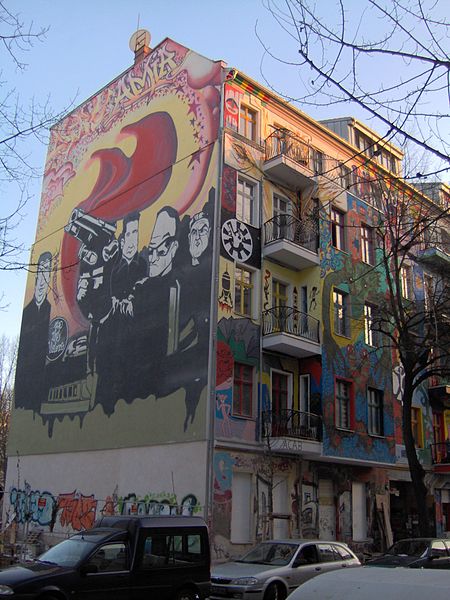
A house in Friedrichshain (not the one we went to) source: Wikipdia

A house in Friedrichshain (not the one we went to) source: Wikipdia

It was horribly dirty. To get into Tim’s flat, we had to cross a pitch-black yard. As we were making our way to the door, a large terrier bounded at us out of the darkness. I didn’t scream. When I am terrified, I go mute.

We made our way up the graffitied stairway to Tim’s place and rang the bell.

Tim had shaggy hair and glasses.

“Hey, you guys,” he said. “You found it! I know the buildings are pretty run-down man, but you got the best one here.”

The flat stank of smoke. Tim led us past the kitchen, where a pile of dirty dishes towered next to the sink. There were hundreds of records on the shelves in the hallway.

In the living room was a tatty armchair and a fridge. “For the beer! Nothing better than having a nice beer ready for you when you stumble home at 4 am!”

LSB and I nodded excessively.

“Cool,” I said.

“Very handy,” said LSB.

“And of course you guys can smoke in here! No problem at all,” said Tim.

“Brilliant!” I said.

(LSB and I do not smoke.)

“The only thing really,” said Tim – “don’t touch the records. At all. They are my babies.”

We saw ten other places. Writing about them all would be boring.

Suffice it to say, one of the strangers became our friend. It’s unsurprising really because she has a corner couch and a Goethe quotation painted on the wall. I’d be lying if I said I’d always wanted a Goethe quote, but the corner couch has been a dream of mine for quite some time. She also has a copious supply of kitchen utensils.

She left us a crate of beer, a charming welcome note and plenty of shelf space.

LSB and I have colour-coded our books. We have a red, blue, green and yellow section.

And even though our small, north-facing balcony overlooks a car park, there is a school building across the way.

Some mornings, I peek out from behind the curtains and try to make out the teacher’s power point presentations.

Kate Katharina appears in rag, LSB brings home bottled water

Some of you might have noticed that I’ve been blogging less since LSB moved here. But, as my psychology professor used to enjoy pointing out, correlation does not equal causation.

I mean, of course we do spend the occasional evening in streaming epsiodes of 7th heaven. (We’re on Season 5 – Mary is in big trouble because – instead of going to college – she’s working at a pizza joint where she makes unsuitable friends who smoke pot and have premarital sex).

The Camdens of 7th Heaven. Image source: Wiki Media

The Camdens of 7th Heaven. Image source: Wiki Media

But, truth be told, most of the time we are awfully busy having our own lives and co-habiting on the side.

Take this week for instance. LSB started an internship at an advertising agency, where he gets “thinking time,” free yoga classes and and an endless supply of bottled water. (His interview for the position took place on a bean bag).

I, on the other hand, made it into the notorious BILD tabloid – Germany’s equivalent of the Daily Mail – with the seniors’ blogging project I co-founded last year. The blog – Berlin ab 50 is a place for the over 50’s in Berlin to share their experiences of getting older in the city.

Safe to say, I was a little bewildered that BILD – the world’s second best-selling newspaper with a circulation of nearly four million requested an interview with us.

And cynic that I am (in fairness, BILD is a rather nasty publication) I wondered whether my group of senior bloggers – three of whom are in their sixties – were sitting on a big dirty secret. Had they been in the Stasi? Had an ill-advised fling with a high-ranking official?

With a gulp, I wondered whether perhaps I was the villain of the story. However, I quickly realised I was far too much of a square to make it legitimately into the pages of a rag. Bloggers in BILD! source: http://www.bild.de/regional/berlin/berlin-aktuell/drei-seniorinnen-haben-einen-internet-blog-34082682.bild.html

Well, as it turned out, the BILD journalist was a very nice young woman who spent a whole hour asking us questions about our blog. Her colleague – a thin photographer who tried not to look bored during the interview – got the three seniors in the group to pose with laptops and smart phones around a table on which he had strategically placed some coffee cups.

The article, which you can see here, leads with the bold headline “We are Berlin’s oldest bloggers.”

Of course, our hits went through the roof. And then we started getting media requests from everywhere. We’ve even been invited to go on television.

I know.

Speaking of television, you’d be surprised how many people write to it.

You see, another reason I’ve been awfully busy in the past few months is that I’ve taken on additional job at the international broadcaster where I work. It’s in the Zuschauerpost or “Viewer Correspondence” department and it’s my job to answer the e-mails and letters people send to the television station. When I took the job lots of people said: “Why on earth would you want to do that? Only crazies write in to TV stations.” To them I say: perk of the job.

I get some very sad mails from people in developing countries who have access to a television but not to adequate medical care. And I get some very entertaining complaints. I derive a guilty pleasure from composing eloquent replies to ridiculous requests.

But it comes on top of my regular job as a writer and translator at the company, my shifts at The Local, my senior’s blogging project and my treasured visits to Frau Bienkowski.

Oh, and did I mention LSB and I found a flat? And moved into it?

preparing for a 7th Heaven session.

preparing for a 7th Heaven session.

Well, we did. More on all of that to come. But for now, it’s time for beer and a bit of 7th heaven. Got to get our priorities right.

(By the way, this post from The Atlantic about the worth of blogging as a medium, inspired me to finally sit down and write a post again! Check it out- it’s definitely worth a read)

Gate Expectations

On Friday night, LSB and I were to return to Berlin after spending a warm, damp Christmas in Dublin.

The day had been stormy and the queue at the airport was frightful. IMG_7793[1]

The woman before us looked particularly dismayed so I said: “Well, you’re one ahead of us!” to which she replied, “that’s not saying much given the circumstances.”

It took us an hour to reach the check-in desk, where calm was restored. Our luggage was within the weight allowance and the lady helpfully circled the departure gate on our boarding pass with a biro. It was quite old-fashioned really. Almost worth the wait.

We pulled our little carry-on cases to Gate 412. LSB whipped out his first ever smart phone – a Christmas present from his siblings – to connect to the free wifi. I reminded him of the time he used to read books, speak to me and look at me lovingly. I said those things because now I am the only person of my generation without a smart phone. He was too busy playing with his German grammar app to pay me any attention, so I took out my laptop and logged onto the free wifi too.

Moments later, a bell sounded and a soft female voice from the void said: “Attention: passengers of Flight EI330 to Berlin: this flight has been cancelled.”

image source: Wikipedia

image source: Wikipedia

LSB and I gaped like goldfish, our eyes meeting as we tore them from our respective screens.

I issued an expletive.

Soon after a tall, clean-looking man dressed all in blue appeared. He was proportioned like an ice pop. Perhaps this pleasant association explains why I took an immediate liking to him.

“Ladies and Gentlemen,” he said. “I am extremely sorry but my supervisor has informed me that this flight has been cancelled. Unfortunately, Aer Lingus will not pay for accommodation as this is a weather event.”

A rotund German man in a brown coat erupted in indignation. “You are obliged to take us to our destination,” he spat.

The man said he was extremely sorry. He was merely repeating the instructions of his supervisor.

“You can re-book free of charge online,” he said. ” Which is what I’d advise you to do. The alternative is to queue downstairs, but you will be waiting for hours.”

An Irish woman with pink skin and mousy hair piped up: “Well what about all your taxes and charges shite? Will you be charging us again?”

“No, Madam we will not be,” said the man in blue.

LSB and I retreated to a corner with our electronic devices. His smart phone didn’t live up to its name – but after a few stressful minutes we had managed to re-book our flight for Sunday night using my laptop.

An elderly German lady was most perturbed by the commotion.

“What is going on? Does anyone speak German?” she asked.

I put up my hand and explained the situation.

“I am officially attaching myself to you” she said.

The tall, blue man appeared again.

“Ladies and gentlemen, please follow me to reclaim your baggage.”

The German lady who had attached herself to me, said “where are we going?”

“We’re collecting the bags we checked in an hour ago,” I said with cheer that belied the dread I was feeling at having to call my office in Berlin to let them know I would be unable to work my weekend shifts.

As our dejected group was making its way to the baggage reclaim – I still had my laptop in my hands – a woman with blonde hair, red cheeks and a course voice pushed me to the side and said “Get off your fucking computer! Fuck off and let me by! I’ve been waiting for nine fucking hours!”

“You’re not the only one,” said LSB.

She stuck up her middle finger.

“Céad Míle Fáilte!” I said.

We retrieved out suitcases from the luggage belt. Then I sat down with the elderly German lady, who told me she was on her way back from Belfast, where she had been visiting her son – a translator who had married a Northern girl.

I explained that to re-book her flight, we would need her booking reference, as well as the e-mail address which had been used to buy the ticket.

She took out a small black notebook which was neatly filled with useful information. (I believe all German women of a certain age have a notebook just like this.)

She produced her booking reference, which she insisted on calling out to me in English. But the e-mail address presented a problem.

“My son booked!” she said. “And I don’t know what e-mail address he used!”

We tried three but none of them worked.

She called her son on her mobile phone but appeared either not to get through or to be unable to hear him.

At one point she said: “I am now hanging up! Alright, goodbye. I cannot hear you.”

The whole process took about an hour. I found the lady grateful but impatient.

In order to exit the airport, we had to go through passport control.

In an act of pointless confession, I told the passport control man that I had in fact never left the country and that my flight had been cancelled because of the storm.

image source: Wikipedia.org

image source: Wikipedia.org

“I understand,” he said kindly.

The elderly lady with the notebook got on a bus to Belfast. My father collected LSB and me.

We spent the weekend drinking Guinness with friends who thought they’d seen the back of us for another six months.

And who did we see at the airport on Sunday evening but the blue ice pop man from Aer Lingus.

“Remember us?” I asked.

“Of course,” he said. “Flight to Berlin.”

“Rough night on Friday, wasn’t it?” I asked.

“You’ve no idea,” he said.

Nothing but the tooth

When it comes to wisdom teeth, the world is divided into haves and have-nots. Those that have suffer stoically while those that have-not continue on, blissfully unaware of their good fortune.

Sometimes the have-nots playfully roll their tongues to the back of their mouths and say: “Oh, I don’t think I’ve got any! But I’m honestly not sure!”

You’d know, trust me.

Not only have I got a wisdom tooth, I’ve also got a wisdom tooth infection. Just in time for Christmas.

Arriving home to my parental home in poor condition has become a festive tradition. Last year I spent Christmas wrapped in a blanket hogging the sofa nursing Lemsips.

This year I came in dental agony, prompting fears that I am in fact poorly all-year around.

Having never experienced intense, shooting pain like it before, I asked my mother tearily how she ever managed to give birth.

“Your toothache might be worse than giving birth!” she said modestly. “At least with childbirth you know it’s going to be over in a while.”

My father took me to a dentist in Sandymount.

image source: Wikimedia Commons

image source: Wikimedia Commons

“Oh, you poor pet,” the dentist said, looking into my mouth.

Then she sent me to stand in an X Ray machine, clasping a piece of plastic in my mouth.

“Your tooth needs to come out,” she said. “But it’s too risky for me to do, as it’s right on this nerve.”

My nerve is a long white snake stretching from my tooth to my ear. Pain has been shooting along it for days now. I will probably need to go to a German hospital to get my tooth pulled. My way of dealing with that eventuality is to ignore it.

My father came with me to Rathmines to pick up some antibiotics and intense painkillers.

I paid for them using my VISA card. Then I went into the hairdresser’s to book an appointment.

Last night my father said: “I marvelled at the debonair confidence with which you sailed through your errands in Rathmines earlier.”

I blinked at him.

“You remind me of your sister (the one in America)” he said. “She also pays with plastic.”

“How do you pay?” I asked him.

“I pay with cash,” he said nostalgically.

“Yes, but what do you do when you don’t have enough?”

“I write cheques,” he said. “A dying art.”

My father opposes change of any kind. As long as we avoid talking about politics, it’s not much of a problem.

In fact, as an emigree, the certainty that nothing will change at home can be reassuring.

My father’s constancy is primarily associated with food.

Therefore, I can be absolutely assured that no matter what time of year I return home, there will be a bowl full of soaking butterbeans on the kitchen table and a half-open packet of Lidl cream crackers.

Yesterday my mother made her trademark exquisite celeriac soup. Later she hung up our walnut baby Jesus on the Christmas tree.

In the evening we watched a poorly-dubbed version of Ceclia Ahern’s “PS Ich liebe dich” on German television.

And I curled up wrapped in a blanket munching Dominosteine on one side of my mouth.

There’s no place like home.