Thoughts on leaving Ireland: Why emigration is my lifestyle choice

This time two weeks, if everything has gone to plan, I’ll be sipping beer alone in an east Berlin hostel.

I’m leaving Ireland for a few months to do an internship at Spiegel International, the English version of Germany’s Der Spiegel.

I’m one of the people Michael Noonan was referring to when he talked about emigration being a “Lifestyle choice”.

I intended to emigrate when I graduated in 2010 but I couldn’t afford it. After I did a TEFL course, which my parents paid for, I was lucky enough to get a job at the school where I trained.

I have loved this job and were I not young, passionate about writing and curious about the world I would do well to keep it.

I don’t agree with Eamonn Dunphy that Ireland is a dump. I agree with George Hook that this country gave him a “bloody good living”.

If we were in the middle of an economic boom I’d be in more of a rush to leave.

Because moving shakes you up, allows you to meet people that challenge how you think and forces you to define yourself within new parameters.

I’ve lived in the same house for 24 years. I know its every nook. When I come home, my father is where he is supposed to be. As I push open the gate, I look in the window and see the back of his head and his arms outstretched. From behind, it looks like he’s made a tent out of the Times newspaper and is holding it stubbornly in place because he has run out of pitching pegs. I hear clinks of plates in the kitchen. I smell his butter beans beginning to burn. I find my mother’s school-bag in the hall and hear her practising the Alto part to the piece of music she is singing in choir. When I come into the room she turns from the piano and tells me an amusing story about one of her pupils or something that she saw on the way to school.

In the mornings, I wake up and Áine Lawlor’s voice is like wind, willing me out of bed. All I can think about is how warm I am in my onesie and how early Áine must have to get up every single day. After a while I feel ashamed and curl into a foetal ball and roll out of bed.

As for the the three men that are in my life but that don’t know it they won’t miss me one bit.

I saw the man with long blonde hair and pools for eyes again today. His head was pushing down Harcourt Street, like a hound in slow motion. Last week I bought the Big Issue from a Romanian women in Rathmines, instead of from my friend outside Trinity. I haven’t seen him in a while but if I do, I will buy another copy. LSB has promised that he will buy each new issue from him while I am away. I know he will, because he always keeps his promises. And if he forgets, my face will appear on his computer screen as soon as he signs into Skype and I will ask him why he hasn’t done it yet. I am charming like that.

I’ll miss town on a Saturday. My vegetarian breakfasts at Cornucopia, where I spy on people who have nice haircuts, pretty coats and carry pocket books. I’ll miss John Gormley’s neat head and chiselled chin, which you can see in a frame hanging on the wall. I’ll miss the flea markets and co-ops which are beginning to blossom like a shy bride all over the city. I’ll miss the silent Falun Dafa-practising protesters, who stand around banners at Stephen’s Green with their eyes closed, drawing shapes in the air, uncannily in sync.

After the terrible things I have said about it, I’ll miss O’Connell Street. I’ll even miss the towering superfluous spike. Sometimes when I’m whizzing along on the U-Bahn gobbling up breaking news, I’ll think back to the times I felt sad when I passed the alcoholics who drank inside the pubs on Parnell Street at half eight in the morning. I’ll think back to Wednesday mornings, which are Dole days in the north inner city. I’ll remember the sorry queue of hunched figures in tracksuits waiting to get into the little green post office.

Sometimes, I’ll yearn for those moments when you’re waiting at a bus stop or sitting on a park bench and an old man or lady looks at you a little longer than they should and then decides that you are a safe person and talks to you about the weather or the recession or about when the bus should arrive.

I’ll miss the men and women who work in the charity shops on Camden Street and the type of lady that I overheard last week in the Cancer Society shop telling a customer that she couldn’t win an argument, let alone the National Lottery but that it doesn’t stop her from dreaming.

I will miss the -often irrational- indignation of the callers on Liveline. I will miss the ceaseless banter and inoffensive drizzle and the feeling I get of being a 1930’s maiden any time I’m in Neary’s Pub.

But I’ll be back. And I’ll have learnt how to live with a cat despite my prejudices and what it’s like to write to live instead of to live to write.

I might just have managed to see out my Quarter -Life Crisis. but I’m not promising anything.

And I’ll be blogging so that you can come to Berlin too, if you like.

*********************************************************************************************

Tomorrow is Valentine’s Day. E-mail me privately with suggestions as to how to get LSB back for last year.

If you’re on Facebook and want to join in on some chats, you can “like” Katekatharina’s page.

What septic tanks and education have in common

I’ve spent three-quarters of my life being educated and the last two years educating others.

Since I began school at the age of four, I’ve associated education with evaluation.

First it was stickers and stars and rubber stamps. These evolved into report cards with little boxes beside the words: poor, fair, good, very good and excellent. Next came the letters of the alphabet: A, B and C. Then fractions and percentages arrived and after that, points. At university, marks were converted into classes and you could be first, second or third.

Compulsory education – like the septic tank- originated in the nineteenth century. While both aged tolerably well, of late they have begun to fail us.

image source: insectapedia.com


After all, as Ken Robinson, an educational theorist points out, the current system of education was conceived in the intellectual era of the enlightenment and the economic context of the industrial revolution.

Like the septic tank, it has failed to keep up with the times, often producing impenetrable sludge before practical distillation.

(If you need proof, try understanding what on earth academics writing in humanities journals are trying to say).

It’s not that our education is of poor quality. It’s not that we have bad teachers, or unmotivated students. They never help but they’re neither unique to this period nor the cause of the problem.

The real issue is that we haven’t decided whether education is a journey focussed on itself or on its destination.

Let me explain.

Up to recently, education was a means to an end. You walked out of school and into the workplace. If you went to university and got a first class degree, you got a first class job.

Now things have changed. We have too many people educated in areas with too few jobs.

The difficulty is that we still believe that the higher your educational level, the loftier your career expectations should be.

Of course it’s a prospect that many are failing to realise.

Now, if you get a first class degree, you take your place among all the others and compete for any old job.

It’s a case of social progress outrunning institutional reform.

You could see the situation as a social leveler. Now unemployment is for everybody, not just the least privileged.

Some students spend twenty years collecting stamps and stars and letters and numbers.

And then they find that the numbers don’t add up to a job.

Their experience calls into question the very purpose of evaluation.

The transition from pupil to teacher has taught me that evaluating students is rather arbitrary. It doesn’t measure very much at all.

But we’re hooked on comparison. We get frustrated if our own evaluation can’t be backed up by a standard measurement. If we think we’re better than the person next to us, we want it neatly before us in percentage form.

I guarantee that in a secret ballot, students wouldn’t vote out tests and exams.

Science backs it up. Research has shown that the pleasure circuits are activated in advance of finding out a result.

We thrive in conditions of uncertainty.

Waiting for a test result is like waiting to see if you have won in Poker. Ultimately neither tells you how well you have played or how much you have learnt, but rather how well you have performed relative to others.

It’s time we took a step back though.

The right to education is one of the great privileges of our age. While its original and most important purpose-to lay the foundations for economic subsistence- has been eroded by the unprecedented pace of progressive reform relative to growth in employment opportunities-we must take time to remember what has been so long neglected: the timeless, immeasurable pleasure of learning for its own sake.

Could it be that indulging ourselves in constant measurement against others is doing us more harm than good?

Andrew Bird, an American folk singer condenses the possibility beautifully in the song “Measuring Cups” which opens:

Get out your measuring cups and we’ll play a new game. Come to the front of the class and we’ll measure your brain. We’ll give you a complex and we’ll give it a name.

This generation, more intensely than any other before it, has experienced education as a closed system of incessant measurement.

For many that measurement has not amounted to more than restlessness and disillusion.

Learning for its own sake has been forgotten amidst the obsession with making ‘it’ which means ‘making money’.

If teaching has taught me one thing, it’s that the responsibility to evaluate is nothing compared with the possibility to inspire. My job is to encourage before it is to instruct.

Pupils are not watering cans: we can’t fill them up without their consent. They must want to learn, not in order to get a good job or to become rich or to sound clever, but because, as Merlin in T. H. White’s The Once and Future King reminds us, “it is the only thing that never fails”.

I have the following words pinned to my bedroom wall:

“You may grow old and trembling in your anatomies, you may lie awake at night listening to the disorder of your veins, you may miss your only love, you may see the world about you devastated by evil lunatics, or know your honor trampled in the sewers of baser minds. There is only one thing for it then, to learn. Learn why the world wags and what wags it. That is the only thing which the Mind can never exhaust never alienate, never be tortured by, never fear or distrust, and never dream of regretting. Learning is the thing for you”.

Equipped with this original joy of learning, and a quieter, more humble confidence, our young people may be more inspired to carve an independent niche on the side-lines rather than enter the desperate rat-race of out-performance.

Let’s make our recovery less sludgy than a septic tank. In remembering why education matters for its own sake, we avoid throwing the baby out with the bathwater.

The reality of working in retail

Toeing the Line

Pippa’s feet hurt. They’re wedged in narrow pumps and she’s been on them all day. She’s moving between the till and a number of milling customers, which include a formidable lady in her forties sporting a mass of auburn curls and examining a pair of shiny black boots. “D’you have them in a thirty-nine?” she calls over, waving the article at her. “I’ll just check for you now”, Pippa says, issuing a receipt and handing the customer at the till her bag before returning to the lady.

While she’s in the stockroom, Pippa’s colleague appears, her head barely visible beneath the enormous tower of shoeboxes she’s carrying. “Deliveries just in”, she whispers as Pippa emerges with the boots in a thirty-nine. “Oh, God”, Pippa gasps looking at the mountain of boxes growing in front of her.

Meanwhile, the lady has begun tapping her foot. Pippa hastens over. “Hi there. I’m really sorry for the delay. Unfortunately, we only seem to have size 39 in navy..” The lady purses her lips. “Is that right?”
“Yes, unfortunately. But I can check with our other branch to see if they have them in stock”.
She blinks a few times. “Alright, check”.

Pippa goes to the phone behind the till but there’s already another customer waiting to buy a pair of shocking-pink heels. “Sorry for keeping you”, she says taking the box and commenting, “they’re gorgeous” as she drops them into a plush black carrier bag. Transaction complete, she calls the other branch and dodges around the heap of boxes her colleague is sorting. On the way, another customer taps her on the shoulder.
“Are these leather?”
“They wouldn’t be entirely leather”, Pippa replies apologetically. “but they’re leather-lined”.
Back with the lady now, Pippa explains that she branch ten minutes away has the black boot in size 39 in stock.
The lady shakes her head vigorously; “Oh, I just can’t face the walk!”
“Or I could order them in for you?”, Pippa suggests.
The lady takes another look at the boot, with its glittery heel and floppy leg and puts it down. “I’ll leave it”.

“No problem”, says Pippa brightly, packing it back into its tissue wrapping and returning it to the stockroom upstairs. Her colleague is now up at the till dealing with a man who is demanding a refund for a shoe his daughter damaged while out dancing. As soon as he’s gone, Pippa’s colleague calls over to her and says “hey, go on your lunch, you haven’t even had a break”.

Pippa takes a look at the heap of boxes, at the group of shrieking friends who’ve just come in looking for matching stilettos to wear to a hen night and at the accounts that are yet to be filled in. The sales target figure her boss has given her seems alarmingly out of reach. Rocking Around the Christmas Tree comes on again. “I can’t”, she says.

Living on a shoestring

Pippa has been working in the shoe shop for the last year and a half. She’s got a Master’s Degree and worked part-time all through college. She’s one of the 216,229 retail workers in Ireland and part of a growing number of graduates entering the sector.

Like many others retail employees, Pippa’s work conditions are poor. She splits her time between the various branches of the shop and frequently runs the smaller outlets with no help. “It’s a nine-hour shift, on my own, with no break”, she says.

Quite apart from compromising safety, such conditions represent a breach of the law, which states “Shop employees who work more than 6 hours and whose hours of work include 11.30am-2.30pm are entitled to a one hour consecutive break which must occur during those hours”. Furthermore and rather curiously, retail workers in the Footwear and Drapery trade in Dublin only “are entitled to a 15-minute paid break (exclusive of the main meal break) if working more than 4 ½ hours.” Taking into account the amount of work she does and her experience, Pippa feels that she “could do with getting more than nine euro an hour at this stage”.

To add insult to injury, Pippa is not allowed to wear her own shoes but is instead forced to wear footwear that the shop stocks, for which she must pay out of her own wages. She finds them uncomfortable and permanently suffers from blisters. “I have wide feet”, she explains and “because of that these type of shoes hurt”. The one time she dared to come in to work in her own shoes, she was shouted at by her manager. “She just went crazy”, Pippa remembers.

Fear of managers and bosses is widespread among the workers I speak to. “It’s just a lack of respect”, one girl tells me. “We’re dispensable, so they can afford to treat us badly”. Pippa is used to being shouted at. Of her manager she says, “She has been horrible to me on many occasions, but, to be honest, it’s just her manner with you, and a build up of little things, which over time, would have your confidence in ribbons!” she says, adding, “everybody is scared of her”. On the week I pop by, she has been made cry twice by her employer, which Pippa describes as a “new record”.

Image source journal.ie

“We’re just the Christmas slaves”

Wendy, also a graduate worked her sixth Christmas in retail this year. “In the three weeks before Christmas I worked 16 late shifts; they included 2pm-11pm and 2.30pm-12.00am. There were a few consecutive days where I did not even see daylight. I would come home from work at 12.30am, finally wind down to sleep at 3.00am, wake up at 1.00pm to get to work by 2.30pm … I lived like a vampire, microwave meals became my everyday dinner; eating a home cooked meal was a rarity … My sleeping pattern has become alarming and now that the Christmas rush is over all of us on our staff are suffering with colds, infections and the flu from being so run down and stressed. All because people want to shop at 11pm at night … I remember on one occasion finishing at 12.15am, heading home to bed and my alarm going off at 5.30am to be in the store by 7am: all for minimum wage.”

“Nobody thinks about us”, she says “we’re just the Christmas slaves to the shoppers”.
Compared to other years though this Christmas has not been the worst for Wendy: “The years I worked in fashion retail at Christmas were hell but selling face creams and body lotions is pretty straightforward”.

Short-staffing and Dispensability

The problem of short staffing is widespread in the retail sector. With employers taking on fewer staff, individual workers are forced to work longer hours and to go beyond their prescribed duty. The scramble for vacancies makes employees less likely to speak out against their employers’ malpractices, for fear of losing their job to the ever-growing queue of people hoping to take it. The participation of shops in the Government Job Bridge Scheme, which pays interns €50 on top of their weekly social welfare allowance to work for a period of up to nine months, further restricts the number of workers hoping to get paid minimum wage for doing the job.

Experiences with customers: a mixed bag

Mandate, the third largest trade union in Ireland represents 40,000 workers, the majority of which are employed in major retail companies. In 2009 it launched its Respect Retail Workers Campaign following a survey it carried out on twenty retail businesses and their employees, which found that 74% of workers had received verbal threats from customers in the past year and almost 10% had been assaulted by a customer in the course of their employment.

For Pippa, encounters with customers have been varied “Experiences with customers can be really lovely and make you feel very appreciated and like you have helped someone in some little way, even if it is just by lending them an ear; other times, it can be hell!”

Wendy agrees, “Honestly customers were not so bad this year … but of course there were the people who argued over 20 cent for a gift wrap bag that went to charity and the man who wanted money off for buying three things”.

Employees of smaller business losing out

For the thousands of retail workers employed by smaller businesses who are not part of a union, bringing change about is a difficult, risky process. Speaking out threatens to damage relations with colleagues as well as prospects of promotion. The “At least I have a job” mantra appears to be the guiding principle behind silent, gritted teeth and stoic continuance.

As for work being valued, according to Pippa, “Nothing I’ve seen or heard would really suggest it. It’s a tiring job at first, but you do get used to it. Emotionally it can be awful at times, but the people around me are lovely. It’s nice to be working around people my age, who can pick you up when you are down”.

As for the employers, who are supplied with an ever-increasing number of staff faced with little choice but to work in poor conditions, a change in behaviour is bound to come from above rather than below. For the Government, that means enforcing and checking on the written records employers are required to keep of hours worked, to impose the maximum fine of €1,900 on employers who fail to co-operate with it and to monitor the Job Bridge Scheme to make sure that it introduces more, not fewer paid workers into the sector.

What do you think? Have you ever worked in retail? Do shop workers have it tougher than most?

A quarter-life crisis, a Familienfest, the land of the free, my first real job.. Here are the highlights of 2011

January

I was: unemployed, restless, devilish

What I said: “I have few accomplishments to recommend me; I cannot draw, my recitals on the pianoforte are clumsy at best and I have neither a talent for embroidery nor the gift of graceful movement. The one area in which, after much searching, I have found myself to excel is in the ability to produce plausible-sounding Gibberish at will…” more

February

I: found a job, was still devilish.

What I said: “I check my e-mail before going to sleep and there’s a Valentine e-card in from LSB! I think: “Aw, what a sweetie”. I open it up only to find a Fine Gael cartoon canvasser tell me that “Labour are red, Fine Gael are blue, we won’t raise your taxes like they want to do”. Then he winks and looks shiftily (seductively?) to the side. I send one to every member of my family signing it Eoghan Murphy xxx, the name of the Fine Gael candidate in my constituency who topped 98 fm’s “hottest election poster boy” poll…” more

March

I: had a quarter-life crisis

What I said: “There was once a raven-haired fortune teller who, tracing her forefinger over my palm, told me that I would live to be in my nineties. I was alarmed when I realised some time ago that I had reached quarter age in spite of her promise of longevity. This realisation, coupled with acute post-graduation panic (PGP) has propelled me to a life crisis…” more

April

I: tried to forget about my Quarter Life Crisis by taking a trip to Sligo with LSB

What I said: “We’re leaning against a stony wall by the riverbank. I’m unzipping my camera case gingerly because I want to remember the stillness and his solitude when a blonde-haired man of about thirty staggers, stony-eyed towards us.
“Don’t you dare take my picture”, he yells. “You’ve no right, you sons of bitches. You’ve no fucking right at all”…” more

May

I: thought about my younger and more vulnerable years.

What I said: “I was 16 and practically the same but for a hideous mane of long, straggly brown hair with orange highlights. I had just finished struggling through The Satanic Verses. I’d taken it to Germany where I spent many a journey on slow trains, puff-puff-puffing their way through the Bavarian countryside, with the battered book on my knee, trying to make sense of it all. Bizarrely-named angels, and evil and the Muslims didn’t like it: it went something like that…” more

June

I: took up a political cause

What I said: “As they beat their hammers on their oak writing tables and whisper “Objection” in advance of September’s Referendum, the twenty-two dissenters will inevitably privately concede that the scrapping of Article 35.5 represents good riddance to bad rubbish. Objection over-ruled…” more

July

I: thought about pens and penises

What I said: “Unless it’s accepted as equally scandalous that the proportion of male nurses is equivalent to that of female corporate executives, a discussion of gender can never be detached from a social weighting in favour of money…” more

August

I: attended the annual Familienfest

What I said: “As I was tucking into my vegetable bags (or Gemuse Taschen) I had a sudden sinking feeling: I had forgotten to pick up the bag of black sausages!…” more

September

I: admitted that I don’t have the first clue about the economic crisis

What I said: “Every weekday morning, I brush my teeth while listening to the business news on Morning Ireland. Once the weather comes on, I know it’s time to spit…” more

October

I: realised that there’s nothing quite like an Irish Presidential election.

What I said: “The struggle for the presidential candidates to find many more words than the Queen of England herself during the “Irish Language” debate revealed the incongruities that are still gripping this little nation, which – desperate for an export-driven recovery from economic ruin- continues to struggle with its own identity…” more

November

I: went to America.

What I said: “Subways in New York are grubby places. They are for poor people and for people who read large books with city library stamps printed on their spines…” more

December

I: finished learning the Arabic alphabet!

What I said ““That is a beautiful and new car!”, I said pointing to a rusty 1993 fiat punto. “I am Kate Katharina.” “Pleased to meet you.” “Give me a falafel please”.”… more

………………………………………………………..

Thank you all so much for making 2011 lovely and for taking time out of your much more exciting lives to leave comments. I appreciate you all enormously. ❤

Leprechauns trade in gold as downturn hits the streets

On North Great George’s Street this morning I saw a woman pushing a buggy with her belly while using her hands to scrape a scratch card with a coin. I imagined the baby going flying as she raised her arms in jubilation but alas, it didn’t happen. This morning wasn’t her lucky day.

I enjoyed the image though, particularly as it happened right outside the tacky off-license at the corner where a few days ago I saw the homeless man who sits on O’Connell Bridge (with his rabbit and dog) buy booze. He stuffed his rabbit into his shopping trolley and held the dog under his arm while he rummaged for coins to buy his cans. He could have gone to Centra but he was looking for good value. Aren’t we all?

If these moments tell us anything about the Irish, it’s that we’re damn good at recessions. If it’s a quirky economic downturn you’re after, look no further than Dublin city centre.

Without a doubt the creature that has benefitted most from the downturn is the Leprechaun. This being, formerly associated with ancient folklore and American gullibility, (“Do you really have leprechauns in I-Ur lend?“) has experienced an unprecedented comeback in times of austerity. On Grafton Street you can find a man of about two and a half-foot who has painted his face orange, attached a ginger beard to his chin and placed a pot at his feet. He looks a little like an Oompa Lumpa from the original Charlie and the Chocolate Factory film. If you felt sorry for him I think the joke would be on you; he’s probably making a killing. Size matters.

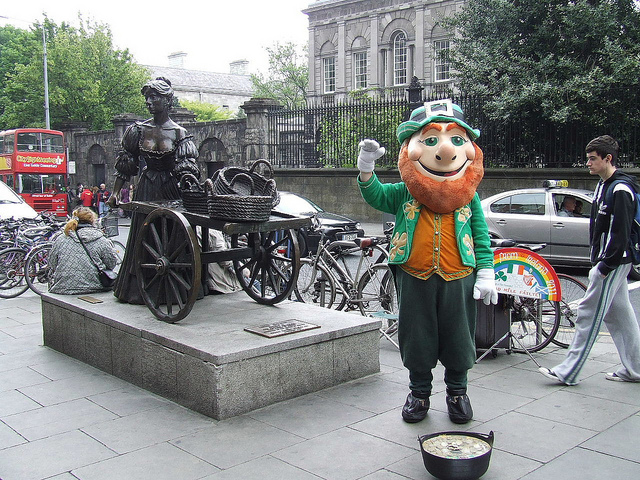
Size matters so much among opportunistic leprechauns that the one that hovers around the Molly Malone statue is enormous. His artificial head is about six times as big as his own. He waves his gigantic leprechaun arms awkwardly at passers-by and of late he has decorated his crock of gold with silver tinsel. The other day I saw him leaning against a lamppost on the phone, with his huge fake head under his arm. He didn’t look Irish, which made it all the more wonderful. He’s probably an economic downturn migrant from the BRIC area who’s heard that no one throws a recession session quite like the Irish.

It’s not all fun and games though. There are feuds on the streets; warring factions have developed. Resentment is building.

You can see why.

Way before economic opportunism was in fashion, an old man from Cavan had an idea. He decided to put on a tweed cap and a patchwork waistcoat and sit on Molly Malone banging on a badhrán. The tourists loved it. He’d motion to them to come sit beside him and encouraged them to take photographs. He even bought spare tweed caps for them to pose with in the pictures. Once, when I was in my first year of university, I pretended to be a German tourist just to get a picture with him. If somebody else tried to sit down on the statue beside him, he’d snarl at them and tell them to clear off. He had the kind of audacity I can only dream of.

The good old days


It may be easy to mark your territory when the property market’s booming but things have changed. A few weeks ago, I saw my tweed-capped friend outside River Island, patting his badhrán with a sour face. Two American tourists stopped to have a look at him and quick as lightning he beamed. After both of them had had a go of the badhrán and dropped a few euro into his cap, he pulled them closer to him. Pointing at the giant leprechaun parading around Molly Malone, he whispered conspiratorially, “See that leprechaun? Don’t bother with him; He’s a fake”.

Budgets aside, recessions in Ireland are pure Gold.

Also, if you find this post facetious, you can read a serious piece about my opinion of the Irish here.

Enda’s National Address goes down a storm

Curled up in a blanket with a cup of camomile tea at 9.30 to watch Enda address the nation. Nice and cosy. The anticipation was killing me during the weather. I usually love watching Jean Byrne talk about unsettled conditions but it wasn’t her place today. Talk about stealing Enda’s thunder.

Got the three-day summary anyway and then – hurray – grim-faced Enda appeared in his red tie. He looked tiny in front of those enormous flags. Wonder how it feels to be on a wooden chair with the weight of the nation’s deficit upon you. Did anyone notice the upside-down glass? Talk about half empty. Not a drop. You’d think he’d have got thirsty addressing the nation for that long, but these are the times we’re living in. Silver quill on the desk made it all very official didn’t it? I swear he was looking me in the eye the whole time though. Wonder if everyone got that. Might be a Mona Lisa trick they teach you in the Dáil.

Anyway, he was very fluent. Don’t care if he had it all on a screen because he was looking me in the eye. Told me I wasn’t responsible for the crisis. Relieved. We’re spending 16 billion more than we’re taking in though. Not so good. Liked the way he said “Eamonn Gilmore and I” – best of friends. Said they’d imposed losses on some bondholders. He forgot to say which. Ah well, there was a lot to be said.

And then, last thing I expected, he thanked me! For my “courage, character and sense of responsibility”. Ah Jaysus Enda. It’s the least I can do. Any time. You’re doing fairly well yourself, with all your kite flying and addresses to the nation.

Might be because I’m an English teacher now but really noticed the Taoiseach’s emphatic ‘B’s and ‘P’s. The way he said that lower rate of interest on “Bborrowings” will save “ten Bbillion” in time and that we have to “Bbuild on those first steps” and how “Ppublic sector Ppay”’s been cut. Kind of charming.

Said a few times he wished he didn’t have to say this but he does. Ah, Enda.

In fairness, he didn’t shy away from the serious stuff. It’ll take years to recover, we remain fragile, change won’t come quickly enough for many people out of work.

And after all that, still with steely blue eyes directed at me he says: “I am VERY OPTIMISTIC”. He wants to make Ireland the best small country to do business, to raise a family and to grow old”. Good on ya, Endo. Yes we can. But rather you than me.

Oiche mhaith now, Taoiseach. And for God’s sake, have a sip of water. You must be parched.

For Enda’s back story, click here.

Enda's red (ad)dress

The Mouse

One September morning in our poky kitchen, my father and I were enjoying an early brunch. He was spooning floating pineapple rings from a large glass bowl while I dipped some oatmeal biscuits into my peppermint tea. From the corner of my eye, I noticed something small and dark flitting across the floor, but the moment I turned in its direction, it was gone.

My father’s pineapple ring splashed unceremoniously back into its pool. “Did you see that?” he asked.

“See what?” I replied, wondering whether he was talking about the same thing.
“Something on the floor?”
“Yes! It was probably a Daddy Long Legs”, I told him.
He agreed and we laughed at my infantile terminology.

I thought nothing more of it and we continued to eat in amicable silence.

That September represented a new and unforeseen period of my life. I’d finished university the May before and was still at home, having failed in my attempts to travel and to find a job.

The upside to it all was that I was rather enjoying domestic life. I got to see a lot of my dad, and we’d developed our own little routines, like making mochas in the tiny steel pot which he’d had since university and listening to programmes on Radio 4.

Though I could sense myself regressing, I took solace from the fact that these moments at home were precious; that they wouldn’t last forever.

Throughout the summer, I had been indiscriminately applying for jobs but nobody would have me; the country was at a standstill. Then one day an enormous opportunity presented itself: The Irish Times was looking for an intern.

600 applied and I was in the final eight. I wasn’t holding my breath but I was devouring newspapers all the same and after a summer of uncertainty, a date for the final interview had at long last been set. Many of my conversations with my father went something like this:

“Dad, do you think I have a future?”
“Of course”, he said “You will become a literary lay-about just like me”

My father is the honorary editor of a history journal and spends much of his time cycling to and from the National Library to check if Major General so-and-so of the fifth battalion really did travel to Kinsale in 1752 as the Right Honourable Blogs’ diary of that date alleges. If he’s not doing that, he’s sitting in front of his laptop, painstakingly typesetting articles, which have arrived in his inbox from the eclectic collection of contributors he has garnered from around the world.

“Of course you won’t be rich”, he said, “but you will find a niche eventually”.

So went our conversations that summer and we revelled in the gentle irony with which we viewed our mundane daily existence.

Now that the summer had drawn to a close, the brunch we were enjoying in early September was my last before the final Irish Times interview, which was to take place the following day.

That evening, my father made an announcement.

“We have a mouse”.

“What?”, I said, already squirming.

He nodded solemnly. “Yes, I rather feared that’s what I saw in the kitchen this morning, but I didn’t want to scare you”.

“Ugh”, my mother sighed, from under her woollen blanket in the living room. “We’d better seal up the kitchen door so it doesn’t escape into the rest of the house”.

And so it began.

I refused point-blank to enter the kitchen the following morning and set off for my interview without breakfast.

I’m a vegetarian but that does not mean that I like to be invaded; particularly not by fast creatures, with long, thin tails, I told myself. After all, that’s why I chose to grow up with guinea pigs and hamsters rather than gerbils and rats. I further justified my over-reaction by telling myself that I was under enormous stress: what with a potentially life-defining interview ahead of me.

I arrived home that evening to bad news.

“We saw it in the living room”, my father said, grim-faced but full of resolve.
“It was incredibly fast”, my mother added gravely.

On the way upstairs, I quivered at every nook, convinced that the creature was about to emerge from hiding and crawl up my leg. I couldn’t bring myself to take out my furry slippers from under the hall table either, in case the mouse had taken refuge there. I shuddered and locked myself into my room.

I sat there and wondered about myself.

Two days later, things took a turn for the worse:

“It was in our bedroom”, my mother said “I saw it scamper behind the cupboard”.

She too was highly uncomfortable about the invasion.

Action had to be taken. My father got some traps.

My protest was pathetic: “Can’t we just capture it and free it humanely? Please

We could not, and I had some nerve if I thought that I could just sit there, being an hysterical and inert vegetarian, applying a guilt trip while they went to war on all our behalf.

Impractical, irrational and immature, I knew that I could neither see the mouse suffer nor capture it alone.

There had to be another way.

I made my way to the local hardware store, passing through shelves of creosote and weed-killer until I got to a section labelled “Pest Control”. Jumping with delight, I found exactly what I was looking for; I snatched it from the shelf and proceeded to the till.

I arrived home triumphant.

“I have a humane trap”, I declared.

“Huh?”

They weren’t nearly as enthusiastic as I was. They’d spent the day trying to catch the thing, which had now been spotted in several locations throughout the house, only to have me saunter back from my sojourn in the moral high-grounds, wielding a tiny cardboard box, which promised “easy capture and release”

They wouldn’t replace their multiple killer-traps with my one humane one, but agreed to use it as a supplement to their own.

The following day I spotted the mouse in my sock-drawer, and screamed.

I noticed though, that it was much smaller than I had expected.

It was a baby mouse, with a beautiful little face and a shorter-than-average tail.

I thought about the techniques for overcoming fears that psychologists recommend. One of them was called “mere exposure”: simply coming into contact with a fear can help alleviate it.

On Sunday morning my mother went to Church, having seen the mouse scuttle under her wardrobe.

By then our battle with the mouse was becoming somewhat of a farce; so much so that my father had placed our mouse-shaped pumice stone onto a trap in the living room the day before in order to startle me.

Fortified by courage and relaxed by the prepostrousness of the situation I entered the room. My father was in bed, reading a tatty book with a dull title.

“What’s the situation?”, I asked.

He lifted his nose reluctantly from under the book: “It has to be over there”, he said, motioning to the far corner of the room, “It definitely hasn’t left.”

With a sudden surge of courage, I ran to the kitchen and snatched the humane trap from where I had placed it just beside the door.

Returning upstairs, I opened the flap to the linen closet where scores of my mum’s dresses were hanging.

In the corner, half-concealed by a green velvet wrap, whiskers twitching and tiny ears erect, I saw it perched.

Any of the fear I had left drained from me in a flash. It was adorable.

We waved a scarf at it and it dashed. We dived and it squeezed past us in a blur. We put the hoover on and it didn’t move.

We laughed.

Mum came home and I retreated, expecting that we would have the little creature captured and released into the wild by lunchtime.

Later that day a voice called me from above.

“Kate, we have it!!! We’ve got it!! Come here!”

I rushed up, tripping on the pieces of cheese they had left in a trail across the floor.

My father, grinning, was holding the plastic box, where the mouse had become entrapped.

“There you go, it was your humane trap that did it in the end”, my mother conceded, smiling with a twinkle in her eye.

I took the box from my father and stared in at the little face, with its jet-black beedy black eyes peering back at me.

In those few minutes, as we sat there in my parents’ room, surrounded by traps, with clothes and cheese strewn around the floor and the tiny creature in our hands we felt closer to each other than we had for a long time. Somehow this little incident had brought us together: first through our nervous tension and then, when we saw the cute thing up close, in our shared appreciation of the ridiculous.

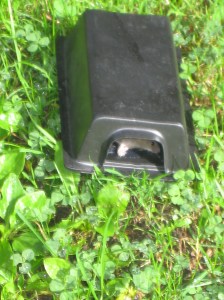
There was some sticky stuff on the base of the trap so the creature couldn’t run away.

“We’ll release it in the park across the road”, I cried, beaming at the idea.

“It won’t be long before it’s back!”, my father laughed as we were getting ready to go.

We were giddy with our success.

I ran upstairs to grab my camera so that I could record the moment of release. We got as far as the gate and I got my mother to take a shot of my father and me with our mouse friend.

Once in the park, I returned the box to my dad, to do the honours. We’d brought a pair of kitchen scissors with us so we could remove the top of the box.

Gingerly, my dad cut through the roof. The mouse, impaled on the floor, did not look happy.

“Not long now”, I gushed over it, still frivolous and light-headed with our victory.

My father placed the plastic container down on the ground.

Suddenly from behind, an enormous labrador came bounding towards us, barking madly. He had smelt a rat.

My instincts suddenly aroused, I growled and ushered him away, becoming a little embarrassed as I turned and saw his ten-year-old owner watching me.

The dog gone, the park fell silent but for some leaves, which rustled in the distance. We must have been there for only a few seconds but suddenly an uncertainty engulfed the air.

My father stepped back to look at the motionless mouse, stuck to the base of the box and after a while, he asked my mother to get him a sand scraper from the house.

While she was gone, I bent down, and looked more closely at where the mouse was stuck.

Attached to the base of the box, were not just the four paws, as I had thought, but the entire belly of the mouse, rendering it utterly immobile.

My mother returned with the scraper. Dad picked up the box again. With gentleness that stirred me, he attempted to get it under the mouse’s tiny feet.

It didn’t work. The gluey goo was too deeply ingrained into its silky-thin fur.

My heart was beating more quickly now.

The little body was beginning to twist in pain. My father’s expression changed: scraper in hand, he too was twinging with discomfort.

As the mouse moved, more of its fur became dislodged.

I began to see blood.

“Stop”, I yelled, hopelessly.

I had to look away. My father’s eyes were full of pain, as he continued to scrape at the little body, wreathing in agony.

An autumn chill was in the air.

The last I saw of the creature was its outstretched neck and taut, mangled, tortured body being ripped away from the plastic box.

It haunts me still.

In the days, weeks and months that followed, nothing has invaded me like this image. We had some other mice after that which were killed, humanely by guillotine. I got a rejection letter from the Irish Times some weeks later and didn’t feel much. And for all the bloodshed I have seen in the news, and the depressing images of suffering on the streets around me, nothing disturbs me like that image, or sends a pang of guilt so accute gushing through my entire body.
KateKatharina’s Online Arabic Tutorial

I wish I could lie to you but I can’t. The Arabic alphabet has 28 letters, a large proportion of which change shape according to their position in the word. A select few are awkward and refuse to join with letters to their left. Many have the same shape when in the beginning or middle of a word but have a different number of dots above or below them. There’s a special symbol to let you know the absence of a vowel sound. In case you were, you know, in doubt.

I’m just back from my second class and am rather disappointed that there has been no opportunity to practise speaking, given that learning the alphabet seems to take an eternity. For this reason, I’m going to teach what I’ve learnt in the way I would have liked to learn it. I’m really not one to say a bad word about teachers (believe me, I’ve a vested interest) but as one of my classmates mumbled after class “she’s awful serious.. she’d want to ligthen up” and of the homework “It’d put you to sleep alright”.

To get us started, watch this. I dare you not to feel a smile creeping uponon your lips.

The only two things you need to remember from this video:
1.That little boy’s adorable voice (Bieber who?)
2.that Arabic has three vowels, which correspond loosely to ‘A’. ‘E’ and ‘U’. They’re a bit like fadas in Irish. For ‘A’ you put a dash above the letter; for ‘E’ below and for ‘U’ its a little sign that looks like a number 9 above the letter. That’s why in the song they sing ‘A, U, E, Be Bu Beey’ etc.

Okay, enough about the alphabet. (For my sake, not yours).

For those of you who don’t know me (I’m looking at the seven people who googled “smail” and were referred to my blog today. Though on second thought, perhaps it was was just one massively enthsiastic malacologist.)

“ismee Kate Katharina”

Say it.

Go on.

Now tell me who you are.

ismee= I

Your name=Your name

Easy Peasy Lemon Squeezy.

Now, Kayf- haluk? How’s life?

I’d hate to pre-empt you but are you feeling fine, thank God? And are you male? Then say this:

Tayeb al-hamdu lelah

Are you feeling fine thank God but worried, because you are female? Then say this:

Tayeba al-hamdu lelah.

Same? Nope. All adjectives (as here ‘fine’) have genders. How do we make an adjective feminine?

Add A.

Hmmm. There’s a problem, isn’t there?

Some of you are not fine. Some of you are tired. Fine. It’s a late blog post. You have an excuse.

Say this if you’re a man:
Ta-ban, which the stress on the ‘ban’.

If you’re female, say….???

Come on, you know this one.

Yes, you got it Ta-ban-a.

I (ismee) really am Ta-ban-na now..

So I guess I should take my leave from you and say

Mass-salama.

Go on, reply to me. It’d be rude not to.

*********************************************************************

PS- Remember ‘share the luv’ on bebo? Well my lovely blogger friend Clariice over at Reise meines Lebens has shared the luv by nominating me for a Liebster blogging award.
I’m not sure if this is an actual award or simply a way to get bloggers to share each other’s work but I’m going to take the opportunity to link you to some blogs that I really enjoy.

1. Comeheretome: UCD history students writing interesting short pieces about cultutal landmarks. They often include scans of really interesting historical documents they have access to. Warning: also write about football.
2. Inside the brain: Love this blog. Irish neuroscientist summarises latest research in his fields in layman’s terms
3.Broadside New York-based writer and author of Malled: my unintentional career in retail writes short, poignant pieces in beautifully crafted prose
4. Kat Richter: Serial-dater from Philadelphia. What more can I say? Addictive and witty.
5. Last but definitely not least: Clariice herself. She writes wonderful poetry in language that I love. It’s totally unique in that it’s sparse but also satisfyingly clunky. Her words are real, soulful and off-beat.

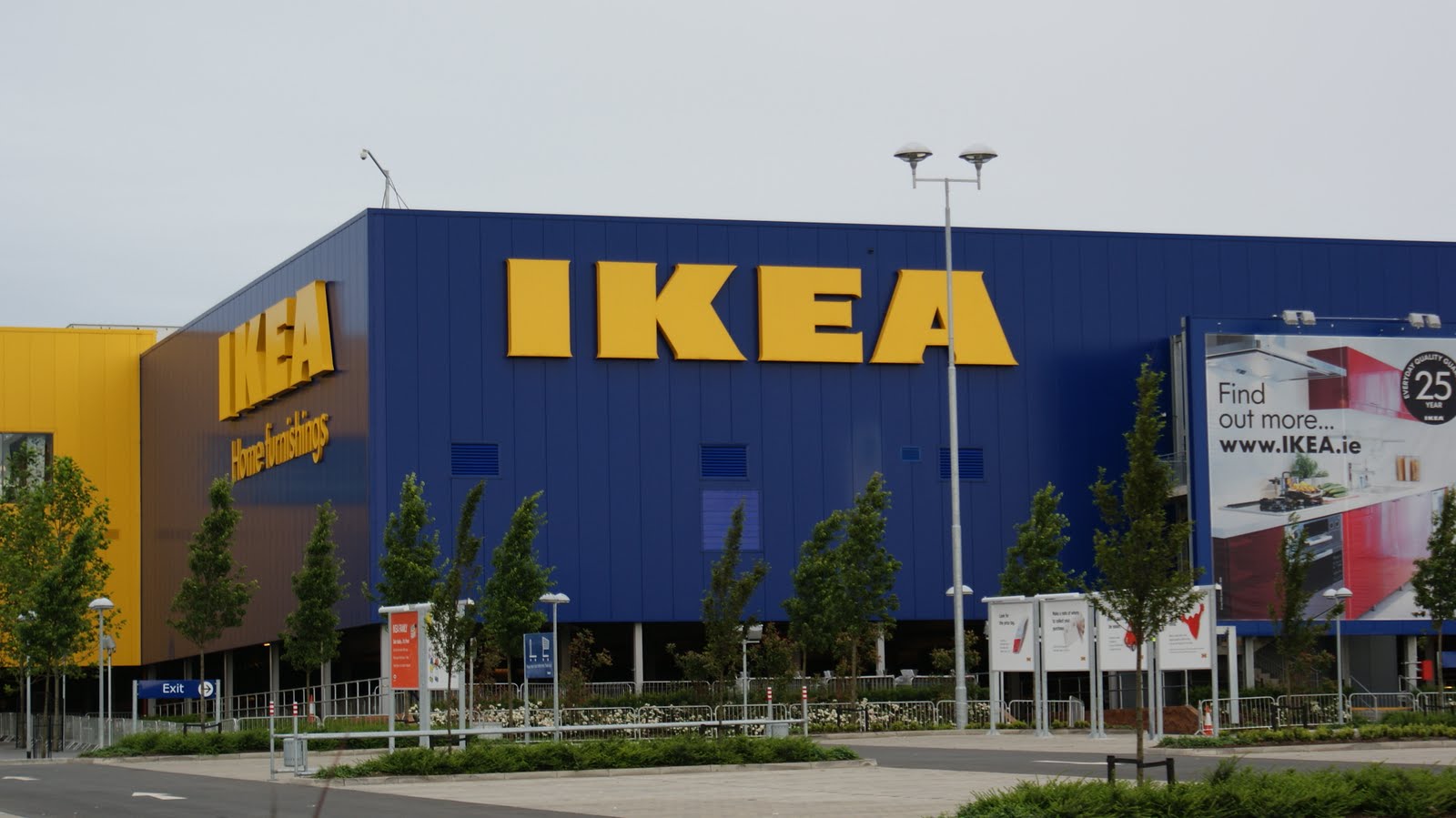
Ikea and Ireland: a practical love affair

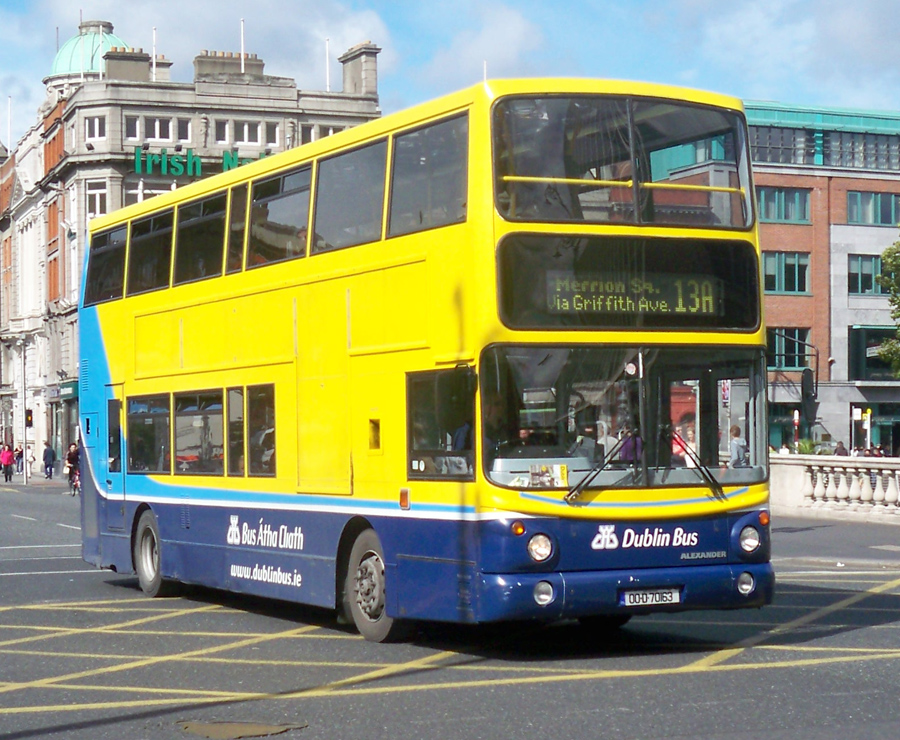
On its way to the blue and yellow superstore in Ballymun, the 13A (officially known as the “Ikea Bus”) passes three horses grazing lazily on a patch of grassland. At the entrance, a Swedish flag flutters in the breeze alongside the tricolour and opportunistic taxi drivers line up to ferry the furniture of impulsive bus passengers.

Inside, The Stereophonics’ Have a nice day provides a soft soundtrack to three Corkonian ladies who are perusing a kitchen/living room display unit. One of them is pointing at a collection of cream-coloured cookie jars: “they’re gorgeous, aren’t they?” she asks her companions, but gets no response. One of them is occupied with opening and closing the door of a bookcase to reveal again and again the flatscreen TV it conceals. “Look how it slides” she gasps in the direction of the third, who is regarding a navy shelving unit with a little suspicion; “I wouldn’t be mad about the colour”, she says, adding “it must be the fashion now”.

Around the corner, in the bathroom display area, a father has one hand curled around the bar of his shopping trolley and the other clasped to a lead attached to his toddler. Inside his trolley is a tiny sleeping baby lying flat on its back beside a large plastic toolbox. A few metres away a couple kissing by the fabric stand is separated by a middle-aged man in glasses, who strokes a piece of material and casts a thoughtful glance in the direction of the sofas in front of him.

It’s 3 pm on a Monday in June and Ikea is awash with customers. A cursory glance about the car park, which is decorated with pretty picnic table displays, reveals that shoppers have come from far and wide. At least one third have travelled from outside of Dublin. There are a particularly large number of registration plates from Cork, Kildare Longford, Meath, Kerry and Wexford and the accents inside the store represent this diversity. It’s far from just Irish accents that can be heard though. In the kitchen display area Polish children play with saucepans and mothers soothe their children with cooing foreign sounds.

How can it be that in Recession-depression Ireland, shoppers are coming in their droves to buy flat-pack furniture and frozen cinnamon buns? In the 12 months leading up to last August, Ikea Ballymun made a pre-tax profit of €11.4 million, making it one of the most profitable stores in Europe.

Ikea seems to be ergonomically designed to thrive in a recession. Its emphasis on accessibility and transparency as well as on low prices appeals to a public, which has lost faith in a politics dominated by wastage and concealment. In sum, Ikea defines “customer friendly”.

The entire store is constructed with the busy, multi-tasking customer in mind. Underneath the escalator at the entrance are a number of wheelchairs so that older and less mobile customers can navigate the store with ease. At every corner you can pick up a measuring tape, note-cards and pencils to keep track of your shopping. It would be easy to become frustrated trying to find your way through such an enormous store but measures have been taken for that eventuality too. You can find a map at every turn and each time you are about to enter a new section a sign helpfully vouches safe a missive along the lines of “By taking this shortcut you will miss workspaces, kitchens and dining.” (Heavens forbid.)

In Ikea, customer-friendly means “family-friendly”. On the ground floor, an enormous play area (“Smålan”) provides children with a huge quarter in which to expend their energy. It’s supervised and free. In the restaurant there are microwaves available for parents to heat up their babies’ bottles. Adjustable high chairs are available for toddlers of all sizes and there’s even a quiet nursing area for mothers who wish to breastfeed their babies in private. There’s a fold-out changing table in the downstairs toilet too.

There’s a great emphasis on communicating the manufacturing process to the consumer. In the living room display area for example, there is a large glass box housing an armchair. Attached to it are two mechanical levers which press again and again into the seat and back of the chair. Though it looks like some bizarre modern art fixture, the sign above it explains that this chair, like all sold in Ikea is undergoing quality testing: “Only if it withstands the pressure and still functions as well as before is it approved”.

As if furniture weren’t enough, the food is customer-friendly too. The “meatballs for all” mantra is sincere. You get a plate of 10 for €3.95 and for 50 cent you get a cup of coffee and a cinnamon bun. The soup of the day is less than two euro and you can be full up for less than a fiver. From the window of the restaurant, you can see what remains of the Ballymun tower blocks and on closer inspection, a cluster of mobile homes and caravans amidst some unwanted furniture strewn in a rubbish heap.

As they make their way to the tills, the Corkonian ladies stop to admire the pink and white orchidaceae and agree that with quality stalks like those they’re “dirt cheap”. They pick up a pot each and proceed to the checkout.

“Face of Ireland” Contest makes Farce of Ireland

Today Waterstone’s Bookshop announced the closure of its two Dublin branches and the Sunday Tribune newspaper went into receivership. I spent the day in my bear onesie; having spent an unfortunate night vomiting. The news about the Waterstone’s closure reached me via text message from my dismayed, book-selling LSB who had just finished work. Nursing a saline medicinal solution and rather cosy in bed, at the moment my phone beeped, I had just finished reading Stefan Zweig’s The Post Office Girl; a story of cultural and ideological tragedy that depicts the epic and transformative power of money.

With these thoughts at the back of my mind, I got around to researching the “Face of Ireland” beauty competition, which a friend of mine told me that she had entered last week. The contest, which I had not heard of before is now in its fourth year and promises the successful candidate “a year of glitz and glamour”.

But both come at a price. If I have understood the terms and conditions of this dubious divafest correctly, I calculate that all candidates that reach the grand finalé will have forked out €750 for the privilege. The website stipulates that: All candidates who are selected for interview will have to pay a small fee for the upkeep of the competition. I know from my friend that this “small fee” happens to be €150, a sum with which you could procure at least ten great works of literature from Waterstone’s bookshop. In an uncanny commercial coincidence it just happened that every girl selected for interview also got through to the next round. My friend opted out at this point and in an indignant text message which I sent her from Penneys in O’Connell Street I ensured her that she had done the right thing.

Should she have progressed further through the competition, she would have been required, in accordance with the terms and conditions, to sell at least 10 Tickets at a costing of €60 each for the semifinal show. This year’s Face of Ireland, Louise from Donegal blogged happily of the night of the grand finalé that Between cat walking, interesting questions and a few unexpected party pieces an entertaining night seemed to be over in a blink! I know it’s a cliché but to have made it that far, every single one of us was a winner!.

I suppose with a loose interpretation of winner, any achievement is possible. In a society which has lost its money, its bookshops and its most educated people the success of this kind of vacuous endeavour makes a farce of us all. I have a lovely memory of sitting upstairs in the coffee shop of Waterstone’s on a spring afternoon during my first year of university. Our tutor had taken us there to discuss Structuralism over a cup of hot chocolate. Soon enough the Deconstruction will begin at that site and the future Faces of Ireland and their fans will stand proud, pouting over it all.