OMG finding a flat in Berlin is sooo hard (Part 1)

Some people think looking for a flat is stressful.

I don’t.

I love poking around strangers’ homes.

LSB and I have been doing a lot of it lately.

In fact, it’s turned into quite a nasty little habit.

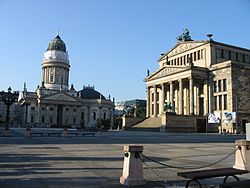
It began last month, when I developed an epistolary relationship with an English gentleman named Mr Humphreys. He was advertising an apartment just off Gendarmenmarkt, one of Berlin’s prettiest squares.

Mr Humphreys had bought the property for his daughter while she attended university. Since she had now completed her studies, he was looking to rent it out.

But poor Mr Humphreys was ill and his treatment meant he was unable to travel to Berlin. He was simply keen to rent out his beautiful, affordable apartment to a young couple just like LSB and me.

“You seem to be a very nice person,” Mr Humphreys wrote to me, adding “I can assure you we will not have any problems.”

Mr Humphreys had a formal, near-native prose style. He offered to send me the keys to his apartment. The rest, he said, would be taken care of by a letting agency.

source: wikipedia.org

source: wikipedia.org

There was just one small matter. In exchange for mailing us the keys, he required €1,340 to be transferred to his account – so we could “trust each other.”

I thought I might trust Mr Humphreys more if he agreed to Skype with me. But as well as being in poor health, Mr Humphreys suffered from shyness. Ideally, we would just transfer the money. After all, it would be immediately refunded if we decided not to take the apartment.

While I was corresponding with Mr Humphreys, LSB decided to check out our future address. It was a Chinese restaurant.

And as much as it pained me, I concluded my correspondence with Mr Humphreys.

LSB and I then narrowed our search to flats which existed.

(Part 2 coming soon!)

A stitch in time

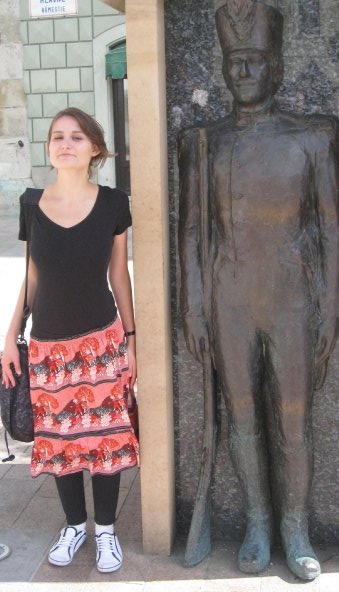
The last time I visited Frau Bienkowski I was wearing a red cotton skirt. The pattern featured lots of identical girls and boys holding hands and strolling past apple trees.

“What lovely material,” she said, motioning for me to come over so she could have a closer look.

“Yes, I love it,” I said. “But the problem is that the elastic at the waist has come loose and I’ve got into a terrible habit of tying it into an ugly knot to stop it falling down.”

“Bring it to me next week and I’ll sew it up.”

“Oh no..”

“Do. I can’t guarantee that it’ll be pretty but it’ll do the trick.”

I called my mother on Skype. I was deeply ashamed of my elastic knot. It stood for both incompetence and laziness.

“You should let her do it, Katzi,” my mother said. “I’m sure she’d love to do something for you.”

So last Friday I went to the Turkish market. And as well as purchasing six avocados and three mangos, I bought some elastic and a little sewing kit.

“Did you bring the skirt?” Frau Bienkowski asked the moment I entered her room last Saturday.

“I did. And pears too.”

“Good. Now, let me have a look.”

I handed her the skirt and rummaged in my bag for the sewing kit and the elastic.

“Can you thread me a needle?”

I tried but Frau Bienkowski wanted a double thread.

I tried again.

“Oh but that’s a little too short, Katechen,” she said.

I tried a third time. This time Frau Bienkowski approved.

“Good,” she said. “Now, how about you either read to me or tell me about your week while I get a start on this.”

I could have told her about my week, which was rather eventful, but I got distracted.

Frau B’s hands were flying. She tore out my ugly knot of elastic and started weaving stitches furiously. The waistband was restored in minutes.

Then she asked me to put my finger and thumb on the flap where she’d placed the last stitch and told me to come over to her armchair so she could measure my waist.

Her hands moved the elastic easily about my waist.

With a few marvellous swoops, she sewed it in. She wasn’t even looking at what she was doing. When she saw how astonished I was, she said: “But Katechen, this was my job. You never lose the feel for it.”

My red cotton skirt used to live at the bottom of a large wicker basket. It shared its home with an enormous plastic nose, several berets and a pair of bee’s wings. I used to match it with ugly purple beads when I pretended to be the Queen of England.

Wearing the skirt while inter-railing in the summer of 2009.

Wearing the skirt while inter-railing in the summer of 2009.

With the terrible dawn of adolescence, my dressing-up basket was cast into the bottom of a basement wardrobe.

Years later I re-discovered it and found that the skirt’s loose elastic made it a one-size fits all. The queen’s skirt had turned boho-chic.

I took it with me when I went inter-railing in 2009 because it was light and didn’t crumple easily. I also fancied myself as some kind of honorary gypsy in it; a fantasy I indulged in while gazing out the windows of the slow trains which hauled me through eastern Europe.

Frau Bienkowsi, her fingers moving like those of a master pianist across a keyboard, broke the silence.

“Katechen,” she said. “I don’t want you to say Sie to me any longer. “I’m not Frau Bienkowski any more. I am Lotta.”

LSB moves to Berlin, starts blog

LSB moved to Berlin, just like that.

One moment we were waiting for the 16A in grubby, familiar Camden Street and the next we were on the U7 to Spandau.

Berlin is different with him here.

I’ve had to stop sleeping in the shape of a large star fish.

I’ve had to allow cheese in the fridge.

And I’ve started becoming one of those people who complains when the lids of shampoo bottles aren’t replaced after use.

I used to spend my evenings munching Rittersport chocolate, scrolling through my Facebook feed and contemplating my existence.

Now we do that together.

Sometimes LSB laments the fact that he is arbeitslos.

The other day we saw a happy-looking postman in a green uniform on the subway. He was on a poster, recruiting.
I told LSB that my best ever job was being a postwoman in Rathgar in the run-up to Christmas. I got a bike and men’s overalls and everything. We noted down the number.

Today we went to an enormous Turkish market. First, I bought a sewing set, some elastic and six wooden buttons.

copyright: LSB

copyright: LSB

LSB advised me to haggle but I refused. Not for the first time that morning, I cursed my tentativeness. Instead, I slunk away from the rude man behind the stall to another whose face I preferred. He under-charged me for the buttons.

I felt completely vindicated.

I don’t need painted wooden buttons. But sometimes I fantasize about making my own dresses.

I have similar daydreams of baking apple pies and looking adorable on a bicycle.

Next I bought three mangoes, six avocados, two courgettes and a punnet of pears.

I was so pleased with my purchases that I dragged LSB into Kaiser’s so we could calculate how much we’d saved.

This evening, LSB told me gently that I hadn’t stopped talking about mangoes all day. I asked him if he understood what a bargain it was to get three mangoes for a euro and six avocados for two.

He said he did but his eyes told a different story.

They were glazed from having been at a computer for too long.

I looked at him carefully.

I might not be a doctor but I’ve often been praised for having a physician’s intuition. I knew immediately that he had joined WordPress.

As a savant, LSB naturally upstages me in most respects. But now that he’s started a hilarious photo blog, I’m more in his shadow than ever.

To make matters worse, he’s even threatened to start posting about “LSG.”

“Had he ever said he loved me?” she wondered.

“Last night I was lying awake thinking about my husband,” said Frau Bienkowski. “And I wondered whether he had ever told me that he loved me.”

“I thought back and realised he never had,” she continued. “I think he would have considered it unmanly.”

“And did you ever say it to him?” I asked.

“No. I think if I had asked him, he would have replied, ‘haven’t you noticed?’”

“Lots of men aren’t good at expressing their emotions,” I said.

“Yes,” she said. “And he did bring me flowers.”

I looked over at the windowsill. The carnations, whose longevity has astounded us, were now wilting.

“Do you think I should get rid of them?”

“I think it’s time,” I said.

source: wikimedia.org

source: wikimedia.org

Our conversation meandered.

Frau Bienkowski told me about a carer at the home who earns just €1000 a month. She is a Lithuanian law graduate in her fifties.

We talked about the possibility of Germany introducing a minimum wage, and what the outcome of Sunday’s election might be.

Frau Bienkowski follows politics closely. Last week, I sent off her postal vote.

She’s voted for the same party all her life.

Frau Bienkowski thinks Merkel is machthungrig – hungry for power- but also “ruhig” – or calm.

Even though Germany is in a good place, the poor are getting poorer.

Frau Bienkowski is anxious about LSB finding a job. He has been here for just five days. I told her that he was at home learning German.

“He’s diligent, is he?” she asked.

“He is,” I said. “He’ll find work. But for the moment, he needs to focus on learning the language.”

“Absolutely – there’s no point worrying about it this side of Christmas.”

Frau Bienkowsi says she pities young people out of work. It was the same in 1928, she told me. Unemployment was rampant.

Then Hitler rose and things changed. A man Frau Bienkowski knew had been out of work for ages. Then he got a job building a motorway. His wife was delighted.

Hitler re-built the army, even though he wasn’t allowed.

Men were kitted out in brown uniforms and had work again.

Frau Bienkowski got married just before the war broke out. She got pregnant, then her husband was conscripted. In 1940 her son was born.

“I prefer not to think of the time after the war,” she said. “It was so hard. We had no money.”

She will never forget the generosity of the Americans during the blockade.

“We gathered at Tempelhof airport,” she said. “And they dropped down packets of food for us.”

Then Frau Bienkowski wanted to talk about her winter clothes. They’re stuffed in a large box because her summer wardrobe takes up all the cupboard space.

We agreed to leave re-arranging the clothes until October in case of an Indian summer.

I told Frau Bienkowsi that LSB has complained about my many clothes taking up all the cupboard space and about how his t-shirts hang neatly, discontentedly from the top of the wardrobe door.

She laughed, her eyes lighting up with amusement, and told me to send him her love.

Merkel versus Steinbrück: the owl versus the rhinoceros

Merkel and her Social Democrat challenger face off in their first and only TV duel this evening. While there’s little chance of the debate turning the tide, it’s an opportunity to watch two very different political animals in action.

If the German election were a poster competition, the Left Party would win. Instead of presenting awkward close-ups of candidates superimposed onto blurry cityscapes, it’s opting for punchy tabloid-style headlines.IMG_7615[1]

“Sharing is fun,” one of their posters reads – below it: “Tax the millionaires!”

“Collect a guaranteed pension of €1500 instead of bottles” says another, referring to the impoverished retirees in Berlin and elsewhere who spend their days shining torches into public bins in the hope of finding bottles they can recycle for cash.

For a traditionally marginal party, polling at around seven percent, Germany’s Left is punching above its weight. But the fact that its posters stand out for addressing concrete issues shows how consensus-based German politics has become. It’s also an indicator that people not policies will determine the outcome of the election.

Peer Steinbrück, the Social Democrat opposition candidate, is all too aware of this.

He’s facing two major challenges. The first is to compete against the overwhelming personal popularity of the chancellor. The second is to convince the public that his party offers a stark contrast to hers.

Germans do not get to vote directly for their chancellor but if they did, 54 percent would choose Merkel while just 28 percent would go for Steinbrück.

Merkel, dubbed “Mutti” – or “mother” – by the German press is viewed as a competent, unflappable leader and above all an excellent crisis manager.

Steinbrück on the other hand, is considered highly excitable. He does not enjoy an easy relationship with the media. His PR blunders include suggesting that German chancellors do not get paid enough and that Merkel’s popularity is boosted by her gender. They make for good headlines, particularly when taken out of context. In the case of politicians’ pay, Steinbrück was having a dig at bankers’ salaries and in remarking on Merkel’s gender, he was attempting to compliment the chancellor on her success in a male-dominated world.

But Steinbrück, whose passion can verge on belligerence, is less self-assured than his rhetoric would suggest. At a party event in June he became lost for words and had to fight back tears when arrested by a question about his negative media treatment.

That said, Merkel’s main opponent is determined not to build up a reputation for being too sensitive. In a television interview with the Münchner Runde, he said his favourite animal was a rhinoceros, which he described as a “very thick-skinned animal.”

Merkel has not revealed whether she has a favourite animal. If one had to pick one for her though, the owl – quiet, watchful, calm, or the otter – unpretentious and resourceful – would be good options.

The chancellor’s ego-free governance has helped her to be held less personally responsible for potentially damaging issues. Allegations about close government co-operation with the NSA and a scandal involving former president Christian Wulff have not dented her approval ratings.

The unfortunate truth for Steinbrück is that is public persona is only half the battle. Most crippling to his campaign is the widespread contentment among Germans. At least, among those with the most voting power.

There is one large and significant German demographic which does not enjoy a good lot, even when compared to their European counterparts. They are low-skilled workers.

The working poor and the retired working poor were on Steinbrück’s mind when he unveiled his 100-day election plan earlier this week.

He’s vowed to introduce a nationwide minimum wage of €8.50 an hour and to put a cap on rent increases in the first 100 days of his governance.

Merkel opposes a nationwide minimum wage on the grounds that keeping wages down has kept people in work. At present, those earning less than a so-called “Existenzminimum,” –a working wage receive a boost from the state to cover their employers’ shortfall. Critics say this encourages bad employers and gives them a competitive boost over those offering a decent wage.

But it was Gerhard Schröder – Merkel’s Social Democrat predecessor – who brought in the labour reforms which expanded the low-wage sector. His “Agenda 2010” plan offered businesses the chance to hire “mini-jobbers” and temporary workers. That cut unemployment and caused a boom in low-skilled, low-paid work. The policies got people back to work but increased the number of working poor and those taking on second and third jobs to make ends meet.

Steinbrück’s plan has boosted his approval ratings slightly but he is still trailing far behind the chancellor.IMG_7618[1]

Those struggling to make ends meet might be more convinced by the Left Party’s confident promise of: “Enough with the waffle!€10 minimum wage now!” which they see plastered on their local lampposts.

Tonight’s television debate might not be one to turn the tides but it’ll be an interesting face-off between two very different political species: the owl and the rhinoceros.

When life and art collide

I went to see a one-man show at the Edinburgh Fringe festival this week. The performer’s name was Alain English and his show was advertised in a slim booklet which listed all the events you could go to free-of-charge.

The three-line blurb mentioned that English had Asperger’s Syndrome and had written a book about his experiences.

As I was entering the little venue at Cowgatehead, a man loitering outside handed me a flyer. It was for the show I was about to see.

“Thanks!” I said. “This is the one I’m here for.”

The man looked sideways past me. It was his face on the flyer.

I took a seat in the third row of the theatre and for a while I was alone. Then a middle-aged couple arrived and sat across from me. They were followed by two men, one of whom was tall with bleached blonde hair and had red-painted fingernails.

image source: myspace

image source: myspace

And that was it. An audience of five.

Alain English, who has a wide forehead and bulbous eyes, entered the room and headed straight for the back corner of the stage, where he turned his back to the audience, raised his shoulders and took a deep, audible breath.

Then he whipped around, charged to the centre of the stage and began to shout poetically. Mostly about what it felt like to be overwhelmed by conversations. They were like blisters bursting in his brain, he said.

Then he cut off his poetry and began talking conversationally. It was still scripted but the effect was almost off-the-cuff. He said that as a child he lived entirely in his imagination, where he resided as a superhero. When he started school he categorised his male classmates as either heroes or villains. The little girls became princesses or damsels in distress. He was – he admitted- both bullied and a bully himself. He just didn’t quite get the world. Or maybe it didn’t get him.

Then he launched back into poetic language.

English continued the show like this – performing dramatic bursts of poetry punctuated by what was essentially his own biography.

Alain the awkward child grew into Alain the frustrated, isolated adolescent. But he had a solicitous mother who – having seen her son transformed while playing a role in an amateur dramatic production- enrolled him in theatre school.

There he met his teacher and long-time mentor, Annie Inglis, who believed in him. At theatre school he felt free, yet outside he remained constrained and unhappy.

Receiving a diagnosis of Asperger’s Syndrome changed little and he was amazed to find that his beloved Annie Inglis knew about it before he did. I’m a professional, dear she said simply.

Alain dreamt of achieving fame and fortune as an actor. But people advised him to study something useful at university. Something he could “fall back on.”

So he did – and performed in plays in his spare time. But things still weren’t right. He discovered alcohol, then depression. On the closing night of one of his performances, he got drunk, came on to another actor’s girlfriend, almost got into a fight and spent the rest of the evening crying in the toilet.

He worked in boring temp jobs and kept getting fired for being odd.

He went on the dole but had to fight to keep his benefits. His father retired and with it went Alain’s financial back-up.

Then his beloved Annie Inglis died and the hole in his life became yet bigger.

Life, he seemed to be telling the five of us who had now been with him for an hour, was rather disappointing.

And he was running out of things to fall back on.

But then he began to roar again. And this time it was poetry.

“There’s this myth about being an artist created by the media. It’s that either you are famous or you are nothing. That unless you’re a celebrity, you don’t count for anything.”

“That’s a fallacy, a distortion,” he spat.

I shifted in my chair.

“This is the truth of a real artist’s situation. It’s not the fame but the process of artistic creation. That’s the real reason we do what we do. This is how we connect with the world around us. THIS is how we live.”

The tiny theatre was suddenly electric.

“Fall FORWARD on your failures, as well as your successes .. Fall forward on your own terms and no one else’s!””

“Don’t fall back, fall FORWARD. …” he yelled at the five of us.

Silence. And then we clapped like mad.

“Thank you. Thank you. Thanks so much for coming,” he said. “I, er, don’t have a hat to pass around. But I am selling some of my CDs with my poetry.”

The man with the red-painted fingernails was first out the door to buy the CD and have a chat.

I was still inside the theatre as I heard him say, “That was the best show I’ve seen at the Fringe.”

“WHAT?!” Alain roared from outside the door.

The couple across from me and I exchanged a smile.

“I’m serious mate, you made me cry,” said the red-nailed man.

Alain may not be the best poet in the world but that day, he sold five CDs to an audience that had been treated to something rarely authentic.

Familienfest 2013 Part 1

The train journey to Familienfest 2013 was hot and sticky. I got a seat in the bicycle carriage opposite a large dog with a sad, deformed paw.

My mother met me at the platform in Regensburg. She was so tanned that earlier, when she was in the health-food store buying vegetable spread, the cashier had asked her where she’d been.

“Ireland,” she’d said.

We ate mini dumplings for dinner and then my mother said, “Kate, we really need to rehearse.”

We darted into the next room and she took out some pages from a plastic pocket.

“These are yours,” she said, handing me three sheets containing typed verses. Beside every second one she’d written K, which stood for me.

We began to recite.

“You must speak slowly and dramatically,” my mother said.

I did.

“Excellent,” she said.

After all, it’s not every day you deliver the gift of Bavarian citizenship to your husband and father through rhyme.

Then we practised singing the Bavarian anthem in harmony.

In just a few hours, Familienfest 2013 would officially open and there would be no excuse for tumbling over words or singing off-key.

My father had been due to arrive any minute. But then I checked my phone to find he had texted to say his plane had failed to take off.

My mother’s faced dropped as the unspeakable possibility sunk in that he might not make it.

But all was well. It was just some technical fault. They changed planes. All going well, he would be in Regensburg by midnight.

We killed time by examining our props.

image:www.katekatharina.com

image:www.katekatharina.com

When Final Fantasy 7 turns real

A while ago I was working on a story about poverty in Germany. I found out about a place called Kaffee Bankrott, where people go to get cheap meals and emergency shelter.

I went there one grey and humid afternoon. On the way in, a group of young men speaking a foreign language looked me up and down. I smiled at them stupidly. I always do that when I’m nervous.

The cafe was full. Some people looked down-and-out. Others were in suits. Everyone was staring at me.

There’s something despicable about walking into a place like that and telling people that you’re a journalist – working on a story about poverty.

image source: http://www.strassenfeger.org/archiv/topic/21.kaffee_bankrott.html

image source:www.strassenfeger.org

But that’s what I did – I approached an elderly man with a long beard.

“No,” he said.

I looked at his friend.

“No.”

But something about my polite response to rejection must have softened them.

The first man made a joke. “That guy’s a millionaire,” he said, pointing to his shabby companion. “He’s not what you’re after.”

I laughed. “That’s another story then,” I said. “I’ll be back for it!”

I began circulating again. I am relatively good and identifying an open face. There weren’t any here.

But then I spotted a blonde head bent over an A4 pad. A middle-aged woman was sitting alone, smoking and writing furiously. I was drawn to her like a magnet.

I told her who I was, what I was doing, that I was Irish. The latter is a bad habit I’ve developed so that I seem like more of an outsider. It cushions the blow when you act like an idiot.

“Well then we can talk in English,” she said.

I was too stunned to ask why she could speak perfect English and why it sounded as if she’d learnt it in America.

We made an arrangement to meet the following week.

This is the write-up of the interview which was published in an English language broadsheet last month.

Café Bankrott in Berlin’s Prenzlauerberg district provides cheap meals and a place to stay for people in need. 49-year-old Astrid Baty comes here nearly every day. She gets a coffee, takes out a notepad and pen, lights a cigarette and begins to write, furiously.

Her stories are based on the Final Fantasy video game series. But, she says, “I could easily write a book about my own life.”

Astrid Baty was born in Bochum in western Germany and grew up in the state of Saarland on the French border. After she left school, she trained to become a painter-decorator. There were 8 girls and 240 boys in the class. She didn’t find work in the area so instead got a secretarial qualification. From 1983 to 1990 she lived in the south-western state of Baden-Würtemberg and worked as an office clerk to a broker.
Then at the age of 26, she moved to the United States, where she was to stay for the next eleven years. Within weeks of arriving, she had found a job. She worked as a cartoonist, drawing for small newspapers, as well as for the Marvel company.

“When I arrived, I didn’t speak a word of English,” she says. “But within three months I picked it up. “I read the same Stephen King novel page-by-page in German and English.”

In the more than a decade she spent in the United States, Astrid Baty was never out of work for more than two weeks.

“It helped that I was willing to move 3000 miles,” she says, laughing. She lived in New York, Florida, Los Angeles and Oregon. Her favourite job was with the Salvation Army, helping victims of the Los Angeles earthquake.

source: finalfantasy.wikia.com

source: finalfantasy.wikia.com

In June of 1996, Astrid Baty got married. Five years later however, the marriage broke down. The collapse of her relationship and the election of George W. Bush were behind her decision to move back to Germany. “I began to get the feeling that people who were not born in the US were beginning to be pushed aside,” she says.
Back in Germany, she was offered a job with Lufthansa. “I was going to work at the counter because I had two languages,” she says. “But then September 11th happened and that was the end of that.”

Since then, life has been a struggle. She returned to Saarland and worked in a so-called “mini-job” cleaning a bakery, which paid €400 a month and supplemented her unemployment benefit.
But the job was humiliating. “I was the only one who’d come in every day,” she says. “Eventually I quit the job. I’m not a slave.”

She continued her job hunt but to no avail. “I always get the same response – we’ll call you if something comes up.”
The problem, she believes, is not lack of qualifications, but her age. “I’m not 25 and I don’t have the figure of Claudia Schiffer,” she says.

Still unemployed, Astrid Bates moved to Berlin in 2009. “Saarland was too small,” she says. “Berlin was like New York. I thought there would be more possibilities there.”
Her big hope was to get a job at the new Berlin-Brandenburg airport, which was due to open in 2012. But that project has been plagued by delays and the opening date has been pushed back indefinitely. “It won’t be open until 2075!” she says, chuckling.

Unable to support herself, Astrid Baty ended up on the street for a short time, before somebody told her about Café Bankrott, which is run by the Strassenfeger street newspaper group. The organisation provides emergency accommodation and Astrid Baty stayed there for six months before being provided with a flat from social services.

She volunteers in the kitchen at Café Bankrott and occasionally sells the Strassenfeger. Her impression is that people buy more from women than men. “It also helps that I’m not drunk or on drugs,” she says. “I always make sure I dress well when I’m selling.”

She thanks an old teacher for introducing her to a book which put her off experimenting with drugs. “At school we read Wir Kinder von Bahnhof Zoo by Christiane F and I’ve never forgotten it,” she says. It is a true story of a girl living rough in the area around the Bahnhof Zoo station of the former West Berlin who becomes a drug addict and prostitute. “The idea of selling your body to pay for drugs… it was a horror,” she says.

In 2012, Astrid Baty experienced what could be described as a horror. “I had a sore back,” she says. “But thought nothing of it.” The next thing she knew, she was in hospital. “I had no idea I’d had a heart attack,” she says. She spent a week in intensive care and went through three weeks of rehabilitation.

“They took good care of me,” she says. But in October of last year, she had more heart trouble. As a result, even if she were to get a job, she is now no longer allowed to work more than three hours a day. That puts her on an alternative disability benefit, known as ‘Erwerbsminderungsrente’, which is in the process of coming through.
Both of Astrid Baty’s parents are deceased and she has no contact with her brother. She’s lost touch with her friends in America too.

It’s a situation that would drive many to despair. But Astrid Baty insists that despite her plight, she is happy.

“What’s the use of whining?” she asks. “I overheard a girl complaining about the weather recently. What’s the point in that? We can’t change it!”

“I also have a hobby to keep my mind occupied,” she says. “I write.”
The notepad in front of her contains pages and pages of immaculate script. “I write fan fiction,” she says. “The stories just come to me – it’s like seeing a movie in front of my eyes.” She got her first games console in the United States and has been an avid gamer ever since. A search for her username, “Moonshadowcat” on Germany’s leading fan fiction site, http://www.fanfiktion.de reveals dozens of stories and also directs to a self-built website in both English and German which Astrid Baty uses to promote her services as a painter, translator and secretary.

But if she is cynical about anything, it’s politics. “We get support. But the problem is – while I live on €378 a month, the politicians are earning thousands.”
“Okay, I smoke,” she concedes. “But the money’s still not enough to cover everything else, like train tickets, heating, food, clothes and toiletries.”

She doesn’t believe much will change after the election. “For little people like us, it’ll be the same.” But, she says, she will turn out to vote. “I can’t complain about anything if I don’t vote.”
When it comes to the future, Astrid Baty is ambivalent. “I’ve no big plans,” she says. “I would love to go back to the US. But that’s not possible … I would like to find work.”

Her dream job would have something to do with computers and writing. “Give me a computer and I can do almost anything,” she says.

In the meantime, she plans to keep writing and coming to Café Bankrott, where she has made friends. “But who knows how long I’ve got left after my heart attack?” she says.

This is what slipping through the net looks like.

It’s not a sob-story. Astrid is resilient. And she is content.

The stories she writes are homo-erotic. She has suggestive lips and she laughs a lot. She views death relatively casually.

She has more dignity than most.

But her story represents the tragedy of lost potential.

What I’ve learnt from Edward Snowden

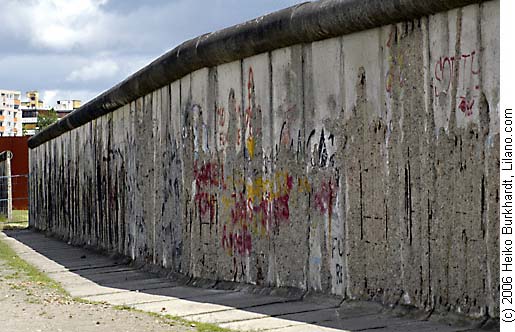
Mauerpark is home to some of the few remaining slabs of the Berlin Wall. They are dotted neatly along Bernauer Straße and flanked by a visitors’ centre and tower. Tourists climb the tower and look down on the street, imagining it divided in two.

A few weeks ago, a Mercedes pulled up on Bernauer Straße. Michelle Obama and her daughters got out. They were met by a man in a black suit. As they made their way into the visitors’ centre, he gestured to the area around them and they nodded attentively. A few minutes later, I saw their tiny heads at the top of the tower.

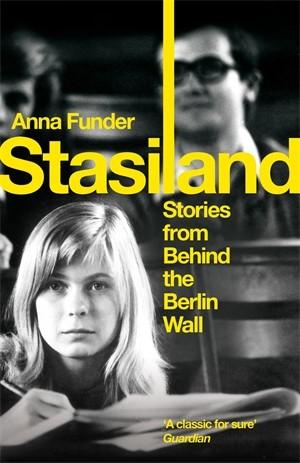
Lately I’ve been spending my evenings on the other side of the park, closer to the stalls housing ponies and goats and pens full of guinea pigs. I go there after work and read Stasiland. It’s a paperback with a yellow and black cover. The ‘L’ of the title has been extended to separate Stasi from and. I avoided it for months, admiring instead the bold colours of its spine, which stood out like a bee among the other titles on my shelf. I had got it into my head that it would be a bleak read; more of a history lesson and less of a story.

I was wrong. It is compelling and original. The author, Anna Funder, tells remarkable stories in unsentimental language. She is a master of observation – a fitting tribute to her task, which is unravelling the lives of East Germans constantly under surveillance.

I don’t just go to Mauerpark to read though. I go to watch.

There are two places I like to sit.

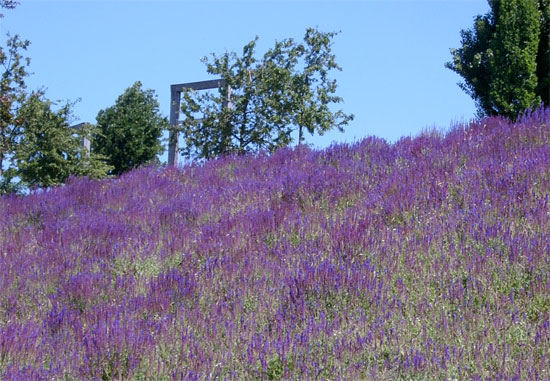
The first is on the top of a hill covered in purple flowers that look like lavender but which somebody told me, categorically, they are not.

The second is in an arena made of concrete. On Sundays, an Irishman with a battery-powered box moderates enormously popular karaoke sessions there. During the week though it is populated by shaggy-haired men playing guitar, groups of teenagers with shisha pipes and old stooped figures moving quickly up and down, collecting the glass bottles people discard on the ground. Later, they recycle them for cash.

Once I observed three teenagers in an unequal relationship. They were sitting in the centre of the arena. The two girls would kiss and hold hands while the boy sat beside them drinking beer. Then one of the girls would break off from the other to wrap her arms around the boy and climb onto his knee, while the other sat alone. The relationship seemed to intersect around one of the girls; the other two didn’t touch. After some time, the girls took each other’s hands and walked away, leaving the boy – and me- watching them from behind.

Karaoke in Mauerpark

karaoke in Mauerpark

I also watch people setting up picnics, cooing at their babies and shooting basketball hoops.

It doesn’t occur to me that I am being watched.

The office where I freelance is close to Mauerpark. My job requires me to write about German news, in English, very fast. In the past few weeks, one face has been appearing on top of several of my stories.

image source: Wikimedia

image source: Wikimedia

It is young, chiselled and bespectacled.

It’s Edward Snowden. There is a stock photograph that the agencies have which is a still from an interview that was recorded last month.

I’ve looked at it carefully. Snowden is facing the camera at an angle. His image is reflected in the mirror behind him and his expression is tense but firm.

When I write about him I use terms like “NSA whistleblower” and “fugitive” because that’s what everybody else is calling him.

I dutifully record the sequence of events as they appear in the agency feeds and try to come up with snappy headlines to fit the stories.

But the more I see Snowden, the more uncertain I become.

When it broke that US intelligence agencies were monitoring vast amounts of telecommunications, I was surprised it was a story.

Wasn’t it a given?

I wasn’t alone in my reaction. Others have told me, somewhat sheepishly, that they too expected it to be the case.

News of microphones in EU offices did shock me though. Unlike the internet, they are tangible devices. People need to conspire to plant them. They feature in detective novels and in the Cold War.

And as sometimes happens, I began to question myself.

‘Virtual reality,’ I thought, is an oxymoron. Spying on the internet requires forethought too.

And taking the technology for granted only adds to its sophistication.

Most of the time I am content to be gratefully bamboozled by how it is that the face of my friend in South Sudan can pop up on my screen or that my boyfriend and I can share a beer together – he in Edinburgh and I in Berlin.

But reading Stasiland and writing about Edward Snowden has caused me to uncover an uncomfortable truth of my own.

I have underestimated the capabilities of those in power. And I have become inert, thanks to a life full of comfort.

I escaped World War II by just fifty years and was four when the Cold War sort of ended.

But I figured – out of laziness – that nobody could be watching me and that those that are being spied on, probably deserve to be.

I have, it seems, a trust in authority that has only just become explicit.

Edward Snowden, a disillusioned geek, is just five years older than me. I am impressed by the hysteria he has unleashed. It, rather than anything he’s revealed, has shaken me up.

I’ve learnt that I live in a world where a plane carrying Latin American dignitaries can be forced to ground on the suspicion that a tech-clever ex-contractor could be on board. I’ve learnt that the balance of power in the West is an uncomfortable thing. And I’ve learnt something I keep learning: that I know very little about anything at all.

Yesterday, my colleague and I took our lunch to Mauerpark. She had bought a punnet of raspberries and we were munching them in the sun. A man with sun-tanned skin was loitering close by, watching us. After a while he lay down on the grass and curled up with his back to us.

Then suddenly we felt him looming. He asked, in Spanish, for a raspberry. When we gave him one, he disappeared.

Minutes later, a man in sunglasses, shorts and a baseball cap raced towards us.

“Was that guy just now hassling you?” he asked. He sounded panicked.

“No” He just wanted a raspberry,” my colleague said.

“Have you got everything?” the man said. “Quick, check for phones and money!”

We rummaged through our bags. Everything seemed to be intact.

“You sure?” the man asked. He was rushing onto the road.

“Wait,” we called after him. “Is everything okay?”

“Yeah,” he said, without stopping. “I’m a cop.”
“Auf die Minute!”

Auf die Minute! Frau Bienkowski says, glancing at the clock which hangs to her right.

This is always my greeting. It is the third and final thing that happens before we shake hands.

First I knock twice on the door. Frau Bienkowski says “Ja” in two syllables, which she stresses equally.

And as I am pushing open the door and making my way past where her coat hangs, she says it.

Auf die Minute! – to the minute!

Once, Frau Bienkowski had another visitor – a lady – when I knocked on the door at precisely 3 o’clock.

Auf die Minute! they said in unison, because Frau Bienkowski had told the lady that I come exactly on time, every time. And we all laughed.

“So gehört es sich auch,” – that’s how it should be – I retort as I take the hand she has outstretched.

Sometimes Frau Bienkowski playfully teases me about my punctuality.

“You must pace around the corridors!” she says.

“The corridors? Are you joking? I go for a walk in the gardens!”

It is a source of immeasurable pride that my punctuality amuses and reassures a German. A 94-year-old German at that.

I have not told Frau Bienkowski that she alone benefits from my impeccable timekeeping and that back home, my parents are bemused by what they called my “scurry” – a trademark dash out the door which I perform with my shoulders hunched forward, my head down and usually missing an item vital to the appointment I am trying to make.

Today Frau Bienkowski is wearing a yellow jumper with short sleeves. She matches the apricots I have brought her.

“I couldn’t find the Turkish apricots which you requested,” I tell her. “These are Greek.”

“Oh, perfect,” she says.

“And they are still a little hard. But I chose them deliberately because they go soft so quickly.”

“Absolutely right,” she says, digging out her purse and pouring coins onto the table. “Now, what do I owe you?”

“Nothing,” I say. “I get a monthly travel allowance of €25 for visiting you, which I do not use because I walk. I think it’s well spent on apricots.”

“Katechen,” she says, as more coins topple out of her purse. “I swear to you, I will not ask you to get me anything ever again if you do this!”

“But I don’t need the…”

“Katechen!”

“They cost €2.29,” I say.

“Good,” she says. “Take €2.50.”

“Ha! You must be joking.”

Frau Bienkowski digs her fingers through the netting of the plastic container. She gropes the apricots, pressing them with her forefinger and thumb.

“Let’s have one each,” she says.

I take them and rinse them under the tap in her toilet sink.

To the left there is a plastic shower seat, where Frau Bienkowski sits when she gets her back washed.

“It is the only thing I can’t do for myself,” she has told me many times. “I can still do everything else. I can get dressed, and make my way downstairs for lunch. I always say, as long as I still can, I will…But I can’t reach my back any longer.”

We sit by the window, munching apricots.

It is a dull day, but every now and then, the sun breaks out from behind the clouds.

On the window sill is a line of pots.

“Look,” Frau Bienkowski says, pointing to the pot of carnations I brought for her birthday.

They are deep pink and in full bloom.