Anyone with a novel idea?

Anna Wulf is a character in Doris Lessing’s The Golden Notebook. I don’t know her very well yet because we only met 78 pages ago and our encounters since have been sporadic. My first impression of her was on board the 46 A bus to Dún Laoghaire and at that time, I considered her pretty self absorbed and possibly lacking the courage of her convictions. She really surprised me today over lunch though. I was eating a re-heated corner piece of brocolli quiche and I had opened the book defiantly, because on my endless weekend ‘to do’ list I had included such boxes to be ticked off as “sleep in and relax”, “check out menu pages for dinner tonight” and “Read The Golden Notebook”.
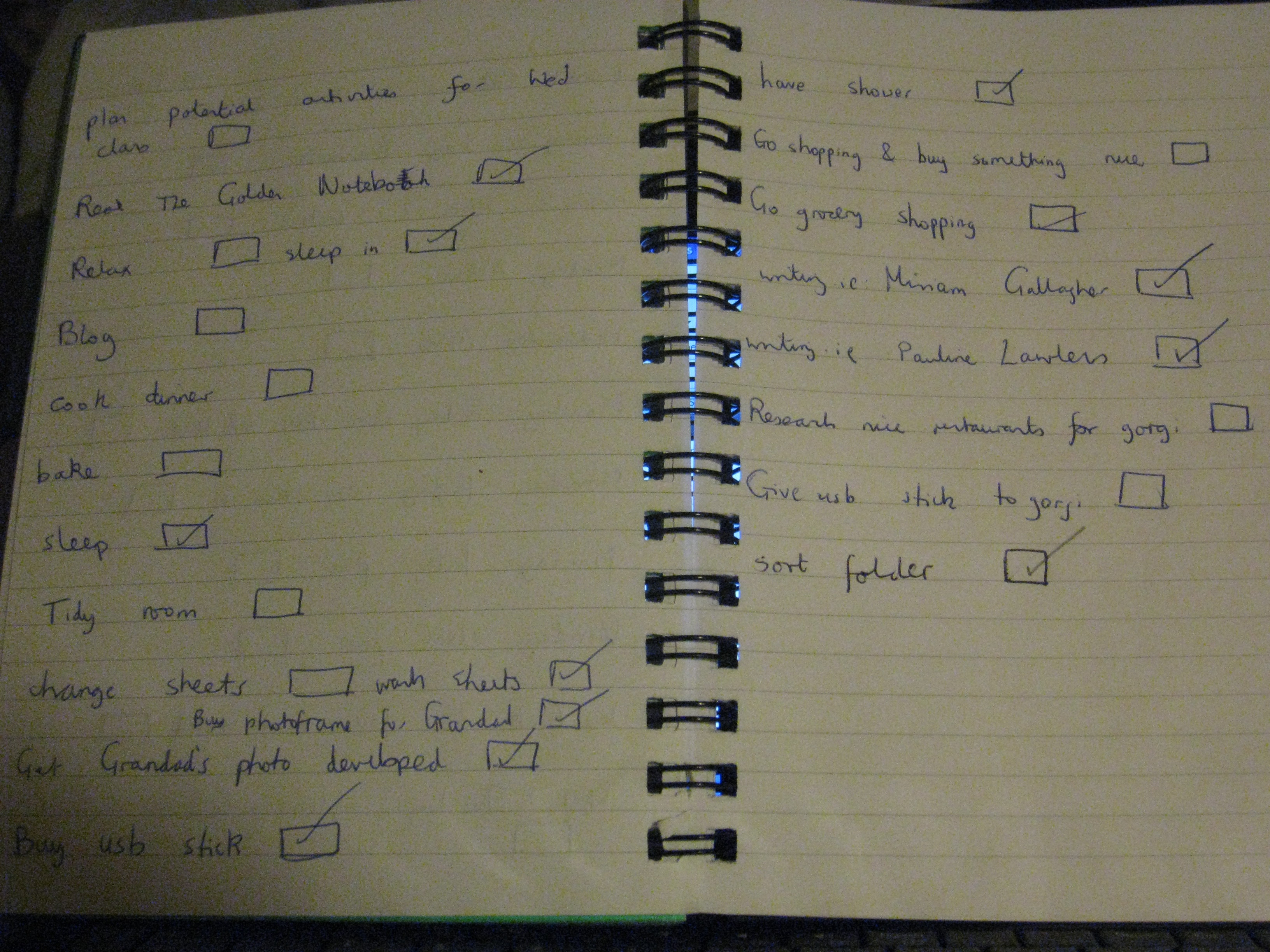
two of my three-page weekend 'to do' list

What Anna said to me over lunch was: “I am incapable of writing the only kind of novel which interests me: a book powered with an intellectual or moral passion strong enough to create order, to create a new way of looking at life. It is because I am too diffused … I have only one, and the least important, of the qualities necessary to write at all, and that is curiosity. It is the curiosity of the journalist.”

I think what Anna means is that for her the appeal of art lies in its power to arouse in the intellect and the emotions a sense of novelty. Whether or not there’s anything intrinsically profound in that novelty, it seems reasonable- at least from the perspective of human advancement- to be deeply moved by an idea which one encounters for the frst time. Premieres are pure, and that which is pure does not take long to become tainted and ugly. I have often wondered why we have such an aversion to clichés. To use one myself: “it’s a cliché because it’s true” and surely “beauty is truth”? I remember once as a child feeling immensely satisfied when I suddenly understood what my mum meant when she said (in German) “the apple doesn’t fall from the tree”. I had heard this said before and had stored in my mind an image of one of the apple trees in my Grandmother’s garden dropping its fruit gently onto the grass below. I connected in a flash the image with its import: like mother like daughter; like father like son.

Truths become clichés and clichés in themselves pejorative because of human vanity. We enjoy the novelty of our first flash of understanding and feel our cognitive and moral achievement devalued by widespread use. Anna’s fear is that she lacks original insight and instead indulges in passionless curiousity – which leads not to clichés but instead to a barrage of information with no meaning.

Art is nothing without meaning and even ambiguity in art has its function etched into it etymologically; allowing us to see two things at once. I have written before about how I believe the patron of the arts to be more profound than the artist themselves. I stand by that position, particularly because I have always been confused and lacking in conviction about what’s really ‘good’ in art and in particular in literature. When something has not appealed instinctively to me, beauty has been drawn out for me by inspiring teachers and friends. I have an irational but passionate dislike for the word ‘canon’ because it seems to have been constructed in cultural retrospect rather than based on timeless intellect and emotion. I know that I, like Anna am only interested in books that move me (usually to tears) or change fundamentally the way I think but I know that for many others, the appeal of literature lies elsewhere and that more and more, the commercialisation of fiction has come to be what constitutes it rather than what reveals great truths to the masses.

I think much more about reading and writing than I engage in either activity, and I like Anna yearn to write a novel which is just that. My problem is that I am crude and craftless – I yearn for original insight and would gladly spend my life in its pursuit but I despair at the idea of inventing a plot, characters, voice and setting, in which to couch my eventual clarity. I can’t help but ask myself the very question that Anna poses: “Why a story at all … Why not, simply, the truth?” Readers, please help me out. What does ‘novel’ mean for you?
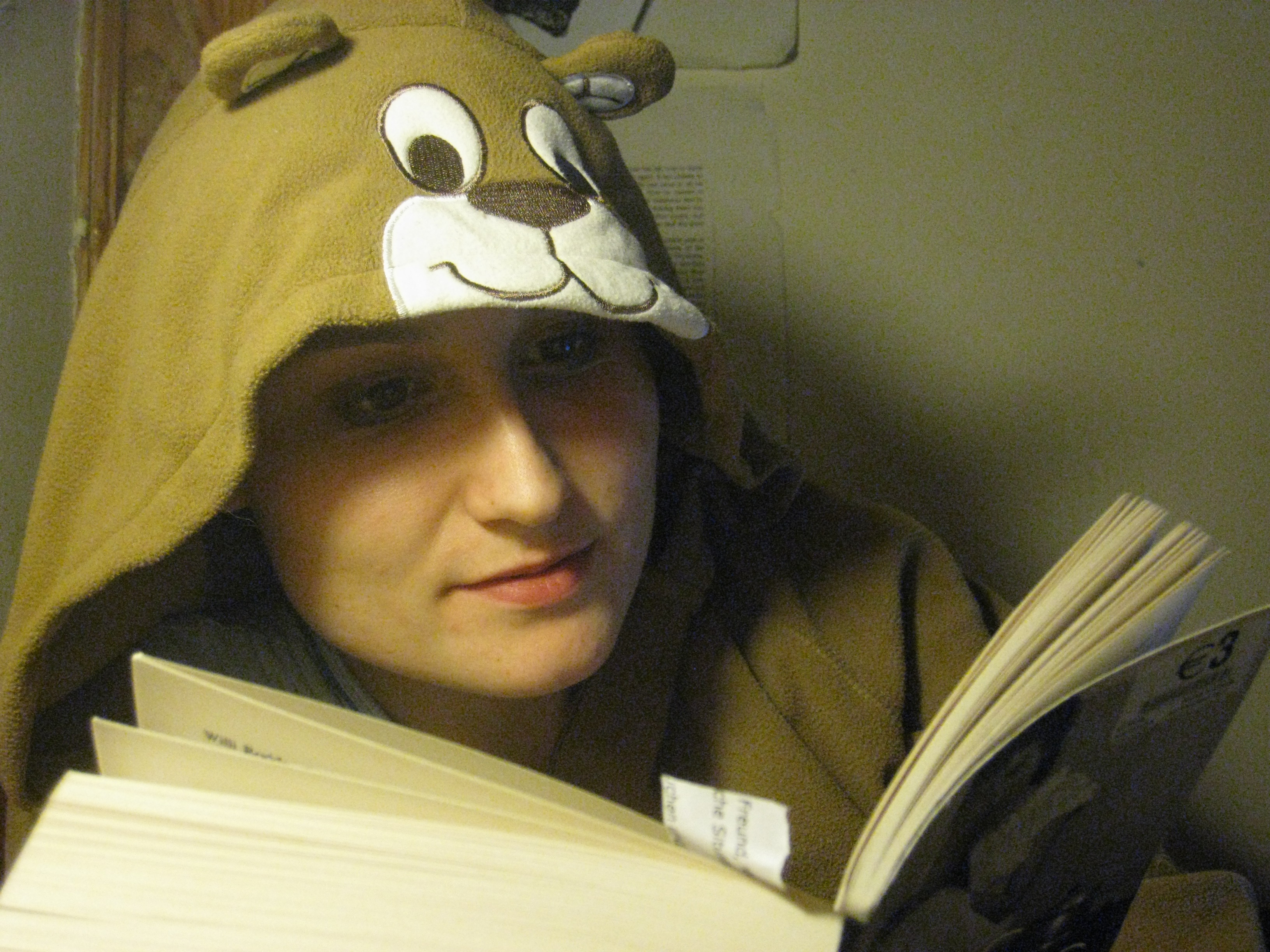
In bed with Anna after our lunchtime chat

On Love or “Ode to my LSB”

LSB and me


“The LSB has outdone himself”, was my dad’s verdict. “How wonderful a time he must have had planning it” was my mum’s astute observation.

It’s only right that you judge for yourselves. Here is how the day’s events have unfolded:

1.25 am
I am up late marking tests. The French engineers have grasped in main the location of the apostrophe ‘s’ and I am particularly bemused at some of the creative mistakes they make when turning countries into nationalities – my favourite Charlie Chaplinesque slip morphs the people of Germany into ‘Germanians.’

2.00 am
I check my e-mail before going to sleep and there’s a Valentine e-card in from my LSB! I think: “Aw, what a sweetie”. I open it up only to find a Fine Gael cartoon canvasser tell me that “Labour are red, Fine Gael are blue, we won’t raise your taxes like they want to do”. Then he winks and looks shiftily (seductively?) to the side. I send one to every member of my family signing it Eoghan Murphy xxx, the name of the Fine Gael candidate in my constituency who topped 98 fm’s “hottest election poster boy” poll.

7.40 am
I’m dashing into work. All around town, clean young men in suits are loitering on streetcorners, handing out Valentine’s Day cards in Irish. I’m accosted in Harcourt Street, on Grafton Street and finally again on O’Connell bridge. They are campaigning against Fine Gael’s proposal to drop Irish as a compulsary subject on the Leaving Certificate by asking people as Gaeilge whether they will be their Valentine. As I am being proposed to and handed card number three, I tell the young gentleman in Irish that I already have my Valentine, i sráid fhearchair. That makes him smile and he says slán leat like he really means it.

8.35 am
I’m waiting for a vacancy at the photocopier; musing. A Valentine’s card from Fine Gael and one to oppose their policies. A working day ahead – I have morning and evening classes to teach and no prospect of a romantic liason with my LSB, who is getting up around about now for a full-day slog in his bookshop. I text him a good morning and wish him a Happy Valentine’s Day. He doesn’t reply so I assume he is rushing about trying not to miss his bus.

10.50 am
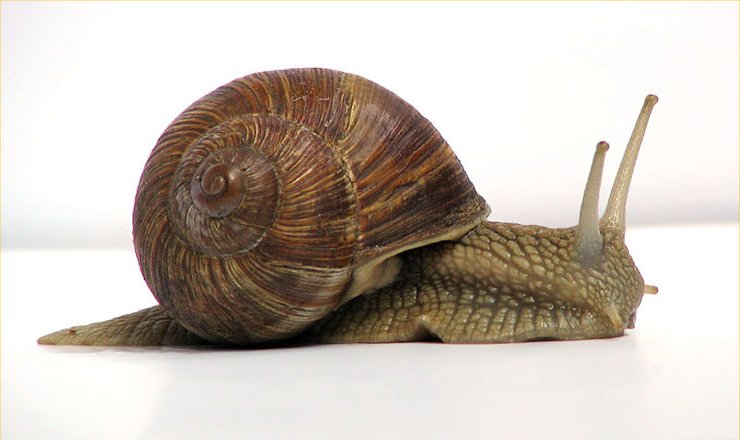
The French engineers are describing their “ideal date” to each other. One of them wants to take his wife to eat snails under candlight. I grimace and when I remind him that I’m a vegatarian his eyes bulge and he says “mais zee snails are not zee animals… zay are the …how you say… insects”! He is one of my favourites, along with Mattieu, who has two cats and two rabbits and likes motorcycling.

French snail


11.15
It’s breaktime and I have a quick text from LSB, who is on his 15 minute break: “sorry I didn’t text earlier, I was dashing. Happy Valentine’s Day, Katzi! My lunch is at 2 so if you feel like a phone chat then let me know”

1.55
School’s out! I’m listening to Joe Duffy talking about homophobic attacks on my way down O’Connell Street. My phone rings and it’s LSB:
“How was work?” he asks
“Ah grand, I think”, I reply, “but I’d rather be hanging out with you.
He sighs “I know, Katzi, such a shame we can’t spend the day together..”
“How’s work going for you?”, I ask
“Ah, same old, same old”, he says, “it’s kinda dragging”

The next thing I know the phone goes dead and I’m attacked from behind. Bearing the most beautiful bunch of roses and lillies and wearing a red tie is my LSB, deceitful and delighted.

I am without words.

14.45
Over a delicious aubergine, pepper and celeriac pie in Cornucopia, I am still incredulous. What an absolute ledgecake I’ve landed myself with! “I never said I was working today”, he gloats, delighted and adds, “I hope you like the way I synchronised my texts according to a typical working day though”.

15.25
I’m conscious of the time because I have work later and have to get some preparation done. “Just one more stop, Katzi”, he says.
He takes me to Hodges Figgis where I fight him, in more than a whisper. “I don’t want a present”, I whine. I want to get YOU a present”.
He ignores me, swoops to the Stefan Zweig section and picks up “The Royal Game” and “Selected Stories”. “Which would you like, Katzi?”, he asks. Both are beautiful editions. “I want neither”, I hiss. “This is ridiculous!”
“Bit rude”, he remarks, picking them both up and rushing to the till.

16.00
Despite my ecstacy, I’m determined to end this madness or at least reciprocate in the most paltry of ways. “I’m buying you coffee”, I say, marching into Butler’s with my enormous bunch of flowers under my arm. I curse inwardly because I have no cash on me but I barge to the till and ask, “do you take laser?”. LSB swoops in, wielding a ten euro note and nods to the cashier; “don’t mind her”, he says. She smiles, and looking at me with faux sympathy says “I’m sorry our laser machine is broken”. I could have spat at her.

20.40
On the way out of the staffroom I beam at my colleagues and wish them a “Happy Valentine’s Day”. “Oh shut up”, says one, “some of us don’t do Valentine’s Day”. I walk home, beaming and insufferable.

22.53
I’ve just finished writing an uncharasteristically personal blog entry. All I had really wanted to say, 927 words ago was: LSB, if you’re reading this,thank you. For everything.

The Jibbertalky

I have few accomplishments to recommend me; I cannot draw, my recitals on the pianoforte are clumsy at best and I have neither a talent for embroidery nor the gift of graceful movement. The one area in which, after much searching, I have found myself to excel is in the ability to produce plausible-sounding Gibberish at will.
Though it is far from my best, you may have a listen here.

I have found that the children I babysit for nextdoor can speak Gibberish fluently but that older, more refined people sometimes struggle with the language. My Long-Suffering-Boyfriend (LSB) for example, speaks only pidgeon Gibberish, but enough to get by in most situations. I can only aspire to match some day the eloquence of Charlie Chaplin, the world’s only native speaker of Gibberish as he introduced the world to Sauerkraut.

I think my good friend Stephen Pinker would have a lot to say about Gibberish. He mentions Lewis Carroll’s 1872 nonsense poem The Jabberwocky in his book The Language Instinct as appealing to our hard-wired knowledge of and acquired predictions about language. If he were to condescend to read my blog and then stoop even lower to follow its links, I imagine he would point to the patterns of intonation in my speech as consisting of a mad mishmash of the grammatical structures of the languages I have been exposed to and that he would herald subtleties in prosody as indicative of uniformity in the portrayal of emotion through language.

I believe that my penchant for Gibberish is also connected to my tendency toward deceit. Let me explain. In order to compensate for my shockingly limited general knowledge, I periodically fabricate bizarre facts and relate them to my nearest and dearest. Once, for instance, on a rather dull bus journey from York to London, I turned suddenly to my LSB and said, “Did you know that T.S.Eliot was the first known poet to use the word peanuts in a poem?” A look of intelligent surprise crept over his face. I knew he would remember it for life.
“Really?”, he asked rhetorically.
“No”, I said, “I just made it up”. He looked at me, searchingly.

On another occasion, I broke a comfortable silence with the slow, dramatic outburst: “On gelded wheatgrass glides the linnet’s wing”.
“What’s that?”, he asked.
“Oh, just Milton”, I said with the nonchalance of a pouting fish.
“Really really?”
“No. Sorry.”

Since I always confess my wrongdoing within seconds of a Gibberishish utterance, I rarely suffer the consequences of my perjury. Having pondered the matter privately at length however, I have come to the conclusion that at the root of my silly amusement lies my inability to see the trees for the wood.

Looking for the Trees in the Wood.

You see, as I’ve mentioned before, I like to take a fly’s eye of the world. I find pleasure in understanding how people work, how language works, how the brain wires itself. My ineptitude resides in my lack of interest in the details; I am perfectly content to marvel at brain plasticity, but I’d be damned if I memorise the precise nature of the neurotransmissions that allow me to type this prepostrous post at four in the morning.

I may never be afforded the opportunity to advertise my unconventional charms to Mr Darcy, as Lizzy Bennett was, but were the opportunity to arise, I would do my very best to present my bad habit as an … impediment.

A Brief Treatise on Colin Firth’s Possession of Charm

Interaction of eyes and lips to produce Charm.

Colin Firth has made me cry eleven times in the past week; once while gazing with melancholic resolution toward Elizabeth Bennett, once while strolling with her through the grounds of Longbourn, once on the occasion of his wedding day and eight times as vexed and sensitive King, battling with a speech impediment.

It’s the rare interaction of eyes and jaw that does it for me. When the subtly determined curl of his lips is softened by his lost, intelligent eyes I become an emotional wreck. In these instances, he brings to life Ezra Pound’s definition of the ‘image’ as that which presents “an intellectual and emotional complex in an instant of time”.

A Charming Metaphor

Charm twirls itself about you like a ribbon; its intellectual appeal lies in its emotional reserve; it is a tease. Natalie Portman has it as does the German political interviewer Sandra Maischberger. Bryan Dobson possesses it and so too does Alexis Bliedl, but only when she is Rory Gilmore.

Charm, though extremely useful as a sexual tool need not take a seductive route. It’s interesting to note that when a brash young man accosts a lady at a bar with a chat-up line below her dignity she will often remark saractically “… charming” to her girlfriends after he has departed. Furthermore, it is customary for members of the general population to find scantily- clad women parading in stillettos and clutching bottles of Corrs Light as lacking in charm.

Potentially charmless girls

The perception of charm requires a little effort and as such the fruits of its identification carry an emotional value: we place worth on that in which we invest our energies. This is not to reduce charm to a mere self-serving bias but rather to highlight that intellect and emotion or “head and heart” are not always as far removed as we believe them to be.

To be charmed is one matter; to be charming another. Countless pamphlets have been penned on the latter so I thought it time to thrust open the question to the blogosphere: what charms you?

Why Plastic is Fantastic

Norman Doidge’s The Brain that Changes Itself is already inspiring me to get off farcebook and engage in mental gymnastics, and I am only on page 92. In his book, Doidge documents cases in which people have benefited from the plasticity (the ability to change) of the brain.

Let’s take the example of Cheryl Shiltz, because hers is a nice-sounding name. Because of damage to the area of her brain dealing with balance (or the vestibular apparatus), Cheryl constantly feels as if she is falling. So great is the sensation that she is unable to sustain a career or maintain a conventional daily routine. Along comes the researcher Paul Bach-y-Rita and gives her a hat, as well as a thin strip to wear on her tongue. Attached to the strip are small electrodes and inside the hat is a device called an accelerometer. The accelerometer sends signals to the electrodes and both are connected to a computer.

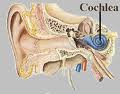
Most of us keep our balance because tiny hairs in our cochlea, or inner ear respond to movement in the fluid canals that surround them and communicate this movement successfully with a clump of neurons, whicn in turn tell our muscles which way to move in order to maintain balance. Since the tiny hairs in Cheryl’s cochlea are not working properly, the accelerometer in the hat detects movement instead and conveys this information to her tongue, which then sends the signals to the specialised clump of neurons in her brain which then advise her muscles which way to move. The journey simply changes from the conventional Hair – Neuron clump – Muscles to become Hat -Tongue- Neuron clump – Muscles. In other words, the hat and the electrodes attached to her tongue allow her to stay balanced.
Nobody wants to hang out in a construction hat and attached to electrodes though. The marvelous, wonderous thing is that with repeated wearing of the hat, Cheryl’s brain developed a residual effect of increasing time periods, until eventually she learned to balance herself without wearing the hat. What this means is that her brain managed to change itself to find new pathways to that clump of neurons. Nice one.

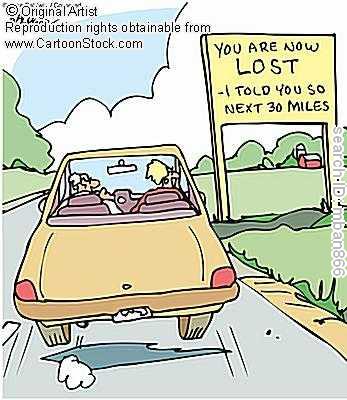
Cheryl’s case illustrates what every road-tripper knows: if you miss your turn, you can take a roundtrip and still reach your destination.

The idea of brain plasticity was long contested among neuroscientists because of their success in assigning areas of the brain to specific functions. This idea, known as localisation assumed that the areas of the brain associated with specific tasks were fixed and that once certain critical periods were passed, if certain cognitive feats had not yet been mastered, they would never be.

Now that I’m curled up, hanging out with Cheryl and many others with inspiring stories, I am thinking about the possibilities of the human mind and that maybe some day, I really will master Arabic. As soon as I get my hands on that €13 teach -yourself set my boyfriend found but did not hold on to while he was stacking books into a pyramid at work, I’m on it. I may be unemployed and not up to much, but that is no excuse not to learn to turn mental somersaults in the middle east. Never before have nerds been so plastic.

Reflections On A Winter Wonderland

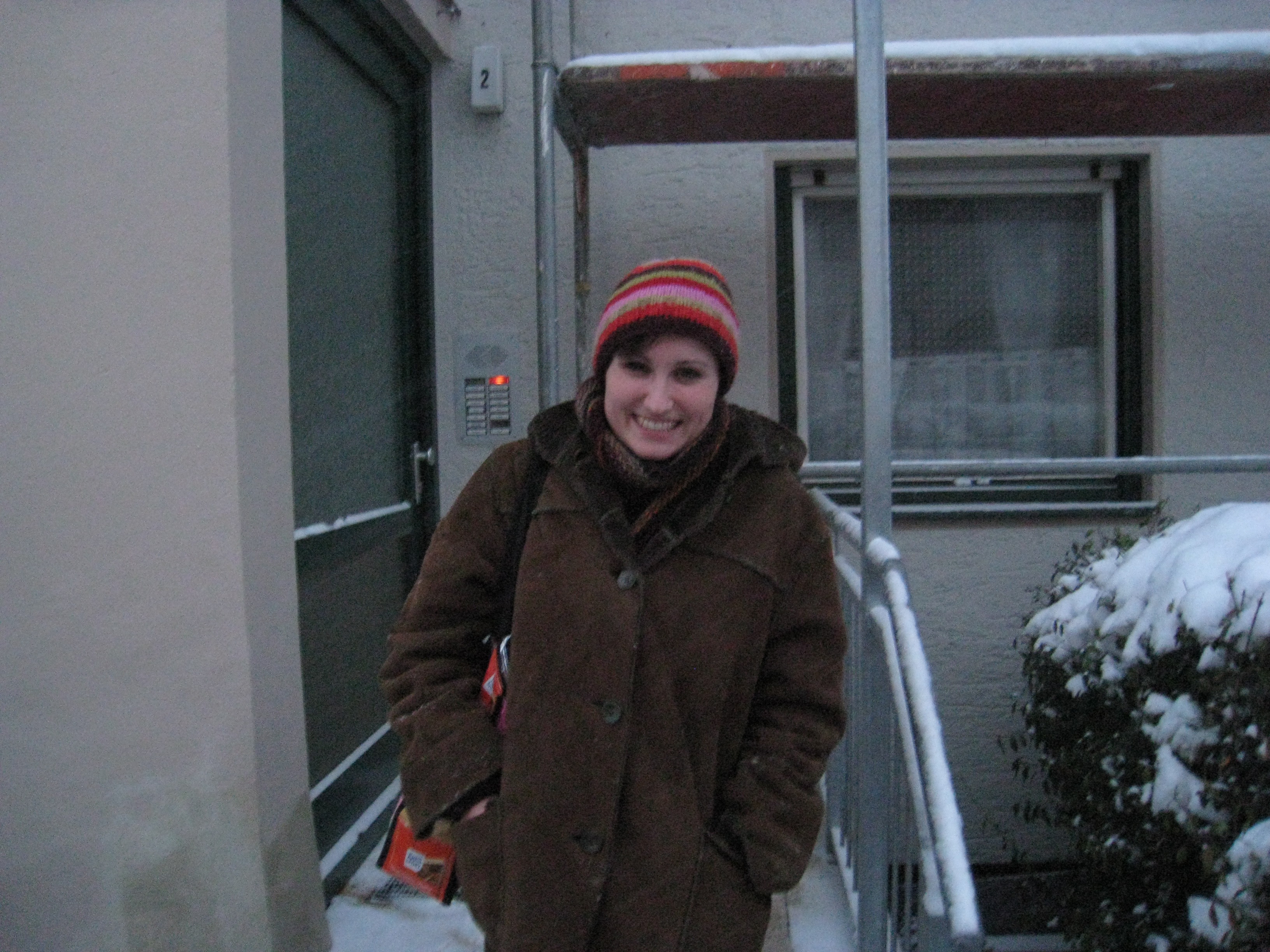
I trod upon this Winter Wonderland two nights ago; perhaps you can see my footprints in the snow. This is my mother’s hometown of Regensburg, Bavaria and I am seeing it for the first time in the winter. I know it from the summers of childhood and adolescence as the place where first I splashed my toes into cool drinking-water fountains and then wandered moodily into the branches of H & M and Müller in the hope of diversion from the obligations of ‘extended family’ holidays.

The German side of my family is enormous – my mother is the fourth child of nine and at last count my cousins tallied close to thirty. My memories of the summers between about 1995 and 2007 are rooted in a certain self – consciousness about the German I spoke, which I perceived as stilted in comparison to the Bavarian twang and slang with which my relatives conversed. Aware and anxious from a young age that I had but a single afternoon to persuade each branch of the German relatives of my lively personality and engaging wit, I presented invariably an image of dullness and excessive politeness which they perceived (with accuracy) as shyness and awkward sensitivity. I had an awful lot of fun in Regensburg too though – I was particularly fond of the twisty yellow waterslide at the local pool and the vast availability of playmobil and wooden dolls’ house accessories in the toy -shops. When my Grandmother moved out of the family home and into a flat nearby, she dedicated her biggest free space to a playroom for her grandchildren. There she set up a shop (or ‘Kaufladen’) which she supplied with a wooden till and weighing scales, dried apples from the garden, miniature packets of raisins and cinnamon-topped marzipan balls; all of which could be purchased in tiny cone-shaped paper bags, which she provided for her customers. It was marvellous.

Such feelings return to me as I sit on a Regensburg and Grandmother-bound train with my boyfriend, who is not a part of these memories but who has the most incredible ability to absorb and to understand information and to remain quite silent as he does so; only to amaze me with evidence of his awesome memory at appropriate points in the future.  For instance, he has recited in order the names of my mother’s brothers and sisters without ever having been formally taught, recalled anecdotes about my relatives that I don’t even remember fabricating and has learned (albeit not with great accuracy) the lyrics of the family song (yes, there is one) which is performed at the approximately bi-annual family gathering.

I would forgive you for accusing me of having notions of one day appearing on one of those ancestry-tracing television shows like ‘Who do you think you are?’ . To practise for such an occasion, I ask Andrew to take a picture of me on arrival at Regensburg train station.  I attempt to look restrained and dignified, humbled and delighted (as those minor celebrities do at important and scripted moments in the discovery of their past) but it is too much for me and I end up pointing with mock excitement at the sign above my head.

The journey begins and we battle through a blizzard along the Danube on the way to my Grandmother’s flat. We are startled by a baby rat as it darts for cover under the inches-deep layers of snow by the riverbank. When we arrive, we are heaped with white powder. I am nervous as I ring the bell – it has been three and a half years since I last saw my Grandmother and at that time I was not romantically attached. She opens the door and pops her head out. She motions us in as if we were meals on wheels. It is wonderfully reassuring. She brews a herbal tea and we sip it as the blizzard outside continues. She tells me that she misses packing Christmas parcels for her Grandchildren; it is beyond her competencies now, she tells me, as the children are looking for gadgets and games she doesn’t understand. I tell her how I loved playing shop in the playroom and how I remember her paper bags and dried apples. She smiles and tells me she has found old letters that her children wrote to the Christkind (the German equivalent of Santa Clause). I ask her eagerly if I may see them. I may. She gets up to fetch them, and I whisper a few words to Andrew, who has remained mute at the head of the table (Andrew speaks no German and my Oma no English). I leaf through the letters of my youngest aunts: they have asked for an anorak and an extendable pencil and have promised the Christkind that they have been brave Kinder all year.

Outside my Oma's flat

After an hour and a quarter, we shake hands goodbye and venture back out. We are station-bound again but have decided to check out the Christmas market by the Castle before we leave. We are ankle deep in glistening snow. Burning torches light our way to the courtyard, where stalls of mulled wine and gingerbread lure us through the cold. Four men play Christmas carols on old-fashioned horns. Beyond the glistening snowflakes and torch flames, the castle gleams. I buy Andrew a baked potato and he buys me a woolly hat. We leave our footprints in the snow. We miss our train and spend all evening in a Winter Wonderland I feel is part my own.


Ah Thanks Love.

I’m imagining a portly cavewoman bent over a roaring fire, gingerly carving up a slab of meat, which hours ago her bearded partner wrestled ferociously with in the depths of the surrounding forest. Hands still bloodied from the kill and with several of his children fighting for the bones, I wonder whether Caveman gives his wife a tender kiss alongside a “thanks, honey” for the lovely meal or whether Cavewoman thanks her man for providing her with the succulent flesh of an Irish boar. Perhaps they thank each other in their own, silent way.

Thinking about thanking should be natural to us, since the two words stem from the same root; the Proto Indo-European word tong meaning to feel. Thinking pre-existed thanking- a fact which matches up nicely with the intuition that gratitude should be considered rather than automatic. It is no wonder that in Stone Age times, where food, shelter and sex were the hallmarks of successful existence, thinking and thanking were relegated to a common sentience. While thinking about thanking is a sign of evolutionary progress, not thinking about thanking is yet one step more advanced. After all, automatic thanking is synonymous with the language of service transaction, which constitutes a process more sophisticated than the simple bartering of one good for another. Take a bog standard morning in the city centre of Dublin for instance. The 15 A bus arrives late and takes me in to town. I alight and thank the bus driver. As I pass the gates of Trinity College, a religious enthusiast thrusts upon me a medallion of the Virgin Mary, which she claims will protect me from everything the world may throw at me, excepting medallions themselves it seems. I thank her with a smile and hurry on. I am groggy and so I head straight to Butlers Chocolate Café, where I order a caramel machiato ‘to go’. I thank the man at the till as I hand him over my money. Without thinking, I have given thanks for a tardy service for which a driver earns his keep, for an item I would rather be without and for due receipt of a steaming cup for which I have paid ready money.

But why? A 2007 study into cultural service exchanges argues that “the use of thanks in closing conversations … reflects local concerns of conversational management, insofar as participants need to demonstrate their final alignment to a common frame of reference and a shared satisfactory role-relationship.” In other words, perhaps what I am meaning to say is “I appreciate that you’ve battled through the morning traffic to drop me into town”, “Despite my complete indifference to your cause, I respect your dedication to The Legion of Mary and the fact that you are standing here in the freezing cold offering gratuitous items to passers-by” and “I value my cup of sweet warmth and your pleasant demeanour, even if provision of both forms part of your job description”. 

Uttering thanks may have become automatic but feeling gratitude is a state much more specific to the individual and ultimately more meaningful. A child can be forced to say “thank you” for the cotton socks its Great Auntie has bestowed upon it, but in no way can the feeling of gratitude be imposed. The human brain – plastic with potential – can differentiate between uttering thanks and being grateful. Indeed, true gratitude is often exceptionally hard to articulate. A youtube video promoting gratitude to American service men and women, which has registered over two and a half million hits, describes some of the problems, which accompany the attempt to express true gratitude. One of the most common is the feeling of awkwardness. How do you tell somebody you have never met how grateful you are for their actions? How do you tell somebody you see every day how much they mean to you?

Perhaps it’s about showing and not telling. Like love and hope and fear, it’s actions that speak louder than words. Thank somebody with a look, a hug, a card, a surprise and watch the warm feeling break across their face. It is nobler to thank than to be thanked but there is nothing that replaces that affirming feeling of being appreciated.

This Thanksgiving Festival, as modern Man Matt carves the organic turkey that Marigold’s high-powered legal job has helped provide and Hannah Montana occupies the kids in the background, perhaps it will be a silent, prehistoric glance between man and wife and not a glass-tipping dedication to America that will express true thanks. “To Silent Gratitude”.

Generation X Factor: Reeling in the Years

It’s October 25th, 2023 and I’m curled up with a glass of red wine and a Potential Life Partner (PLP) watching 3D Reeling in the Years. Brian Cowen’s epic nasal congestion interview of 2010 is clogging up the surround sound, and sexy PLP, who has been absent-mindedly  playing Snake Fourth Dimension on his iphone 32 looks up and gasps. “That’s Biffo from Fair City!”, he shouts with excitement, “he looks so young and sober there!”

I sigh. “He used to be a politician, honey”

He is incredulous. “No way! Are you joking me?”

“He was the Taioseach.”

“Are you serious?” I nod, remembering that I love him for his culinary expertise, but not his intellect.

Now they are showing old news clips of the thirty-three miners who were trapped underground in Chilie for 69 days, as they emerge to embrace their loved ones. The images ignite a flash of recognition in me. I had completely forgotten about those poor guys! I wonder what they’re up to now and how many of them are still miners. The old RTE format is so quaint – before the six-one news begins they show a series of 2D images of people pausing as they go about their daily business to observe the Angelus. The Newsroom backdrop is completely flat and Sharon Ní Bheolain has blonde hair, which she wears in loose shoulder-length curls. Though it suits her, I prefer her as a mature brunette.

And then -oh the memories – the old X Factor theme music comes on. PLP perks up. “Aw, d’you remember?” he sighs as a close-up of a young Simon Cowell’s gritty stare fills up the screen. I nod; “Yeah that was a golden year, wasn’t it?” I cosy up to PLP and giggle “You’re wearing Simon Cowell’s aftershaveright now, aren’t you?” He smiles sheepishly. “Is it the one I got you for Christmas last year?” I ask.

Simon Cowell in 2010

He nods; “Yeah, it’s his XY Factor range. It says on the bottle that it’s genetically proven to make you smell like a popstar for at least eight hours.” I look at him fondly. I can smell the success in our future.

We begin to smell burning.

“Shit!”, PLP exclaims, rushing out to the kitchen to take out of the oven the chicken that we purchased earlier as part of Tesco’s Mary Byrne-patented €10 meal deal.

PLP manages to work his magic though and serves me up a second glass of wine with my burnt chicken and side of mashed potato. He puts his arm round me. It’s almost time for Fair City, when Biffo the barman will finally have to face up to the trouble he has got himself in to; having borrowed more for a late license than he can afford to pay back. “I’m dying to know how he’s going to get himself out of this mess”, muses PLP as he sings along to the Fair City theme tune.

Drama Queen and The Ghost in the Machine

I am massaging my jawbones, thrusting by body forward and shouting an emphatic “Ah”. Then I am on the floor, hoisting my left arm up and down mechanically while grunting. Every few seconds somebody jumps in and joins with a repetitive movement justified by a plausible industrial buzz. The time is 7.20 pm, the place Rathmines town hall and the evening class I signed up for: Drama and Acting. 

Rathmines Town Hall

Today’s project; a warm-up and opening of the vocal passages followed by the creation of a giant 20-person-linked machine, which becomes progressively more complex as new members join it, is proving highly successful. Beyond the layers of mechanics, the ghost in the machine is concentrating hard.

Since we twenty odd locals – many of international origin – joined the class, we have been engaged in weekly displays of prepostrous behaviour. In week one we were asked to select a partner and decide which one of us would be the bossy one and which the submissive. The bossy boots was to lead their partner on daily adventures of their invention employing only the language of command. I partnered Sherry, a lady twice my age and thrice my grace. I was the boss and she my subservient. I led her around, making her jog by my side, pass me over her food in my favourite restaurant, and finally, bury a cat which I found lying on the roadside on the way home.

The predominant focus of these classes has been on improvisation, which Julie Poland, a business-coach blogger describes as “art with a strong foundation in science”. She is right, because to improvise is to create but also to reflect the maxims that guide successful interaction. Whether that interaction be with music, movement or other people, the key is to recognise patterns and to glide around them, using instinct as your guide.

My formal introduction to improvisation happened last summer, when I was studying as part of an international programme at the University of Bayreuth in Germany. I was only there for four weeks, but by the end of it, I was a proficient waffler in the German langauge and able to jump into a situation at just the right time to alleviate a waning scene. On the final night, there was to be an international farewell celebration and the drama group was to perform a selection of its improvisation-themed antics. “Kate”, said Thomas, the drama student and Bayreuth- local who had run the workshops, “We’re going to get you up to perform the object-imrov by yourself, mm kay?” “mm, WAS?” I replied, slipping firmly back into Kate Katharina Ferguson. ” I don’t vanna”.

He was having none of it, and stymied by my stiflingly sweet self, I couldn’t even make a scene. Ten minutes later, 150 people are watching in a dimmed performance area as I am called up to represent the drama group. Super-cool Teutonic Thomas explains the premise of the game to an eager audience. “Kate is an alien and this is her first visit to our world. She will be given an object and has to use the communication and motor skills indigenous to her own planet to make sense of it. Kate does not know what object she will be handed”. He motions to me to come forward.

From behind his back, he produces: a deodrant can. No biggie, sure don’t I love the attention. That’s it. Secretly, haven’t I always wanted to be an extrovert, and sure, haven’t I been waiting patiently for years and years for the chance to emerge with a can of deodrant and be… extrovert.

There is no option but to stop being Kate Katharina Ferguson. I detach myself in miliseconds and begin to make noises I consider eastern -European-sounding. With gestures of varying intrigue and reservation, I manipulate the cylidrical object in my possession. I have never commanded this much sustained attention in my life. The more I move the more I lose myself in the moment and when Thomas’ clap comes, signalling the end to my performance, I feel Kate Katharina gradually regain possession of body and mind as I shuffle a little awkwardly to the edge of the crowd and make mortified eye contact with my friends. Yonder though, the feeling of delight.

My improv performance in Germany

As somebody who is damned if I’ll shout to be heard, improvisation is an ideal way to command but not demand attention. Like the sensation of intoxication, improvisation interferes pleasantly with the inhibitory areas of the brain, which usually remind you not to order Sherry to bury an imaginary cat, regardless of how much it would amuse you. 

So forget the psychobabble  – sometimes trying to be something you’re not is the greatest favour you can do yourself. What do you think?

That is like so funny, NOT.

Try as I might, there is little in this world I find less funny than Anchorman. In these two minutes and twenty eight seconds, designed to tickle my funny bone and whet my apetite for more, the temptation to lol is absent and the possibility of lmaoing and rofling out of the question. But why then do I find frumpy Maeve Higgins and her sister having the banter while baking hilarious when  Ron Burgundy’s string of faux pas invariably leaves me straight-faced? Is what you find funny not more than simply a matter of which way the cookie crumbles?

Cognitive Psychologists believe that what you find funny depends on your interpretation of the incongruous. Which incongruities in particular amuse you depend on the level of intellectual effort required to recognise the inconsistency. Let’s take Stand Up comedy. It’s thought that jokes about rape get a laugh not on account of particularly twisted audience members but rather due to their acknowledgement that a taboo is being flouted and that on top of that, the Unspeakable is being treated with flipancy.

I have been thinking a lot in the past few days about the things that do and don’t make me laugh. Sarcasm never does.  The mental effort required  ro recognise the blantantly incongruous: that somebody is saying the opposite of what they mean just doesn’t cross the threshold of intellectual toil necessary to cause me to chortle. (Each to their own I guess….. :NOT?!) 

I am reduced to convulsions of laughter however by anything that approaches the Ridiculous, as long as it is left discreetly packaged in the Understated. Rape jokes don’t do it for me, but hidden camera shows, in which those taken in treat their pranksters (sometimes even consciously) with the sobriety appropriate to a genuine situation make me laugh. In these scenarios, you’ve got the obvious incongruity of the joker acting as something he’s not. In addition however, you have the intellectual pleasure of watching the punked-ee respond in accordance with the conversational and societal maxims they have imbibed through experience. Furthermore, the possibilities of their own moulding of the situation and the potential to ‘play along’ with the prankster leaves an element of unpredictability which itches my funny bone.

Speaking of the Unpredictable reminds me of the eighth wonder of the world: the apparent hilarity of a short clip that my parents watch without fail, every New Year’s Eve on Bavarian television. The clip is a black and white British sketch of the title “Dinner for One” and dubbed into German for maximum comedy. It portrays an imaginary dinner party given by a senile lady of royalty- status. The lady, imagining that she is surrounded by prestigious guests orders her butler to fill their glasses and heap their plates. The catchphrase of the dopey butler is the polite question:”Same Procedure as Last Year?” which is invariably answered by the delusional hostess in the affirmative. As well as that line, what makes my parents hysterical is the increasingly intoxicated state of the butler as he downs the drinks of the imaginary guests and falls repeatedly over the head of a tigerskin mat. Before I set off in hope of actual intoxication last New Year’s Eve, I watched with incredulous amusement as my parents came close to rofling off the sofa.

Given that I am pretty certain of my genetic relationship to those I call my parents, I cannot but conclude that there is no such thing as “Intelligent Humour”. What I can say without a doubt though, is that what you find funny is a representation of the way you view the world. And that may well depend on which way the cookie crumbles.