Enda Kenny: The teacher that Ireland needs?

If Ireland loves an underdog story, it has all it could wish for in Taoiseach Enda Kenny. In less than a year, he has gone from leader of an opposition party whom nine members of his front bench did not support to heading a government party with an approval rating of 41%.

Resilience, tenacity and no small amount of luck have been the hallmarks of his success.

Though his entry into the Dáil at age 24 may have been facilitated by the vacancy of his late father’s seat, his rise in that chamber came gradually and faced its fair share of setbacks.

He spent nearly 10 years on the opposition benches and failed to be promoted when Garret Fitzgerald became Taoiseach in 1981 and 1982. In 2001 when John Bruton resigned leadership of the party following a vote of no confidence, Kenny contested the leadership unsuccessfully. The following year, when Fine Gael suffered its worst ever electoral performance, he was reported to have prepared a concession speech in anticipation of losing his seat, though he did in fact manage to take the third of five seats in his constituency.

Enda Kenny’s strength lies considerably less in his rhetoric than in its tone. He can inject equal measures of passion into expressing indignation at Fianna Fáil’s “crippling government” and pride at Ireland’s “performance” on the world stage during the recent state visits.

And of course he’s had serendipity on his side too. Not only did he replace the least popular government in Ireland’s history but he has also hosted impeccably staged visits from the two most important heads of state, from Ireland’s perspective.

Kenny himself describes his leadership as teacherish. In fact the four years he spent working as a primary school teacher (before he was elected to Dáil Eireann at only 24) would have entitled him to draw a pension of €100,000 in April of this year, having in his own words “simply being paying into it” since his excedingly premature retirement.

Though it has been thirty-six years since Enda Kenny taught the times tables, his performance in office thus far indicates that his politico-teaching strategy may well be amounting to quite a success.

He told Ryan Tubridy on the Late Late Show that he intended handing over report cards to his minsiters and made a point of expressing pride in his people’s performance during the state visits. He even went as far as explictly pointing out that not one person had “shamed him” – as if he were a trainee teacher and Ireland his trophy class performing for an inspector. In this way, Kenny espoused the essential quailities of a conscientous teacher: a tendency toward supervision, evauluation and praise when merited. At the same time he let slip the less popular characteristics of didacticism and condescension.

It will take immense ambition and steadiness to reawaken the disillusioned pupil that Ireland has become. But as somebody who has suffered his own setbacks and flings with public opinion, a teacher that genuinely cares could just be what Ireland needs at this time. After a long hiatus, Enda Kenny’s teaching career has now begun in earnest.
Ikea and Ireland: a practical love affair

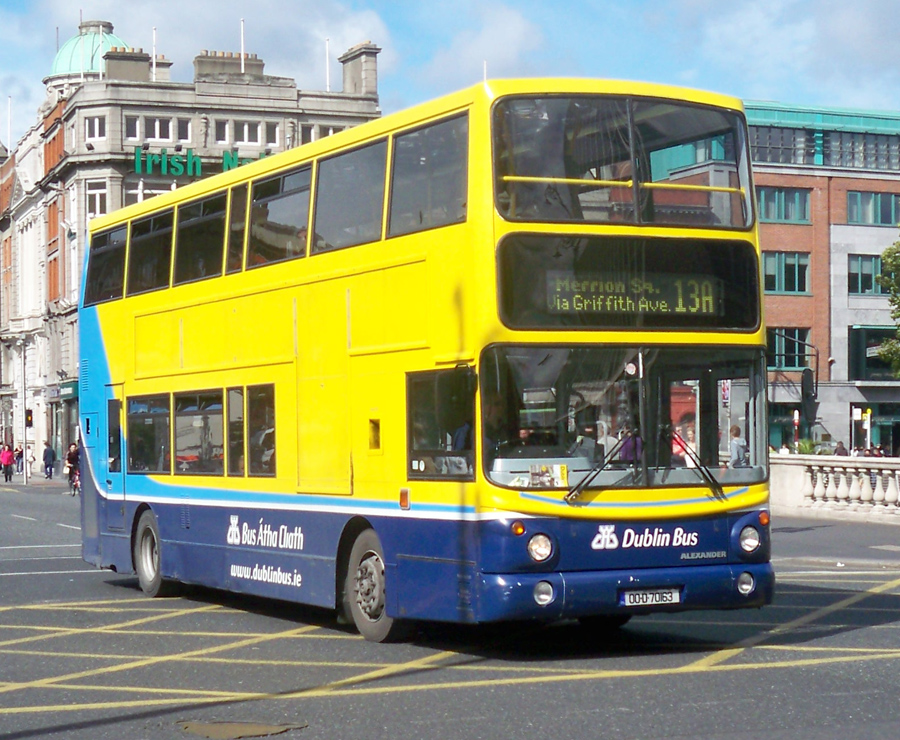
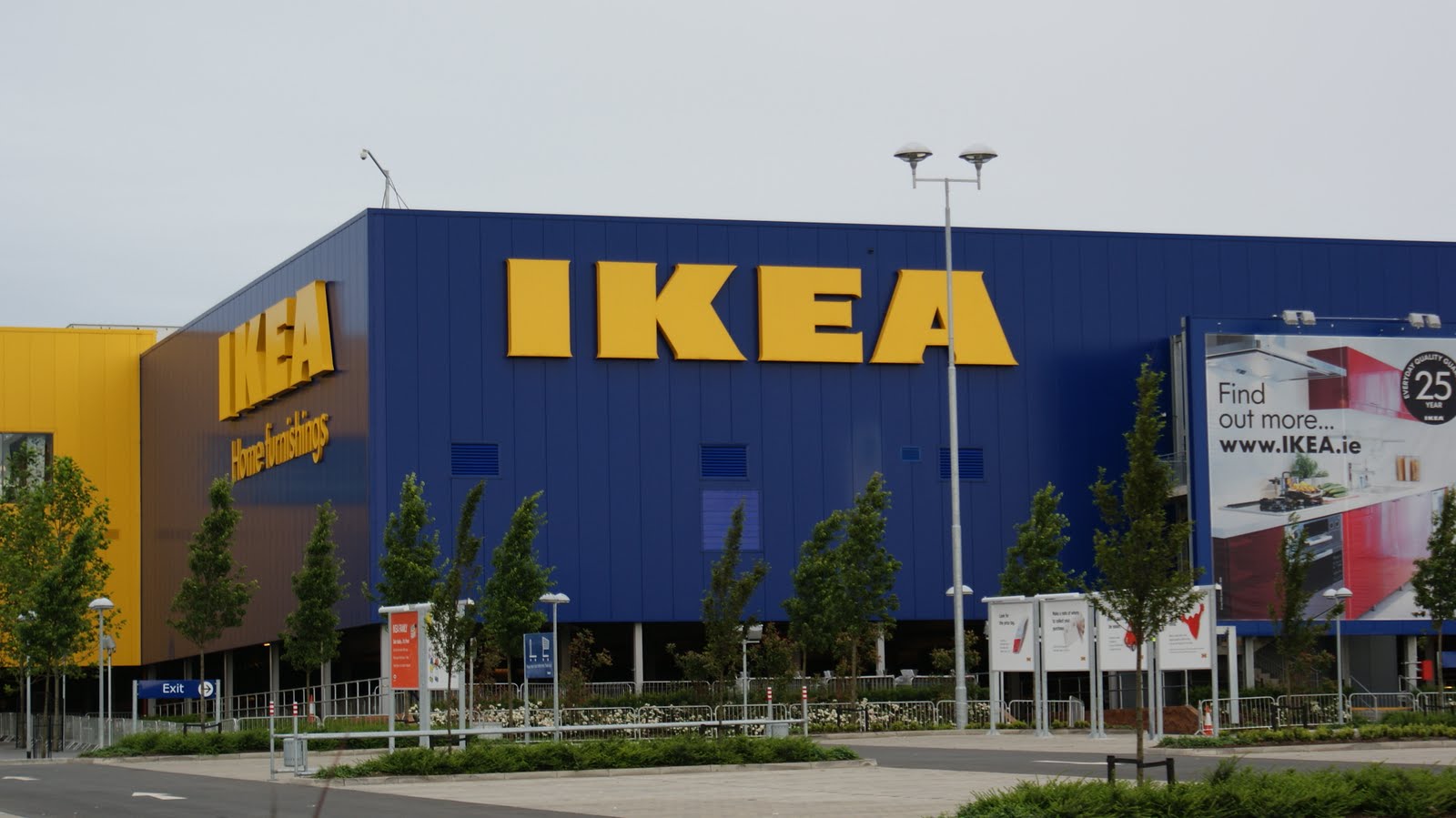
On its way to the blue and yellow superstore in Ballymun, the 13A (officially known as the “Ikea Bus”) passes three horses grazing lazily on a patch of grassland. At the entrance, a Swedish flag flutters in the breeze alongside the tricolour and opportunistic taxi drivers line up to ferry the furniture of impulsive bus passengers.

Inside, The Stereophonics’ Have a nice day provides a soft soundtrack to three Corkonian ladies who are perusing a kitchen/living room display unit. One of them is pointing at a collection of cream-coloured cookie jars: “they’re gorgeous, aren’t they?” she asks her companions, but gets no response. One of them is occupied with opening and closing the door of a bookcase to reveal again and again the flatscreen TV it conceals. “Look how it slides” she gasps in the direction of the third, who is regarding a navy shelving unit with a little suspicion; “I wouldn’t be mad about the colour”, she says, adding “it must be the fashion now”.

Around the corner, in the bathroom display area, a father has one hand curled around the bar of his shopping trolley and the other clasped to a lead attached to his toddler. Inside his trolley is a tiny sleeping baby lying flat on its back beside a large plastic toolbox. A few metres away a couple kissing by the fabric stand is separated by a middle-aged man in glasses, who strokes a piece of material and casts a thoughtful glance in the direction of the sofas in front of him.

It’s 3 pm on a Monday in June and Ikea is awash with customers. A cursory glance about the car park, which is decorated with pretty picnic table displays, reveals that shoppers have come from far and wide. At least one third have travelled from outside of Dublin. There are a particularly large number of registration plates from Cork, Kildare Longford, Meath, Kerry and Wexford and the accents inside the store represent this diversity. It’s far from just Irish accents that can be heard though. In the kitchen display area Polish children play with saucepans and mothers soothe their children with cooing foreign sounds.

How can it be that in Recession-depression Ireland, shoppers are coming in their droves to buy flat-pack furniture and frozen cinnamon buns? In the 12 months leading up to last August, Ikea Ballymun made a pre-tax profit of €11.4 million, making it one of the most profitable stores in Europe.

Ikea seems to be ergonomically designed to thrive in a recession. Its emphasis on accessibility and transparency as well as on low prices appeals to a public, which has lost faith in a politics dominated by wastage and concealment. In sum, Ikea defines “customer friendly”.

The entire store is constructed with the busy, multi-tasking customer in mind. Underneath the escalator at the entrance are a number of wheelchairs so that older and less mobile customers can navigate the store with ease. At every corner you can pick up a measuring tape, note-cards and pencils to keep track of your shopping. It would be easy to become frustrated trying to find your way through such an enormous store but measures have been taken for that eventuality too. You can find a map at every turn and each time you are about to enter a new section a sign helpfully vouches safe a missive along the lines of “By taking this shortcut you will miss workspaces, kitchens and dining.” (Heavens forbid.)

In Ikea, customer-friendly means “family-friendly”. On the ground floor, an enormous play area (“Smålan”) provides children with a huge quarter in which to expend their energy. It’s supervised and free. In the restaurant there are microwaves available for parents to heat up their babies’ bottles. Adjustable high chairs are available for toddlers of all sizes and there’s even a quiet nursing area for mothers who wish to breastfeed their babies in private. There’s a fold-out changing table in the downstairs toilet too.

There’s a great emphasis on communicating the manufacturing process to the consumer. In the living room display area for example, there is a large glass box housing an armchair. Attached to it are two mechanical levers which press again and again into the seat and back of the chair. Though it looks like some bizarre modern art fixture, the sign above it explains that this chair, like all sold in Ikea is undergoing quality testing: “Only if it withstands the pressure and still functions as well as before is it approved”.

As if furniture weren’t enough, the food is customer-friendly too. The “meatballs for all” mantra is sincere. You get a plate of 10 for €3.95 and for 50 cent you get a cup of coffee and a cinnamon bun. The soup of the day is less than two euro and you can be full up for less than a fiver. From the window of the restaurant, you can see what remains of the Ballymun tower blocks and on closer inspection, a cluster of mobile homes and caravans amidst some unwanted furniture strewn in a rubbish heap.

As they make their way to the tills, the Corkonian ladies stop to admire the pink and white orchidaceae and agree that with quality stalks like those they’re “dirt cheap”. They pick up a pot each and proceed to the checkout.

A tribute to Kim Peek: megasavant who inspired Rain Man

As part of an assignment for a writing course I’m taking, we have to choose somebody who has already died and to write their obituary. This is pretty far outside of my comfort zone but I took the opportunity to do some research on the savant Kim Peek, whose story I find both fascinating and extremely moving. What follows is no more than the result of some online research but I hope that it conveys how privileged I think the world has been to be exposed to this man and his incredible mind:

The first neurologist to see the baby Kim Peek was late for a golf game and told his parents that their son was “mentally retarded” and that he should be put in an institution. Half a century later psychiatrist Dr Darold Treffert described him as “a living google” and a “stellar savant”. Born on November 11 1951, Peek was the son of Mormon parents Fran Peek and Jeanne Willey Peek who resolved -in spite of advice from doctors- to take care of Kim in their own home and “to keep him happy and healthy”. Jeanne Willey Peek enjoyed an uncomplicated pregnancy but when Peek was born it was discovered that his Corpus Callosum-the part of the brain joining the two hemispheres- was absent. This resulted in an impaired ability to carry out motor tasks and to communicate conventionally but also served to facilitate the storage of an immense quantity and variety of information. Peek was not only reading encyclopaedias before the age of two but was also memorising their contents. At that age he developed the habit, which he maintained until his death, of turning books upside down upon their completion. Peek would read twenty or thirty books a day and was the only person known to be able to read separate pages of text with his left and right eyes simultaneously, regardless of the angle at which the book was placed. Peek managed to memorise over 9000 volumes using this method and was able to recall the facts, figures and historical events contained in them with astounding accuracy.

At the age of six, Peek was sent to a mainstream school but was expelled on the first day on account of “disruptiveness”. Lacking support from the American social services of the 1950’s, Peek’s parents employed retired teachers to educate him at home. Although he completed the High School curriculum at age 14, he was refused a certificate by the local authorities.

Peek’s life took a dramatic turn in 1984 when he visited a conference of the Association of Retarded Citizens in Arlington, Texas and was accosted by screenwriter Barry Morrow, who was much taken by his exceptional ability. Morrow’s script, which was later to become the highly successful Rain Man film starring Dustin Hoffman, was inspired by this first encounter. Though Hoffman’s character Raymond Babbitt differed substantially from Peek, Hoffman spent six hours with Peek, studying his mannerisms and attempting to imitate his particular habits which included rocking motions and monotone utterances.

In spite of Fran Peek’s initial reluctance to put his son on ‘show’, Hoffman made a particular appeal to him to “take him out and show him to the world”. The opportunity to do just that arose when Hoffman paid tribute to Peek during his Oscar acceptance speech, which propelled him to the attention of the media.

Peek’s parents had separated in 1975 and after the success of Rain Man, Peek spent the remainder of his life with his father touring the world and speaking at conferences and schools. As a matter of principle, they did not accept money for these appearances. Peek loved to challenge audience members to ask him difficult questions and was delighted at the impressed response his great knowledge elicited. At one event a little girl ventured forth to the microphone with the question “Who built outer space?” to which Peek replied in monotone (and to great applause) “God made the heavens and the earth”. At each talk Peek and his father left a card behind them which read “”Learning to recognise and to respect differences in others and treating them like you want them to treat you will bring the joy we all hope for”. The unwavering commitment of Peek’s father to just that message and the willingness of people to listen to it ensured that he will be remembered (in psychologist Larry D Beal’s words) as “an amazing human being that life could have very well passed over”.

A blast from the past: Bertie Ahern’s Irish legacy

Bertie Ahern’s blend of endearing naivety and wily opportunism is representative of a peculiarly Irish mindset, which has dominated the body politic for at least the last decade.

Bertie Ahern is grinning up at me with scrunched up nose and open-topped shirt. I find him perched comfortably at the top of page 70 of the July 4 edition of the Irish News of the World, where he has conceded that “there are questions to be answered and issues to be resolved” and that “all of the players should realise that it is time to hold their hands up and then move on.” In his capacity as sports columnist for the aforementioned publication, he is of course referring to England’s dismal performance in the world cup. His blend of endearing naivety and wily opportunism is representative of a peculiarly Irish mindset, which has dominated the body politic for at least the last decade.

As its most successful exponent, Bertie Ahern stood smiling over the country throughout its period of extraordinary prosperity and glided to a swift resignation conveniently in advance of its crippling economic demise. At the launch of his autobiography last year, he told David Frost that accusations that he had received bribes from property developers were unfounded and based on nothing more than that ‘one guy said that the other fellow told him he did’. A polished Cleggeron he may not be, but his colloquial circumlocution renders him a similarly slick smooth – speaker.

The Irish gift of the gab is not just about sliding through the nets though. Our eager benevolence and uncomplicated approachability represent the ideal of a mobilised community spirit. When Joe Duffy spoke recently to a woman living in the west of Ireland who confessed to feeling lonely and depressed in her surroundings, within minutes calls flooded in from strangers offering chats over cups of tea and spare rooms in Dublin, where she was on a housing waiting list. With similar vehemence, homeless charities have launched an impressive campaign against the demolition of empty houses in the outskirts, suggesting instead that they be made available to shelter the homeless.

I was born an invincible Celtic tiger cub and have developed lately into a scavenging graduate, competing to take on unpaid work so that some day a philanthropist will discover an archive of my eclectic and unpublished scribblings and plead with me if they may not immortalise them in serialisation – at any price. Like Ireland’s dream of winning the world cup, it is a goal worth striving towards in the strangely reassuring certainty that it will never be achieved. It is this paradoxical conviction of both success and failure, which makes possible the symbiotic relationship between self-deprecation and delusion, which has contributed to Ireland’s staggering economic rise and fall.

Bertie Ahern’s curious decision to keep his money under his mattress rather than in a bank account is the mark of both madman and genius, each masquerading as the quietly quotidian everyman, drinking still as Taoiseach in his local pub and insisting on going to Mass every week in spite of his cohabiting relationship with a woman not his wife. Paradox and irony thrive in a culture where emotion is self-consciously privileged over intellect. When Ireland rejected the Lisbon treaty, it did so with an impish ‘let’s see what happens’ attitude. The ‘No’ vote was not an indictment of Europe, but rather a concentrated attempt to get on the government’s nerves. After all, they had burst our bubble. Having wedged ourselves between Scylla and Charybdis, we grinned and voted ourselves out second-time round, much to the annoyance of the UKIP.

In a televised debate about head shops, it was claimed by a frustrated liberal that Ireland is a country where laws are set “not by experts but by Joe Duffy”. Indeed, when our former Taoiseach concludes as sports expert from the pages of a tabloid that “no one person should be made to be the scapegoat for what was a collective failure” one can only smile at the audacious success of his opportunism and shake one’s head at the grave irony of his accompanying naivety.

On books, buyers and balloons

It’s a wet and windy Saturday afternoon. The Spanish protestors gathered at the Spire have painted balloons with slogans forecasting a Revolution. Moore Street is quiet but for a vendor who’s shouting “umbrellas aunl’ a foiva” again and again and again. Inside the Ilac centre, broadband salesmen and the pumping beats from cheap clothes stores are competing for shoppers’ attention. A little boy pressed into a communion suit is dragging his parents into Game. Then, as you go up the stairs and the automatic gate pulls you in: silence.

Seated at one of the desks is a man who has taken off his brown leather watch and propped it up against an empty bottle of peach ice tea. If you are close enough, you can hear the swish of his highlighter pen over a paragraph about marketing strategy. The air is musty and the carpet tattered. A security guard moves suddenly and the keys attached to his belt jingle to the background hum of a hoover, which has just come on.

The faces are either young and foreign or Irish and old. There’s a special table reserved for the elderly and at it spindly fingers are crinkling the pages of newspapers. Blu-tac-ed to one of the shelves is a laminated poster, which reads “Books can help”. There’s a single title lying on that shelf. It’s called When Parents separate- helping your children cope.

A girl drops a pile of books on the counter and asks whether she can return them. The librarian, a lady with a wispy brown bun and rosy cheeks looks carefully at the screen: “Now, I have to tell you, there’s a bit of a fine on your account”. The girl’s eyes flash briefly, “ Yeah, I paid that in Pearse Street last Monday..” The lady’s nose scrunches up a little. “Em.. These are the titles we have here as overdue: With My Lazy Eye, The Colloquial Guide to Arabic and Homecoming. Is that right?” “That’s right”, the girl replies. “But I paid €4.50 for those in Pearse. It’s all cleared on my online account.” The lady pauses. ”hmm”, she says. Her lips curl into a smile. “Alright, I’ll take you at your word”. “Thanks”, the girl mutters awkwardly. “I wouldn’t l..”

The stench of a tweed suit comes and goes. For a split second, it’s silent again. Then the bounce of a book spine as it’s returned to the shelf: Closing time. Outside, it’s cleared up. Yer man is selling fake Adidas tracksuit tops now. The protestors are gone from the Spire but there’s a single black balloon bopping about in the breeze.

Do you mean what you say?

Remember Senator John McCain? He- that -promoted -Sarah Palin -to -Vice- Presidential- candidate? And daughter Bristol to equivalent reality TV stardom?
Well, I’m happy to say that this month marks the two- year anniversary of his inclusion in my Undergraduate essay of the title The Field of Pragmatics is concerned with how people manage to mean more than their words seem to say. Discuss how they do this, with reference to Grice’s maxims.
It was a dull essay, believe me, but Senator JMC managed to spice things up about 1500 words in.
You see, one day in 2008, when JMC was on his campaign trail, an elderly lady supporter petitioned him for a quick word about his no-hoper opponent, Barack Obama. She told JMC proudly that she had “read about him”. JMC nodded in sympathy. By God, hadn’t he had to do his own reading up on that guy. It was the lady’s next utterance that scored the inclusion in my essay. She asked simply; “he’s an Arab?”, to which McCain- swiftly removing the microphone from under her- replied “no, he’s a decent family man … and citizen”.
The whole interchange was a delight to me. It justified the discipline of pragmatics as the study of meaning beyond words and made clear to me that language is as much about what’s not said as what is. Of course, the obvious implication in this interchange is that being an Arab and a decent family man are mutually exclusive. Were this to have been made explicit however, JMC would have been immediately asked to answer to accusations of racism. As his response was veiled in an (arguably irrelevant) compliment to Obama’s family values and citizenship (oh, the irony!) however, he faced no such charges.

Paul Grice was a linguist with a mission. He wanted to create a taxonomy of the unspoken rules that govern the kind of communication that generates meaning beyond words. You can read all about his maxims here but in short, he believed that successful communication relies on adherence to a few basic rules: tell me what’s true, tell me what’s relevant, don’t flood me with information, be polite. So, when I ask you whether you like my new haircut and you tell me that you think long hair really suited me, I can assume, based on the maxims of relevance and clarity, that you are politely answering “no”.

Saying what you mean is so rare that shows like Curb Your Enthusiasm exploit it as a particular kind of comedic art. Sugar-coating our utterances and beating about the bush are so ingrained in our psyche that they have come to represent what we consider civil society to entail. An insidious underbelly is revealed however when we consider the larger-scale effects of such rigid use of linguistic decoration. As recently as last week, the White House claimed that Bin Laden was killed “after a fire-fight”. What emerged later however, was that he couldn’t in fact have had any part in the fire-fight, since he wasn’t armed. When we hear the term “firefight” it’s fair to assume that both parties (now there’s an incongruous word) exchange fire, isn’t it?

Things don’t seem to go so well for those who do say what they mean though. Poor Old Gordon Brown had a terrible time during his campaign trail last year when he called a lady a “bigoted woman”. Even though she was.

At the end of King Lear, Edgar reminds us to “speak what we feel, not what we ought to say”. Respect to Mr Brown for favouring William Shakespeare over Alistair Campbell.

The Wild West or just a quiet town?

A boy of 15 is standing still; thigh-deep in muggy river water. His pomona green Wellington boots are just visible beneath the surface. It’s about six in the evening. He is alone, and the town about him sleeps. He is fishing.

“That’s a lonely image”, I say as we watch him from a distance.

We are leaning against a stony wall by the riverbank. I am unzipping my camera case gingerly because I want to remember the stillness and his solitude when a blonde-haired man of about thirty staggers, stony-eyed towards us.

“Don’t you dare take my picture”, he yells. “You’ve no right, you sons of bitches. You’ve no fucking right at all”.

Startled, I glide the camera down and wait for him to pass. He is still ranting as he shuffles away. He is alone and mad maybe, if mad is a thing.

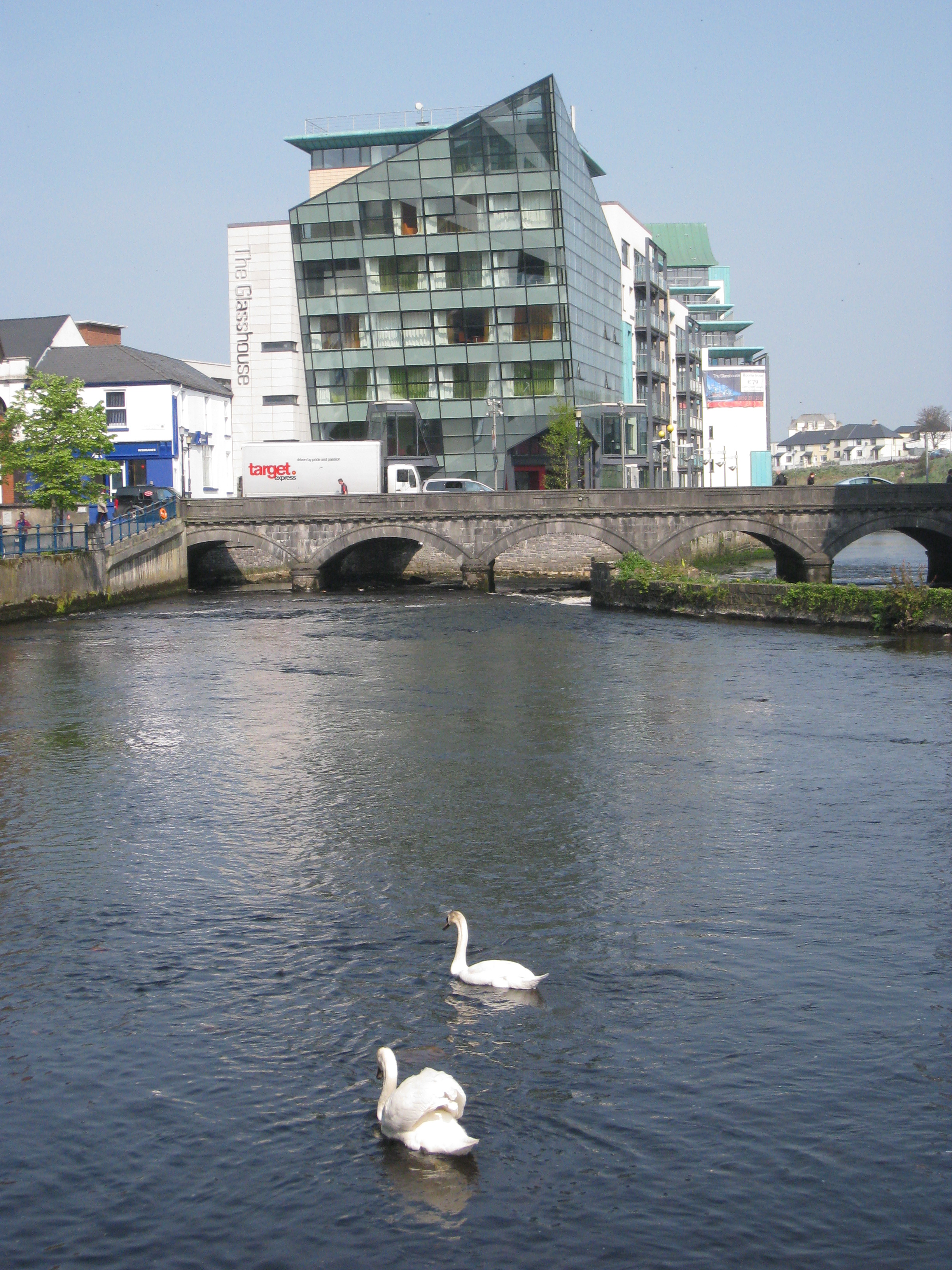
This was our first of impression of Sligo and the scene I have just described took place just metres away from the impressive glass structure of our hotel, which is shaped like an enormous boat, and obscures the little twist of the river as it stretches itself into an estuary.

The Glass hotel, Sligo

Later that night, after a walk through the town, Andrew asked, “so what do you think of it?” I paused, because this was our special break away and you’re not really supposed to acknowledge that it’s not perfect until months later, when you joke about it and realise that the other thought it was a bit shit too.

“It’s a bit dead”, I said. That was indisputable. As dusk settled, the town was lifeless but for a line of three drunken old men, smoking outside their local.

You’d have to move, if you were our age, we agreed, unless you were a farmer or wanted to work in a tattoo parlour, of which there were a disproportionate amount in the town.

We spent only three days in Sligo but it was long enough to perceive how fuzzy a boundary divides what is still and unspoilt from what has been forgotten.

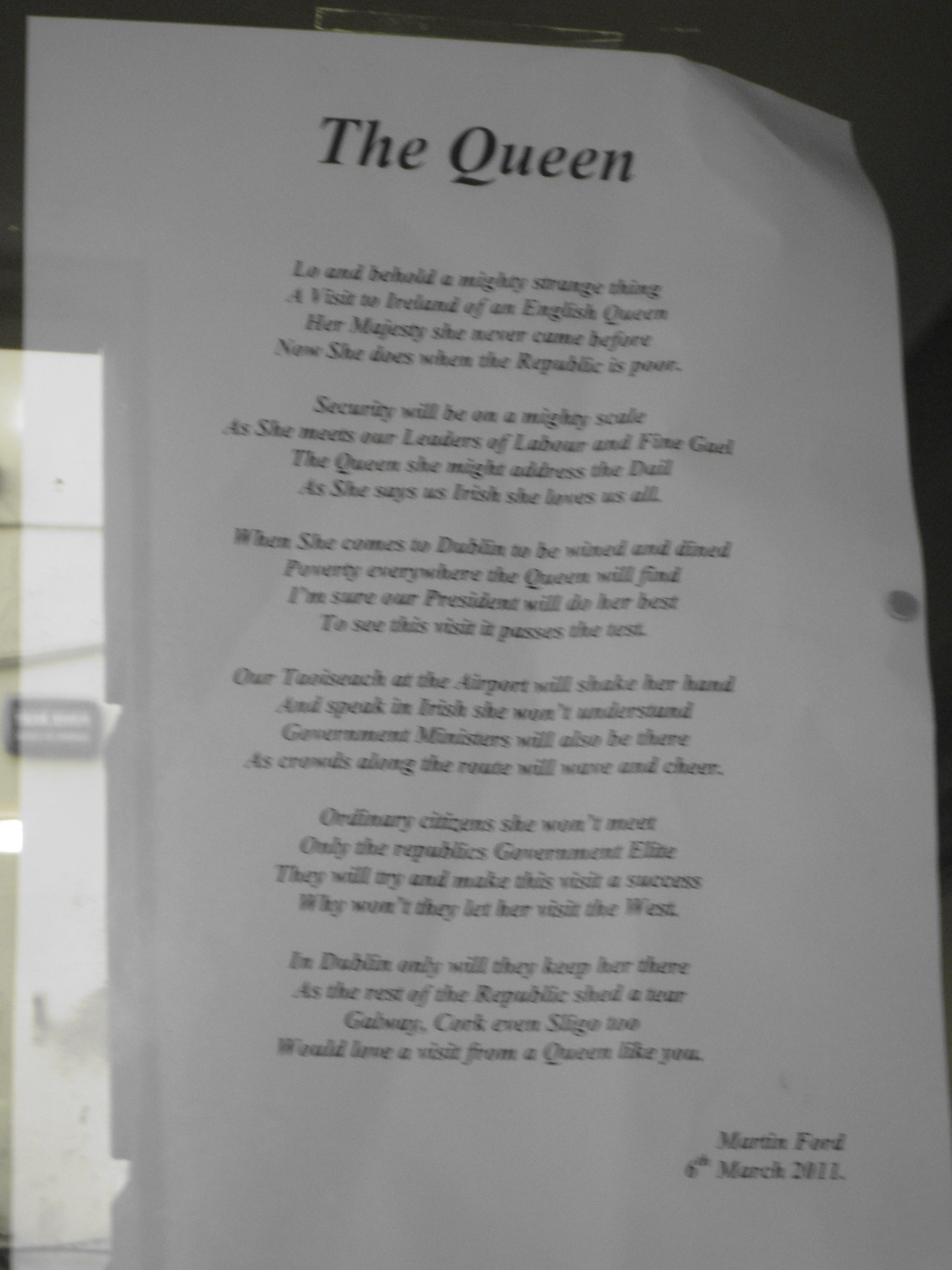
One of the first things we noticed in Sligo town, was a page stuck with blu-tac to the door of a bank (of all places!). It was a reminder of what’s been forgotten. A man, a poet, had penned some verses, on the subject of the queen’s visit. In the penultimate verse, he asked simply “Why won’t they let her visit the west?” And indeed the following day, as we climbed Knocknaree and observed the beautiful, rocky wilderness that surrounded us, it was hard to believe that this wild, unspoilt landscape wouldn’t be to Her Majesty’s taste. And yet, the way I had described Sligo town the night before as “dead”, was as if stillness were a sin.

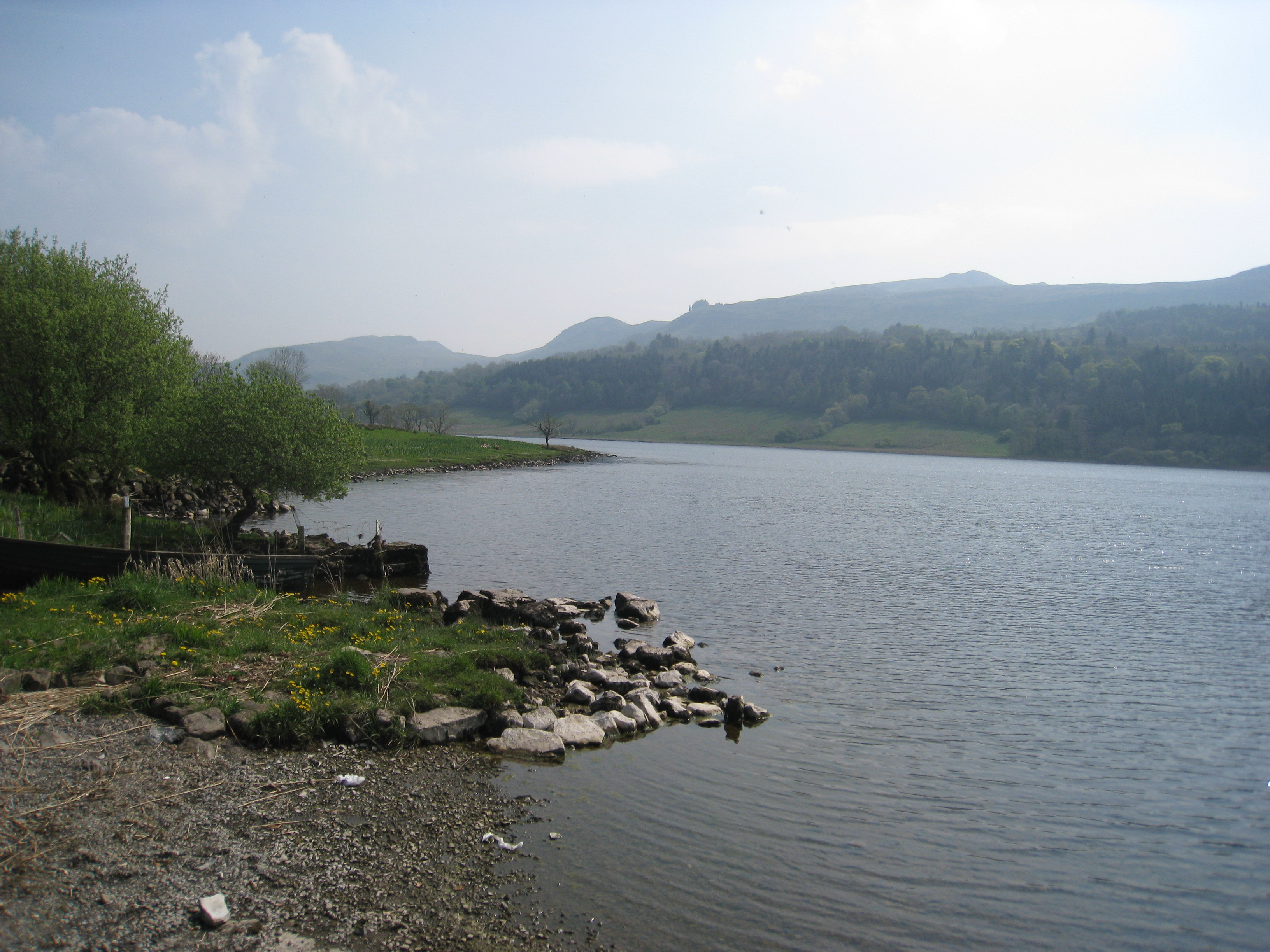
And when on our last day we visited the majestic lake at Glencare (strictly in Leitrim, but whatever) and the waterfall that inspired Yeats in his poetry we were cast under a spell. Beneath gleaming sunshine, the lake water lapped with low sounds by the shore and there was not a soul to be seen. It was beauty unbridled. It didn’t need the Queen’s visit to make it so. It was too beautiful for words or tourist brochures.
And looking back, I am glad that I never did take the fisher boy’s picture. Without that angry, lonely interruption to the peace, his stillness wouldn’t have resonated into prose.

The lake at Glencare

O’Connell Street: Was it for this?

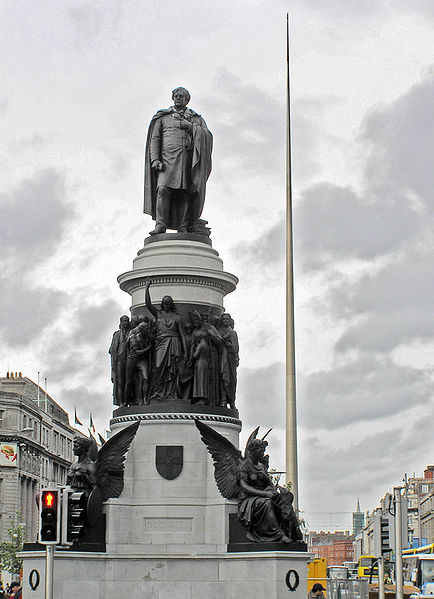
On cold, wet days I really feel for them; O’Connell, Larkin and the other lads, condemned – on account of their noble achievements- to a life of stony immobility rooted to the grey, chewing gum-smeared concrete of our main thoroughfare. I scurry by them in the mornings and wonder whether the tick-tock of Clery’s clock imposes order to their lives and whether they ever sigh to themselves “I’d fecking kill for a drink in The Grand Central” or “I’d risk my bronze plating for a win at the slot machine in Dr Quirkeys”.

The tiny Mary Mediatrix shop, which blasts out religious tunes from a battered speaker and which claimed on hand-made posters in advance of the general election that “a vote for the Labour party is a vote for abortion” is an historical artefact made charming by the implausibility of its continued existence. The Spire too – the triumphant baby claw that remains of the Celtic Tiger – speaks of time passed.

Image courtesy of Flickr

The news stands selling the Herald, as well as some specialist magazine titles survive against the odds to compete with the similarly-priced and far more extensive range in Eason’s. Those that man them are industrious and tough and their presence often masks the groups of three or four addicts slumped against the walls outside of shops with cans of Dutch gold at their feet and expressions that flicker from vacant to murderous.

The beggars too are early risers. I admire their flowing gypsy skirts and the sleepy faces of the babies they cradle in their free arm. I watch in the afternoon as tipsy old men respond to flirtations, addressed to them in wide-eyed, broken English. There is always a moment when the few coins that these men have paid for their flattery are rejected for being too paltry and it is at that moment that the expressions of the men change for it is then they know that they have been had and that the price of their time was an extra portion of curry chips at Londis.

The top of O’Connell Street is a blend of Belvedere boys and foreign children in wine-coloured pinafores making their way to school. There is a grotesque butcher’s shop on Parnell Street just at the junction with North Great George’s Street. All sorts of fleshy entrails dot the grubby countertops and I see a pair of Chinese hands skilfully tidy them into rows and columns.

Families in tracksuits queue for social welfare in a little newsagent which doubles up as a post office. Once I saw a father assault his three-year-old son on Marlborough Street. The most brutal and disgusting face I have ever seen; there is a sharp knot of disgust in my stomach as I type and the memory floods back. I didn’t intervene and it fills me with some shame. What would have been the point though? I had seen the violent force the man was capable of and the little boy’s mother was with him, watching it all with the ennui of perpetual deprivation.

There are moments of relief though. Daffodil Day coloured the street golden and pinned to bopping buttonholes an image of energy and hope and growth. The man who hops about on O’Connell Bridge each morning, wearing a gigantic grin on his face as he hands out a complimentary copy of MetroHerald to groggy commuters on their way to work makes me smile every day. And in spite of the indignity of public urination, unsolicited mounting and discarded beer cans, perhaps Larkin, O’Connell and the lads do stand proud as they watch over the city and the people they helped to forge. After all, it is their city, as it is mine and for every loss at Dr Quirkey’s there is the possibility of redemption across the road at Mary Mediatrix.

1001 Arabic Nights

Oh – wistful sigh – the stories I could tell you about the sex, drug and electro-music – obssessed Italian teenagers. For sure the tale of Akram’s business card, which I employ now as a bookmark could also have been enshrined into a blog post. The sad truth is that I have been too busy to continue my confessions and that my daily routine of walking for two-and-a-half hours and teaching for eight is taking its toll in physical and mental fatigue.
Constant contact with foreigners nevertheless continues to please. I am dealing very well with the unceasing extroversion required of my profession and I am convinced that my love of improvisation is at the root of it. I have grown passionately fond of Akram and his friends and have forgiven but not forgotten his trangression. I have heard King Abdullah of Saudi Arabia described as “vedy beautiful person” and have been suitably bemused at his feature in Akram’s “Greatest Person in the World” project presentation. In short, I have been freshly motivated in my desire to learn Arabic, first announced back when I was marvelling at brain plasticity.

I just love how everything in the language is stylishly incomprehensible and back-to-front. I have self-diagnosed dyspraxia (the most severe kind) and if there is a ‘wrong’ way to do something simple, I have found it. For example, one summer while eating dinner high up in the Swiss Alps, an American across from me regarded the manner in which I was holding my fork and asked me whether this peculiar grip was “Irish tradition”. I told her it was but have had a silent complex ever since. Perhaps for this reason, the idea of reading unintelligble symbols backwards has long held an intuitive appeal.

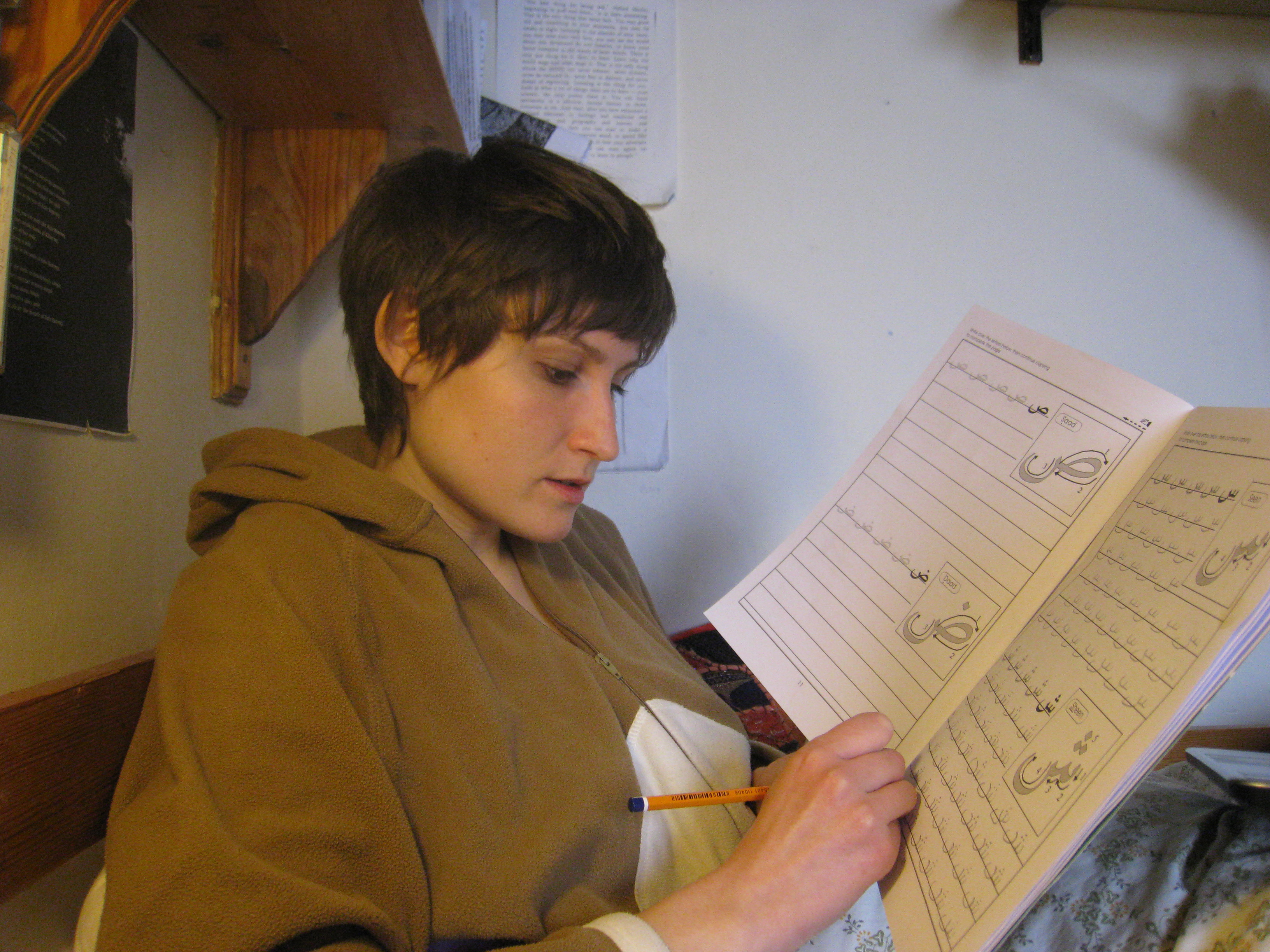
So I have bought myself a backwards Arabic workbook so that I can learn the alphabet. It’s mega-cool. It only cost me €5.65 in Hodges Figgis and it requires of me to trace letters repeatedly just like I did in those special copybooks when I was four. Last night, while babysitting in a quiet house with nothing but the heavy breath of a sleeping labrador beside me, I began to form the letters: Alif, Baa, Taa, Thaa …

It’s sure to be a journey of 1001 Arabic nights and more, but it’s only one item on my ever-growing mental to-do-list, which includes – if only putatively – emigration and re-sewing the golden buttons onto my coat from AWear. More of both in the future, but meanwhile, why not follow me on my journey and learn some Arabic with me along the way? السلام