American Diary Part 2 – Make poetry not paper hats!

In a shop on the banks of the Delaware river in Philadelphia I picked up a book with the title “Newspaper Blackout” by Austin Kleon. I thought it would be about the decline of print media but it wasn’t. It was a book of poems.

In 2008 Kleon was just out of college and living with his girlfriend. He was trying desperately to make it as a short story writer but he had writer’s block. His girlfriend had stacks of the New York Times at home and Kleon, struggling to find any of his own words, resorted to the papers, which had millions. Armed with a permanent marker, he began to read and to draw lines through the words he didn’t need. He was left with the realisation that although he’d “never wanted to be a poet, .. dang if they weren’t poems”.

He posted some of his poems on his blog. Over time, they began to get attention and it wasn’t long before his work was featured on NPR’s Morning Edition.

Kleon says “writing should be fun. Everyone can do it”. It something that I have to remind me of sometimes when I’m staring at a blank computer screen late at night.

I was teaching an advanced English class today and decided to give “newspaper blacking out” a go. There were only three students in the class: a girl from Saudi Arabia and two boys from Japan and Switzerland. We read a few of Kleon’s poems first and then I gave them each a chunky board marker so they could try their own.

I’d picked up three metroheralds on the way to work. We chose to work on the cover story – the guilty verdict in the Jackson doctor case. I gave them about five minutes to complete their poems. Three completely different pieces materialised: three unique ideas jumped from the same article.

I tried my own when I got home today. Not sure I’d really call them “poems” but it was fun to eliminate words at will. See if you can read them here:

What I like most about Kleon’s poems is that you feel part of the craft of writing. You have the sense that these words were chosen actively, by eliminating others. I wonder if this kind of crafting is at odds with the processes of writing creatively. One of the biggest differences is making newspaper blackout poems is that you’re not bound by the structure of the sentence, which usually ensnares you as you begin to write. This kind of writing allows you to draw pictures and to bounce ideas abound without worrying whether your sentence is grammatically and aesthetically pleasing.

Check out Kleon’s Work at http://www.austinkleon.com
Katekatharina’s Blog is one year old today!

Today Katekatharina’s Blog is one year old. To celebrate I am working late and going to my Arabic class. In my head though, I’m in a hammock clutching a yellow balloon with “Happy First Birthday” written on it in Comic Sans.

Blogging is terribly fun and at first it was terribly hard to keep up. I set up at least three different blogs on various sites before sticking with this one. WordPress’ format is foolproof. Believe me, I have tested it. It’s easy to use and it makes the things you write look quite pretty. The photographs you upload know intuitively where they should land and in what size they should appear. Critics say all our sites look the same: I say: “but look at the selection of themes we can choose from!”

This time a year ago, I was in the same bed I’m typing from now but in a different place. Then an indefinite void lay ahead of me whereas now I have an -albeit dangerously short-term- plan worked out.

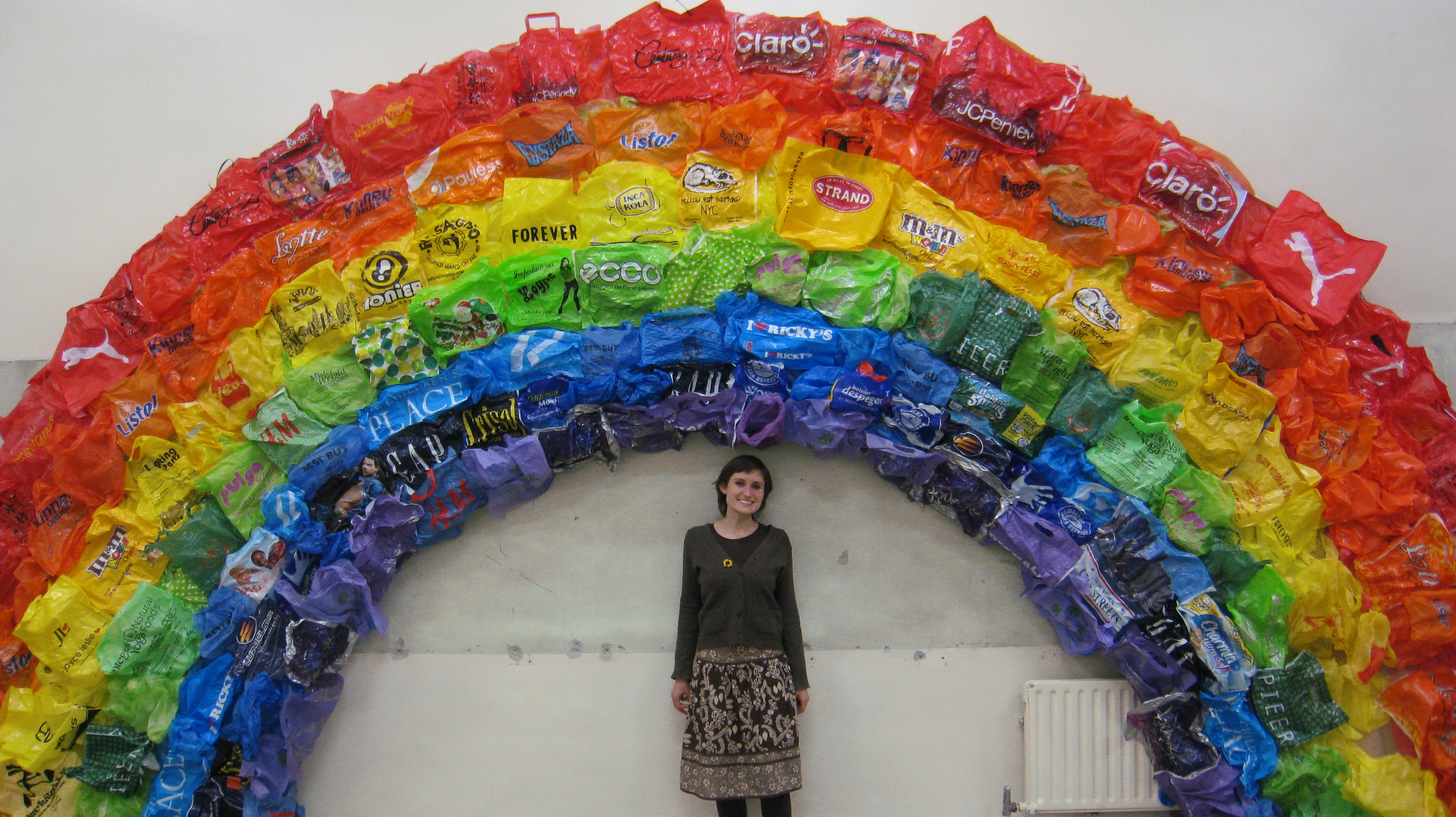
Birthday Rainbow from Dublin Contemporary


The best bit about blogging is when someone reads what you’ve written. That’s why people write on the internet. It’s not like a diary, where you reveal your innermost thoughts but it’s confessional all the same and looking back over a year’s worth of entries, I guess I can see some characteristic themes emerging.

I seem to write a lot about things I see. For me, images form an easier structure than the course of events. I think that’s why I favour feature writing over news reporting. I seem to like write a lot about language and quite a bit about LSB too. These are two of my favourite things I guess. My tone has become less formal in the last year too. My aspirations of maintaining a crisp and detached tone were tempered by the realisation that even very serious journalists enjoy copious use of the personal pronoun.

The most popular blog posts are not the ones that I have sweated over. They are the ones which were fastest to write and which were “tagged” with terms that searchengines were a fan of that day. I get a lot of referrals to a post I wrote about the closure of Waterstone’s Bookshop last February, a piece about brain plasticity, LSB’s Valentine Day surprise and my Confessions of a teacher. It is a great pleasure to skim the search terms upon which people are referred to my site. As I told you last week, a disproportionate amount of my hits come from people googling images of snails and phrases like “inappropriate teacher-pupil relationship”

I have a wonderful friend who lives in Bayreuth in Germany. Really, she’s my mum’s friend but I have applied for joint custody because I like her very much. She sent me an e-mail last week to let me know that she occasionally reads my blog. And on the same day, a boy I’ve never met dropped me a line from where he was too. We’d connected over our blogs a year ago only to discover we graduated from the same college in the same year and both wanted to get into writing. Things that like can transform your day.

Ironically, my first blog post was titled “A last resort” and was in fact taken from a column I had in Trinity College’s The University Times (then The Record). You can check it out here.

Happy Birthday to my wonderful readers, especially to you that has googled ‘snail’ again. Thank you so much for all your comments! Have a slice of cake sometime today for me. And please, let me know what you’d like to see on Katekatharina’s blog before she turns two. Got a challenge for me? Something you think I should investigate? Try out? Get over? Let me know.

Anyone with a novel idea?

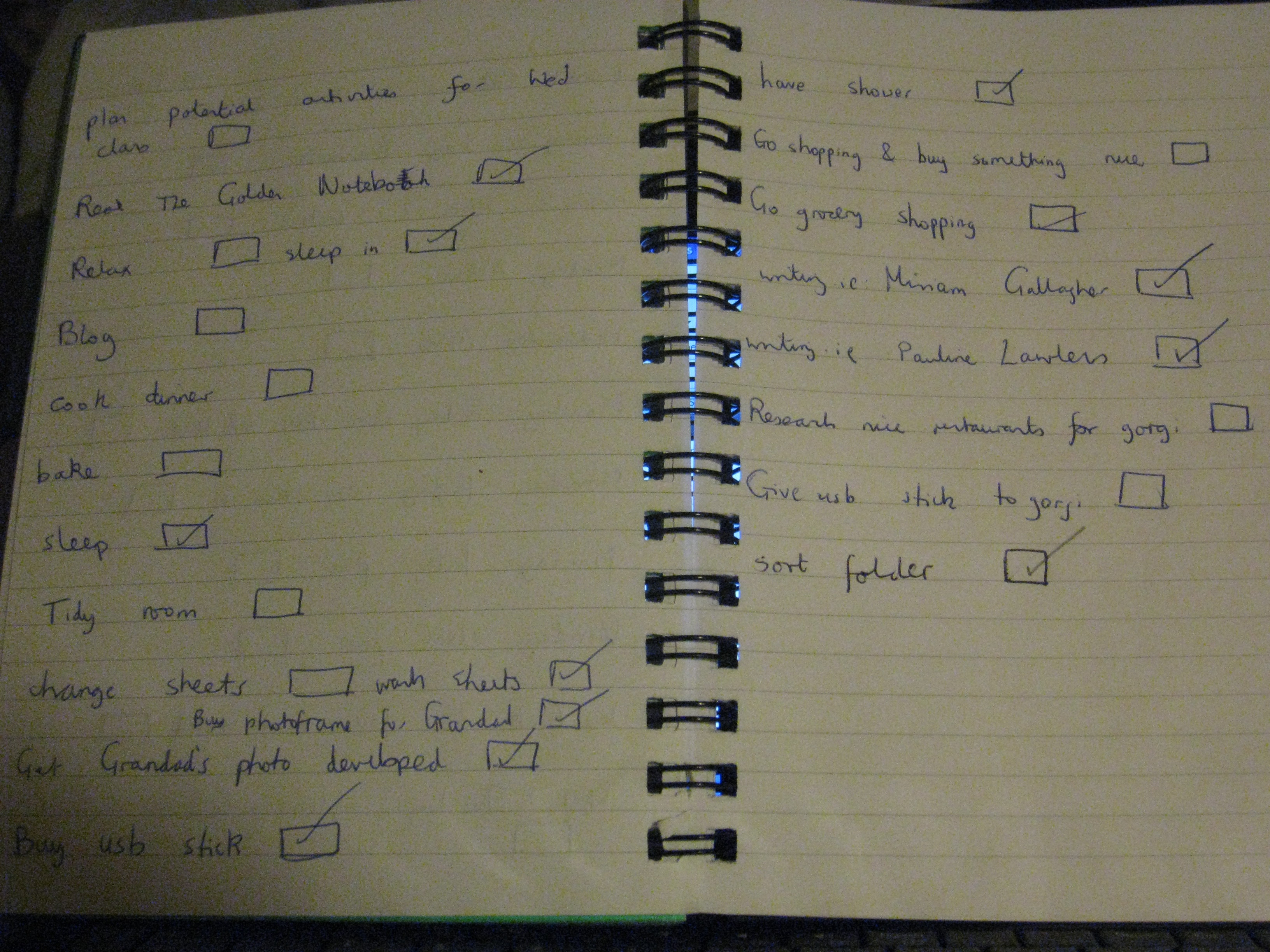
Anna Wulf is a character in Doris Lessing’s The Golden Notebook. I don’t know her very well yet because we only met 78 pages ago and our encounters since have been sporadic. My first impression of her was on board the 46 A bus to Dún Laoghaire and at that time, I considered her pretty self absorbed and possibly lacking the courage of her convictions. She really surprised me today over lunch though. I was eating a re-heated corner piece of brocolli quiche and I had opened the book defiantly, because on my endless weekend ‘to do’ list I had included such boxes to be ticked off as “sleep in and relax”, “check out menu pages for dinner tonight” and “Read The Golden Notebook”.

two of my three-page weekend 'to do' list

What Anna said to me over lunch was: “I am incapable of writing the only kind of novel which interests me: a book powered with an intellectual or moral passion strong enough to create order, to create a new way of looking at life. It is because I am too diffused … I have only one, and the least important, of the qualities necessary to write at all, and that is curiosity. It is the curiosity of the journalist.”

I think what Anna means is that for her the appeal of art lies in its power to arouse in the intellect and the emotions a sense of novelty. Whether or not there’s anything intrinsically profound in that novelty, it seems reasonable- at least from the perspective of human advancement- to be deeply moved by an idea which one encounters for the frst time. Premieres are pure, and that which is pure does not take long to become tainted and ugly. I have often wondered why we have such an aversion to clichés. To use one myself: “it’s a cliché because it’s true” and surely “beauty is truth”? I remember once as a child feeling immensely satisfied when I suddenly understood what my mum meant when she said (in German) “the apple doesn’t fall from the tree”. I had heard this said before and had stored in my mind an image of one of the apple trees in my Grandmother’s garden dropping its fruit gently onto the grass below. I connected in a flash the image with its import: like mother like daughter; like father like son.

Truths become clichés and clichés in themselves pejorative because of human vanity. We enjoy the novelty of our first flash of understanding and feel our cognitive and moral achievement devalued by widespread use. Anna’s fear is that she lacks original insight and instead indulges in passionless curiousity – which leads not to clichés but instead to a barrage of information with no meaning.

Art is nothing without meaning and even ambiguity in art has its function etched into it etymologically; allowing us to see two things at once. I have written before about how I believe the patron of the arts to be more profound than the artist themselves. I stand by that position, particularly because I have always been confused and lacking in conviction about what’s really ‘good’ in art and in particular in literature. When something has not appealed instinctively to me, beauty has been drawn out for me by inspiring teachers and friends. I have an irational but passionate dislike for the word ‘canon’ because it seems to have been constructed in cultural retrospect rather than based on timeless intellect and emotion. I know that I, like Anna am only interested in books that move me (usually to tears) or change fundamentally the way I think but I know that for many others, the appeal of literature lies elsewhere and that more and more, the commercialisation of fiction has come to be what constitutes it rather than what reveals great truths to the masses.

I think much more about reading and writing than I engage in either activity, and I like Anna yearn to write a novel which is just that. My problem is that I am crude and craftless – I yearn for original insight and would gladly spend my life in its pursuit but I despair at the idea of inventing a plot, characters, voice and setting, in which to couch my eventual clarity. I can’t help but ask myself the very question that Anna poses: “Why a story at all … Why not, simply, the truth?” Readers, please help me out. What does ‘novel’ mean for you?

In bed with Anna after our lunchtime chat

On Growing a (de)Tail

I hit my forehead against the side of a glass shelf in the Birkenstock shop at 36 Wicklow Street this afternoon. The blow inflicted a sharp pain which faded until this evening, when I absent-mindedly rubbed my forehead as I was watching Upstairs Downstairs on BBC4.

The man behind the till in the Birkenstock shop was old, with the air of an indifferent butler and if he noticed my accident, he masked his perception with perfection.

Then I met my friend Reuben at Central Bank. He had on shorts and as I approached him he was reading. There’s that way that we all stuff a book out of sight or yank earphones into a tangle when somebody we have been waiting for approaches us suddenly. A universal movement away from ourselves and into that self-governing realm of conversation.

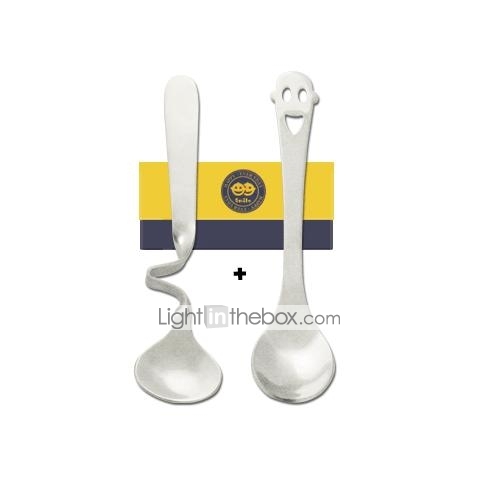
Reuben’s cup had flowers on it and contained lemon and green tea, but mine was glassy and plain. We both got bendy spoons though, which hovered over the rims of our cups and I didn’t notice until Reuben pointed it out, that the spoons were smiling. When it was time to pay, I put a tiny sum into the tip jar and took a mint. I felt bad when the waitress offered me a mint after, because that meant I had taken mine out of turn.

On the way home I crossed the road because there were boys in tracksuits on my side. In Centra, the Irish Times was sold out but there was a handful of London Times and Independents left over.

My mum read me two German Christmas stories tonight. She is the best reader in the world.

During Upstairs Downstairs my dad cupped his hands expectantly so I threw him a Malteser. After that I threw Maltesers at him without his hands being cupped.

In Avoca, a table yelled for my mum and two girls gave her effusive hugs. Grateful, smiling students of hers. It moved me strangely. I was feeling tender today, with preoccupations of an uncertain future. We met the mother again, as we were walking into Zara. She said it was ‘crazy’ in there.

There is a golden button missing from my coat. It came that way, but I have a spare because my boyfriend is magic and he went into AWear and asked for one once. They ripped a button off a faulty coat for him and I have been meaning to sew it on for seven weeks. I wondered today where that button was, but then, outside the Pound Shop in Rathmines, I felt it in the undersized pocket of my coat.

My sister and I sat beside the fire and when our feet touched by accident, her toes recoiled and danced away in disgust. She left the room to talk to her boyfriend while I listened to my mum’s stories. When she came back, we talked about epigenetics and how everything is related to everything.

I told my mum about what Ian McEwan said. That to write, is to have a detail, and not a story. That Atonement sprang from a single observation of his bossy elder daughter directing and staging a play. That a single detail can grow into love and war and betrayal and atonement and a moving masterpiece.

I’ve a lot more to gather, but this was a start.