Why I want to get naked at Teufelsee

A little while ago, LSB and I were cycling through a forest. The sun was glistening through the leaves. The air was sweet. All you could hear was the crunch of tyres on the path.

Somewhere along the way, we took a wrong turn and found ourselves at a lake. A sign told us we had arrived at “Teufelsee.” Naked men and women were lounging on the grass reading magazines, while others stood knee-deep in the water, patting their arms with water before diving in. Up a little hill, a young and bare-skinned couple was embracing. Unmoving and perfectly entwined, they reminded me of a Renaissance painting.

“This is wonderful,” I said to LSB as we walked by some middle-aged men and women chatting together; their breasts and penises exposed as naturally as my hands or feet.

“It’s nice,” he said, and pointed to a group of ducklings, which were creating tiny ripples as they paddled behind their mother.

Image source: Lucas Cranach the Elder [Public domain], via Wikimedia Commons

Image source: Lucas Cranach the Elder [Public domain], via Wikimedia Commons

Freikörperkultur – or free body culture – thrived in Communist East Germany, where people knew a thing or two about being denied personal freedom. The movement spread to West Germany and now even in a united and free Germany, nudist areas are relatively common.

A few months ago, I was writing a news story about nudist bathing spots in Munich. “It’s not right,” my young, male editor said.  “What’s not right?” I asked.

“Imposing yourself on others,” he said. “I don’t want to see some…” He paused.

“…Fat people.” I think he had wanted to say “ugly” too but stopped himself.

If words have a smell, these reeked of privilege and prudishness.

That, coupled with the recent click-whorish delight he had displayed while creating a photo gallery of women posing for a sexy Alpine-themed calendar under the caption “Farm girls calendar shows pick of the crop” made me see red.

“People don’t exist for your viewing pleasure,” I said.

He scoffed. “I don’t want to be confronted with some .. naked person when I’m walking down the street,” he said.

Poor man, I thought. Imagine his horror when he realises not every woman looks like the Alpine farm girls. Or that men get old and have saggy flesh and that someday, he will too.

I read the following quote recently, which sums up perfectly what I want to say:

“It is illegal for women to go topless in most cities, yet you can buy a magazine of a woman without her top on in any 7-11 store. So you can sell breasts, but you cannot wear breasts, in America. ”

It is okay to post naked pictures of women on the internet, as long as it generates clicks and income for your website. It is not okay to meet one in real life. Particularly if she doesn’t conform to your ideals.

And here is the saddest part.

Even though I have promised myself I will, I have reservations about going nudist bathing at Teufelsee. I dread the idea of meeting someone I know, or alarming somebody with my less-than-perfect body.

Because in spite  – or maybe because of – of all the education I have had; the material comfort and political freedom I enjoy,   somewhere along the way, I failed to learn that my body has to please nobody but myself.

Familienfest 2013 Part 1

The train journey to Familienfest 2013 was hot and sticky. I got a seat in the bicycle carriage opposite a large dog with a sad, deformed paw.

My mother met me at the platform in Regensburg. She was so tanned that earlier, when she was in the health-food store buying vegetable spread, the cashier had asked her where she’d been.

“Ireland,” she’d said.

We ate mini dumplings for dinner and then my mother said, “Kate, we really need to rehearse.”

We darted into the next room and she took out some pages from a plastic pocket.

“These are yours,” she said, handing me three sheets containing typed verses. Beside every second one she’d written K, which stood for me.

We began to recite.

“You must speak slowly and dramatically,” my mother said.

I did.

“Excellent,” she said.

After all, it’s not every day you deliver the gift of Bavarian citizenship to your husband and father through rhyme.

Then we practised singing the Bavarian anthem in harmony.

In just a few hours, Familienfest 2013 would officially open and there would be no excuse for tumbling over words or singing off-key.

My father had been due to arrive any minute. But then I checked my phone to find he had texted to say his plane had failed to take off.

My mother’s faced dropped as the unspeakable possibility sunk in that he might not make it.

But all was well. It was just some technical fault. They changed planes. All going well, he would be in Regensburg by midnight.

We killed time by examining our props.

image:www.katekatharina.com

image:www.katekatharina.com

When Final Fantasy 7 turns real

A while ago I was working on a story about poverty in Germany. I found out about a place called Kaffee Bankrott, where people go to get cheap meals and emergency shelter.

I went there one grey and humid afternoon. On the way in, a group of young men speaking a foreign language looked me up and down. I smiled at them stupidly. I always do that when I’m nervous.

The cafe was full. Some people looked down-and-out. Others were in suits. Everyone was staring at me.

There’s something despicable about walking into a place like that and telling people that you’re a journalist – working on a story about poverty.

image source: http://www.strassenfeger.org/archiv/topic/21.kaffee_bankrott.html

image source:www.strassenfeger.org

But that’s what I did – I approached an elderly man with a long beard.

“No,” he said.

I looked at his friend.

“No.”

But something about my polite response to rejection must have softened them.

The first man made a joke. “That guy’s a millionaire,” he said, pointing to his shabby companion. “He’s not what you’re after.”

I laughed. “That’s another story then,” I said. “I’ll be back for it!”

I began circulating again. I am relatively good and identifying an open face. There weren’t any here.

But then I spotted a blonde head bent over an A4 pad. A middle-aged woman was sitting alone, smoking and writing furiously. I was drawn to her like a magnet.

I told her who I was, what I was doing, that I was Irish. The latter is a bad habit I’ve developed so that I seem like more of an outsider. It cushions the blow when you act like an idiot.

“Well then we can talk in English,” she said.

I was too stunned to ask why she could speak perfect English and why it sounded as if she’d learnt it in America.

We made an arrangement to meet the following week.

This is the write-up of the interview which was published in an English language broadsheet last month.

Café Bankrott in Berlin’s Prenzlauerberg district provides cheap meals and a place to stay for people in need. 49-year-old Astrid Baty comes here nearly every day. She gets a coffee, takes out a notepad and pen, lights a cigarette and begins to write, furiously.

Her stories are based on the Final Fantasy video game series. But, she says, “I could easily write a book about my own life.”

Astrid Baty was born in Bochum in western Germany and grew up in the state of Saarland on the French border. After she left school, she trained to become a painter-decorator. There were 8 girls and 240 boys in the class. She didn’t find work in the area so instead got a secretarial qualification. From 1983 to 1990 she lived in the south-western state of Baden-Würtemberg and worked as an office clerk to a broker.
Then at the age of 26, she moved to the United States, where she was to stay for the next eleven years. Within weeks of arriving, she had found a job. She worked as a cartoonist, drawing for small newspapers, as well as for the Marvel company.

“When I arrived, I didn’t speak a word of English,” she says. “But within three months I picked it up. “I read the same Stephen King novel page-by-page in German and English.”

In the more than a decade she spent in the United States, Astrid Baty was never out of work for more than two weeks.

“It helped that I was willing to move 3000 miles,” she says, laughing. She lived in New York, Florida, Los Angeles and Oregon. Her favourite job was with the Salvation Army, helping victims of the Los Angeles earthquake.

source: finalfantasy.wikia.com

source: finalfantasy.wikia.com

In June of 1996, Astrid Baty got married. Five years later however, the marriage broke down. The collapse of her relationship and the election of George W. Bush were behind her decision to move back to Germany. “I began to get the feeling that people who were not born in the US were beginning to be pushed aside,” she says.
Back in Germany, she was offered a job with Lufthansa. “I was going to work at the counter because I had two languages,” she says. “But then September 11th happened and that was the end of that.”

Since then, life has been a struggle. She returned to Saarland and worked in a so-called “mini-job” cleaning a bakery, which paid €400 a month and supplemented her unemployment benefit.
But the job was humiliating. “I was the only one who’d come in every day,” she says. “Eventually I quit the job. I’m not a slave.”

She continued her job hunt but to no avail. “I always get the same response – we’ll call you if something comes up.”
The problem, she believes, is not lack of qualifications, but her age. “I’m not 25 and I don’t have the figure of Claudia Schiffer,” she says.

Still unemployed, Astrid Bates moved to Berlin in 2009. “Saarland was too small,” she says. “Berlin was like New York. I thought there would be more possibilities there.”
Her big hope was to get a job at the new Berlin-Brandenburg airport, which was due to open in 2012. But that project has been plagued by delays and the opening date has been pushed back indefinitely. “It won’t be open until 2075!” she says, chuckling.

Unable to support herself, Astrid Baty ended up on the street for a short time, before somebody told her about Café Bankrott, which is run by the Strassenfeger street newspaper group. The organisation provides emergency accommodation and Astrid Baty stayed there for six months before being provided with a flat from social services.

She volunteers in the kitchen at Café Bankrott and occasionally sells the Strassenfeger. Her impression is that people buy more from women than men. “It also helps that I’m not drunk or on drugs,” she says. “I always make sure I dress well when I’m selling.”

She thanks an old teacher for introducing her to a book which put her off experimenting with drugs. “At school we read Wir Kinder von Bahnhof Zoo by Christiane F and I’ve never forgotten it,” she says. It is a true story of a girl living rough in the area around the Bahnhof Zoo station of the former West Berlin who becomes a drug addict and prostitute. “The idea of selling your body to pay for drugs… it was a horror,” she says.

In 2012, Astrid Baty experienced what could be described as a horror. “I had a sore back,” she says. “But thought nothing of it.” The next thing she knew, she was in hospital. “I had no idea I’d had a heart attack,” she says. She spent a week in intensive care and went through three weeks of rehabilitation.

“They took good care of me,” she says. But in October of last year, she had more heart trouble. As a result, even if she were to get a job, she is now no longer allowed to work more than three hours a day. That puts her on an alternative disability benefit, known as ‘Erwerbsminderungsrente’, which is in the process of coming through.
Both of Astrid Baty’s parents are deceased and she has no contact with her brother. She’s lost touch with her friends in America too.

It’s a situation that would drive many to despair. But Astrid Baty insists that despite her plight, she is happy.

“What’s the use of whining?” she asks. “I overheard a girl complaining about the weather recently. What’s the point in that? We can’t change it!”

“I also have a hobby to keep my mind occupied,” she says. “I write.”
The notepad in front of her contains pages and pages of immaculate script. “I write fan fiction,” she says. “The stories just come to me – it’s like seeing a movie in front of my eyes.” She got her first games console in the United States and has been an avid gamer ever since. A search for her username, “Moonshadowcat” on Germany’s leading fan fiction site, http://www.fanfiktion.de reveals dozens of stories and also directs to a self-built website in both English and German which Astrid Baty uses to promote her services as a painter, translator and secretary.

But if she is cynical about anything, it’s politics. “We get support. But the problem is – while I live on €378 a month, the politicians are earning thousands.”
“Okay, I smoke,” she concedes. “But the money’s still not enough to cover everything else, like train tickets, heating, food, clothes and toiletries.”

She doesn’t believe much will change after the election. “For little people like us, it’ll be the same.” But, she says, she will turn out to vote. “I can’t complain about anything if I don’t vote.”
When it comes to the future, Astrid Baty is ambivalent. “I’ve no big plans,” she says. “I would love to go back to the US. But that’s not possible … I would like to find work.”

Her dream job would have something to do with computers and writing. “Give me a computer and I can do almost anything,” she says.

In the meantime, she plans to keep writing and coming to Café Bankrott, where she has made friends. “But who knows how long I’ve got left after my heart attack?” she says.

This is what slipping through the net looks like.

It’s not a sob-story. Astrid is resilient. And she is content.

The stories she writes are homo-erotic. She has suggestive lips and she laughs a lot. She views death relatively casually.

She has more dignity than most.

But her story represents the tragedy of lost potential.

What I’ve learnt from Edward Snowden

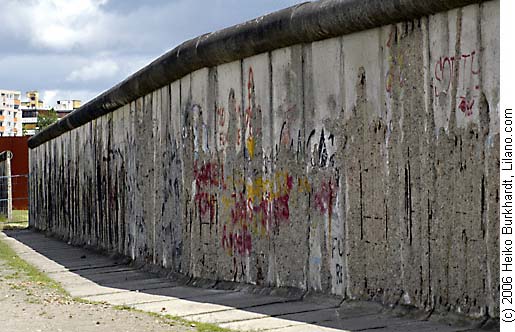
Mauerpark is home to some of the few remaining slabs of the Berlin Wall. They are dotted neatly along Bernauer Straße and flanked by a visitors’ centre and tower. Tourists climb the tower and look down on the street, imagining it divided in two.

A few weeks ago, a Mercedes pulled up on Bernauer Straße. Michelle Obama and her daughters got out. They were met by a man in a black suit. As they made their way into the visitors’ centre, he gestured to the area around them and they nodded attentively. A few minutes later, I saw their tiny heads at the top of the tower.

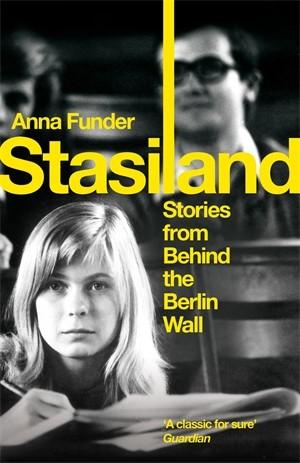
Lately I’ve been spending my evenings on the other side of the park, closer to the stalls housing ponies and goats and pens full of guinea pigs. I go there after work and read Stasiland. It’s a paperback with a yellow and black cover. The ‘L’ of the title has been extended to separate Stasi from and. I avoided it for months, admiring instead the bold colours of its spine, which stood out like a bee among the other titles on my shelf. I had got it into my head that it would be a bleak read; more of a history lesson and less of a story.

I was wrong. It is compelling and original. The author, Anna Funder, tells remarkable stories in unsentimental language. She is a master of observation – a fitting tribute to her task, which is unravelling the lives of East Germans constantly under surveillance.

I don’t just go to Mauerpark to read though. I go to watch.

There are two places I like to sit.

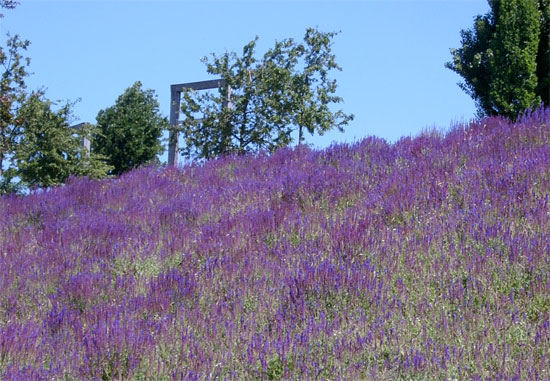
The first is on the top of a hill covered in purple flowers that look like lavender but which somebody told me, categorically, they are not.

The second is in an arena made of concrete. On Sundays, an Irishman with a battery-powered box moderates enormously popular karaoke sessions there. During the week though it is populated by shaggy-haired men playing guitar, groups of teenagers with shisha pipes and old stooped figures moving quickly up and down, collecting the glass bottles people discard on the ground. Later, they recycle them for cash.

Once I observed three teenagers in an unequal relationship. They were sitting in the centre of the arena. The two girls would kiss and hold hands while the boy sat beside them drinking beer. Then one of the girls would break off from the other to wrap her arms around the boy and climb onto his knee, while the other sat alone. The relationship seemed to intersect around one of the girls; the other two didn’t touch. After some time, the girls took each other’s hands and walked away, leaving the boy – and me- watching them from behind.

Karaoke in Mauerpark

karaoke in Mauerpark

I also watch people setting up picnics, cooing at their babies and shooting basketball hoops.

It doesn’t occur to me that I am being watched.

The office where I freelance is close to Mauerpark. My job requires me to write about German news, in English, very fast. In the past few weeks, one face has been appearing on top of several of my stories.

image source: Wikimedia

image source: Wikimedia

It is young, chiselled and bespectacled.

It’s Edward Snowden. There is a stock photograph that the agencies have which is a still from an interview that was recorded last month.

I’ve looked at it carefully. Snowden is facing the camera at an angle. His image is reflected in the mirror behind him and his expression is tense but firm.

When I write about him I use terms like “NSA whistleblower” and “fugitive” because that’s what everybody else is calling him.

I dutifully record the sequence of events as they appear in the agency feeds and try to come up with snappy headlines to fit the stories.

But the more I see Snowden, the more uncertain I become.

When it broke that US intelligence agencies were monitoring vast amounts of telecommunications, I was surprised it was a story.

Wasn’t it a given?

I wasn’t alone in my reaction. Others have told me, somewhat sheepishly, that they too expected it to be the case.

News of microphones in EU offices did shock me though. Unlike the internet, they are tangible devices. People need to conspire to plant them. They feature in detective novels and in the Cold War.

And as sometimes happens, I began to question myself.

‘Virtual reality,’ I thought, is an oxymoron. Spying on the internet requires forethought too.

And taking the technology for granted only adds to its sophistication.

Most of the time I am content to be gratefully bamboozled by how it is that the face of my friend in South Sudan can pop up on my screen or that my boyfriend and I can share a beer together – he in Edinburgh and I in Berlin.

But reading Stasiland and writing about Edward Snowden has caused me to uncover an uncomfortable truth of my own.

I have underestimated the capabilities of those in power. And I have become inert, thanks to a life full of comfort.

I escaped World War II by just fifty years and was four when the Cold War sort of ended.

But I figured – out of laziness – that nobody could be watching me and that those that are being spied on, probably deserve to be.

I have, it seems, a trust in authority that has only just become explicit.

Edward Snowden, a disillusioned geek, is just five years older than me. I am impressed by the hysteria he has unleashed. It, rather than anything he’s revealed, has shaken me up.

I’ve learnt that I live in a world where a plane carrying Latin American dignitaries can be forced to ground on the suspicion that a tech-clever ex-contractor could be on board. I’ve learnt that the balance of power in the West is an uncomfortable thing. And I’ve learnt something I keep learning: that I know very little about anything at all.

Yesterday, my colleague and I took our lunch to Mauerpark. She had bought a punnet of raspberries and we were munching them in the sun. A man with sun-tanned skin was loitering close by, watching us. After a while he lay down on the grass and curled up with his back to us.

Then suddenly we felt him looming. He asked, in Spanish, for a raspberry. When we gave him one, he disappeared.

Minutes later, a man in sunglasses, shorts and a baseball cap raced towards us.

“Was that guy just now hassling you?” he asked. He sounded panicked.

“No” He just wanted a raspberry,” my colleague said.

“Have you got everything?” the man said. “Quick, check for phones and money!”

We rummaged through our bags. Everything seemed to be intact.

“You sure?” the man asked. He was rushing onto the road.

“Wait,” we called after him. “Is everything okay?”

“Yeah,” he said, without stopping. “I’m a cop.”
“Auf die Minute!”

Auf die Minute! Frau Bienkowski says, glancing at the clock which hangs to her right.

This is always my greeting. It is the third and final thing that happens before we shake hands.

First I knock twice on the door. Frau Bienkowski says “Ja” in two syllables, which she stresses equally.

And as I am pushing open the door and making my way past where her coat hangs, she says it.

Auf die Minute! – to the minute!

Once, Frau Bienkowski had another visitor – a lady – when I knocked on the door at precisely 3 o’clock.

Auf die Minute! they said in unison, because Frau Bienkowski had told the lady that I come exactly on time, every time. And we all laughed.

“So gehört es sich auch,” – that’s how it should be – I retort as I take the hand she has outstretched.

Sometimes Frau Bienkowski playfully teases me about my punctuality.

“You must pace around the corridors!” she says.

“The corridors? Are you joking? I go for a walk in the gardens!”

It is a source of immeasurable pride that my punctuality amuses and reassures a German. A 94-year-old German at that.

I have not told Frau Bienkowski that she alone benefits from my impeccable timekeeping and that back home, my parents are bemused by what they called my “scurry” – a trademark dash out the door which I perform with my shoulders hunched forward, my head down and usually missing an item vital to the appointment I am trying to make.

Today Frau Bienkowski is wearing a yellow jumper with short sleeves. She matches the apricots I have brought her.

“I couldn’t find the Turkish apricots which you requested,” I tell her. “These are Greek.”

“Oh, perfect,” she says.

“And they are still a little hard. But I chose them deliberately because they go soft so quickly.”

“Absolutely right,” she says, digging out her purse and pouring coins onto the table. “Now, what do I owe you?”

“Nothing,” I say. “I get a monthly travel allowance of €25 for visiting you, which I do not use because I walk. I think it’s well spent on apricots.”

“Katechen,” she says, as more coins topple out of her purse. “I swear to you, I will not ask you to get me anything ever again if you do this!”

“But I don’t need the…”

“Katechen!”

“They cost €2.29,” I say.

“Good,” she says. “Take €2.50.”

“Ha! You must be joking.”

Frau Bienkowski digs her fingers through the netting of the plastic container. She gropes the apricots, pressing them with her forefinger and thumb.

“Let’s have one each,” she says.

I take them and rinse them under the tap in her toilet sink.

To the left there is a plastic shower seat, where Frau Bienkowski sits when she gets her back washed.

“It is the only thing I can’t do for myself,” she has told me many times. “I can still do everything else. I can get dressed, and make my way downstairs for lunch. I always say, as long as I still can, I will…But I can’t reach my back any longer.”

We sit by the window, munching apricots.

It is a dull day, but every now and then, the sun breaks out from behind the clouds.

On the window sill is a line of pots.

“Look,” Frau Bienkowski says, pointing to the pot of carnations I brought for her birthday.

They are deep pink and in full bloom.

LSB and Kate Katharina Fail to Elope

LSB’s arrival scene had been playing on loop in my head for several weeks. I would stand at the dingy arrivals hall at Schonefeld looking radiant. LSB would get off the plane and fly into my arms. We would embrace. He would vow to abandon his studies in Edinburgh with immediate effect. We would elope. Publishers would flock to our door offering him a job. If that didn’t happen, I would pick up enough freelance shifts to hire him as my domestic servant.

But my dreams were thwarted by wintry showers. The trains on the way to the airport were cancelled. LSB’s flight was due in at 12.40. I was shivering at a train station at the time. The plane had the audacity to land punctually. At 12.45 LSB called me.

“Katzi! I can’t believe you’re trying to dodge me. After all this time!”

“Did you not get my text?” I cried. “I’ll be there soon, promise.”

“Four months!” he said, sighing.

The S45 condescended to arrive. When it pulled in at Schoenefeld, I dashed like there was no tomorrow. I arrived panting and with a pile of snowy slush heaped on each of my boots. LSB was standing there, looking maddeningly nonchalant. “Oh you turned up then?” he said.

LSB and Lego snowman

LSB and Lego snowman

I welcomed him with a punch.

LSB has aged gracefully since I last saw him in August. The highland air has been kind to his complexion and he even trimmed his beard in anticipation of our reunion. He still insists on wearing unsuitable canvas shoes in all weather and lists meeting Joe Duffy as the most momentous occasion of his life.

The highlight of LSB's life to date

The highlight of LSB’s life to date

The last few days have been idyllic. We have been streaming Seventh Heaven online and pressing pause at opportune times. Reverend Eric Camden’s expression of brave resilience has been etched, again and again in our memories. Last night we listened to the Adrian Kennedy phone-show.

Sometimes we interrupt our analysis of the Camdens with weighty conversations about our future. When we get tired of that we go to the Christmas market and buy a bag of five Quark balls, which we share in an equitable ratio of 4 to me and 1 to LSB.

Sometimes we use our infinite wisdom and experience of travel to cast wistful judgement on the country we’ve left behind. Ireland has become homogeneous and backward since we left.

We wonder how the Catholic Church can still have such a hold. And we wonder if the recession will ever end.

Then we smile when we think about cosy nights in the pub with friends, Tayto crisps and the way Grafton Street twinkles at Christmas time.2012-12-15 17.03.59 - Copy

We may have been temporarily evicted but it’s home, glorious home and the craic at Christmas will be almighty.

Were you born in Dublin or in “Baile Átha Cliath?”

The lady in the bank squinted at my passport.

“Were you born in Dublin or in Baile Átha Cliath?” she asked.

“They’re the same place,” I said. “Baile Átha Cliath is the Irish word for Dublin.

She paused. “Can I just fill in Dublin?”

“Sure!”

“Thank Goodness. It’s much shorter,” she said, beginning to tap on her computer.

Earlier at the town hall, where I had gone to register with the police (it’s a blanket requirement rather than a sign of criminality here) I was seen by a woman whose sister had married a Northern Irish man.

“He comes from Coleraine,” she said. “But I still haven’t got around to visiting.”

Kate Katharina at her most patriotic

I felt compelled to tell her about the wildness of the west, the incessant drizzle and the friendliness of our people.

“Now I really want to go!” she said.

I told her she should.

Just in time for my move back to Berlin, the Irish Times is concerned this week with the relationship between the Germans and the Irish. In their aptly-titled series “A German Complex,” journalists are writing about Kerrygold and the idyllic German view of the Irish.

As the product of a German-Irish relationship and a literature graduate, my favourite article in the series so far has no doubt been the descriptions of the Irish by German writers and poets.

I was personally flattered by Heinrich Heine’s opinion, expressed in 1828, that an “amalgamation of the two elements would produce something excellent” and was strangely moved by Johann Georg Kohl’s conclusion in 1842 that “this island of misfortune and discontent, this country of so many incongruities otherwise unknown in the rest of Europe – can quite justly be called, like Prospero’s, an island of wonders.”

The observation which really stopped me in my tracks came from Philipp Andreas Nemnich in 1806, who found that “the Irish often express themselves too obligingly. They seem never to be able to turn down a request, and yet they never keep their promises, no matter how often one reminds them.”

I recognised myself immediately. Like many of my fellow Irish, I too am inflicted by a rather pleasant disposition. I find myself smiling at strangers and being very polite even to people I dislike. I make offers I expressly do not wish to be taken up and then curse myself when they are accepted.

All that wouldn’t be so bad if I simply didn’t bother to keep my promises, as Nemnich claims most Irish people fail to do. But I have inherited the unfortunate trait of reliability from my mother and invariably end up keeping the promises I did not wish to make.

I wonder what Philipp Andreas Nemnich would make of me.

I was asked earlier this year to carry out a Vox Pop in Berlin to find out what German people thought of Ireland. The old stereotypes prevailed: Guinness, green pastures and traditional music were the most common responses.

There’s a lot they know less about here though. Our wonderful writers for one. Our excellence in cultivating potatoes. Our uncomplicated kindness alongside our cynicism and repression.

The poor lady at the bank now knows about our national language though. Then again, she’ll find that out as soon as she lands at Dublin airport and is greeted by a poster of the beaming Westlife lads and a “Fáilte” signpost.

I love the Irish language, but don’t get me started on the signposting in Dublin airport…

So to all our potential German tourists, I hope you enjoy your stay as much as I enjoy recommending it.

Go n-Éirí and bóthar leat because the road signs sure won’t bring you any luck.

Familienfest: The Ferguson Sisters’ Moment of Truth

“Keep your gaze fixed at the back of the room,” LSB had said, against the conventional wisdom of imagining your audience naked.

I instinctively disregarded his counsel, and fixed my eye creepily on a number of individuals I believed would be sympathetic. I looked most often at my mother, who had abandoned her high-heels in favour of a pair of sensible sandals.

Given that I often fail to entertain myself, the prospect of commanding the attention of the entire Schultz family and even attempting a few quips along the way was rather daunting.

My mama’s letter to the Christ Child

However, there I was standing in my black graduation dress with all the Schultzs staring at me, desperate to figure out what the Irish contingent had come up with this year. I decided the best thing to do was to start speaking.

“When our mother was a little girl,” I began (in German) “and adults asked her what she wanted to be when she grew up, her answer was always the same.”

I paused for effect and a Schultz baby (third generation) began to cry. Unable to decide whether it was in empathy or disgust I continued:

“She wanted to be a martyr.”

The baby wailed again. My sister clicked the next slide and a picture of my mother as a child beside a stock image of Martin Luther (the reformer) appeared.

I regaled my audience with a hilarious anecdote about my mother challenging an irate nun in class. The Schultz family laughed politely. The baby demanded to leave the room.

Before I knew it, it was time for the first theatrical performance.

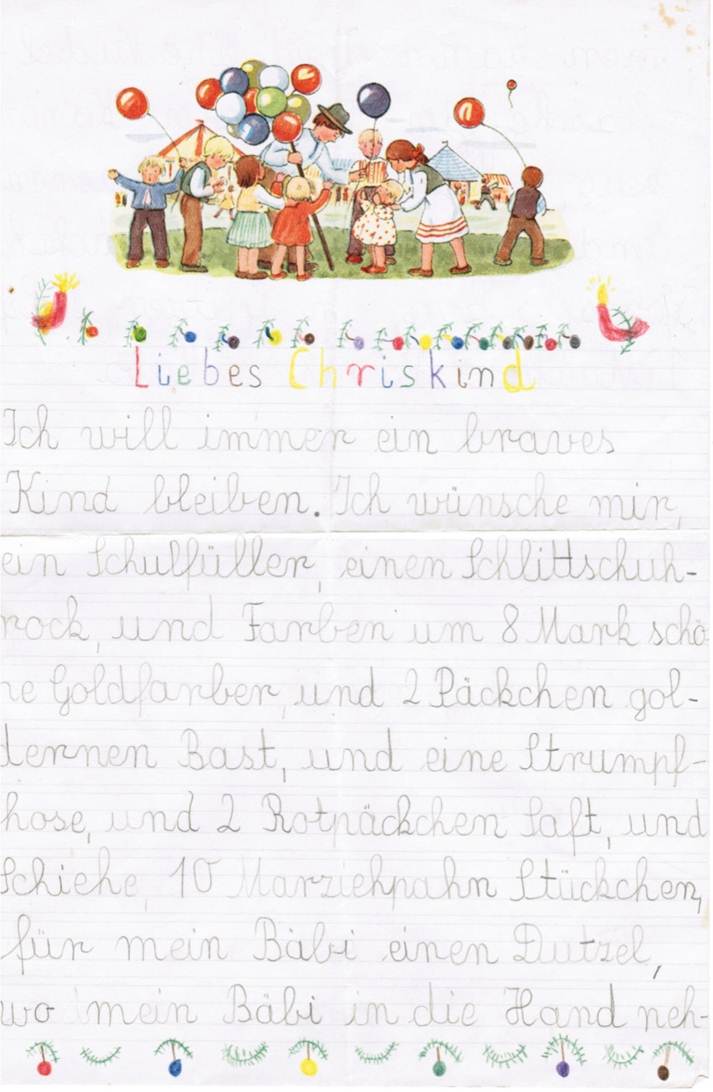
As part of the research into our mother’s past, we had stumbled across a letter she had written to the “Christkind” when she was a little girl.

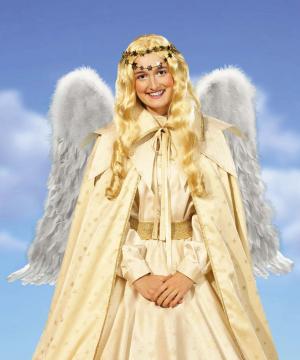
While the Christkind fulfils the same role in Germany as Santa Claus does in this part of the world, there are notable differences between the two. For one, the Christkind is an angel, rather than a Coca-Cola-inspired fat man, and according to my mother, genderless. He/she flies from the heavens on Christmas Eve and deposits presents under the trees of good children.

My mother made modest demands of the Christkind. She asked for a pair of tights, a bottle of Rotbaeckchen juice and a fountain pen.

The Christkind

I acquired these items in Regensburg and decided that a cameo appearance from the Christkind simply had to feature as part of the presentation. Having mentally auditioned the entire younger generation of Schultzs, I finally cast my 17-year-old cousin in the role. She is a natural Child of Christ, waif-like with long blonde hair and an angelic countenance.

She fashioned herself a golden costume featuring an enormous pair of glittery wings and to complete the transformation, LSB had the ingenious idea of covering our Frisbee with tinfoil to make a halo.

Shortly before the presentation (we were interrupted by the Family Song) the Christ Child and I briefly rehearsed what cue she would need in order to fly to my mother at just the right time. She had prepared to hide in a little adjoining room until the time was right.

Up to that point –all things considered — my performance had been without major hitch. I was fair-minded enough to put the baby’s reaction down to the stress of his first ever introduction to the Schultz family and accounted for his disappointment at the standard of my opener by diagnosing a case of precociousness.

When I spoke the Christ Child’s cue (“To show our mother that dreams really can come true, we have invited the Christ Child here today to lavish her with gifts”), nothing happened.

No Christ Child flew in, bearing fruit juice, a pair of tights and a fountain pen.

I paused and spoke again.

Still no Christchild.

The Schultzs were quiet. No baby cried now.

I paused a while.

In spite of my meticulous preparation for this event, I had not tested the acoustics of the room next door.

I became increasingly desperate.

“Christchild,” I yelled. “CHRISTCHILD.”

There was a flutter of wings at the door and the Christchild flew in to a great cheer from the Schultzs.

My mother was overwhelmed by her winnings and immediately asked the Christchild to pose for a photograph.

The public’s positive reaction to the Christ Child’s appearance was unprecedented and I relaxed in the confidence that the next theatrical performance would go down just as well.

It did.

My Greek cousins re-enacted my parents’ first dance with rare and delicate sensibility. My research had revealed that my father and mother had communicated in French when they first met and that my father was an exceptionally poor dancer. My male cousin, dressed in an afro wig similar to my father’s hairstyle of the time, grabbed his sister around the neck and stepping on her toes, misdirected her in an unfortunate and entirely graceless waltz around the room. She, a method actor in turn, called out “Oh la la,” and “Fais les petits pas” in what came across as very genuine desperation.

Here’s a picture of us all that Onkel Fritz took it just before the presentation. Do we look nervous?

Having completed the first section of the presentation, I breathed a sigh of relief, let my sisters take over and took a seat in front of the laptop. On my way, I managed to catch LSB’s eye. He couldn’t give me the thumbs-up because he was holding his camera at arm’s length (much to the mortification of my sisters) but he winked encouragingly at me.

At this point in the story, perhaps I should offer some insight into the background to this curious presentation. This might be of particular interest to my mother, who at time of writing, remains in the dark.

The Ferguson sisters are like any series of collectables. We are essentially the same but we each have some nice individual characteristics to recommend us to the peculiarly attentive.

When we were little, our father used to invent stories featuring my sisters and me in a parallel ancient Greek world. So that they don’t beat me up, I’m going to refer to them by the names our dad invented for us. My oldest sister, Penelope is the DIY extraordinaire and one not to libel, the middle child, Hermione is the scientist and bag-maker in Philadelphia and you all know me, Persephone as the youngest, least accomplished one that isn’t quite sure what she’s doing with her life.

In preparation for the presentation, Penelope scoured the family archives (dusty boxes in the basement) for photographs, Hermione compiled them into a Powerpoint file and I, Persephone wrote the accompanying text.

In the weeks leading up to the Familienfest we encountered a series of artistic differences, which were fortunately tempered by the great physical distance between us.

On the day however, as I watched Penelope and Hermione present our mother finally with a magnificent home-made medal (a speed limit sign with the number “60” within it) and I closed our speech with reference to her love of etymology (the word “martyr” is related to “memory…”) I realised that no matter how far apart, the Ferguson sisters are a bizarre force to be reckoned with.

Belated Happy Birthday, Mama. Hope you liked the juice.

Football in Berlin: Flat Out Support

Berliners tell me that the 2006 World Cup was the first time since the war that Germans dared wave the national flag. Now you can see them dotted on balconies, slung out of shop windows and on the tops of cars.

When Dublin Meets Berlin

There was a delay on one of the underground lines in Berlin a few weeks ago because a homeless man had fallen asleep on the tracks. Security personnel rushed to the scene and the man was woken up. Bewildered, he growled at the passengers staring at him. He was escorted off the platform but it all took time. There was a short delay before service resumed.

Meanwhile, a public announcement had urged passengers to take alternative routes. I got on another train which would take me close to where I needed to go. Sitting opposite me were two little girls, aged about nine and eleven, who had also been waiting for the first train. We’d barely been on the second for five minutes when it was announced that “Service has now resumed on the U8.”

The smaller of the girls pursed her lips and shook her head, disgusted. “What an absolute joke,” she said. “Why didn’t they announce that it would only take five minutes to clear the line?” The other rolled her eyes and sighed. “This kind of thing is always occurring. It’s a farce.”

My jaw dropped. I couldn’t believe what I was hearing. First of all, the transport system in Berlin is the single best I have ever encountered. And second, here were two tiny German girls complaining about bad service in language so adult and earnest that it was comical.

This, I thought is the difference between the Germans and the Irish.

I imagined a similar situation in Ireland, where a conversation might have gone like this: “Jaysus, the poor fella. Did you get a look at him? Lucky somebody saw him and he wasn’t driven over … Jaysus! Sure we’ll be fashionably late. It’ll be grand sure. We’ve a story to tell.”

As our economy wilts and theirs prospers, it’s worth examining what makes the Germans German and the Irish Irish. I’m in a rather convenient position to do so, being half of each.

People here tell me that when I begin to complain habitually about everything, I can be called a “Berliner.”

Complaining in Germany, as in Ireland is a national hobby. The difference here is that complaints are taken seriously.

The reason that complaints are taken seriously is that responsibility is too. When you go to a ticket vendor or to buy a hot dog, you’re served with the same level of attention as you are in a bank or a lawyer’s office.

Some time ago, I was working on a story about low wage workers and got talking to a middle-aged woman selling hot dogs on the street. “I take my job seriously,” she told me, after she spoke perfect English while serving some American tourists. “I want people to enjoy their food.” She was earning about six euro an hour and was finding it hard to make ends meet.

Sincerity too is an integral part of the German mindset. If you say “We must meet up for a coffee. I’ll give you a call in the next couple of days,” it means that you will certainly arrange a date within three working days.

Shortly after I moved into my apartment, I made my flatmate dinner. It was vegetarian Shephard’s Pie and I was worried that it hadn’t turned out well. As we sat down to eat it, he took a few mouthfuls and said nothing. I was nervous. Perhaps it wasn’t to his taste. I waited for a while and then tentatively asked whether the food was alright.

“It’s delicious,” he said.
“Then why didn’t you say anything?” I cried.
“Well I had to wait to taste it properly,” he said. “It would have been insincere to say it was nice straightaway.”

I thought about that for a long time.

While the Germans are responsible, reliable and sincere, the Irish are compassionate, humorous and wily.

When my parents visited me recently, they were a little slow in buying their train ticket at the machine. A woman in her twenties standing behind cursed at them and shoved them out of the way. I would like to think that in Ireland, she would have given them a hand. For all its Celtic Tiger madness, Ireland has remained a place, where, as my mother so nicely puts it, “eejits and eccentrics are well tolerated.”

Before I moved to Berlin, my boyfriend made me a mix tape which included two anthems to remind me of home. One of them is the speech Enda Kenny made to welcome Barack Obama to the country and the other is the lament, with mandolin accompaniment, performed by Joe Duffy following Thiery Henri’s handball in 2009, which crushed Ireland’s dream of qualifying for the World Cup.

The latter is ridiculous and hilarious and features lines such as “Will You be Out of Favour To Sell Gillette Razors?” and “It’s a pity for the South African nation without us at their world celebration.” Enda’s speech on the other hand, is so full of passion and pride that it’s hard not to feel a pang of affection for the little nation, which despite falling to pieces, has still managed to maintain a healthy dose of national pride.

While the Irish might champion mediocrity, they do it with charm. Ireland is like the child in the psychological experiment that gobbled up the single marshmallow, despite knowing that if it had waited, it would have received two. Germany is the child that waits for the second marshmallow but wonders whether, by the same principle, it would make more sense to continue to wait rather than to enjoy the two already gained.

The Irish are wily and endearingly naive. We wouldn’t quite call ourselves dishonest but we’d settle on being creative with the truth: the stuff of brown envelopes, dodgy property deals, shifty politicians and the Catholic Church. On the other hand, it’s also the kind of opportunistic cleverness that bagged Enda a meeting with the Chinese Vice President last February, made Jedward into national icons and allows some to hold fast to the belief that we really, really, really can win the Euros.

If we could learn accountability and responsibility from the Germans and teach them to kick back and remember that everything – probably will be grand in the end – we’d both be better off. Instead, they’ll be bailing us out for decades and we’ll be telling jokes to numb the pain.