Ever the Bridesmaid…

Frau Bienkowski hasn’t managed to marry me off yet, which is a pity since she likes a good wedding. She’s always talking about William and Kate’s and is the first to know about the appearance of a new photograph of Prince George.

She’s interested in failed marriages too. Like those of former president, Christian Wulff who, scandalously, separated twice. And she thinks it’s high time his successor, Joachim Gauck marries his long-term partner. After all, Frau B says, she accompanies him to most official events.

source: Creative Commons Robbie Dale www.anonlinegreeworld.com

source: Creative Commons Robbie Dale http://www.anonlinegreeworld.com

Luckily for us both, our appetite for wedding-related stories has recently been whetted by living vicariously through my sister, who got married in Philadelphia in July.

Frau B was there every step of the way.

She was thoroughly briefed on the suitor. And on how he met my sister.

(“Everything is possible online these days!” she had said approvingly)

She knew all about  the navy bridesmaid dresses, which we ordered online for $25. She knew my sister was making her own wedding cake. And she had a good knowledge of the guest list too.

Ever the stylist, she worried about how I would wear my hair on the day. She suggested I get the same cut I had last December.

I have documented my fear of hairdressers here before. Believe me, they get worse when you cross the Atlantic. My cutter had scraggly blue hair and dreadful manners. She refused point-blank to cut the shape I wanted, instead insisting, “It’s 2014  dude. You sister is getting married! Try something new.” She also accused me of frequenting “old lady salons.” (She’s right obviously; hip salons don’t have libraries attached.) I ended up with a stupid cut. Relieved I wasn’t the bride.

Frau B was also privy to my pre-wedding music-related woe.(PWMRW; primarily affects  amateur musicians, according to DSM X)

I had brought my violin back from Dublin at Christmas after my sister hinted she might want my (other) sister and me to play during the ceremony.

Things were going okay at first, though I hadn’t played in years. My fingertips were getting tougher and I was playing halfway in tune. Then one night, when I was doing my floor exercises (as you do) LSB tried to step over me to get to the couch.

Except he tumbled over my open violin case instead. I watched as if in slow motion as he landed, knees first on top of the instrument.

Snap. Crack. An expletive.

I twisted out of my yoga pose faster than you can say “downward dog” in time to see my E string spring loose. Then the A string. Then the bridge collapsed. It was all very traumatic.
Source: Wikipedia

Source: Wikipedia

I had to bring it to the Geigenbaumeister. He fixed it for €10 and told me he’d had a Stradivarius in earlier that week. Frau B told me I’d got lucky. She was right. Could have been much worse. Could have been a collapsed Stradivarius bridge.

When I visited her last week, Frau B said: “Tell me everything about the wedding. Then show me the pictures.”

I told her that my sister was objectively the most beautiful bride there’s ever been.

That the wedding took place in a medical museum which boasted among its displays a gigantic colon. (Available for guests to view before dinner).

That everyone survived the violin duet.

That the cake was spectacular.

That my tough big sister had to try really hard not to cry during the (self-written) vows.

That I had to try even harder.

When I showed her the pictures,  Frau B said. “My! What long hair your sister has got!”

Want to win the World Cup? Try “Konzentration”

I meant to post this yesterday but didn’t get around to it, sorry! The story begins at the Brandenburg Gate 24 hours ago:

As I write the German football team are dancing on a stage at the Brandenburg Gate. Before their “Sieger Flieger” landed, the plane took a spin over the fan-zone, where half a million people clad in red, black and gold were waiting to welcome their heroes home.

I have no idea how half a million people have nowhere else to be on a weekday morning. But this is Berlin; they’re probably in the creative industry or have called in sick.

As I watch Berlin explode with festivities, I’m reminded of the cliché that when Germans do party, they tend to party hard.

And, come to think of it, identifying the right time to party has been key to this team’s success.

Throughout Germany’s stellar World Cup campaign, coach Joachim Löw has refused to celebrate prematurely.  Instead, he remained adamant that each team Germany faced had the potential to end their championship dream. He was right too; after his side’s spectacular 4-0 defeat of Portugal, Germany could only muster a 2-2 draw against Ghana.

And after their epic 7-1 win over Brazil, which broke social media as well as footballing records, he remained determined in his caution.

Löw’s measured style may be seen as a tactic to keep his team level-headed before the final. But it was matched, if not exceeded by Merkel’s  endearingly understated response.

Appearing at a press conference the day after her country’s  7-1 defeat of Brazil, she said: “I agree with the global opinion that it was a very good match … I think it almost merits the description ‘historic.’”

She went on to wish the team “strength and concentration for the task at hand.”

Strength and concentration, seasoned with some good old-fashioned caution,  is the German recipe for Weltmeisterschaft success. What’s yours?

Help! I am an insufferably smug gardener

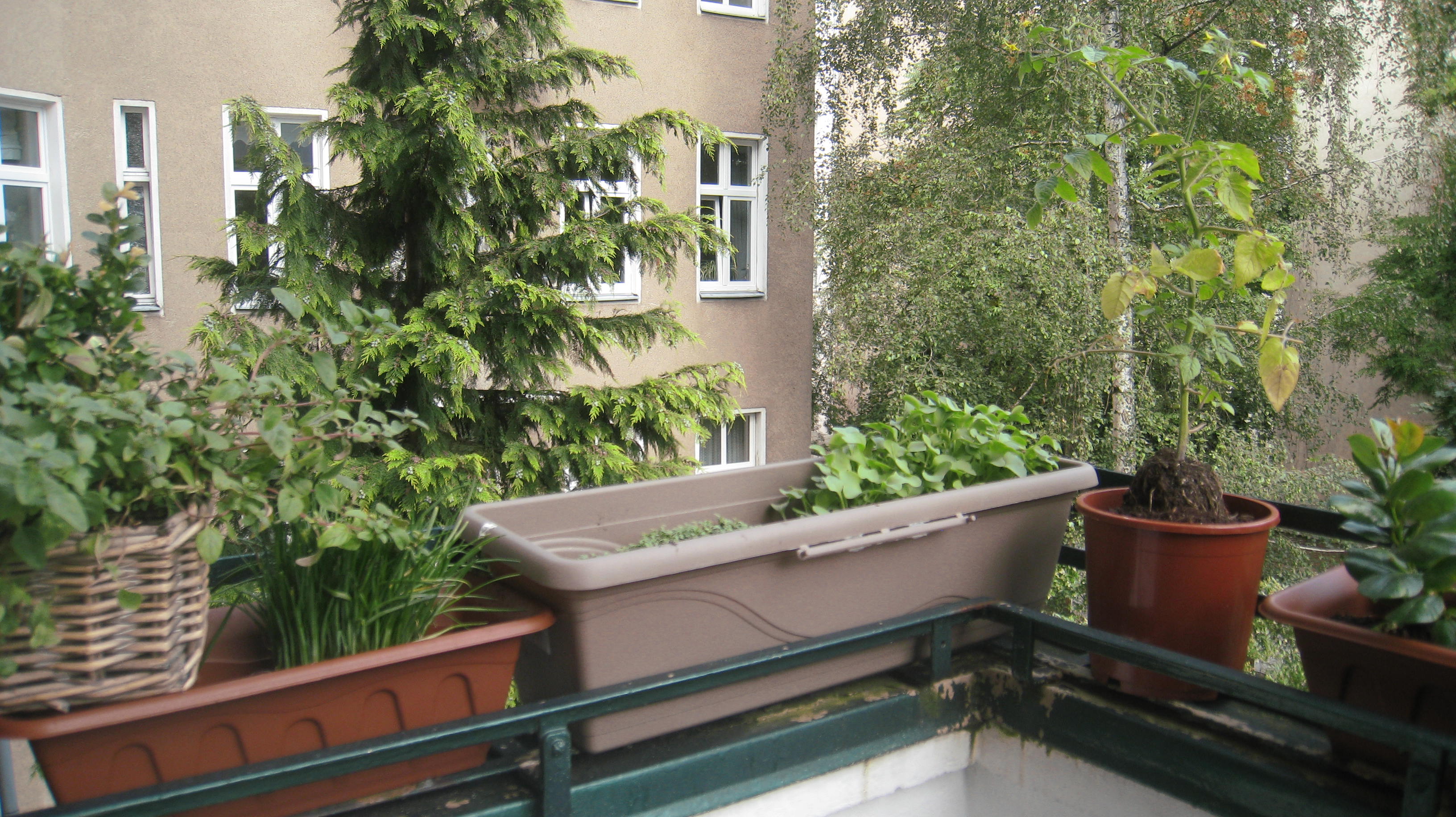
Okay, I admit it. Ever since I planted some radish seeds and bought a pot of dahlias, I’ve become quite insufferable.

I’d been looking for a new hobby, you see. My small, north-facing balcony was looking sad and bare so I decided to take up gardening. But before you could say “from seed to sprout” my hobby had become an obsession and I was finding myself boasting about my zucchinis at social events.

My plant-purchasing habit has since spiralled out of control and my balcony can no longer accommodate my botanic buys. The obvious solution might be to stop acquiring vegetation but instead, I have directed my attention to house plants.

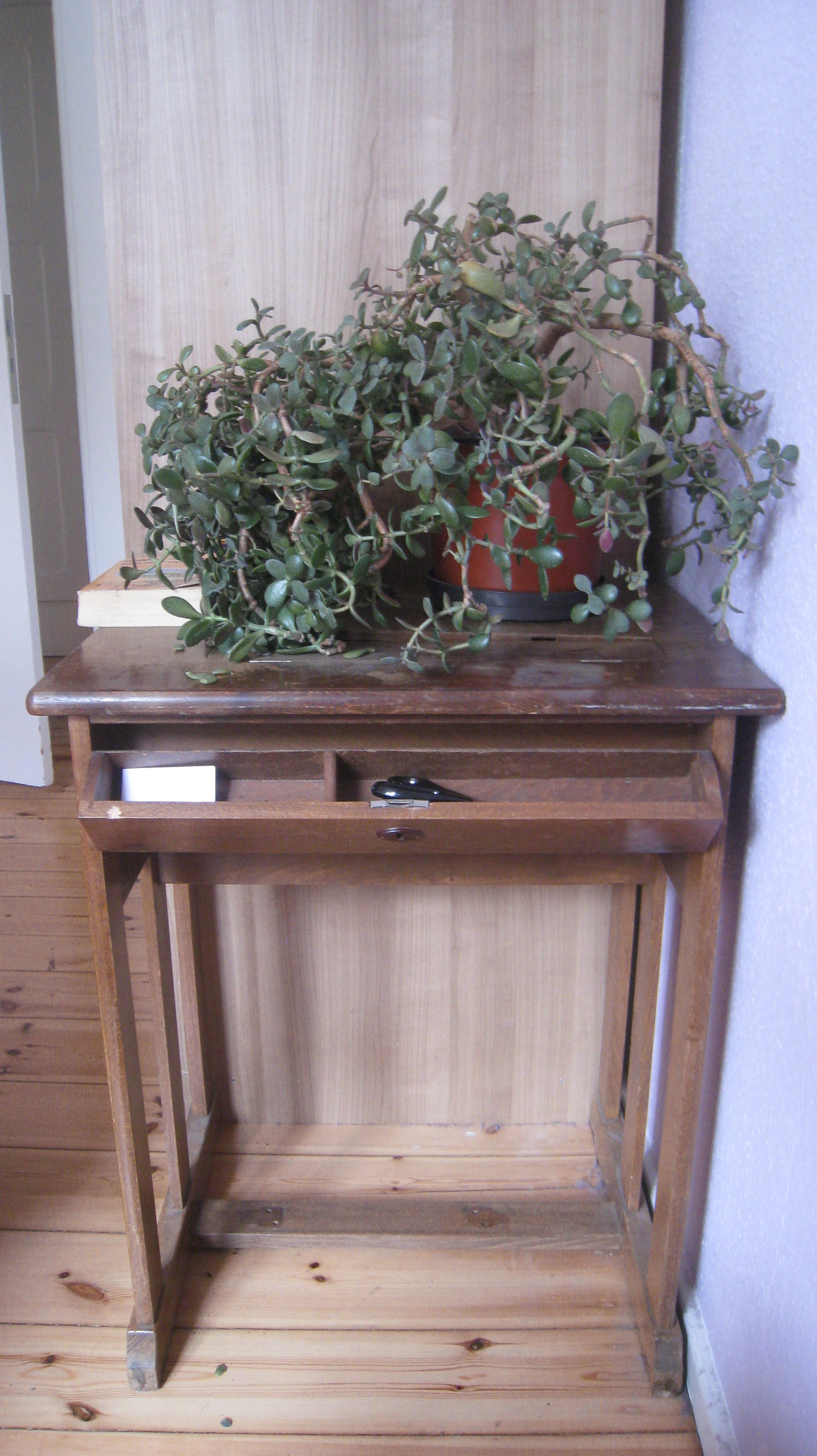
Look at my beautiful plants!!! Aren't they just wonderful?

Look at my beautiful plants!!! Aren’t they just wonderful?

I recently signed up to the Berlin section of Freecycle, an online portal where users offer to give away items they no longer want. You can imagine my excitement when I discovered that someone in Friedrichshan was giving away a Crassula ovata, known more commonly as the “money tree.” He also mentioned that he intended to shed two spider plants (or Chlorophytum comosum, to nerdier naturalists).

The kind stranger lived on the sixth-floor of an uninviting block of flats close to Alexanderplatz. Upon disembarking the lift, I encountered several entrances boarded up with concrete. It occurred to me that the promise of a free money tree may have lured me into a murderous, Communist-style Venus Fly trap. But soon enough a young man appeared and led me to his doorstep, where the three potted plants were ready for collection.

This money tree is NOT a desk plant.

This money tree is NOT a desk plant.

The money tree turned out to be several times larger than I had expected. It became clear to me that this was not going to be the desk plant I had envisioned.

My benefactor was slight and shy and appeared quite keen to keep our encounter brief. He expressed some sympathy with me for having to ferry the portly plants across the city and advised me to re-pot the money tree.

As well as receiving quite a lot of attention on the tram, I was a little concerned about the fact that I was on the way to a work social event and would not have time to stop by at home to drop off my tree.

Needless to say, arriving at a bar wielding an enormous plant proved an ideal opportunity once again to regale my colleagues with my latest botanic news.

It would seem wrong to sign off without mentioning that my oregano is doing well, that my cress is developing nicely and that both made a flavourful appearance in my omelet this morning.

My radishes are ravishing! And my cress is far from crass.

My radishes are ravishing! And my cress is far from crass.

Why I want to get naked at Teufelsee

A little while ago, LSB and I were cycling through a forest. The sun was glistening through the leaves. The air was sweet. All you could hear was the crunch of tyres on the path.

Somewhere along the way, we took a wrong turn and found ourselves at a lake. A sign told us we had arrived at “Teufelsee.” Naked men and women were lounging on the grass reading magazines, while others stood knee-deep in the water, patting their arms with water before diving in. Up a little hill, a young and bare-skinned couple was embracing. Unmoving and perfectly entwined, they reminded me of a Renaissance painting.

“This is wonderful,” I said to LSB as we walked by some middle-aged men and women chatting together; their breasts and penises exposed as naturally as my hands or feet.

“It’s nice,” he said, and pointed to a group of ducklings, which were creating tiny ripples as they paddled behind their mother.

Image source: Lucas Cranach the Elder [Public domain], via Wikimedia Commons

Image source: Lucas Cranach the Elder [Public domain], via Wikimedia Commons

Freikörperkultur – or free body culture – thrived in Communist East Germany, where people knew a thing or two about being denied personal freedom. The movement spread to West Germany and now even in a united and free Germany, nudist areas are relatively common.

A few months ago, I was writing a news story about nudist bathing spots in Munich. “It’s not right,” my young, male editor said.  “What’s not right?” I asked.

“Imposing yourself on others,” he said. “I don’t want to see some…” He paused.

“…Fat people.” I think he had wanted to say “ugly” too but stopped himself.

If words have a smell, these reeked of privilege and prudishness.

That, coupled with the recent click-whorish delight he had displayed while creating a photo gallery of women posing for a sexy Alpine-themed calendar under the caption “Farm girls calendar shows pick of the crop” made me see red.

“People don’t exist for your viewing pleasure,” I said.

He scoffed. “I don’t want to be confronted with some .. naked person when I’m walking down the street,” he said.

Poor man, I thought. Imagine his horror when he realises not every woman looks like the Alpine farm girls. Or that men get old and have saggy flesh and that someday, he will too.

I read the following quote recently, which sums up perfectly what I want to say:

“It is illegal for women to go topless in most cities, yet you can buy a magazine of a woman without her top on in any 7-11 store. So you can sell breasts, but you cannot wear breasts, in America. ”

It is okay to post naked pictures of women on the internet, as long as it generates clicks and income for your website. It is not okay to meet one in real life. Particularly if she doesn’t conform to your ideals.

And here is the saddest part.

Even though I have promised myself I will, I have reservations about going nudist bathing at Teufelsee. I dread the idea of meeting someone I know, or alarming somebody with my less-than-perfect body.

Because in spite  – or maybe because of – of all the education I have had; the material comfort and political freedom I enjoy,   somewhere along the way, I failed to learn that my body has to please nobody but myself.

The Quiet Revolution

Susan Cain’s “Quiet“came out in 2012 and her TED talk about introversion has been viewed more than 8 million times.

So having just finished reading the book, I’m a little late to the party. But it’s one of the few I’m happy to be at!

Susan Cain’s argument is that introverts live in a world designed for extroverts. She says western society fails to value the traits associated with quieter, more reflective types.

And it’s true. We value speaking over listening, flamboyance over reservation and risk taking more than caution.

Cain believes that our schools and workplaces are designed for the loud and commanding and that such individuals often flourish at the expense of the more sensitive and careful-minded.

Of course, as a self-diagnosed introvert, reading “Quiet” brought with it a great sense of validation. As I raced through the book, I re-purposed all of my perceived failings (lack of assertiveness, fear of public speaking, dislike of group conversations) into virtues (talent for listening, social intelligence, capable of intimacy).

Susan Cain doesn’t dislike extroverts. In fact, she is married to one (which may or may not have inspired her to write “Quiet”.)

Instead, her “Quiet revolution” is about reclaiming the traits which have become sidelined in a society obsessed with the limelight and where what she calls the Culture of Character, which emphasised values and morality, has been replaced by the Culture of Personality, which values the ability to entertain.  And even if she herself doesn’t, her message speaks volumes.


Streetwalking in Schöneberg

I had some time to kill the other night, so I walked up and down Bülowstrasse. It’s in the Schöneberg area of Berlin, where Albert Einstein, Hans Fallada and David Bowie all lived at some point.

It was only 7 o’clock, so I was surprised to see prostitutes lining the streets so early. There were six of them. Two emerged linking arms from a shop before separating to take up position.

They weren’t anything like the prostitutes at Hackescher Markt who are both glamorous and absurd in their identical fishnet tights, baby-pink corsets and furry boots.

These women looked eastern European. They didn’t have a uniform, but they were all wearing  plastic strappy high-heels; the kind you’d find in a basement store in the Ilac Centre in Dublin, full of artificial light and pumping music.

The youngest of them had brown hair, very narrow shoulders and was wearing denim hot-pants. She had earphones plugged in while trying to hail down cars.

The oldest woman wasn’t bothering to show her legs. She was dressed casually in jeans and a leather jacket. She had reddish-brown hair and looked bored.

The woman whose face I can’t forgot was standing near a lamppost supporting a campaign poster for Germany’s neo-Nazi NPD party. It featured a fish-bowl picture of an old lady under the slogan: “Geld für Oma statt Sinti und Roma.” (“Money for Granny, not the Sinti and Roma”)

The woman had her hair scraped back into a ponytail. She was performing her job awkwardly – trying to hail down cars by forming a stop sign with her hand, like a police officer would do to check a driver’s insurance.

Tears were running down her cheeks.

No one stopeed but she kept on sticking her hand out at the passing cars.

Lidl children

Whenever I go to Lidl, the cashier asks if I’m collecting the football stickers. When I say “no,” she looks surprised and a tiny bit relieved.

Yesterday I went to another branch closer to work. There were loads of little girls loitering at the entrance, eyeing up the customers. If they had been bigger, I would have felt very threatened.

This time, the cashier simply handed me two football stickers with my receipt.

Outside the shop, the girls lunged at me.

“Did you get a football sticker?”

I rummaged awkwardly in my bag.

“ME! GIVE IT TO ME, GIMME!” they cried.

They were encircling me now, like prey.

“Give them to me, PLEASE!” the ringleader of the group said, coming very close to me. She had a long black plait and reached up to my shoulder.

I looked around helplessly at the many eager faces.

I picked out the one I found least threatening because it was furthest away.

“Are you collecting them too?” I asked her. She nodded shyly.

“She’s my sister!” the girl with the plait shouted.

“Are you really?” I asked the quiet one.

“Yes!”

“We’ll share,” the plaited girl said.

I gave up and handed her the cards.

“Promise you’ll share?”

“PROMISE!” she said, grabbing the stickers and running away.

The others followed her like wolves.

Image source: www.lidl.de

Image source: http://www.lidl.de

When I was a little girl, my mother used to buy me rolls of stickers from the Pound shop. I stuck the best ones in a special sticker album. I kept the rest in a plastic case for future use decorating envelopes and sticking on dolls.

My album contained an entire section of glow-in-the-dark grasshopper stickers. My piece de resistance was a hologram sticker that glimmered green, blue or yellow depending on how you looked at it.

These days I don’t collect anything except for empty beer bottles. There must be about sixty in the kitchen now. Some day soon, I’ll bring them back to Lidl and get an enormous “Pfand.”

I’ll probably spend the “Pfand” on more beer. Then I’ll get more football stickers, which I’ll pass on to another pack of schoolchildren.

The circle of life.

The ninetenth-century novel that sheds light on 21st century backwardness

I finished Fontane’s Effi Briest on the train back from Warsaw. Maybe I shouldn’t have. The tale of a young girl who marries a much older, politically ambitious man doesn’t end well. I burst into tears while reading the final passage. LSB, well used to my delicate sensibilities, patted my back and let me blow my nose in his scarf. Then I hid my face in his coat to avoid the stares of my fellow passengers.

Image source: Wiki Commons (c) H.-P.Haack

Image source: Wiki Commons (c) H.-P.Haack

*Spoiler Alert*

On the surface, it’s easy to see why I found the story upsetting. 17 year-old Effi is married off to Baron von Instetten, who was once in love with her mother. They move into a creepy house in the middle of nowhere. A huge shark carcass hangs in the entrance hall and Effi is scared by the strange sounds coming from an empty upstairs room. Instetten dismisses her fears and spends most of his time travelling and pursuing political ambitious in Prussia. Lonely and shunned by all but a good-natured apothecary, Effi descends into depression.

She gives birth to a baby girl and recruits a suicidal woman to nurse her.

Enter Major Crampas. He’s a married man with a reputation for infidelity. He makes advances on Effi and implies that her husband is using her fears of the haunted house to “educate” her. One night while taking a sledge ride, Crampas kisses her. It’s a nineteenth century novel, so either the rest of the affair is glossed over, or it doesn’t go any further than that.

In any case, the years go by and things improve when the family moves to Berlin and Effi can finally bid goodbye to the creepy house with the shark carcass. But while Effi is away breathing in sea air to increase the chances of bearing a son, Instetten finds old letters from Crampas in her sewing box.

Instead of being heartbroken, he’s mortified at what society will think of him. He challenges Crampas to a duel and shoots him dead. Then he banishes Effi and deprives her of seeing her daughter. Years later, when he grants a single visit, Effi realises that her daughter has been poisoned against her. Her health declines. Eventually, Effi’s parents take pity on her and allow her to come home. She dies full of remorse at age 29.

That was the bit that got me. Effi dies believing herself monstrous. Despite the fact that she was undoubtedly the victim of a stifling, money-driven, image-obsessed society with a questionable understanding of a woman’s worth, as well as of sexual consent.

Now we get to the crux of it. I wasn’t just in floods of tears because of Effi. After all, she’s fictional!

What made me really inconsolable was recognising that young women these days are still being subjected to outrageous social pressures. And that many, like Effi, accept the blame for things which are not their fault.

Let’s take the fact that Effi’s parents have control over her sexual and marital fate. Nineteenth century craziness, right? Not really. A recent documentary followed the purity movement in the United States, where apparently one in six girls takes a pledge to stay a virgin until she marries. Specifically, it followed the troubling phenomenon of “father-daughter purity balls” where teenage girls, many of them much younger than Effi, pledge that their father will be their only boyfriend until they marry.

What about power dynamics in relationships? Did young Effi really have a choice when the sleazy Crampas came on to her in the sleigh? A video on Upworthy which went went viral last week features a young woman promoting what’s dubbed “consent culture.” She details in crystal clear language what consent is and what it is not. She argues that in some cases, consent is impossible. For example she says, “you can’t get consent from someone you have power over.” Well over a hundred years after Fontante wrote Effi Briest, campaigners still need to spell out that some relationships are by their very existence, exploitative. Echoes of wealthy, manipulative Crampas preying on young and vulnerable Effi are all around us.

Finally, let’s consider the image-based culture Effi is subjected to. She’s paraded around society, where she is expected to display flawless beauty. Last month, 17 year-old singer Lorde took to Twitter to express her frustration that a publication had doctored an image of her to correct her skin blemishes. “Remember flaws are ok :)” she tweeted to her 1.46 million followers.

If only that, and the other important messages Fontane was sending us, would actually catch on in the 21st century.

The place that out-Catholics Ireland

As soon as the “Berlin-Warsaw Express” chugged across the border, the Virgin Marys began to appear. Some of them stood scarecrow-like and alone in their shrines at the edge of wheat fields, while others guarded the entrances to farm houses. Rosy-cheeked and smiling demurely beneath their blue shawls, they reminded me of home.

It was the first indication that I was on my way to a country with the potential to out-Catholic Ireland.

While the Virgin Mary may be rural Poland’s icon of choice, the late Pope John II reigns supreme in Warsaw. The former pontiff is carved into statues, pasted onto posters and a favourite among street artists, who sell paintings of his face alongside still-lifes of fruit bowls and flowers.priest

The adulation isn’t limited to the capital either. Last year, the Daily Mail reported that a businessman in the southern city of Czestochowa had erected a 45-foot statue of John Paul II, whom he believes intervened to save his son from drowning.

LSB and I soon got used to meeting some version of John Paul II at every street corner. We even began greeting him with a “Howeyeah JPII.” But it didn’t take long for us to realise that he’s not the only Roman Catholic actively revered in Warsaw.

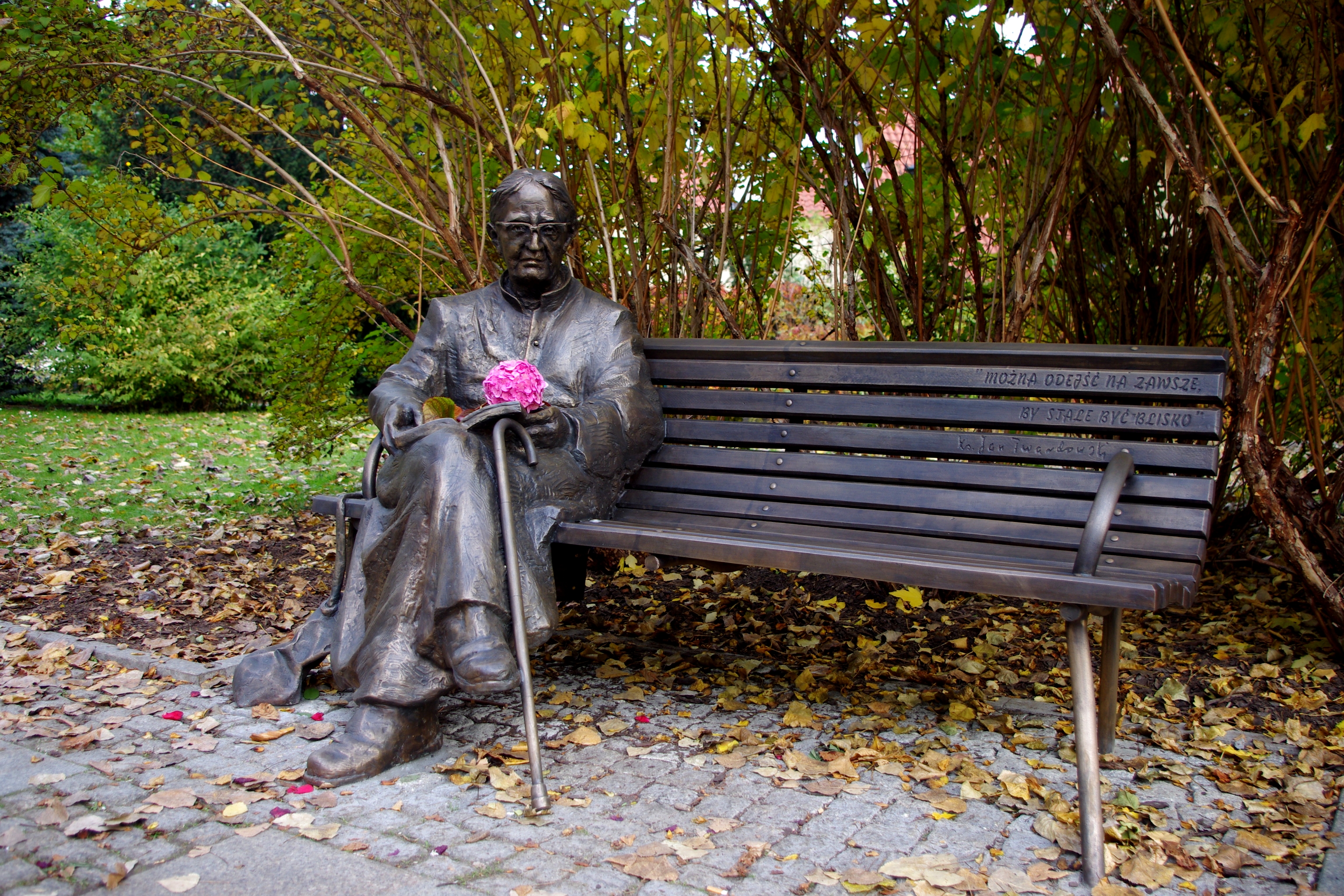
In hindsight, I should have known better than to meander towards a park bench occupied by a life-size bronze statue reading a book. In my defence though, it reminded me of the Patrick Kavanagh statue by the canal in Dublin, a place where I have never been accosted.

LSB and I were basking in the sunshine beside the statue when we were approached by an elderly lady, who stood before us, staring. I smiled at her and she began speaking in Polish.

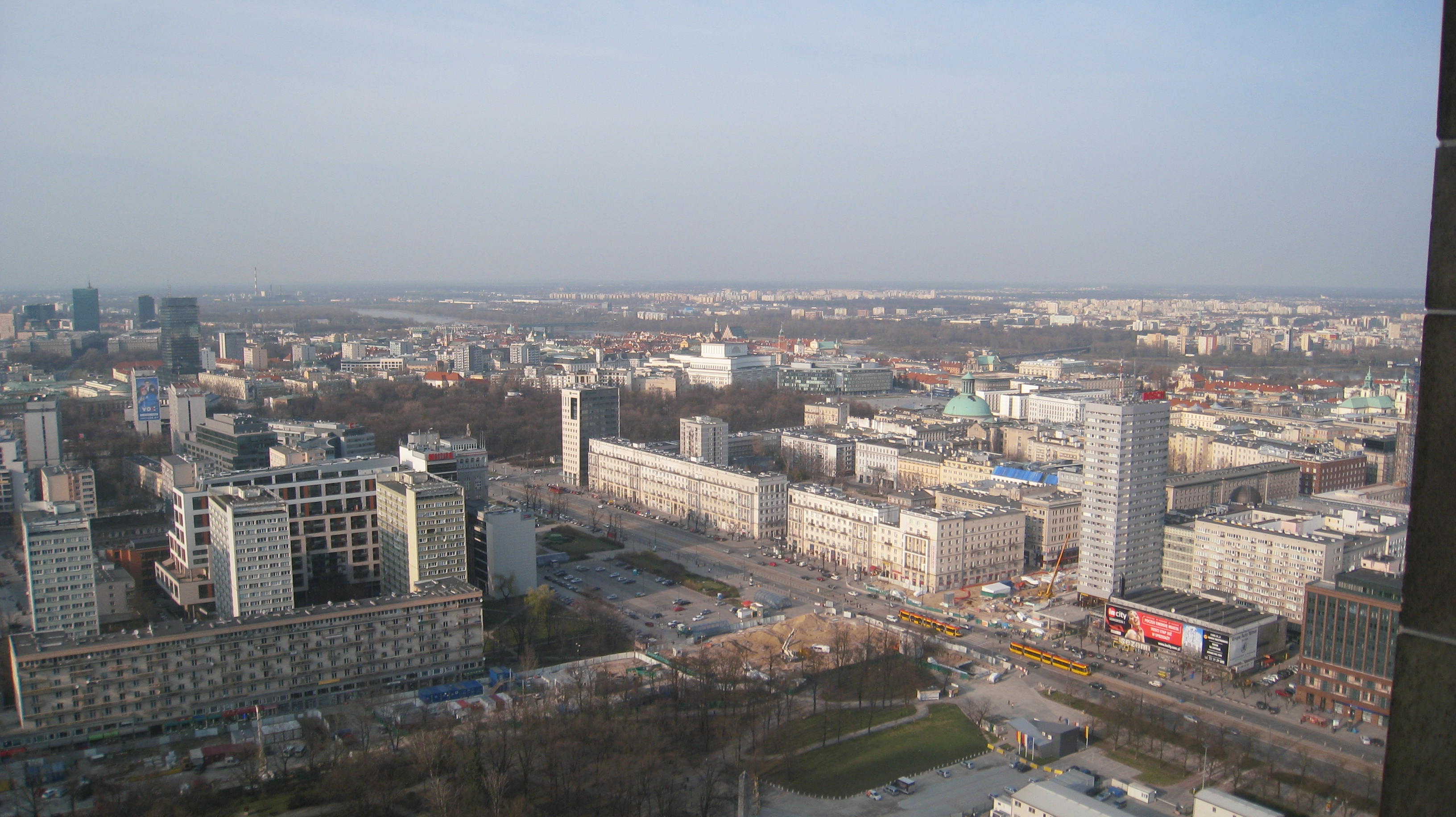
Warsaw skyline -- view from the Palace of Science and Culture

Warsaw skyline — view from the Palace of Science and Culture

“Erm… No… Polski,” I responded apologetically.

She gestured excitedly at the statue. I shrugged my shoulders as politely as I could.

She talked some more, then motioned at us to stay put while she went away.

A few moments later, she came back with an elderly man.

He had a pleasant tanned and wrinkled face and was wearing a Nike sweatshirt.

“English?” he said and we nodded enthusiastically. “I have… um. little English,” he said, laughing.

“This man,” he said, pointing at the statue. “Jan Twardowski. He… um…” he cupped his hands around his neck to indicate a collar and the word came to him. “Priest. Yes. Priest!”

“Oh!” I said. “Thank you! I didn’t know who he was.”
“Yes!” he said, delighted. “Priest… important priest… and also poet!”
“Priest,” the lady repeated, delighted. “Yes, priest!”
“Ah,” I said. “What a beautiful place for him!”
“Yes, yes, beautiful!” they agreed.

They left happily.

A few moments later, another party comprising two women and a man in a wheelchair arrived and stopped in front of us. They stayed there for quite some time and I began to shift uncomfortably in my seat.

Though there were several vacant benches elsewhere, I thought they were perhaps trying to covet our spot. “Would you like to…?” I said, motioning to get up.

“No, no,” the lady pushing the wheelchair said, waving her hand.
Suddenly I noticed a presence to my left. When I turned I discovered a third woman on her knees by my feet, praying.

This, I thought, is one step away from Pope-shaped perogies.

In Warsaw

I’ll be back soon with news of my adventures in Warsaw, the trials and tribulations of shopping for a soon-to-turn 95 year-old and an update on my quarter-life crisis.

Bis bald!